
绿色物流

Search documents
100辆签约 50辆交车!谁家智能新能源重卡?
第一商用车网· 2026-03-27 05:59
Core Viewpoint - DeepWay has made a significant breakthrough in the electrification and intelligence of logistics along the Sichuan-Tibet route by signing a contract for 100 units and delivering 50 intelligent new energy heavy trucks, marking a key milestone in green logistics development in high-altitude areas [1][5]. Group 1 - The signing and delivery event took place in Ya'an, Sichuan, with key leaders and guests witnessing the occasion, highlighting the importance of this partnership for logistics in high-altitude and complex road conditions [1]. - The Sichuan-Tibet route, where the delivery occurred, is a critical logistics hub with challenging conditions, including high altitudes of up to 4,298 meters, which pose significant challenges for heavy truck transportation [1]. - DeepWay's intelligent electric drive bridge offers significant energy consumption advantages, while the 800V high-voltage platform provides fast and stable recharging, enhancing the efficiency and reliability of green logistics in these challenging environments [1]. Group 2 - The delivered vehicles will integrate with Times Qi Ji's recharging network to create a seamless operational loop for Tengyun Logistics, emphasizing the importance of a "vehicle-road-station" integrated approach [3]. - DeepWay's marketing manager stated the company's commitment to continuous technological upgrades and product innovation, aiming to support the green and intelligent development of Tengyun Logistics and set a benchmark for new energy heavy truck applications nationwide [3]. - The achievement of signing 100 units and delivering 50 showcases DeepWay's product strength and market recognition in the intelligent new energy heavy truck sector [5].


京东物流将承担工行借记卡信用卡寄递服务 ESG成果和社会责任贡献获各界高度认可
Zhi Tong Cai Jing· 2026-03-21 21:04
Core Viewpoint - JD Logistics has been awarded the contract for the delivery service project of finished cards for the Industrial and Commercial Bank of China, leveraging its efficient logistics supply chain to provide nationwide delivery services [3] Group 1: Social Responsibility and Coverage - JD Logistics has achieved full coverage of domestic counties and basic coverage of administrative villages, including remote areas such as Xinjiang, Tibet, Inner Mongolia, and Yunnan, establishing nearly 100,000 service stations in towns and villages to enhance grassroots service [3] - The company has received high recognition from state-owned enterprises and large banks for its contributions in the field of social responsibility, aligning with ESG principles [3] Group 2: Green Development Initiatives - Since 2017, JD Logistics has implemented the "Qingliu Plan" to promote green development across packaging, warehousing, and transportation, with solar photovoltaic capacity on warehouse rooftops reaching 139.22 MW and over 10,000 self-operated new energy vehicles [4] - The company has reduced secondary packaging by over 1 billion units and has developed a carbon management platform, serving over 1,000 global brands [4] - JD Logistics' green practices have received international recognition, including being featured in the World Economic Forum's report on green logistics innovation and being included in the S&P Global 2026 Sustainability Yearbook [4] Group 3: Employee Welfare and Support - JD Logistics has established a system to ensure the rights of frontline employees, including 100% formal labor contracts and social insurance coverage since its inception in 2007 [5] - The company has committed to investing 22 billion in the next five years to build 150,000 "Rider Homes" to provide affordable housing for full-time riders, with some families already benefiting during the recent Spring Festival [6] - JD Logistics has partnered with Guangdong Province to create the first "Rider Academy" in the country, offering career development and skill enhancement support for delivery riders and couriers [6]
重卡市场惊签600辆大单!
第一商用车网· 2026-03-12 07:16
Core Viewpoint - The strategic signing of 600 Dongfeng Changxing LNG tractors and the delivery of 200 units in Chengdu marks a significant step for Dongfeng Xinjiang in expanding its market presence in Southwest China, injecting strong momentum into the local logistics industry for high-quality development [1][9]. Group 1: Event Overview - The event was attended by over 80 guests, including key executives from Dongfeng Xinjiang and partners, highlighting the importance of the strategic cooperation agreement [3]. - The delivery of the Dongfeng Changxing D7V LNG tractors was celebrated with a ceremonial handover of a symbolic "golden key" to a major customer, emphasizing the partnership and trust established [5]. Group 2: Product Features - The Dongfeng Changxing D7V-LNG tractor is equipped with the Yuchai K14N-540 high-efficiency gas engine, boasting a B10 lifespan of 1.8 million kilometers and an innovative intelligent torque control system that optimizes power and fuel consumption, reducing fuel costs by 2 kilograms per 100 kilometers compared to industry averages [7]. - The vehicle's design incorporates new materials and processes to optimize weight, enhancing its load capacity and maximizing profitability for customers [7]. Group 3: Market Impact - The D7V-LNG tractors are positioned as the "main force" for expanding operations and improving efficiency for customers, with proven fuel efficiency and reliability that meet diverse operational needs [9]. - The successful signing of the strategic agreement and the delivery event underscores the competitive strength of Dongfeng Changxing tractors in the Southwest market, laying a solid foundation for achieving annual sales targets in Sichuan [9]. Group 4: Future Outlook - Dongfeng Xinjiang aims to continue its commitment to "partnership and win-win cooperation," focusing on market demands and driving product and service upgrades to provide competitive solutions that help customers achieve their wealth creation goals [11].

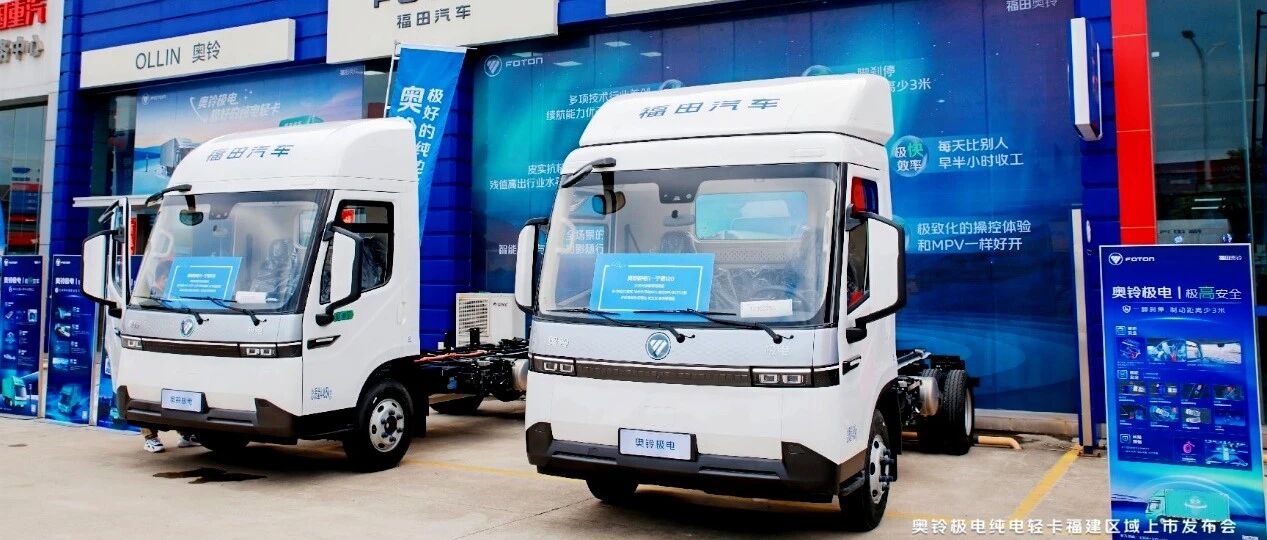
奥铃极电福建上市 开启东南沿海高效物流新篇章!| 头条
第一商用车网· 2026-03-06 08:11
Core Viewpoint - The launch of the Aoling Extreme Electric pure electric light truck marks a significant step towards green logistics in the southeastern coastal region of China, aligning with the country's dual carbon goals and addressing the urgent demand for cost-effective logistics solutions [1][3][12]. Group 1: Product Features and Innovations - The Aoling Extreme Electric light truck is developed on the Foton Qixing platform, representing a technological leap from traditional "oil-to-electric" platforms, transitioning from the 1.0 era of basic functionality to a 2.0 era focused on user value [6]. - The vehicle features a rapid charging capability, allowing for a 20% to 80% charge in just 18 minutes, and utilizes advanced thermal management technology to enhance charging speed [8]. - It is equipped with the latest CATL battery technology, offering a range of 300 to 607 kilometers, significantly reducing range anxiety for users [8]. - The truck is designed for high reliability, with a B10 lifespan of up to 600,000 kilometers and an IP68 rating for water resistance, validated through rigorous testing in various environmental conditions [10]. Group 2: Market Strategy and User Benefits - The launch event highlighted the strategic choice of Quanzhou as a logistics hub, leveraging its robust transportation network and logistics industry to meet diverse user needs [5]. - Aoling Extreme Electric aims to provide comprehensive solutions for various logistics scenarios, enhancing operational efficiency for users in urban and intercity transport [5][12]. - The company offers exclusive purchase and service benefits for users in the Fujian region, including financial subsidies and lifetime warranties on key components for the first 2,000 owners [12]. - The strategic partnerships formed with local logistics companies during the launch are intended to bolster green, intelligent, and efficient logistics support in the region [12]. Group 3: Industry Context and Future Outlook - The ongoing trend towards green transformation in urban logistics is driving demand for electric vehicles, positioning Aoling Extreme Electric as a competitive option in the market [2][3]. - The company is expected to gain traction among urban distribution users from South China to the East Coast, thanks to its high cost-performance ratio and user-centric design [14].

东风燃气重卡再签100台大单!
第一商用车网· 2026-03-03 04:53
Core Viewpoint - The strategic cooperation between Nale HH Logistics and Dongfeng Commercial Vehicle marks a significant step towards enhancing green logistics and efficient transportation in the Puyang region, with the delivery of 40 Dongfeng Longqing gas vehicles being a key milestone in this partnership [4][6][12]. Group 1: Strategic Cooperation - The signing of the strategic cooperation agreement and the delivery ceremony for the first batch of 40 Longqing gas vehicles took place on March 1 in Puyang [4]. - This collaboration aims to deepen strategic ties and optimize transportation capacity, representing a landmark achievement in the development of green and efficient logistics in the northern Henan region [6][10]. Group 2: Vehicle Features and Benefits - The 40 Longqing 520 gas vehicles are equipped with a mature and reliable powertrain, offering stronger power, better fuel efficiency, longer lifespan, higher operational rates, and lower operating costs, making them suitable for heavy-duty logistics scenarios [12]. - The choice of Dongfeng Longqing gas vehicles is based on their strong performance, superior fuel consumption, and reliability, which align with the logistics industry's demands for reliability, efficiency, energy conservation, and compliance [10][12]. Group 3: Commitment to Customers - Dongfeng Commercial Vehicle emphasizes its commitment to providing a full lifecycle solution, including vehicle, service, and support, to ensure efficient operations for customers [8]. - The partnership aims to explore new business models to tackle challenges and share successes, reinforcing the commitment to building a greener logistics ecosystem [8][10].

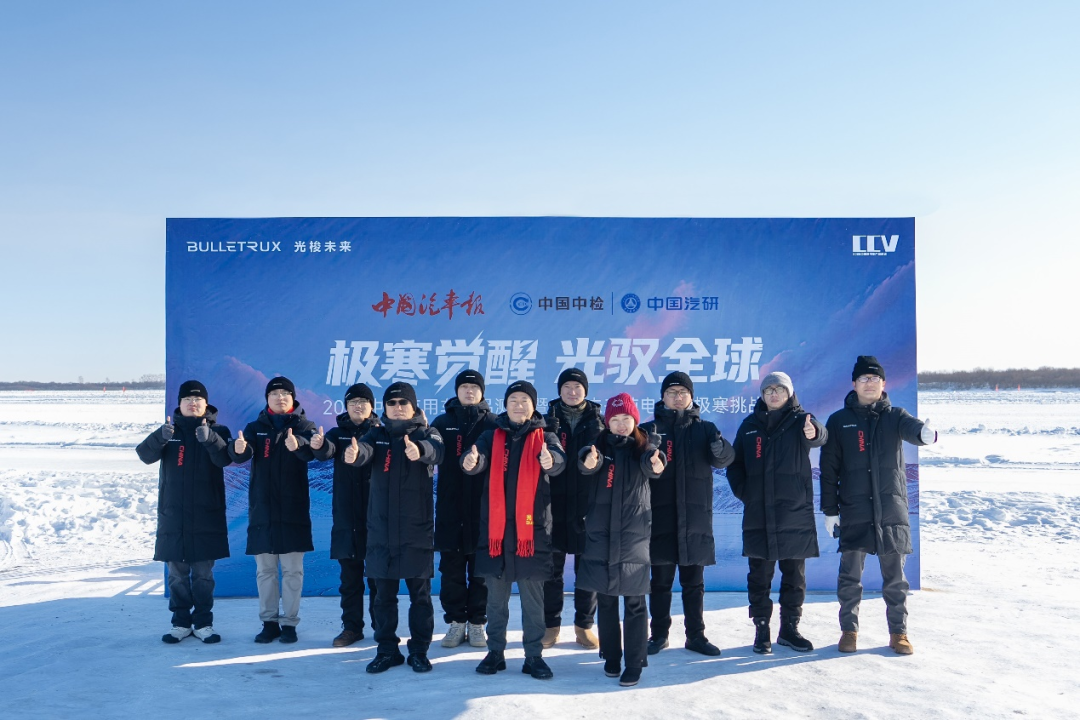
光梭未来极寒淬炼记:-30℃下的“电智融合”宣言与全球化远征前夜
Zhong Guo Qi Che Bao Wang· 2026-02-27 06:04
Core Insights - The article highlights the extreme cold testing of Guangso Future's pure electric heavy-duty trucks in Heilongjiang, China, emphasizing the company's ambition to become a global leader in intelligent electric heavy-duty trucks and sustainable logistics solutions [1][4][15] Group 1: Testing and Technology - The extreme cold testing aims to address challenges such as battery performance and vehicle reliability in harsh conditions, with tests covering over ten performance metrics [7][9] - Guangso Future's CTO outlined a three-pronged approach to battery low-temperature technology, achieving over 85% range retention at -35°C and reducing energy consumption by 15% compared to industry averages [9][10] - The company surpassed national standards in defrosting and de-fogging performance, showcasing advanced thermal management and vehicle dynamics tailored for cold climates [10][12] Group 2: Strategic Vision and Market Positioning - Guangso Future's CEO articulated a three-phase product strategy targeting the booming electric heavy-duty truck market, with plans for advanced models and full automation by 2027 [4][12][13] - The company aims to leverage its technological advancements to capture the global high-latitude market, particularly in Europe, by integrating local regulations and operational requirements into its development process [12][13] - The strategic focus is on creating a comprehensive ecosystem for efficient, low-carbon transportation solutions, distinguishing itself from traditional heavy-duty truck manufacturers [6][15] Group 3: Future Outlook - The period from 2026 to 2027 is viewed as a critical window for the electric heavy-duty truck market, with expectations of market penetration exceeding 50% [12] - Guangso Future's long-term vision includes becoming a key player in the global zero-carbon transportation sector, aiming for international standards and operational models [15][17] - The successful completion of extreme cold testing is seen as a pivotal step in validating the company's products and global strategy, reinforcing its commitment to innovation and market leadership [14][17]
DHL快递全球首席执行官:德中经贸合作始终是全球贸易稳定的重要基石
Sou Hu Cai Jing· 2026-02-26 08:36
Core Viewpoint - The stability of Sino-German economic and trade relations is crucial for global trade, especially amid rising uncertainties in the global economic environment [2] Group 1: Sino-German Economic Cooperation - Sino-German economic cooperation serves as a foundation for businesses operating in China, supported by mutual commitments to open trade, infrastructure development, and technological innovation [3] - The collaboration between Germany's engineering and innovation capabilities and China's industrial system and digital transformation is enhancing supply chain diversification and deepening technological cooperation [2][3] Group 2: DHL's Role in China - DHL has been in China for over 40 years and has evolved from a service provider for import-export trade to a comprehensive partner supporting Chinese companies in going global [3] - The upcoming launch of the Shenzhen Super Port reflects DHL's ongoing investment in China to better connect Chinese and global markets [3] Group 3: Logistics and Supply Chain Transformation - The shift of Chinese manufacturing towards high-end, intelligent, and green development is reshaping logistics and supply chain service models, with increasing demand for sustainable logistics solutions [3][4] - DHL is leveraging its dual expertise in China and Germany to create solutions that address challenges in sustainable manufacturing and logistics [3] Group 4: Cross-Border Logistics Trends - More Chinese companies are expanding into the European market, with Germany being a key destination, driving the upgrade of cross-border logistics services towards end-to-end integration [4] - DHL plays a bridging role in promoting bilateral trade and investment, providing logistics support and local market insights [4] Group 5: Sustainable Development Initiatives - DHL is advancing its carbon-neutral transportation and supply chain decarbonization capabilities in line with its "2050 zero emissions" blueprint, emphasizing the importance of Sino-German cooperation in achieving climate goals [4] - The collaboration is shifting from traditional manufacturing and trade to high-quality cooperation characterized by innovation and green transformation [4]

AI推动全球物流深度脱碳
Ke Ji Ri Bao· 2026-02-15 04:01
Core Insights - The transportation sector is at a crossroads between climate and development, contributing 16%-25% of global carbon emissions, with freight logistics accounting for 7%-8% of total emissions [1] - AI is identified as a powerful catalyst for deep emissions reduction in the logistics industry, potentially reducing greenhouse gas emissions from transportation by up to 15% [1] Group 1: Optimizing Transportation Routes - AI algorithms can analyze real-time data on traffic flow, weather changes, and delivery timelines to match the most energy-efficient routes for freight, significantly reducing fuel consumption and carbon emissions [2] - UPS's ORION system saves 10 million gallons of fuel annually, equivalent to a reduction of approximately 100,000 tons of CO2 emissions [2] - Alaska Airlines, in collaboration with Air Intelligence, implemented the Flyways AI system, which optimizes flight paths and can reduce fuel consumption by 3%-5% for flights over four hours [2] Group 2: Reducing Empty Transport Losses - The U.S. trucking industry incurs over $150 billion annually due to idle capacity, which AI can help mitigate through smart freight matching and loading planning [3] - AI demand forecasting models in air cargo can improve load factors by 8%, potentially reducing CO2 emissions by 80,000 to 85,000 tons annually if widely adopted [3] - If similar AI solutions are implemented across the U.S. trucking industry, empty truck rates could decrease by 50%, avoiding 43 billion kilograms of CO2 emissions, equivalent to burning 16 billion liters of diesel [3] Group 3: Promoting Low-Carbon Alternatives - The choice of transportation mode significantly impacts carbon footprints, with rail transport reducing energy consumption by 75% compared to road transport for long-distance freight [4] - AI-driven predictive analytics can guide logistics companies to shift from high-emission modes to low-carbon alternatives, potentially reducing global freight emissions by 3%-4% [4] - DHL's collaboration with a major automotive manufacturer successfully transitioned from heavy trucks to a multi-modal transport solution, resulting in a 58% reduction in carbon emissions per ton-kilometer [5] Group 4: Enhancing Rail Transport Efficiency - AI is being utilized to address inefficiencies in the first and last mile of rail transport, improving overall timeliness and making rail a viable option for high-priority freight [5] - Despite 75% of inland freight in the EU relying on road transport, there is significant potential for transformation through digitalization and AI, as emphasized in the EU's Green Deal [5] - The International Transport Forum recommends establishing governance frameworks to ensure data security, accuracy, and privacy in AI systems to prevent misuse and systemic risks [5]
市场监管总局批准发布智能网联汽车等重要国家标准
Cai Jing Wang· 2026-02-11 02:04
Group 1 - The National Standardization Administration has approved the release of several important national standards, particularly in the field of transportation logistics [1] - Two national standards related to intelligent connected vehicles have been introduced, focusing on performance testing for autonomous driving and automatic parking systems, which will enhance the performance and safety quality of intelligent connected vehicles [1] - Six national standards have been published concerning automotive door handles and adaptive cruise control systems, aimed at improving road traffic safety and promoting greener transportation [1] Group 2 - Four national standards related to green logistics indicators, accounting, and sustainable procurement have been released, supporting the green transformation of supply chains [1]
涉自然保护地标识通用要求、环境报告鉴证等领域 一批重要国家标准发布
Zhong Guo Xin Wen Wang· 2026-02-10 12:04
Group 1: Emerging Fields - The release of 5 national standards in emerging fields such as brain-computer interfaces and digital twins aims to clarify reference frameworks and data formats, supporting high-quality development in cutting-edge technology sectors [1] - 47 national standards related to new materials, including aluminum nitride single crystal polishing sheets and carbon fiber reinforced composites, are expected to promote innovation in the new materials industry [1] - 15 national standards for experimental animals, including identification and evaluation techniques, are designed to enhance the support for biotechnology research and applications [1] Group 2: Transportation and Logistics - The introduction of 2 national standards for intelligent connected vehicles focuses on performance testing for autonomous driving and parking systems, enhancing the performance and safety of smart vehicles [1] - 6 national standards related to automotive components, such as door handles and adaptive cruise control systems, aim to improve road traffic safety and sustainability [1] - 2 mandatory national standards for the postal industry address safety production operations and equipment requirements, enhancing safety governance in postal and express delivery services [1] Group 3: Ecological and Environmental Protection - 6 national standards, including general requirements for natural protected area signage and drone inspection techniques for forest and grassland fire prevention, provide standard support for national ecological security [2] - 2 national standards for environmental due diligence and report verification are significant for promoting green development and improving environmental governance efficiency [2] - 2 national standards related to greenhouse gas emission accounting and reporting requirements assist companies in accurately calculating and reporting emissions, providing a framework for emissions management [2] Group 4: Safety Production - 16 mandatory national standards in the fire safety sector, including outdoor fire hydrants and gas detectors, update technical requirements and inspection rules to mitigate major fire safety risks [2] - 14 national standards for special equipment, such as gantry cranes and pressure vessels, ensure the safe and stable operation of these devices [2] Group 5: Public Life - 4 national standards for services for people with disabilities, including single-arm walking aids and cognitive accessibility, aim to enhance the quality of rehabilitation aids and standardize services for vulnerable groups [2] - 8 national standards related to medical laboratories and medical device sterilization processes are established to regulate practices in medical testing and manufacturing [2] Group 6: Additional Standards - The market regulatory authority also released national standards concerning transportation terminology, earth-moving machinery, and reciprocating internal combustion engines [3]