蜡样芽孢杆菌

Search documents
用冷饭做炒饭,吃完进ICU!啥是“炒饭综合征”?
Xin Lang Cai Jing· 2026-02-05 13:06
Core Insights - A man in Guangdong experienced severe health issues after consuming fried rice made from refrigerated rice, leading to ICU admission due to foodborne illness caused by Bacillus cereus [2] Group 1: Foodborne Illness Overview - The illness was identified as food poisoning caused by Bacillus cereus, commonly found in starchy foods like rice and fried rice left at room temperature for extended periods [2] - Symptoms of the illness include abdominal pain, diarrhea, and respiratory difficulties, which can lead to multi-organ failure if untreated [2] Group 2: Types of Bacillus cereus Poisoning - There are two types of Bacillus cereus poisoning: 1. Vomiting type, which requires high-temperature cooking (126°C for 90 minutes) to eliminate the toxin, with symptoms appearing within 0.5 to 6 hours [3] 2. Diarrheal type, which can be eliminated by heating at 45°C for 30 minutes or 56°C for 5 minutes, with symptoms appearing within 2 to 36 hours [3] Group 3: Food Safety Recommendations - To avoid Bacillus cereus poisoning, it is advised to consume rice and other starchy foods immediately after cooking and to store them properly in the refrigerator [3] - Personal hygiene practices, such as frequent handwashing and maintaining clean kitchen utensils, are essential to prevent cross-contamination [3] Group 4: Foods to Avoid Overnight Storage - Certain foods should not be stored overnight, including: 1. Seafood, which can degrade and irritate the gastrointestinal tract [4] 2. Leafy greens, which can produce harmful nitrites if stored improperly [4] 3. Fresh soy milk, which can harbor bacteria if not consumed shortly after preparation [5] 4. Mushrooms and fungus, which can produce toxins if not stored correctly [6]


又一海外乳业巨头召回问题奶粉,海关总署提醒立即停用
Xin Lang Cai Jing· 2026-01-23 01:09
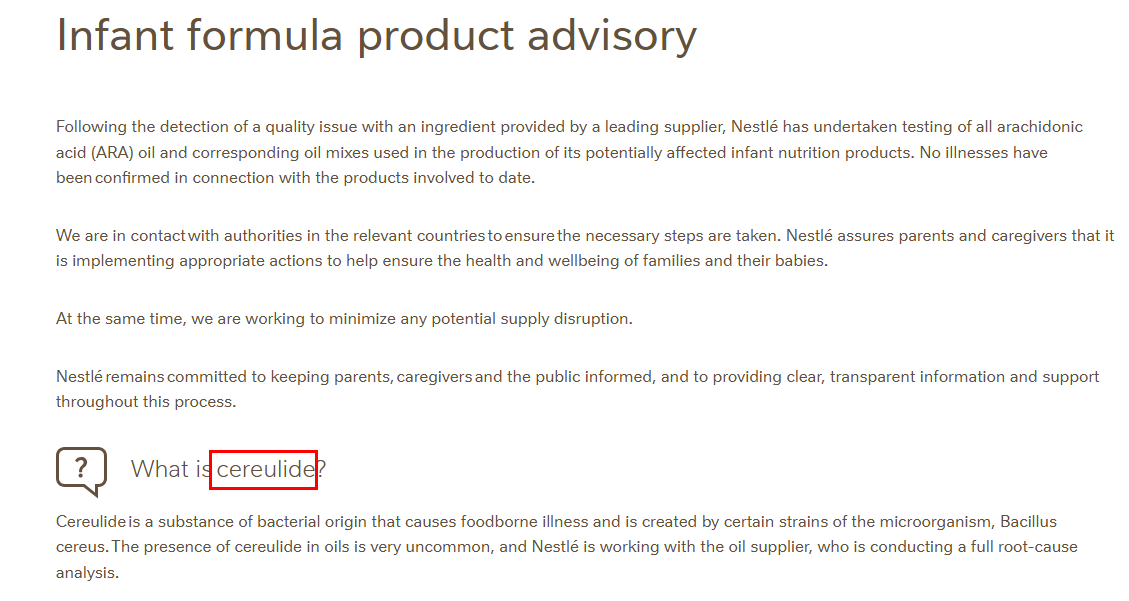
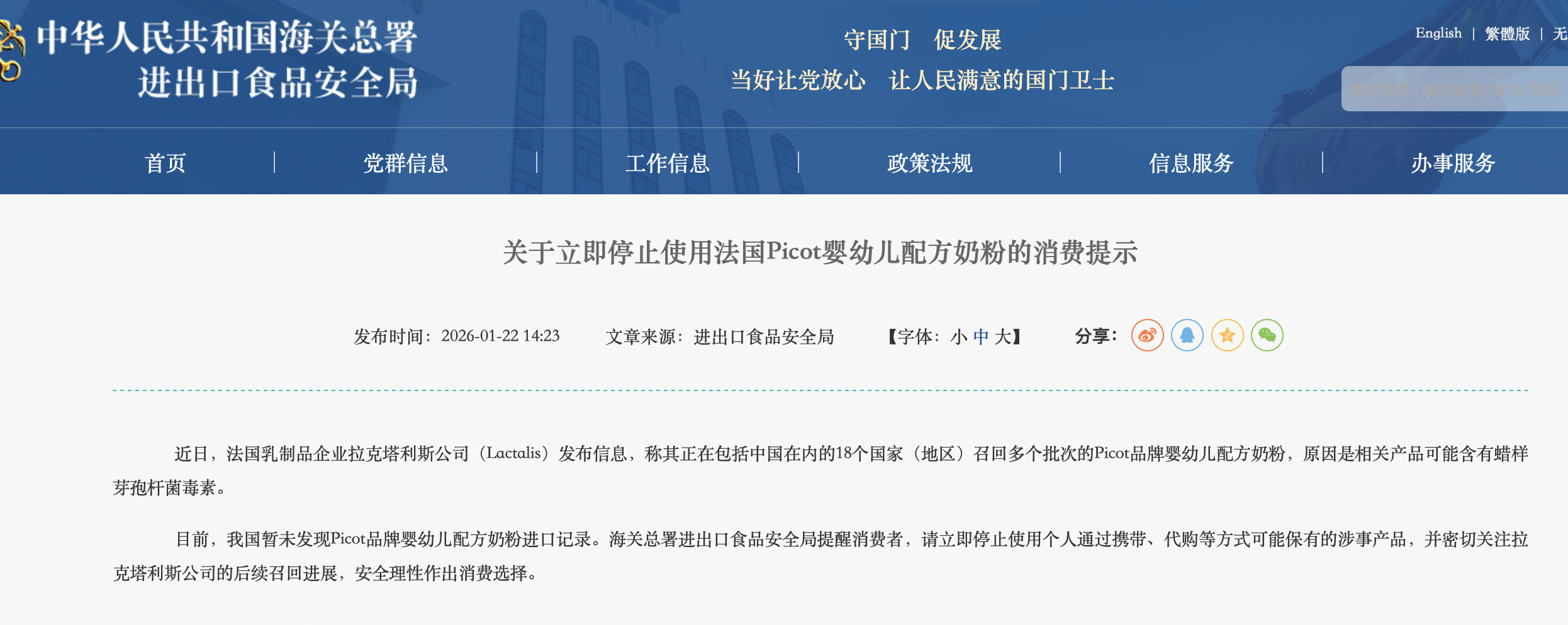
Group 1 - Lactalis, a French dairy giant, announced a recall of multiple batches of infant formula in 18 countries, including China, due to potential contamination with Bacillus cereus toxins, which can cause diarrhea and vomiting [4][6] - The recall was described as a "precautionary decision" based on warnings from the French Association of Infant Nutrition, and no adverse reactions have been reported in France so far [4][6] - The Chinese customs authority stated that there are currently no records of the recalled Picot brand infant formula being imported into China, advising consumers to stop using any potentially affected products [1][4] Group 2 - This incident marks the second recall related to Bacillus cereus in the global dairy industry, following a similar recall by Nestlé on January 5 due to quality issues with a supplier's ingredient [6] - Nestlé's recall involved infant formula in several European countries, with the same bacteria posing a risk of foodborne illness, which is highly heat-stable and difficult to eliminate through cooking [6] - Following the Nestlé recall, the stock price of the largest supplier of arachidonic acid (ARA) products, Jabiou, fell significantly, while other dairy companies reassured the safety of their products [6]
雀巢“预防性召回”奶粉事件是怎么回事?
Zhong Guo Jing Ji Wang· 2026-01-13 01:39
Core Viewpoint - The article discusses the recall of infant formula by Nestlé in 31 countries due to potential contamination with Bacillus cereus, prompting regulatory scrutiny on Jia Bi You Biotechnology (Wuhan) Co., Ltd. for its involvement in the supply chain [1][3][6]. Group 1: Regulatory Actions - The Shanghai Stock Exchange issued a regulatory letter to Jia Bi You, urging the company to respond promptly and fulfill its information disclosure obligations [1][2]. - The National Market Supervision Administration emphasized the importance of Nestlé (China) Ltd. adhering to corporate responsibility in recalling affected products [6]. Group 2: Product Recall Details - Nestlé announced a voluntary recall of specific batches of infant formula, including products like "力多精" and "惠氏膳儿加," due to quality issues with a supplier's raw materials [3][5]. - The recall affects 30 batches of products sold in mainland China and 41 batches sold through cross-border e-commerce channels [3][5]. Group 3: Supplier and Quality Control - The specific supplier of the problematic arachidonic acid (ARA) used in the affected products has not been disclosed, although major producers include Jia Bi You, DSM, and Runke [6][11]. - Both DSM and Runke have publicly stated that they are not responsible for the contaminated ARA, asserting their products meet strict quality control standards [8][10]. Group 4: Industry Standards and Safety - There is a debate regarding the absence of specific limits for Bacillus cereus in China's infant formula standards, with experts arguing that total bacterial counts are regulated instead [11][12]. - The management of Bacillus cereus is crucial, as it can produce toxins when proliferating, highlighting the need for stringent quality control measures throughout the supply chain [12].

雀巢召回婴幼儿配方奶粉,71个批次流向内地,21个批次流向香港多少被中国家庭买到了?公司回应暂无数据
Mei Ri Jing Ji Xin Wen· 2026-01-08 11:41
Core Viewpoint - Nestlé has initiated a voluntary recall of several batches of infant formula across more than 30 countries due to potential contamination with Bacillus cereus, a bacterium that can cause gastrointestinal issues in infants [1][3][12]. Group 1: Recall Details - The recall affects various products, including Nestlé BEBA Supreme, with specific batches identified as potentially contaminated [1][6]. - In Hong Kong, the Food and Environmental Hygiene Department confirmed the recall, citing concerns over Bacillus cereus contamination [3]. - A total of 41 batches of infant formula sold through cross-border e-commerce in mainland China are included in the recall, with brands such as Nan and Wyeth being affected [6][12]. Group 2: Consumer Reactions - Parents are expressing significant concern and anxiety over the recall, with many checking their products against the recall list and considering switching formulas [7][8]. - Some parents have reported adverse reactions in their children, such as vomiting and diarrhea, which they suspect may be linked to the affected formula [8][9]. - Despite the lack of reported adverse health effects related to the recalled products, parents remain apprehensive about potential long-term health impacts [7][9]. Group 3: Company Response and Market Impact - Nestlé has stated that the recall is a precautionary measure and has not received any reports of adverse effects related to the affected products [7][14]. - The company indicated that the affected batches represent less than 0.5% of its annual sales, suggesting minimal financial impact from the recall [12]. - The recall comes at a challenging time for Nestlé's Greater China region, which has recently merged its infant nutrition and Wyeth nutrition businesses, aiming for improved operational efficiency [14][15].