血制品行业整合

Search documents
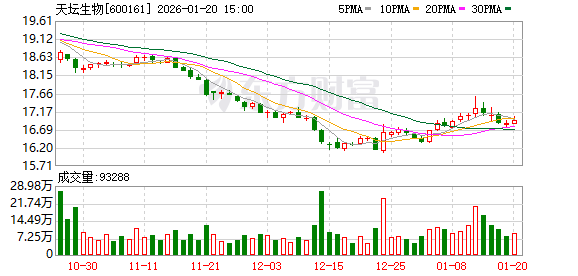
天坛生物承压换帅 血制品业迎加速整合期
2 1 Shi Ji Jing Ji Bao Dao· 2026-01-20 23:07
Group 1 - The core point of the article is the recent personnel changes at Tian Tan Biological Products, a subsidiary of China National Pharmaceutical Group, which aims to adapt to market changes and strengthen its position in the blood products industry [2][8] - Yang Huichuan resigned as chairman but remains as a board member and general manager, while Liang Hongjun has been elected as the new chairman [2][3] - Under Yang's leadership, the company saw steady revenue growth in 2023 and 2024, with revenues of 5.18 billion and 6.032 billion yuan respectively, and net profits of 1.11 billion and 1.549 billion yuan, marking increases of 25.99% and 39.58% [2][5] Group 2 - The blood products industry in China has experienced increasing performance differentiation and intensified market competition, prompting Tian Tan Biological's strategic personnel adjustments [2][6] - Liang Hongjun's appointment comes at a critical time as the company faces profit pressure, with a reported net profit decline of 22.16% in the first three quarters of 2025 [4][5] - The industry has seen a narrowing growth rate, with some companies like Hualan Biological and Boya Biological experiencing significant revenue declines, while others like Tian Tan Biological and Shanghai Lai Si have shown revenue growth [6][7] Group 3 - The blood products sector is undergoing consolidation, with fewer than 30 operational companies in China, making license resources scarce and acquisitions vital for enhancing competitive strength [7][8] - The industry is shifting from a low-competition, high-growth phase to a differentiated competition phase, necessitating continuous strategic adjustments from leading companies like Tian Tan Biological [8]


万联证券:25Q3血制品利润端承压 行业处于整合加速阶段
Zhi Tong Cai Jing· 2025-11-13 08:44
Core Insights - The blood products sector has experienced a significant decline in profitability, with a year-on-year net profit decrease of 23.14% in the first three quarters of 2025, and a more severe drop of 30.89% in Q3 [1][2] - The average stock price of the blood products sector has fallen by 8.35% since the beginning of 2025, influenced by short-term performance pressures and market sentiment changes [1][2] Revenue and Profit Trends - In the first three quarters of 2025, the revenue growth rate for the blood products sector was only 0.30%, with Q3 showing a slight improvement at 4.11% [2] - The sales gross margin and net profit margin for Q3 2025 were reported at 40.42% (down 7.26 percentage points year-on-year) and 18.74% (down 10.17 percentage points year-on-year), indicating significant margin compression [2] Valuation Metrics - As of November 10, 2025, the price-to-earnings (P/E) ratio for the blood products sector stood at 30.07, with historical percentiles indicating a rising trend in valuation since 2020 [3] Strategic Focus Areas - Companies in the blood products sector should prioritize upstream plasma station resources and integration capabilities, as these are critical competitive advantages [4] - There is a shift towards upgrading product structures, with a focus on increasing the proportion of high-margin products like coagulation factors and developing new products such as recombinant products and subcutaneous immunoglobulin [4][5] Future Considerations - Attention should be given to potential price changes in blood products over the coming months, as well as advancements in new technologies for producing recombinant human serum albumin [5]
派林生物45亿被收编,“国家队”主导血制品整合潮
Guan Cha Zhe Wang· 2025-06-13 08:44
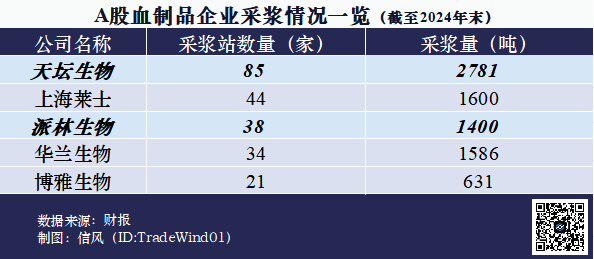
Group 1 - China National Pharmaceutical Group (Sinopharm) announced the acquisition of 21.03% stake in Palin Bio for over 4.5 billion yuan, representing a premium of 32% [1][2] - The acquisition aims to create a blood product giant with an annual plasma collection capacity of nearly 4,000 tons, reshaping the competitive landscape of the industry [1][4] - The blood product industry has seen intense competition for scarce licenses since the freeze on new approvals in 2001, leading to a wave of consolidations among major players [1][4] Group 2 - Palin Bio has undergone three ownership changes in seven years, reflecting the challenges and conflicts in the blood product sector [2][4] - The company has 38 plasma stations and an annual plasma collection capacity of over 1,400 tons, positioning it among the top players in the industry [4][5] - Despite its resources, Palin Bio has faced internal management issues, leading to governance challenges and regulatory penalties [5] Group 3 - The entry of Sinopharm is expected to bring stability and leverage its complete industry chain from research to distribution, potentially ending the cycle of ownership changes for Palin Bio [5] - Balancing capital demands with industry regulations remains a critical challenge for the newly formed entity post-acquisition [5]



中国血王之战
Hua Er Jie Jian Wen· 2025-06-12 06:50
Core Viewpoint - The control of blood product company Palin Bio (000403.SZ) has been transferred to China National Pharmaceutical Group (Sinopharm), which may lead to the integration of Palin Bio and Tian Tan Bio (600161.SH), potentially reshaping the competitive landscape in the blood product industry [1][5][9]. Group 1: Company Control and Financials - On June 10, Palin Bio announced that its controlling shareholder, Qiongcheng Shengbang Yinghao Investment Partnership, plans to transfer its entire 21.03% stake to China National Biotechnology Co., Ltd. [1] - The transaction is valued at 38.44 billion yuan, with a share price of 24.96 yuan, representing a 47% premium over the closing price of 16.96 yuan on June 6 [3]. - The estimated price-to-earnings ratio for this transaction is close to 32 times, based on a projected net profit of 7.45 billion yuan for 2024 [3][4]. Group 2: Industry Competition and Market Position - The integration of Tian Tan Bio and Palin Bio could lead to a combined revenue of approximately 86.87 billion yuan, surpassing Shanghai Lai Shi's (002252.SZ) projected revenue of 81.76 billion yuan for 2024 [7][15]. - If the integration occurs, the combined entity would control at least 123 plasma collection stations and have a total plasma collection volume of 4,181 tons, significantly increasing market share to nearly 30% [7][16]. - The blood product industry is experiencing consolidation due to limited new entrants since 2001, with companies increasingly acquiring others to expand market share [16][17]. Group 3: Challenges and Future Outlook - The integration process may face challenges, particularly regarding the internal conflicts within Palin Bio, especially with its second-largest shareholder, Harbin Tongzhi Cheng Technology Development Co., Ltd. [10][11][14]. - The future of the blood product industry may depend on how effectively China National Pharmaceutical Group can manage these internal dynamics while pursuing further consolidation [9][14]. - The industry is also exploring innovative solutions to reduce reliance on human plasma, with several companies making progress in developing recombinant products [21][22].

派林生物拟易主中国生物,整合预期再起?
Di Yi Cai Jing· 2025-06-10 04:10
Group 1 - The competitive landscape of the blood products industry is undergoing restructuring due to changes in control of companies [1][6] - On June 10, 2023, Palin Bio (000403.SZ) resumed trading with a stock price increase of over 3% following an announcement of a change in control [2] - China National Pharmaceutical Group Corporation (China Biotech) signed an acquisition framework agreement to acquire 21.03% of Palin Bio's shares from its controlling shareholder, Shengbang Yinghao Investment Partnership [2][4] Group 2 - The transaction will shift Palin Bio from being controlled by a local state-owned enterprise to being controlled by a central state-owned enterprise [4] - The acquisition price is based on a principal amount of 3.844 billion yuan plus interest calculated at an annual simple interest rate of 9% from March 20, 2023, until the signing of the transaction documents [4] - This marks the second change in control for Palin Bio since October 2023, highlighting the company's history of ownership changes in the blood products sector [4][5] Group 3 - The blood products industry has high barriers to entry, scarce plasma resources, and is subject to strict regulatory oversight, with fewer than 30 operational companies remaining after several rounds of consolidation [5] - Due to the scarcity of blood product targets, the industry has seen frequent new capital entering, such as China Biotech's acquisition of Palin Bio and previous acquisitions by other companies [6] - The entry of China Biotech into Palin Bio may lead to increased competition with Tian Tan Bio, another blood products company already under its control [4][6]