豆油期价上涨

Search documents
涨了逾一个月 豆油行情未完待续?
Qi Huo Ri Bao· 2026-01-30 00:36
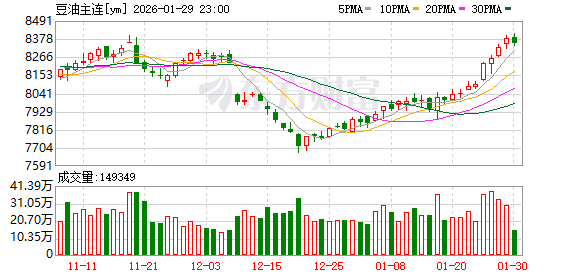
Group 1 - The core viewpoint of the article is that the recent surge in soybean oil futures prices is driven by multiple factors, including rising biodiesel policy expectations in the U.S. and increasing international crude oil prices [2] - Analysts believe that the anticipated increase in the U.S. EPA's biodiesel quota for 2026 and adjustments to exemption ratios have contributed to the rise in CBOT soybean oil prices, which has also affected domestic prices [2] - Geopolitical tensions have strengthened crude oil prices, providing additional support for the oilseed sector [2] Group 2 - Domestic apparent demand for soybean oil remains high, with continuous destocking since the fourth quarter of last year, and the lowest inventory levels are expected around March to April [2] - The commercial inventory of soybean oil has decreased by approximately 15% compared to the previous month due to pre-holiday stocking demands, with some oil mills experiencing delivery queues extending into early next month [2] - The price gap between soybean oil and palm oil has widened, driving demand towards soybean oil [2] Group 3 - On the supply side, expectations for Brazil's soybean production in the 2025/2026 season are optimistic, with estimates ranging from 176 million to 181 million tons [3] - Concerns about domestic soybean shortages may be overestimated, as the national auction of reserve soybeans has resulted in over 2 million tons sold, with deliveries concentrated in the January to April period [3] - Future trends in the oilseed sector may continue to rise, with attention needed on palm oil inventory at the end of January and production-demand data in February [3] Group 4 - Some analysts express caution, suggesting that the upside potential for soybean oil prices may be limited, and there could be downward pressure in the medium term [4]

涨了逾一个月,豆油行情未完待续?
Qi Huo Ri Bao· 2026-01-29 23:47
Core Viewpoint - The recent surge in soybean oil futures prices is attributed to multiple factors, including rising biodiesel policy expectations in the U.S. and increasing international crude oil prices, which have collectively driven global oilseed prices higher [2]. Group 1: Price Drivers - The U.S. EPA's proposal to increase the biodiesel quota for 2026 and adjust exemption ratios has positively impacted CBOT soybean oil prices, which have also influenced domestic prices [2]. - Geopolitical tensions have contributed to stronger crude oil prices, providing additional support for the oilseed sector [2]. - The strengthening of palm oil prices has widened the price gap between soybean and palm oil, further driving up soybean oil futures [2]. Group 2: Domestic Demand and Supply - Domestic apparent demand for soybean oil has remained high, with continuous inventory depletion since the fourth quarter of last year, and a low inventory point expected around March-April [2]. - Pre-holiday stocking demand ahead of the Chinese New Year has led to some oil mills experiencing delivery queues into early next month, resulting in a 15% decrease in commercial inventories compared to the previous month [2]. - The ongoing reduction in rapeseed oil imports has led to inventory depletion, causing market demand to shift towards soybean oil, which has further supported price increases [2]. Group 3: Future Outlook - The upward trend in the oilseed sector may not be over, with attention needed on palm oil inventory levels at the end of January and production-demand data in February [3]. - As crushing volumes recover and stocking demands weaken, supply pressures for soybean oil may ease, although global oilseed market conditions and domestic structural support remain [3]. - A more cautious perspective suggests that the price increase potential for soybean oil may be limited, with mid-term downward pressure anticipated [4].