财政整合计划

Search documents
普华永道:建议港府优化研发税收优惠政策 以推动科技进步
智通财经网· 2026-01-19 05:59
Group 1 - PwC suggests that the Hong Kong government optimize existing R&D tax incentives to promote technological advancement, particularly for outsourced R&D activities in the Greater Bay Area, proposing a 150% tax deduction for companies investing in AI technology to foster innovation and digital transformation [1] - The firm recommends tax incentives for global traders, including e-commerce and gaming industries, to strengthen Hong Kong's competitive edge [1] - PwC advises the government to expedite the granting of Hong Kong residency to qualified family office heads and their families, simplifying visa application processes and providing non-tax incentives such as education allowances and cash rewards to attract and retain family office professionals [1] Group 2 - PwC emphasizes the need for the government to quickly implement optimized shipping tax incentives to enhance Hong Kong's competitiveness as an international shipping center, particularly against jurisdictions like Singapore, and to accelerate the proposed half-tax incentives for commodity trading [2] - To attract global talent and investors, it is suggested to raise the investment threshold for the "New Capital Investor Entry Scheme" from HKD 10 million to HKD 15 million, aligning it with non-residential properties [2] - PwC economists highlight that while operating accounts are expected to return to surplus, structural pressures remain, urging strict control of recurrent expenditures and continued efforts to strengthen fiscal consolidation plans [2] Group 3 - The budget should prioritize growth driven by innovative technology, accelerating the development of the Northern Metropolis as a hub for AI, life sciences, low-altitude economy, and advanced manufacturing, while promoting broader application of AI in public services to enhance efficiency and reduce costs [3]
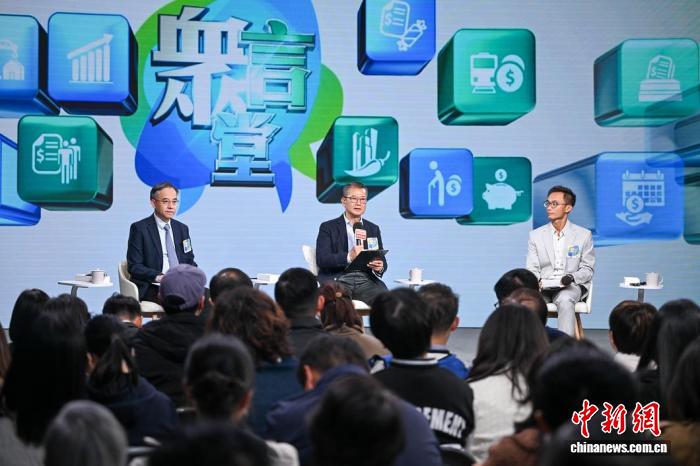
陈茂波:香港新一份财政预算案将于2月25日发表
Zhi Tong Cai Jing· 2026-01-11 07:43
Group 1 - The Hong Kong government is set to release a new budget on February 25, which is expected to show a recovery in operating surplus due to increased overall revenue from a thriving financial market, including stamp duty [1] - The financial sector, which accounts for 26% of Hong Kong's GDP, has shown strong performance, leading to greater market demand and positive expectations for the industry [1] - The trade sector, contributing 15% to Hong Kong's GDP, also supported the economy last year due to strong exports, while major events attracted more tourists, enhancing market sentiment [1] Group 2 - The Hong Kong government plans to increase investment in public works, which will result in a capital account deficit for the current year [2] - The government intends to utilize market forces, including moderate bond issuance, to support infrastructure development [2] - The ratio of the government's outstanding debt to GDP is approximately 12%, which is considered healthy on an international scale [2]
香港新一份财政预算案将于2月25日发表
Zhong Guo Xin Wen Wang· 2026-01-11 07:09
Group 1 - The new fiscal budget for Hong Kong will be announced on February 25, benefiting from a robust financial market and increased overall revenue, including stamp duty, allowing the government to restore operating surplus earlier than expected [1][3] - The financial sector, which accounts for 26% of Hong Kong's GDP, showed strong performance last year, leading to greater market demand and positive expectations for the industry [3] - The trade sector, contributing 15% to the GDP, also supported the economy due to strong exports, while major events attracted more tourists, enhancing the market atmosphere [3] Group 2 - The government has implemented a strengthened fiscal consolidation plan, achieving some success in controlling expenditure growth, although overall spending continues to rise, with education, healthcare, and social welfare accounting for nearly 60% of government expenditure [3] - The government plans to invest in future developments, particularly in the Northern Metropolis area, despite recording a deficit in the capital account due to increased investment in public works [3][4] - The ratio of the government's outstanding debt to GDP is approximately 12%, which is considered very healthy on an international scale [4]

香港全体公务员冻薪,预计削减约1万个职位
21世纪经济报道· 2025-02-27 04:51
Core Viewpoint - The Hong Kong government is implementing a salary freeze for all civil servants and political appointees in the 2025/2026 fiscal year to control government operating expenses amid a projected budget deficit of HKD 87.2 billion [1][5][6]. Economic Outlook - Hong Kong's economy is expected to grow by 2% to 3% in 2025, supported by stable employment, moderate inflation, and increased tourism [3][4]. - The government acknowledges challenges such as international geopolitical tensions affecting trade and investment sentiment, as well as high-interest rates impacting local asset prices [4]. Fiscal Measures - The government plans to reduce recurrent government expenditure by 7% by the 2027/2028 fiscal year, addressing the ongoing budget deficit [6][7]. - The total expenditure on civil servant salaries reached HKD 156.2 billion in the last fiscal year, marking a year-on-year increase of HKD 7.1 billion [7]. Housing Supply - The government aims to supply 190,000 public housing units over the next five years, with a long-term goal of 308,000 units in the next decade [10][9]. - The government will not sell commercial land in the upcoming year due to high vacancy rates and will consider converting some commercial land for residential use [11]. Technological Development - A budget of HKD 1 billion has been allocated to establish the Hong Kong Artificial Intelligence Research Institute, aimed at promoting AI research and application [12][13]. - The Northern Metropolis, including the Hong Kong section of the He Tao Cooperation Zone, is set to begin operations this year, with HKD 3.7 billion reserved for infrastructure development [15][16].