财政民粹主义

Search documents
美金融家警告,2026将爆最惨金融危机,日本首当其冲,原因在高市
Sou Hu Cai Jing· 2026-01-06 22:27
Group 1 - The article highlights the looming financial crisis predicted for 2026, with the U.S. debt nearing $40 trillion and Japan's debt expected to reach 235% of its GDP by year-end [1][3] - The global economic damage caused by uncontrollable factors since late 2019 has exacerbated debt accumulation issues in various countries, with Japan likely to be the first to face a crisis [3][5] - The Japanese government's current fiscal policies, particularly under Prime Minister Kishida, are criticized as detrimental to the economy, with reliance on deficit financing seen as a dangerous approach [5][15] Group 2 - The article discusses the adverse effects of Kishida's monetary policies, which contradict global central bank tightening, potentially leading to unsustainable debt levels for Japan [5][9] - Relations between Japan and China have deteriorated due to Kishida's provocative statements regarding Taiwan, which could have significant economic repercussions for Japan, given China's importance as a trading partner [9][10] - The economic impact of Kishida's policies is evident, with Japan's GDP contracting by 0.4% in the latest quarter, marking the first negative growth of the year, and further economic decline is anticipated [13][15]


美金融家警告,2026将爆最惨金融危机,日本首当其冲,原因在高市早苗
Sou Hu Cai Jing· 2025-12-26 01:13
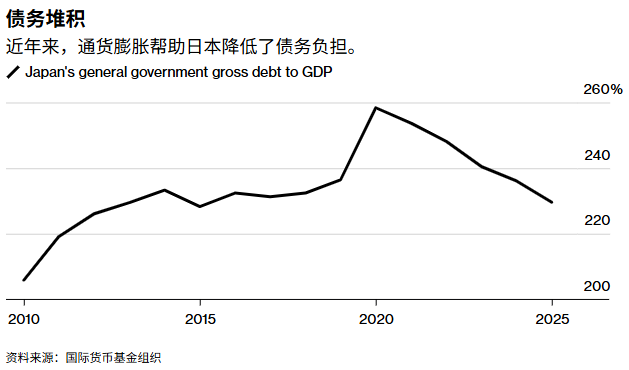
Group 1 - The global financial crisis is severe, with the US debt nearing $40 trillion, reflecting the fragility of the global economy [1] - Japan's total debt has reached $9 trillion, with a debt-to-GDP ratio of 235%, indicating a precarious fiscal situation [1] - Financial expert Rogers warns that 2026 could mark the beginning of the largest financial crisis in history, with Japan being the most affected [1] Group 2 - The economic crisis that began in late 2019 exposed high national debts and accelerated the fiscal crisis, leading to tightening policies by central banks [3] - Japan, under Prime Minister Kishida, has adopted aggressive fiscal policies, including a "responsible active property" plan, which may worsen its economic condition [3] - Kishida's extreme fiscal populism and provocative statements regarding Taiwan have deteriorated Japan-China relations, raising concerns about Japan's economic stability [3][5] Group 3 - Japan's GDP growth has sharply declined, showing a 0.4% negative growth in the post-pandemic quarter, indicating economic downturn [5] - Industries heavily reliant on the Chinese market, such as tourism and medical aesthetics, are facing significant challenges, leading to production cuts and rising unemployment [5] - There is growing domestic concern regarding Kishida's government, with calls for a policy shift to avert inevitable economic decline [5][8] Group 4 - Kishida's approach of external provocation to distract from domestic issues is seen as ineffective, as China has emerged as a global economic power [7] - The strategic imbalance caused by policy missteps under Kishida's "Abenomics" misleads the public and misjudges future economic prospects [8] - The looming global financial crisis, originating from the US, is closely tied to Japan's fate, necessitating careful consideration of future developments [8]

高市早苗财政方针显露“安倍经济学”回潮迹象:长期平衡取代年度目标,支出导向抬头
智通财经网· 2025-11-07 07:37
Core Viewpoint - Japanese Prime Minister Sanae Takaichi announced a shift in fiscal policy, moving away from annual assessments of the primary fiscal surplus target, aiming for a balanced budget over several years instead [1][2] Group 1: Fiscal Policy Changes - Takaichi's comments suggest a commitment to increasing government spending, reminiscent of former Prime Minister Shinzo Abe's "Abenomics" approach, which dominated Japanese politics for nearly a decade [1] - The government aims to achieve nominal GDP growth exceeding Japan's national debt yield while reducing the debt-to-GDP ratio, although specific strategies to achieve these goals were not detailed [1][2] - Takaichi emphasized the need for a long-term perspective in financial management, shifting focus from achieving annual fiscal balance [2] Group 2: Economic Advisory Changes - Recent appointments to Takaichi's economic advisory group reflect a return to the loose monetary and fiscal policy stance associated with "Abenomics," including the inclusion of former Bank of Japan Governor Masaaki Shirakawa [5] - The newly formed Growth Strategy Committee includes inflation advocates and economists known for promoting expansionary policies, indicating a potential shift in economic strategy [5] Group 3: Market Reactions and Concerns - Takaichi's fiscal policy is described as "responsible" yet expansionary, avoiding direct criticism of the Bank of Japan's interest rate hikes, which may be a response to market concerns [6] - The scale of the economic stimulus package aimed at supporting the economy and households remains unspecified, but if it exceeds expectations, it could raise concerns about Japan's fiscal health and increase long-term bond yields [6] - Takaichi rejected accusations of "fiscal populism," asserting that her policies differ from irresponsible populist measures that rely on cash handouts for popularity [6]