
早苗经济学

Search documents
日本财政政策显效面临挑战
Xin Lang Cai Jing· 2026-02-23 21:43
Core Viewpoint - The recent election victory of Prime Minister Sanna Takichi's ruling coalition is expected to facilitate the implementation of his fiscal policies, although significant challenges remain regarding their effectiveness [1] Group 1: Election Outcome and Market Reaction - Takichi's ruling coalition won a decisive victory in the House of Representatives election, with the Liberal Democratic Party (LDP) securing over two-thirds of the seats, enhancing Takichi's influence within the party and government [1] - The market has reacted positively to Takichi's election, with stock prices reaching new highs, while the bond market and yen have experienced significant declines, indicating a "double whammy" effect [1] Group 2: Fiscal Policy Concerns - Market participants express concerns that Takichi's commitment to relaxing fiscal discipline has opened a "Pandora's box," leading to potential future declines in both the yen and bond values [2] - Japan's government debt is projected to reach a record high of 134.2 trillion yen by the end of 2025, exacerbated by ongoing population aging and increasing government expenditures [2] Group 3: Economic Policy Critique - Takichi's economic policy, dubbed "Sanna Economics," aims to stimulate long-term domestic demand through aggressive fiscal expansion, but faces challenges from rising prices and labor shortages [3] - Economists warn that blindly stimulating demand through fiscal policy may worsen cost-push inflation and increase financial market volatility, suggesting that structural reforms are necessary for sustainable growth [3]
环球圆桌对话:日本“滑向二流国家”根源在哪
Xin Lang Cai Jing· 2026-02-10 23:13
Economic Decline - Japan's ruling party expresses concern over the potential loss of its economic status, warning that it may slide into a "second-tier nation" status as its nominal GDP has been surpassed by Germany and is projected to be overtaken by India, potentially dropping Japan to the fifth-largest economy in the world [1][2] - The economic model has failed to adapt to modern times, with Japan's post-war "corporate capitalism" system becoming increasingly outdated and unable to integrate into the globalized economy driven by IT advancements [1][3] Macroeconomic Policy Failures - Continuous macroeconomic policy missteps have contributed to Japan's prolonged economic decline, including the aftermath of the 1985 Plaza Accord which led to a significant appreciation of the yen and subsequent asset bubble burst due to abrupt monetary tightening [2] - The government's fiscal policies have been misaligned, with ineffective public works spending in the 1990s exacerbating government debt, while structural reforms have lagged, leading to a liquidity trap and increased pressure on financial institutions [2][4] Innovation and Competitiveness - Japan's innovation capacity has weakened, with a notable decline in the emergence of groundbreaking technologies and competitive entities, as evidenced by its drop in global competitiveness rankings from first place in the late 1980s to 35th by 2025 [3] - The automotive industry, once a pillar of Japan's economy, is now falling behind in the electric and smart vehicle sectors, while Japan's position in AI and digitalization continues to lag, ranking only 9th in a global AI competitiveness index [3] Investment Trends - Japan faces long-term investment shortages due to demographic challenges, with an aging population and declining birth rates leading to a shrinking domestic market [4] - Japanese companies have significantly increased foreign investments, growing from $23.4 billion in 1996 to an estimated $202.5 billion in 2024, while domestic investments remain low at around $16 billion, less than one-tenth of foreign investments [4] Political Landscape - Japan's aspirations to become a "political power" have faced setbacks, with historical issues and challenges to the post-war international order hindering its progress [5][6] - The current government under Prime Minister Kishi is criticized for avoiding core issues in political discourse, focusing instead on populist sentiments, which may lead to further economic and social liabilities [9][10] Economic Policy and Debt - The government's economic strategy, dubbed "Sanae Economics," mirrors "Abenomics" but is criticized for being overly aggressive without addressing underlying economic issues, potentially leading to increased national debt, which currently stands at 260% of GDP [11] - The focus on short-term political gains through economic promises may exacerbate Japan's economic challenges rather than provide sustainable solutions [11][12]
李浩东:日本经济窘境背后藏着“深层断裂”
Sou Hu Cai Jing· 2026-02-08 23:07
Macroeconomic Overview - Japan's economy continues to struggle with "stagflation" and a "prisoner's dilemma," facing rising prices for energy and essential goods, leading to intensified inflation and occasional "technical recessions" [1] - The Bank of Japan's monetary policy space is severely constrained, with the depreciation of the yen losing its effectiveness in boosting exports due to global supply chain restructuring [1] - Large multinational corporations may benefit from currency fluctuations, but small and medium-sized enterprises face increased costs for imported materials and energy due to a weak yen [1] Industrial Challenges - Japan's industrial sector is experiencing confusion in "innovation breakthroughs," with a decline in its ability to leverage external technology and internal innovation [2] - The crisis in "Made in Japan" is not about the inability to produce quality goods but rather the failure to create intelligent products, particularly in the digital economy and AI sectors [2] Human Capital Issues - The once-celebrated "craftsmanship spirit" and employment practices in Japan are now hindering industrial transformation, exacerbated by labor shortages and mismatched talent structures [3] - Traditional management practices and promotion systems are outdated, leading to a lack of skilled talent necessary for digital transformation [3] Government Policy Responses - The government, under Prime Minister Kishida, is attempting to intervene with "Kishida Economics," focusing on crisis management investments in strategic industries like semiconductors and quantum computing [4] - This approach risks resource misallocation, as Japan lacks the necessary innovation environment for AI algorithms and software ecosystems, potentially leading to further distance from promising startups [4] Macro Policy Side Effects - The government's preference for a "weak yen + ultra-loose" policy is contradictory, as it raises costs for high-end manufacturing and energy-intensive industries [4] - The push for economic security and political conservatism is increasing the risk of technological "isolation," making it difficult to attract top talent and advanced technologies from abroad [4]
美金融家警告,2026将爆最惨金融危机,日本首当其冲,原因在高市
Sou Hu Cai Jing· 2026-01-06 22:27
Group 1 - The article highlights the looming financial crisis predicted for 2026, with the U.S. debt nearing $40 trillion and Japan's debt expected to reach 235% of its GDP by year-end [1][3] - The global economic damage caused by uncontrollable factors since late 2019 has exacerbated debt accumulation issues in various countries, with Japan likely to be the first to face a crisis [3][5] - The Japanese government's current fiscal policies, particularly under Prime Minister Kishida, are criticized as detrimental to the economy, with reliance on deficit financing seen as a dangerous approach [5][15] Group 2 - The article discusses the adverse effects of Kishida's monetary policies, which contradict global central bank tightening, potentially leading to unsustainable debt levels for Japan [5][9] - Relations between Japan and China have deteriorated due to Kishida's provocative statements regarding Taiwan, which could have significant economic repercussions for Japan, given China's importance as a trading partner [9][10] - The economic impact of Kishida's policies is evident, with Japan's GDP contracting by 0.4% in the latest quarter, marking the first negative growth of the year, and further economic decline is anticipated [13][15]


美金融家警告,2026将爆最惨金融危机,日本首当其冲,原因在高市早苗
Sou Hu Cai Jing· 2025-12-26 01:13
Group 1 - The global financial crisis is severe, with the US debt nearing $40 trillion, reflecting the fragility of the global economy [1] - Japan's total debt has reached $9 trillion, with a debt-to-GDP ratio of 235%, indicating a precarious fiscal situation [1] - Financial expert Rogers warns that 2026 could mark the beginning of the largest financial crisis in history, with Japan being the most affected [1] Group 2 - The economic crisis that began in late 2019 exposed high national debts and accelerated the fiscal crisis, leading to tightening policies by central banks [3] - Japan, under Prime Minister Kishida, has adopted aggressive fiscal policies, including a "responsible active property" plan, which may worsen its economic condition [3] - Kishida's extreme fiscal populism and provocative statements regarding Taiwan have deteriorated Japan-China relations, raising concerns about Japan's economic stability [3][5] Group 3 - Japan's GDP growth has sharply declined, showing a 0.4% negative growth in the post-pandemic quarter, indicating economic downturn [5] - Industries heavily reliant on the Chinese market, such as tourism and medical aesthetics, are facing significant challenges, leading to production cuts and rising unemployment [5] - There is growing domestic concern regarding Kishida's government, with calls for a policy shift to avert inevitable economic decline [5][8] Group 4 - Kishida's approach of external provocation to distract from domestic issues is seen as ineffective, as China has emerged as a global economic power [7] - The strategic imbalance caused by policy missteps under Kishida's "Abenomics" misleads the public and misjudges future economic prospects [8] - The looming global financial crisis, originating from the US, is closely tied to Japan's fate, necessitating careful consideration of future developments [8]

日本股市投资机会向更广泛板块拓展
Guo Ji Jin Rong Bao· 2025-12-19 17:32
Group 1 - The Japanese stock market is experiencing a strong rise, with the Tokyo Stock Price Index surpassing 3000 points and the Nikkei 225 Index exceeding 50000, driven by optimistic sentiments following the election of Prime Minister Sanae Takaichi and her growth-promoting policies [1] - The implementation of "Sanaenomics," which includes loose fiscal and monetary policies to stimulate domestic demand and enhance Japan's industrial competitiveness, is crucial for investors in 2026 [1] - Despite significant nominal wage increases driven by the "Shunto" labor negotiations, real wage growth remains below expectations due to inflationary pressures, particularly from rising food prices [1] Group 2 - Household consumption is gradually stabilizing, contributing to GDP growth and indicating rising wage growth expectations, supported by ongoing policy measures [2] - The anticipated "wage-price" cycle is expected to emerge, driven by labor shortages and increased participation of elderly and female workers, which will support domestic demand and household consumption in 2026 [2] - The Tokyo Stock Exchange has accelerated market restructuring since 2023 to enhance capital efficiency and improve stock prices, with a focus on growth markets and startups starting in 2025 [2] Group 3 - The Financial Services Agency of Japan is revising the Corporate Governance Code to strengthen accountability and effective capital allocation, which is expected to improve capital efficiency and profitability in the long term [3] - The Japanese stock market's rise has been primarily driven by AI and semiconductor-related stocks, with a few companies dominating the returns of the Nikkei 225 Index [3] - A market rotation is anticipated, shifting focus from overheated stocks to individual companies' fundamentals, with investment opportunities expected to arise from companies with robust long-term profit prospects across various sectors [4]
加息即是“绝响”?周五之后,日本央行或长时间关闭紧缩大门
Xin Lang Cai Jing· 2025-12-18 09:09
Core Viewpoint - The Bank of Japan is expected to raise short-term interest rates to 0.75%, the highest level since 1995, amid pressures from market forces and political dynamics [1][8]. Group 1: Interest Rate Changes - The anticipated interest rate hike is a response to rising bond yields, which have reached an 18-year high due to actions by "bond vigilantes" [1][8]. - This will be the second rate increase this year, with a 25 basis point adjustment [1][8]. Group 2: Economic Context - The economic plan of Prime Minister Sanna Hayashi, known as "Hayashi Economics," relies heavily on low interest rates and increased deficit spending [1][8]. - Japan's economy contracted by 2.3% year-on-year in the third quarter, highlighting the challenges faced by the government and the central bank [4][11]. Group 3: Historical Precedents - The current situation mirrors past experiences under former Bank of Japan governors, particularly Toshihiko Fukui, who faced similar dilemmas and had to reverse rate hikes after economic downturns [2][9]. - The previous governor, Haruhiko Kuroda, left a challenging legacy for the current governor, Kazuo Ueda, who has been cautious in policy adjustments [3][11]. Group 4: Future Risks - There are concerns that if GDP growth stagnates further by 2026, Ueda may face significant political backlash, as central bank leaders often become scapegoats for economic issues [5][12]. - Geopolitical tensions, including trade wars and regional conflicts, pose additional risks to Japan's economic stability [6][12]. Group 5: Long-term Implications - Experts acknowledge that over 25 years of zero interest rates have hindered necessary economic reforms and innovation in Japan [13]. - The current economic strategy does not adequately address competitiveness or the need for structural changes in the labor market and corporate governance [13].
“早苗经济学”难解日本经济困局
Sou Hu Cai Jing· 2025-11-28 06:17
Core Viewpoint - The economic policy under Prime Minister Kishi's administration, termed "Sanae Economics," closely mirrors "Abenomics," focusing on aggressive fiscal measures and crisis management investments, despite the changing economic landscape in Japan [1][2][4] Group 1: Economic Measures - The Japanese government approved a comprehensive economic strategy with a spending scale of 21.3 trillion yen, significantly exceeding market expectations, with general account expenditures reaching 17.7 trillion yen [1] - The previous administration's budget for the 2024 fiscal year was only 13.9 trillion yen, indicating a substantial increase in the current year's supplementary budget [1] Group 2: Economic Context - Japan is currently experiencing inflation, with the core consumer price index (CPI) rising by 3.0% year-on-year in October, while real wages have declined for 28 consecutive months [2][3] - The yen has depreciated over 6% since Kishi took office, reaching a low of 157.9 yen per dollar, contributing to a decline in market confidence [3] Group 3: Market Reactions - The Nikkei average has dropped from a peak of 50,000 points to 48,000 points, and long-term government bond yields have risen above 1.83%, reflecting a downturn in key economic indicators [3] - The aggressive fiscal policies proposed by Kishi's administration may exacerbate inflation, as they do not prioritize addressing high price levels [3][4] Group 4: Long-term Implications - The structural issues facing Japan, such as excessive national debt and inflation, could lead to increased fiscal and socio-economic pressures if Kishi continues to pursue outdated economic policies [4]
报应来了,日元成“最弱货币”遭全球抛售,日财务大臣苦诉撑不住
Sou Hu Cai Jing· 2025-11-25 15:22
Core Viewpoint - The election of Sanae Takaichi as the president of the Liberal Democratic Party has led to a significant depreciation of the Japanese yen, raising concerns about the impact on the Japanese economy and the potential for a prolonged period of currency weakness [3][5][17]. Group 1: Yen Depreciation - Since Takaichi's election on October 4, the yen has depreciated over 3.7%, with the exchange rate against the US dollar hitting a low of 153.003 on October 8, the lowest since mid-February [3][5]. - The yen has also weakened against other major currencies, reaching a historical low of 177.86 against the euro, marking the lowest level since the euro's inception in 1999 [5][11]. Group 2: Economic Policies - Takaichi's economic policies are characterized by a continuation of "Abenomics," advocating for loose monetary policy and active fiscal measures, which are exerting downward pressure on the yen [7][9]. - Analysts note that Takaichi's approach includes a more aggressive stance on fiscal policy while maintaining a dovish position on monetary policy, which may delay interest rate hikes by the Bank of Japan [9][15]. Group 3: Economic Challenges - Japan's economy is facing multiple downward pressures, including rising prices and stagnant wage growth, with nominal wages increasing by only 1.9% in September while real wages fell by 1.4% [11][13]. - The number of bankruptcies among small and micro enterprises has risen, with 965 companies filing for bankruptcy in October, a 6.2% increase year-on-year, highlighting the economic strain on these businesses [13][15]. Group 4: Market Reactions and Future Outlook - The financial markets reacted swiftly to Takaichi's election, with a notable drop in the yen's value, leading to a consensus among traders to sell the yen [5][17]. - While the yen is currently undervalued, its future trajectory will depend on Takaichi's policy execution and her influence within the government [17][19].
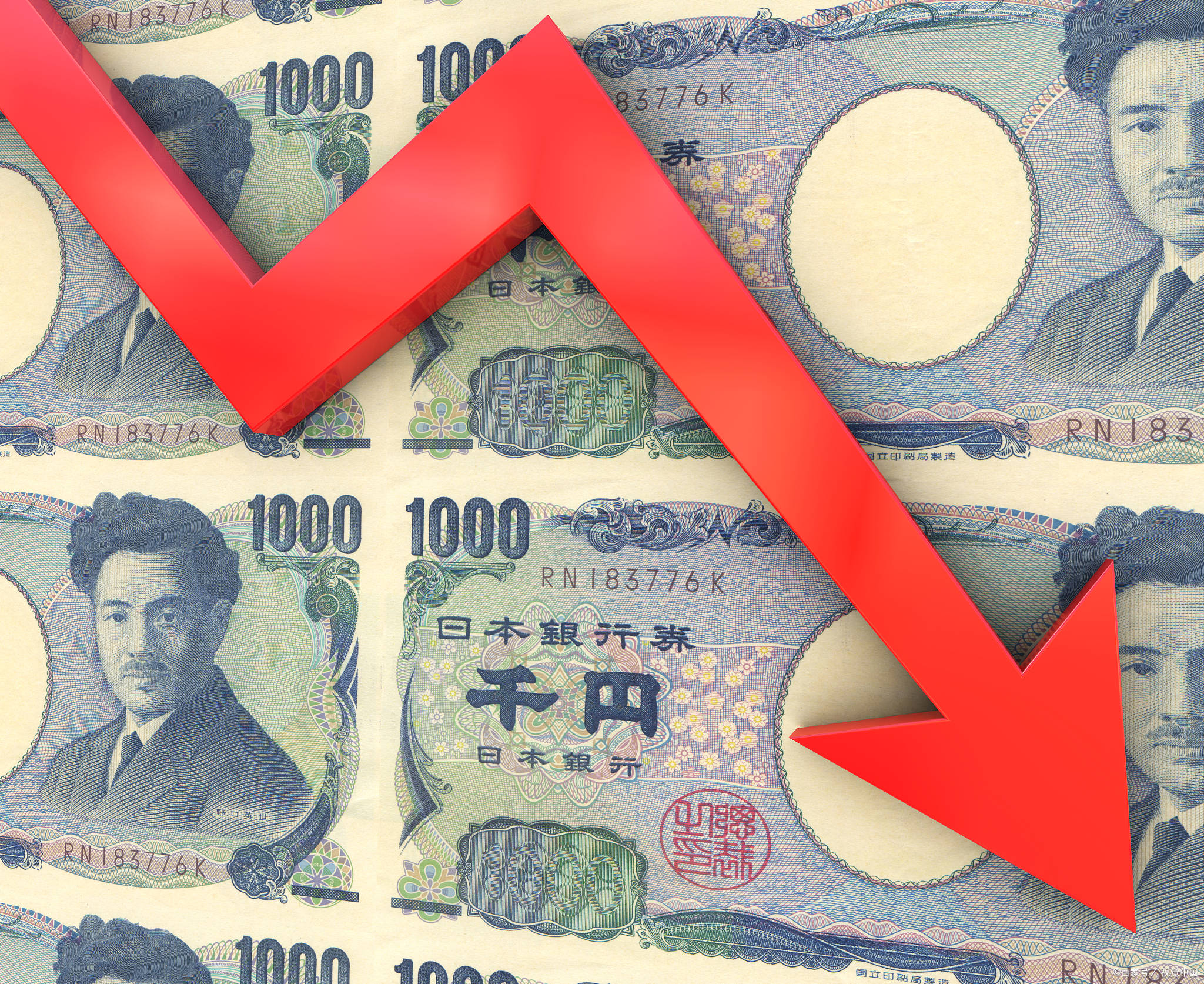
日本股债汇为何连日齐跌?
2 1 Shi Ji Jing Ji Bao Dao· 2025-11-22 00:04
Core Viewpoint - Japan's stock prices, yen exchange rate, and government bonds have all seen significant declines, attributed to the economic policies of Prime Minister Kishi Sanae, leading to market disappointment and concerns over fiscal sustainability [1][2][5] Group 1: Market Performance - The Nikkei average fell below 50,000 points on November 18 and dropped to around 48,000 points by November 21 [1] - The yen depreciated over 6% following Kishi Sanae's appointment, reaching an exchange rate of 157 yen per dollar by November 21 [1] - Long-term government bond yields exceeded 1.83% on November 20, with trading prices hitting levels not seen in 17 years [1] Group 2: Economic Policy Analysis - Initial optimism around Kishi Sanae's economic policies, dubbed "Sanae Economics," has waned as the current economic conditions differ significantly from those in 2013 [2] - Japan's national debt exceeds twice its GDP, limiting the government's ability to implement aggressive fiscal and monetary policies [2] - The government's recent economic measures, including a supplementary budget of 21.3 trillion yen, have raised concerns about fiscal discipline and sustainability [3][4] Group 3: Fiscal Challenges - The supplementary budget's size reflects Kishi Sanae's commitment to active fiscal policies, but critics argue it fails to address rising prices effectively [4] - The focus on crisis management investments, which constitute one-third of the supplementary budget, may exacerbate fiscal issues rather than resolve them [4][5] - The lack of fiscal discipline could lead to increased government debt and further depreciation of the yen, compounding inflationary pressures [5] Group 4: Monetary Policy Outlook - Market pressures have prompted Kishi Sanae to indicate a willingness to allow the Bank of Japan to raise interest rates, with expectations for a decision as early as December [5] - Persistent domestic inflation is a key reason for potential interest rate hikes, which may help stabilize the yen [5] - However, the effectiveness of monetary policy is contingent on a shift away from the current aggressive fiscal strategies [5]