货币流通

Search documents
一美分硬币为何停产
Sou Hu Cai Jing· 2025-11-16 22:03
Group 1 - The U.S. Mint announced the cessation of the production of the one-cent coin, marking the end of its regular production after 232 years [1][2] - The production cost of the one-cent coin has increased significantly over the past decade, rising from 1.42 cents to 3.69 cents per coin, leading to substantial financial losses for the Mint [1][2] - In the fiscal year 2024, the Mint reported a loss of $85.3 million due to the production of the one-cent coin, which is considered a "money-losing" coin [2] Group 2 - Despite the cessation of production, the one-cent coin remains legal tender in the U.S., with an estimated 300 billion coins currently in circulation, far exceeding commercial demand [2] - The Federal Reserve has begun to suspend orders for one-cent coins at various distribution points, with 100 out of 181 points already halting orders [2] - The American Bankers Association indicated that the Federal Reserve will no longer accept deposits of one-cent coins once they are depleted at distribution points, complicating the circulation of existing coins [2] Group 3 - Retailers are facing challenges in adjusting to the discontinuation of the one-cent coin, with no federal guidance on handling cash transactions, leading to various practices such as rounding prices or requiring customers to bring change [3] - Industry organizations are advocating for legislation to establish a federal standard for rounding cash transactions to the nearest five cents to protect businesses from legal risks [3] - There are concerns that ongoing inflation may diminish the actual value of the five-cent coin, potentially leading to its gradual elimination in the future [3]
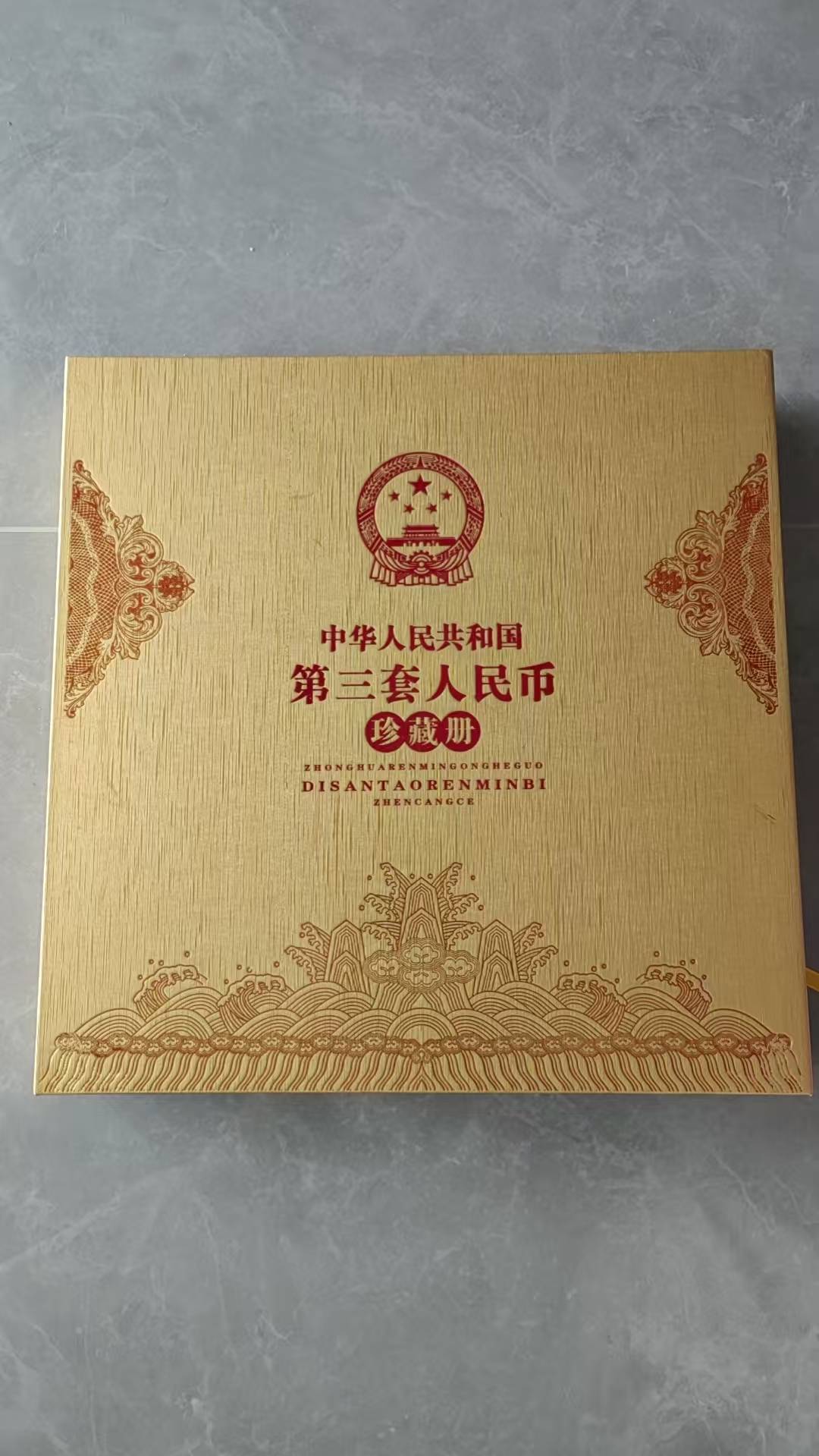
第三套人民币珍藏册:一个时代的经济记忆与收藏瑰宝
Sou Hu Cai Jing· 2025-10-28 02:23
Core Insights - The third set of Renminbi (RMB) is a significant artifact in China's monetary history, reflecting the economic changes of the mid-20th century and serving as a medium of exchange and a historical record [1][2] Historical Background - The third set of RMB was issued on April 20, 1962, and remained in circulation for 38 years until July 1, 2000, making it the longest-circulating RMB set [2] - It was introduced during a period of economic adjustment, aimed at stabilizing the financial order and supporting economic development [2] - The design and issuance of the third set reflect the spirit of self-reliance and hard work, showcasing China's industrial achievements and collective ideals [2] Composition of the Collection - The "Third Set of RMB Collection Album" features a comprehensive collection of major banknotes and coins, emphasizing a complete collection system of "paper money + coins" [5] Paper Money Section - The 10 yuan note symbolizes political ideals with its imagery of the People's Congress, while the 5 yuan note represents industrial enthusiasm through the depiction of steelworkers [5][8] - The 2 yuan note features a lathe worker, reflecting mechanical industry development, and the 1 yuan note highlights agricultural mechanization with the image of a female tractor driver [8] - The 5角 note showcases textile workers, emphasizing the importance of light industry [8] - The 2角 note symbolizes infrastructure achievements with the Wuhan Yangtze River Bridge, and the 1角 note is notable for its various rare editions [11] - The fractional notes (5分, 2分, 1分) are categorized into "long-number" and "no-number" types, with the former being particularly valuable due to limited circulation [11] Coin Section - The collection includes hard coins issued from the 1950s to the 1990s, made from aluminum-magnesium alloy, featuring simple designs with the national emblem [11] Collectible Value - The collection's value is driven by its historical significance, artistic value, and market scarcity [14] - Each banknote and coin serves as a historical artifact, encapsulating specific societal memories and achievements [14] - The artistic design merges political and aesthetic elements, showcasing significant industrial and agricultural imagery [14] - Market scarcity has led to high prices for well-preserved sets, with some rare items exceeding 500,000 yuan in value [17][18] Cultural Significance - The collection transcends mere collectibles, acting as a narrative of contemporary Chinese history [18][21] - It reflects the value orientations and aesthetic tastes of mid-20th century China, showcasing labor and national identity [21] - The collection serves as primary data for analyzing monetary circulation, price levels, and industrial structure during the planned economy era [21] - It has fostered a culture of collecting and appreciation for currency as a historical and artistic medium, shifting from curiosity-driven to research-oriented collecting [21]

人民币只在中国叫“人民币”,出国就变了称呼?这叫法确实高级
Sou Hu Cai Jing· 2025-05-14 15:17
Core Viewpoint - The article discusses the evolution and internationalization of the Chinese currency, Renminbi (RMB), highlighting its significance in global trade and its representation of China's economic strength and influence [1][7][11]. Group 1: Historical Context - The history of currency in China dates back to the Xia Dynasty, where cowrie shells were used as a medium of exchange, leading to the modern RMB, which has been in circulation since December 1, 1948 [3][5]. - The initial denominations of RMB included various small bills, facilitating everyday transactions, and by 2021, five series of RMB had been issued, with older series gradually being phased out [5][11]. Group 2: Internationalization of RMB - RMB's international circulation is seen as a symbol of China's rising national power and influence, with the currency increasingly used in global transactions [7][11]. - In international contexts, RMB is referred to as CNY, where "CN" stands for China and "Y" comes from the pinyin of "yuan," which aids in global trade and financial activities [9][11]. - The growing use of RMB in countries like Southeast Asia, Russia, and Iran indicates its rising status as a global currency, providing alternatives to the dominance of the US dollar and euro [13]. Group 3: Economic Implications - The rise of RMB as a major global payment currency reflects China's increasing comprehensive national strength and its integration into the global economy [11][13]. - The article emphasizes that the flow of currency facilitates communication and transactions globally, enhancing social order and economic interactions [13].