贴牌模式

Search documents
贴牌工厂的IPO幻梦:宁波惠康的业绩迷局与价值泡沫
Sou Hu Cai Jing· 2026-01-21 12:57
Core Viewpoint - The IPO journey of Ningbo Huikang Industrial Technology Co., Ltd. (Huikang Technology) highlights the systemic vulnerabilities inherent in the ODM (Original Design Manufacturer) model, which relies heavily on processing with minimal brand and technological input, leading to weak profitability and governance issues [1][13]. Group 1: Business Model Challenges - The ODM model results in a lack of pricing power and brand value, forcing companies like Huikang Technology to operate as mere processing units, which limits their profitability and market influence [2][3]. - Huikang Technology's performance issues stem from the inherent deficiencies of the ODM model, where every pressure on performance can be traced back to its fundamental weaknesses [2][3]. Group 2: Pricing and Profitability Issues - The strategy of lowering prices to increase volume has become detrimental, as Huikang Technology lacks bargaining power and is forced to compromise on pricing due to competition and pressure from brand owners [3]. - From 2022 to 2025, the average price of ice machines is expected to drop by 12.69%, while sales growth is projected to decline from 28.7% to -3.2%, indicating a reliance on brand strategies rather than market development capabilities [3]. Group 3: Customer Dependency and Credit Risks - Huikang Technology's production planning is heavily dependent on key customer orders, with the top three ODM clients contributing 63.9% of revenue, leading to significant credit risks [4]. - The company's accounts receivable grew at a compound annual growth rate of 48.2% from 2022 to 2024, far exceeding revenue growth, indicating a reliance on credit to secure orders [4]. Group 4: Product Innovation and Market Adaptation - Huikang Technology's attempts to shift towards higher-priced ice machines are misaligned with market trends, as the global market is moving towards smaller, lower-cost models [5]. - The company’s product mix remains heavily weighted towards low-margin models, with less than 3 billion yuan in revenue from proprietary brands, limiting its ability to innovate and adapt to market demands [5]. Group 5: Governance and Family Control Issues - The family-controlled nature of many ODM firms, including Huikang Technology, leads to weak governance structures, which can result in short-term profit-taking at the expense of long-term value [6][7]. - The company has engaged in practices such as pre-IPO dividends and share transfers that reflect a lack of sustainable growth potential, indicating a focus on immediate financial gain rather than long-term stability [7]. Group 6: Financial Manipulation and Risk Concealment - Huikang Technology has resorted to manipulating transactions to present a healthier financial picture, which is a common tactic among ODM firms facing declining demand [8]. - The company’s reliance on opaque transactions to inflate sales figures highlights the vulnerabilities of the ODM model, where order sources can be easily manipulated [8]. Group 7: Market Positioning and Valuation Issues - Huikang Technology's claims of being a market leader are based on selective data that inflate its market share, masking its inability to compete across a broader product range [10]. - The company’s high valuation, which is 48.8% above industry peers, is unsustainable given the weak fundamentals of the ODM model, leading to a disconnect between market perception and actual performance [12]. Group 8: Regulatory Scrutiny and IPO Challenges - The challenges faced by Huikang Technology in its IPO process stem from the fundamental conflict between the ODM model and the capital market's demand for sustainable growth and core competitiveness [13]. - Regulatory inquiries have highlighted discrepancies in the company's business comparisons and governance structure, further complicating its path to a successful IPO [13].
“同仁堂”磷虾油被曝“0磷脂” 谁该为安全买单?
Zhong Guo Jing Ji Wang· 2025-12-17 03:16
Core Viewpoint - The investigation into 15 popular Antarctic krill oil products revealed significant discrepancies in labeling and actual content, raising concerns about consumer safety and the implications of the "private label" model in the industry [1][2] Group 1: Product Testing and Findings - The Shanghai Consumer Protection Commission commissioned a study that found a product labeled as "Beijing Tongrentang 99% High Purity Antarctic Krill Oil" contained 0% phospholipid, despite claiming a 43% phospholipid content [1] - The product is manufactured by Anhui Habio Pharmaceutical Co., Ltd., and distributed by Beijing Tongrentang (Sichuan) Health Pharmaceutical Co., Ltd. [1] Group 2: Brand Responsibility and Consumer Concerns - The incident has sparked widespread concern among consumers regarding the risks associated with the "private label" model, where well-known brands may not be the actual producers of the products [2] - The legal responsibility for product safety lies with both the brand owner and the actual manufacturer, as per the Food Safety Law Implementation Regulations [2]

南极磷虾油造假风波:同仁堂贴牌模式再陷信任拷问
2 1 Shi Ji Jing Ji Bao Dao· 2025-12-16 11:13
Core Viewpoint - The incident involving a counterfeit Antarctic krill oil product has highlighted the branding issues and trust crisis faced by Tong Ren Tang, a well-known traditional Chinese medicine brand [1][3][4]. Group 1: Incident Overview - The Shanghai Consumer Protection Commission conducted tests on 15 popular Antarctic krill oil products, revealing that a product labeled as "Beijing Tong Ren Tang 99% high-purity Antarctic krill oil" had a phospholipid content of 0, indicating potential fraud [1][4]. - The product in question was not directly produced by Beijing Tong Ren Tang but was distributed by its subsidiary, Sichuan Health Pharmaceutical Co., Ltd., with manufacturing outsourced to Anhui Habio Pharmaceutical Co., Ltd., exemplifying a typical private label model [3][4]. - Following the investigation, Habio Pharmaceutical admitted to not adding the claimed "Antarctic krill oil" during production, and Sichuan Health Pharmaceutical was urged to conduct a self-examination and issue an apology to consumers [5][9]. Group 2: Brand Trust Crisis - Beijing Tong Ren Tang, with a history dating back to 1669, has faced multiple trust crises due to private label issues, leading to concerns about its brand management and quality control [3][4][7]. - The company has issued statements emphasizing that the problematic product was unauthorized and that it has initiated legal proceedings against the involved parties, attempting to distance itself from the issue [5][6]. - Experts suggest that the brand's response may not fully alleviate public concerns, as consumers may still associate the subsidiary's products with the Tong Ren Tang brand [6][7]. Group 3: Quality Control and Regulatory Issues - The incident has raised questions about the quality control measures in place for private label products, with calls for stricter oversight and a clearer delineation of brand responsibilities [8][9]. - Habio Pharmaceutical has been involved in multiple legal disputes and administrative penalties over the past three years, indicating ongoing compliance issues [9][10]. - Experts recommend that Habio Pharmaceutical establish a comprehensive compliance system and improve its production processes to prevent future incidents [10].
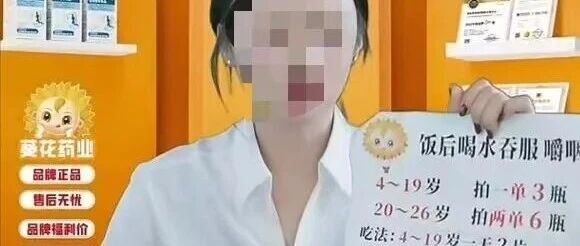
26 岁还能长高?葵花药业贴牌钙片暗戳戳收割年轻人
凤凰网财经· 2025-11-04 06:30
Core Viewpoint - The article highlights the challenges faced by葵花药业, including significant financial losses and regulatory scrutiny, particularly related to its marketing practices and reliance on OEM products, while also addressing the misleading promotion of its products aimed at height enhancement for young consumers [1][3][25]. Group 1: Company Overview and Financial Performance - 葵花药业 has reported its first loss since going public, with a net profit decline of 105.72% in the first three quarters of 2025, amounting to a loss of 335.39 million yuan [3][25]. - The company's revenue for the first three quarters of 2025 was 1.684 billion yuan, a decrease of 43.24% year-on-year, with a third-quarter revenue of 374 million yuan, down 14.9% [25][26]. - Total assets decreased by 12.06% to 5.123 billion yuan, and cash reserves dropped by 34.10% due to declining sales [25][27]. Group 2: Regulatory Issues and Marketing Practices - The Heilongjiang Securities Regulatory Bureau issued a warning letter to葵花药业 regarding a 32.38 million yuan related party transaction with海维生物, which was not disclosed properly [3][4]. - The company has been criticized for its reliance on OEM products, with many of its offerings produced by海维生物, which has faced quality control issues in the past [7][8]. -葵花药业's marketing strategy, particularly through live streaming, has been scrutinized for promoting products with unsubstantiated claims about height enhancement, misleading consumers about the efficacy of its calcium supplements [9][11][21]. Group 3: Product and Market Strategy -葵花药业's calcium supplement, marketed as a height-enhancing product, is being promoted in a way that suggests it can benefit individuals up to 26 years old, despite scientific evidence indicating that height is primarily determined by genetics and growth hormone levels [9][21]. - The company has faced backlash from consumers who reported no results from the product, with some labeling it as a "智商税" (intelligence tax) for its perceived ineffectiveness [16][19]. -葵花药业's traditional marketing approach of heavy advertising is becoming less effective in the current market environment, leading to a significant reduction in sales and brand visibility [29].


贴牌“泰国神饮”,被中国白领捧上神坛
商业洞察· 2025-05-17 09:25
Core Viewpoint - The article discusses the rapid rise of IFBH, a Thai company that has successfully captured a significant share of the coconut water market in China, leveraging strategic marketing and operational efficiencies to outperform established competitors like Vita Coco [3][60]. Group 1: Company Overview - IFBH, with only 46 employees, achieved a revenue of 1.16 billion yuan in 2024, with 92.4% coming from the Chinese market [9][60]. - The company holds a 34% market share in China's coconut water sector, making it the leading brand [11][60]. - Each employee at IFBH generated an impressive 25.21 million yuan in revenue, which is 5.3 times more efficient than Moutai [9][60]. Group 2: Market Dynamics - The coconut water market in China is projected to reach approximately 1.08 billion USD in 2024, with a compound annual growth rate of 82.9% over the past five years [60][81]. - The shift in consumer preferences towards healthier, low-calorie beverages has created a favorable environment for coconut water [21][60]. - IFBH capitalized on this trend by associating its product with fitness and health, leading to a threefold increase in online sales [23][60]. Group 3: Competitive Strategy - IFBH's low-cost advantage stems from sourcing high-quality coconut water from Thailand, which is 18% cheaper than local competitors [29][60]. - The company employs a "light asset" model, outsourcing production and focusing on marketing and sales, which allows for rapid market penetration [37][60]. - IFBH's marketing strategy includes collaborations with popular brands and influencers, significantly boosting its visibility and sales [55][57]. Group 4: Challenges and Future Outlook - Despite its success, IFBH faces challenges from domestic brands that are enhancing their supply chains and entering the coconut water market [60][70]. - The reliance on a single product poses risks, especially with potential supply chain disruptions due to climate impacts on coconut production in Thailand [74][75]. - Competitors like Luckin Coffee are expanding their supply chains into coconut-producing regions, which could erode IFBH's cost advantages [70][81].
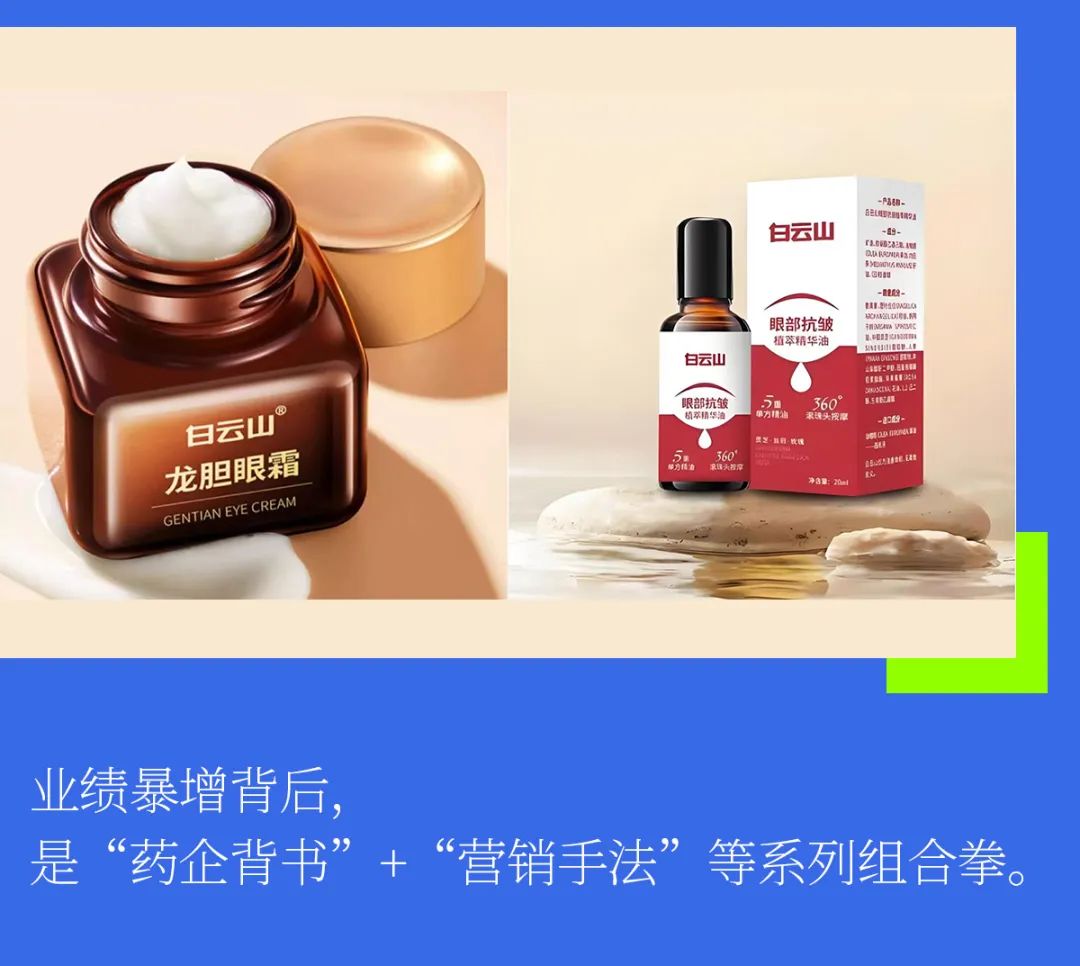
药企跨界美妆:白云山业绩狂飙背后的贴牌之痛
3 6 Ke· 2025-03-25 12:51
Core Viewpoint - The article discusses the rapid growth of the pharmaceutical company Baiyunshan in the beauty industry, highlighting its significant online sales increase and the challenges associated with its private label strategy [5][30]. Group 1: Sales Performance - Baiyunshan's online sales in the beauty sector surged, achieving a total transaction volume of 21.29 billion yuan in 2024, a year-on-year increase of 393.95% [5][7]. - In the first two months of 2025, Baiyunshan's sales reached 4.16 billion yuan, marking a 66.61% increase compared to the same period in 2024 [8][12]. - The brand ranked 20th among online beauty brands in early 2025, outperforming many established domestic and international brands [5][9]. Group 2: Product Popularity - Baiyunshan's top-selling products include eye essence oil, azelaic acid cleansing mud sticks, and anti-dandruff shampoo, with the eye essence oil alone generating over 100 million yuan in sales on Douyin [12][21]. - The products are marketed at competitive prices, typically around 50 yuan, appealing to consumers seeking value [12][21]. Group 3: Marketing Strategy - Baiyunshan leverages its pharmaceutical background to build consumer trust, emphasizing its status as a "World Top 500" company and "Chinese Time-honored Brand" [17][19]. - The marketing strategy combines effective online presence with a focus on product efficacy, addressing consumer concerns about performance and affordability [19][21]. Group 4: Industry Challenges - The article notes that while Baiyunshan's rapid growth is notable, the reliance on private label production raises concerns about product quality and consumer trust [23][30]. - Other pharmaceutical companies like Renhe and Tongrentang have experienced significant declines in beauty product sales, indicating potential pitfalls in the private label strategy [28][29].