if椰子水

Search documents
泰国富二代狂赚中国钱,这下摊上大事了
创业家· 2026-03-19 10:15
Core Viewpoint - The article discusses the trust crisis faced by IFBH, a coconut water company founded by Thai entrepreneur Pongsakorn Pongsak, following a report that questioned the authenticity of its "100% coconut water" claim, leading to significant stock price fluctuations and concerns about its business model and reliance on the Chinese market [4][6][7][11]. Group 1: Company Overview - Pongsakorn Pongsak, the founder of IFBH, is the son of a textile tycoon and has built a successful coconut water brand, "if," which generated approximately $158 million in revenue for 2024 [5][19]. - IFBH operates with a remarkably lean workforce of only 46 employees, yet it has achieved high revenue, showcasing an extreme light-asset operational model [19][21]. - The company has a significant market presence, holding a 34% market share in mainland China and 60% in Hong Kong, making it the leading coconut water brand in these regions [15][20]. Group 2: Trust Crisis and Market Reaction - A report by the Beijing News raised concerns about the authenticity of IFBH's products, indicating the presence of external water and sugar in their coconut water, which led to a trust crisis for the brand [6][11]. - Following the report, IFBH's stock price dropped by 22.81% over a few days, despite the company issuing statements to reaffirm the purity of its products [11][12]. - The company's market capitalization has significantly decreased from a peak of approximately HKD 130 billion to around HKD 30 billion, reflecting investor concerns [12][17]. Group 3: Business Model and Market Dynamics - IFBH's business model relies heavily on outsourcing, with no in-house production or warehousing, which allows for high profit margins despite potential risks associated with supplier concentration [22][23]. - The coconut water market in China is rapidly growing, with projections indicating a compound annual growth rate of 13%-19% from 2025 to 2030, intensifying competition from both international and local brands [29]. - The company's marketing strategy has effectively targeted younger consumers through collaborations with popular influencers and celebrities, enhancing brand visibility [25][26]. Group 4: Challenges and Future Strategies - The heavy reliance on the Chinese market poses risks for IFBH, as any market fluctuations could significantly impact its business [28]. - The company is beginning to localize its operations in China by expanding its distributor network and establishing a local subsidiary to enhance sales execution and distribution management [32][33]. - Despite plans for local production and increased operational investment, the transition from a light-asset to a heavier asset model may strain profitability, as evidenced by a 31.7% decline in net profit despite revenue growth [34].


46人狂揽11亿,泰国富二代的椰子水出事了
阿尔法工场研究院· 2026-03-18 04:28
Core Viewpoint - IFBH, a Thai beverage company known for its "100% coconut water," is facing a significant trust crisis following a report indicating the presence of external water and sugar in its products, which contradicts its branding claims [4][6][5]. Company Overview - IFBH, founded by Pongsakorn Pongsak, has achieved remarkable revenue of approximately $158 million (about 1.16 billion RMB) in 2024 with a net profit of $33.3 million (about 245 million RMB) while employing only 46 people, showcasing an extraordinary efficiency in human capital [5][11]. - The company has dominated the coconut water market in China, holding a market share of about 34% in 2024, significantly outpacing its nearest competitor [9][12]. Market Performance - Following the trust crisis, IFBH's stock price dropped by 22.81% from March 2 to March 4, 2024, and despite a brief recovery, it has remained significantly lower than its peak market valuation of approximately 130 billion HKD [8][10]. - The company's stock has fallen below its initial public offering price, closing at 11.93 HKD as of March 12, 2024 [10]. Business Model - IFBH operates on a light asset model, relying heavily on outsourcing for production, logistics, and distribution, which has allowed it to maintain a gross margin of around 35% and a net profit margin of about 20% [12][11]. - The company has no manufacturing facilities or large sales teams, instead depending on external partners for sourcing and distribution, which has led to a high concentration of sales and procurement with a few key partners [12][11]. Growth and Challenges - The coconut water market in China is projected to grow significantly, with a compound annual growth rate (CAGR) of 13%-19% from 2025 to 2030, presenting both opportunities and increased competition for IFBH [15]. - The company has begun to localize its operations in China by expanding its distributor network and establishing a local subsidiary to enhance its market presence and control [16][17]. Product Performance - IFBH's other product, Innococo, has not performed as well as expected, with its revenue declining significantly in 2025 compared to 2024, highlighting vulnerabilities in its distribution model [16][17]. - The company has increased its marketing expenditure significantly to support Innococo, indicating a strategic pivot to bolster its product portfolio amidst competitive pressures [16].
泰国富二代在中国狂赚钱,这下摊上大事了
创业邦· 2026-03-17 10:13
Core Viewpoint - The article discusses the trust crisis faced by IFBH, a Thai beverage company known for its "if coconut water," following a report that questioned the authenticity of its product claims [5][6][7]. Company Overview - IFBH, founded by Pongsakorn Pongsak, is a Hong Kong-listed company that generated revenue of approximately $158 million (about 1.16 billion RMB) in 2024, with a net profit of $33.3 million (about 245 million RMB) [5][17]. - The company operates with a lean workforce of only 46 employees, primarily relying on external partnerships for production and distribution [17][19]. Market Position - IFBH has dominated the coconut water market in China, holding a market share of about 34% in 2024, significantly surpassing its nearest competitor [12]. - The company is the second-largest coconut water brand globally, following Vita Coco [13]. Trust Crisis - A report by the Beijing News raised concerns about the authenticity of IFBH's "100% coconut water" claim, leading to a significant drop in stock price, with a decline of 22.81% over a few days [6][9][27]. - Despite IFBH's attempts to reassure the market through public statements and data supporting their product claims, confidence has not fully recovered [9][14]. Business Model - IFBH employs a light asset model, outsourcing production and logistics, which allows for high efficiency but also creates dependency on suppliers and distributors [19][20]. - The company maintains a gross margin of around 35% and a net margin of approximately 20% [20]. Market Growth - The coconut water market in China is rapidly expanding, projected to grow from $49.7 million in 2019 to $1.2 billion by 2025, with a compound annual growth rate (CAGR) significantly higher than the overall beverage industry [22]. - IFBH has effectively utilized influencer marketing to maintain a strong presence among younger consumers [25]. Challenges and Strategic Adjustments - The heavy reliance on the Chinese market poses risks, as any negative publicity can severely impact the company's performance [27]. - In response to recent challenges, IFBH is increasing its local operations in China, expanding its distributor network, and exploring local production options [33][35][36].

if椰子水母公司IFBH 2025 年度营收1.76亿美元
Bei Jing Shang Bao· 2026-02-27 05:08
Core Viewpoint - IFBH's 2025 fiscal report shows a revenue of $17.6 million, a year-on-year increase of 11.9%, but a significant decline in net profit attributable to shareholders by 31.7% to approximately $2.28 million [1] Group 1: Financial Performance - The company's revenue growth is primarily driven by the strong performance of the if brand, which saw a year-on-year increase of 27% [1] - The other key brand, Innococo, experienced a substantial revenue decline of 63% [1] - The overall financial results led to IFBH's stock price hitting a historical low of 13.12 HKD per share [1] Group 2: Operational Challenges - The decline in Innococo's performance is attributed to operational issues, including internal problems with distributors [1] - There were instances where shipments were halted for several months, and the launch of new sports drinks was delayed [1]
if椰子水母公司2025年增收不增利 Innococo收益下滑63%
Mei Ri Jing Ji Xin Wen· 2026-02-27 03:45
Core Insights - IFBH Group reported its first financial results post-IPO, achieving revenue of $176 million in 2025, representing an 11.9% year-over-year growth, while net profit attributable to shareholders was approximately $22.8 million, a decrease of 31.7% [1] Revenue Performance - The growth was primarily driven by the strong performance of the if brand, which saw a revenue increase of 27% year-over-year [1] - Conversely, the Innococo brand experienced a significant revenue decline of 63% year-over-year, attributed to operational issues [1] Operational Challenges - The decline in Innococo's revenue was mainly due to internal issues with distributors, including several months of halted shipments and delays in the launch of new sports drinks [1] - Company executives indicated that a partnership with a new distributor, COFCO, commenced in early February, with expectations for the brand to return to previous performance levels [1]
上海与新加坡率先实现企业跨境数字身份认证 无需线下提交纸质文件“全程网办” 两天跨国拿证 “在上海办企业最快”
Jie Fang Ri Bao· 2026-02-26 01:37
Group 1 - The eighth China International Import Expo (CIIE) has prompted IFBH Group to recognize the immense potential of the Chinese market, leading to a decision to expand investments in China [1] - The rapid business registration process in Shanghai, facilitated by cross-border digital identity authentication, has impressed foreign investors, allowing them to obtain business licenses in just two days [2] - The implementation of online cross-border registration significantly reduces time and costs for foreign companies, as they can complete identity verification and electronic signing without the need for physical document submission [2] Group 2 - The collaboration between Shanghai and Singapore in cross-border digital identity authentication has taken two to three years to develop, addressing a global challenge faced by foreign investors [3] - Singaporean companies are increasingly attracted to Shanghai due to its large market and improved business environment, with IFBH Group's coconut water brand achieving a market share of approximately 34% in China by 2024 [4] - The CEO of IFBH Group emphasized Shanghai's strategic location and its vibrant business atmosphere as key factors for establishing the brand's China headquarters in the city [4]
IFBH(06603):领衔品类成长,加码品牌与渠道
Soochow Securities· 2026-01-19 07:16
Investment Rating - The report assigns a "Buy" rating for IFBH, marking its first coverage of the company [1]. Core Insights - IFBH is a leader in the coconut water sector, demonstrating strong profitability and a commitment to a light-asset model that leverages Thai industry resources [8][14]. - The coconut water market in China is rapidly expanding, with a projected growth from USD 1.02 billion in 2019 to USD 10.93 billion by 2024, reflecting a CAGR of 60.8% [8][70]. - The company is actively enhancing its distribution partnerships and product offerings to drive growth, with a focus on both online and offline channels [8][51]. Summary by Sections 1. Company Overview - IFBH was founded in 2013 and has rapidly grown since entering the Chinese market in 2017, becoming a leading player in the coconut water industry [8][14]. - The company operates under a light-asset model, which allows it to maintain high asset turnover and profitability [8][42]. 2. Market Dynamics - The coconut water industry is characterized by its health benefits and growing consumer demand, with significant room for market penetration compared to the U.S. [8][51]. - The market is expected to continue expanding, with a forecasted CAGR of 19.4% from 2024 to 2029 [70]. 3. Growth Strategy - IFBH is focusing on product innovation and expanding its distribution network, including partnerships with major retailers like COFCO and Watsons [8][51]. - The company plans to enhance its market presence through both its flagship brand "if" and the new "Innococo" brand, targeting functional beverage segments [8][29]. 4. Financial Projections - Revenue projections for IFBH indicate growth from USD 187.55 million in 2025 to USD 331.16 million by 2027, with corresponding net profits expected to rise from USD 30.50 million to USD 54.79 million [1]. - The report anticipates a decrease in P/E ratios from 19.29x in 2025 to 10.74x in 2027, indicating improving valuation metrics [1].
IFBH:领衔品类成长,加码品牌与渠道-20260119
Soochow Securities· 2026-01-19 06:24
Investment Rating - The report assigns a "Buy" rating for IFBH, marking its first coverage [1]. Core Insights - IFBH is a leader in the coconut water sector, demonstrating strong profitability and a commitment to a light-asset model that leverages Thai industry resources [8][14]. - The coconut water market in China is rapidly expanding, with a projected growth from USD 1.02 billion in 2019 to USD 10.93 billion by 2024, reflecting a CAGR of 60.8% [8][70]. - The company is actively enhancing its distribution partnerships and product offerings to drive growth, focusing on both innovation and channel expansion [8][51]. Summary by Sections 1. IFBH: Leader in Coconut Water with Strong Profitability - IFBH was founded in 2013 and has rapidly grown in the Chinese market since entering in 2017, supported by a concentrated ownership structure and an efficient management team [8][14]. - The company has adopted a light-asset model, which allows it to maintain high asset turnover and return on equity (ROE) levels [8][42]. - The dual-brand strategy, with flagship brand "if" and sub-brand "Innococo," has contributed to a diversified product matrix, primarily focusing on coconut water [26][29]. 2. Coconut Water: Continuous Expansion and Uncertain Market Structure - The coconut water category is characterized by its natural health benefits and is experiencing significant growth, with the market expected to reach USD 26.52 billion by 2029 [8][70]. - The penetration rate of coconut water in China is still low compared to the U.S., indicating substantial room for growth [8][51]. - The competitive landscape remains fluid, with opportunities for leading brands to educate the market and enhance product innovation [8][51]. 3. Strengthening Distribution Partnerships and Product Development - IFBH is focusing on expanding its distribution network, having signed partnerships with major players like COFCO and Watsons to enhance offline presence [8][51]. - The company is also innovating its product line, including the introduction of electrolyte water under the Innococo brand, to capture growth in the sports drink segment [8][51]. - The light-asset model allows IFBH to mitigate risks associated with raw material price fluctuations while maintaining operational efficiency [8][26]. 4. Profit Forecast and Investment Rating - The report forecasts IFBH's revenue to reach USD 1.88 billion in 2025, USD 2.57 billion in 2026, and USD 3.31 billion in 2027, with corresponding growth rates of 19.0%, 36.9%, and 29.0% [8][1]. - The projected net profit for the same years is USD 0.31 billion, USD 0.42 billion, and USD 0.55 billion, with growth rates of -8.4%, 39.1%, and 29.1% respectively [8][1].
if椰子水母公司股价接近“腰斩” 基石投资者浮亏超40%
Xin Hua Cai Jing· 2025-12-24 10:39
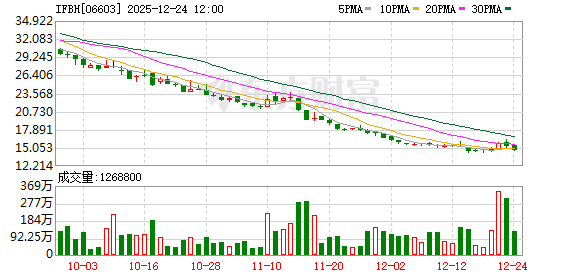
Core Viewpoint - IFBH Limited, the parent company of if coconut water, has seen its stock price decline significantly since its IPO in June, dropping 47% from the initial offering price of 27.8 HKD to 14.64 HKD as of December 24, raising concerns among institutional investors ahead of the upcoming lock-up expiration on December 29 [2][3] Group 1: Company Performance - IFBH's stock debuted at 27.8 HKD and surged 42.09% on its first day, achieving a market capitalization of over 10.5 billion HKD, making it one of the most watched new stocks in the Hong Kong consumer sector [2] - The initial excitement was supported by significant investments from 11 well-known institutions, which collectively injected 310 million HKD as cornerstone investors [2] - However, the stock has since entered a prolonged decline, with cornerstone investors now facing losses exceeding 40% based on the original offering price [3] Group 2: Market Trends - The decline in IFBH's stock price reflects a broader trend in the Hong Kong new consumer sector, characterized by a pattern of "first-day euphoria followed by subsequent corrections" [3] - Historical data indicates that many newly listed consumer brands have experienced initial high valuations followed by substantial corrections, with declines typically ranging from 50% to 90% [3] - Market analysts suggest that the current situation may lead to a more rational assessment of core values in the consumer sector, potentially allowing truly competitive brands to emerge [4]
泰国神饮圈的爽文“男主”,一夜蒸发50亿
3 6 Ke· 2025-11-25 09:42
Core Viewpoint - The rise and fall of IFBH, a coconut water brand, highlights the volatility of consumer preferences and the challenges faced by brands that rely heavily on a single product in a competitive market [3][10][31]. Group 1: Market Dynamics - A new product, "3-second latte," has gained immense popularity, showcasing the coffee industry's ability to create trends that resonate with consumers [1]. - IFBH, once a market leader with a valuation of over 100 billion, has seen its market cap halved, losing 5 billion due to declining sales and profitability issues [7][28]. - The coconut water market is becoming increasingly crowded, with over 50 brands competing, leading to a significant drop in IFBH's market share from 55% to 34% [35][40]. Group 2: Consumer Behavior - IFBH's initial success was largely driven by Chinese consumers, contributing 92% of its global sales, but changing consumer preferences have led to a decline in its popularity [11][31]. - The brand's reliance on a single product, if coconut water, has made it vulnerable as competitors introduce a variety of new products [33][40]. - Consumers are increasingly favoring local brands that offer better price-performance ratios, impacting IFBH's sales [40][44]. Group 3: Business Strategy - IFBH's light-asset model, which allowed it to scale quickly without heavy investment in production, is now seen as a weakness as it struggles with supply chain issues and rising costs [32][44]. - The brand's marketing strategies, including celebrity endorsements and collaborations, initially attracted a young consumer base but have not been sufficient to maintain market dominance [20][22][26]. - IFBH's failure to adapt its supply chain and production strategies in response to market changes has led to quality control issues, further eroding consumer trust [51][54].