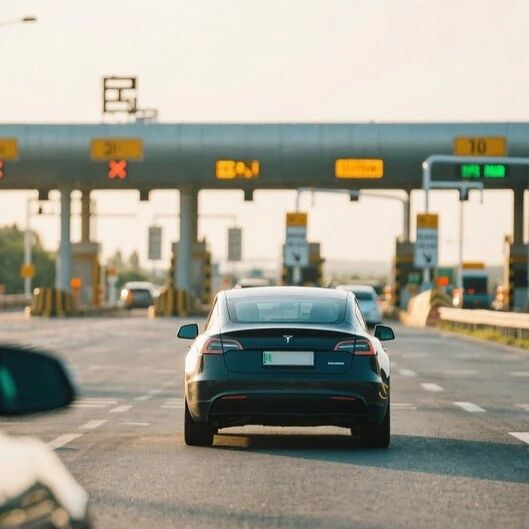
贷款修路

Search documents
高速,如何改变中国?
3 6 Ke· 2026-02-04 08:34
Core Viewpoint - China's high-speed rail and highway construction have rapidly transformed the transportation landscape, with significant implications for economic development and regional connectivity [1][12][32]. Group 1: Historical Context and Development - The first high-speed highway in China, the Hujia Expressway, opened in 1988, marking the beginning of a new era in transportation [4][8]. - Since the opening of the first highway, China's highway mileage has increased over 40 times, with daily traffic on the Hujia Expressway rising from 4,000 vehicles to over 1.5 million during peak holidays [10][14]. - As of now, China has 136,500 kilometers of highways, significantly surpassing the United States by approximately 30,000 kilometers [12][14]. Group 2: Future Projections - By 2030, it is projected that China's highway network will expand to 185,000 kilometers, with many provinces aiming for "county-to-county" highway connectivity [14][18]. - Currently, at least 10 provinces have achieved the goal of "county-to-county" highway access, showcasing the rapid development of infrastructure [18][22]. Group 3: Economic Impact and Challenges - The construction of highways has not uniformly benefited all regions; some areas have seen negative impacts on urban development and increased regional disparities [19][21]. - The financing model for highway construction in China relies heavily on tolls to repay loans, contrasting with the U.S. model, which primarily uses government funding [24][26][30]. Group 4: Public Perception and Future Considerations - The public's understanding of highway tolling is often challenged, with many questioning the necessity of tolls given the scale of highway construction [22][32]. - The rapid expansion of highways has become ingrained in the public consciousness, with the belief that infrastructure development is essential for economic prosperity [33].

重大消息!高速免费时代来了?多地宣布停止收费!
Sou Hu Cai Jing· 2025-11-25 14:43
Core Viewpoint - The recent announcement of free highways in various regions of China, including the Ningbo Ring Expressway and the G30 Lianhuo Expressway, marks a significant shift towards reducing travel costs for citizens and promoting regional economic activity, but it also presents challenges related to maintenance funding and traffic congestion [1][3][5]. Group 1: Benefits of Free Highways - Free highways lead to significant savings for citizens and reduced costs for businesses, enhancing regional economic activity [5]. - For instance, the Chengdu-Mianyang Expressway saw a 30% increase in traffic volume after becoming free, with commuters saving 50 yuan per trip and logistics companies reducing costs by 12.5% [3]. - The Zhengzhou Ring Expressway's free access saves approximately 100 million vehicle trips annually [5]. Group 2: Challenges of Free Highways - There is a substantial funding gap for highway maintenance, with the Ministry of Transport predicting a future demand exceeding 300 billion yuan for upkeep [5]. - Traffic volume can increase by 20% on certain routes after becoming free, leading to congestion, particularly during peak times [5]. - Some regions are extending toll collection periods through highway upgrades, raising public concerns about transparency and fairness [5]. Group 3: Government Actions and Future Directions - The Ministry of Transport is revising the "Regulations on the Management of Toll Roads" to clarify rules regarding toll-free periods and extensions for upgraded highways [6]. - New funding models are being explored, such as public-private partnerships for maintenance and encouraging commercial development in service areas [6]. - The concept of differentiated tolls is being considered to manage congestion and funding needs effectively [8]. Group 4: Future Outlook - The trend towards free highways is expected to continue, but it requires careful management to balance public benefits with maintenance and congestion issues [10]. - Potential strategies include using big data and AI for traffic management and encouraging private investment in highway operations [9][10].
国家打响第一枪!全面取消高速收费,终于开始了
Sou Hu Cai Jing· 2025-10-04 11:05
Core Insights - The article discusses the challenges and complexities surrounding highway tolls in China, highlighting the contrast between cities that have implemented free highways and those that continue to charge tolls [1][8]. Group 1: Highway Toll Policies - Cities like Chengdu, Guangzhou, and Shenzhen have made moves towards free highways, with Shenzhen having repurchased a highway for 2.7 billion to allow free passage, while Beijing remains resistant to removing tolls [1][8]. - The historical context of highway tolls stems from a "loan for construction, toll for repayment" policy established in the late 1980s, which allowed toll collection to recoup construction costs [3][12]. - The government has set regulations limiting toll collection periods to a maximum of 20 years for government-backed highways and 30 years for operational ones, leading to the expiration of tolls for some highways [3][12]. Group 2: Financial Implications - The reluctance to eliminate tolls is driven by the significant revenue generated from tolls, with a single highway potentially earning nearly 10 million in tolls daily [3][12]. - Some regions have resorted to extending toll collection periods through minor modifications to highways, effectively resetting the toll clock and continuing to generate revenue [3][12]. - The introduction of tolls on previously free national roads is attributed to a decline in revenue from vehicle purchase and fuel taxes, particularly due to the rise of electric vehicles [5][12]. Group 3: Economic Considerations - The article suggests that the feasibility of implementing free highways is contingent upon local government finances and the perceived economic benefits outweighing the loss of toll revenue [8][12]. - Cities with strong fiscal capabilities, such as Guangzhou and Shenzhen, are more likely to adopt free toll policies, while economically weaker regions may struggle to do so [8][12]. - The potential for broader implementation of free highways may increase as electric vehicle adoption and fiscal policy adjustments create new funding solutions for highway maintenance [14].

取消高速收费,第一枪打响了
虎嗅APP· 2025-09-05 13:56
Core Viewpoint - The article discusses the recent trend of highway toll cancellations in China, highlighting the implications for economic efficiency and infrastructure maintenance as the first batch of highways built in the late 20th century reaches their toll expiration dates [4][16]. Group 1: Recent Developments in Highway Toll Cancellations - Sichuan has announced the cancellation of tolls on Chengmian Expressway and Chengbei Exit Expressway, marking a significant shift in the western region [4]. - The Guangzhou North Ring Expressway, which has been operational for 30 years, also recently ceased toll collection, making it the first major expressway in the region to do so [9][10]. - Other expressways, such as Huijia, Guangfo, and Wuhuang, have previously canceled tolls, indicating a growing trend [13][14]. Group 2: Historical Context and Regulatory Framework - The first batch of expressways built in the 1980s and 1990s is now reaching the end of their maximum toll collection periods, which is set at 30 years for operating expressways [6][16]. - The regulatory framework stipulates that the maximum toll collection period for operating expressways is 30 years, while government-funded roads are limited to 20 years [6][23]. - The "loan for road construction, toll for repayment" policy initiated in the late 1980s facilitated the rapid expansion of expressways across the country [22]. Group 3: Economic Implications and Future Outlook - The cancellation of tolls is seen as a necessary step towards reducing logistics costs and enhancing economic efficiency, especially as the country aims to strengthen domestic circulation [43][45]. - Despite the trend towards toll cancellations, the article suggests that a fully toll-free highway system is unlikely in the short term due to ongoing maintenance costs and the need for funding for new infrastructure projects [35][43]. - The future of highway infrastructure will likely involve a shift from new construction to maintenance, reflecting a broader change in economic strategy [34].