资本配置逻辑

Search documents
花旗调整银价直接150美元 伦敦银成功冲击高位
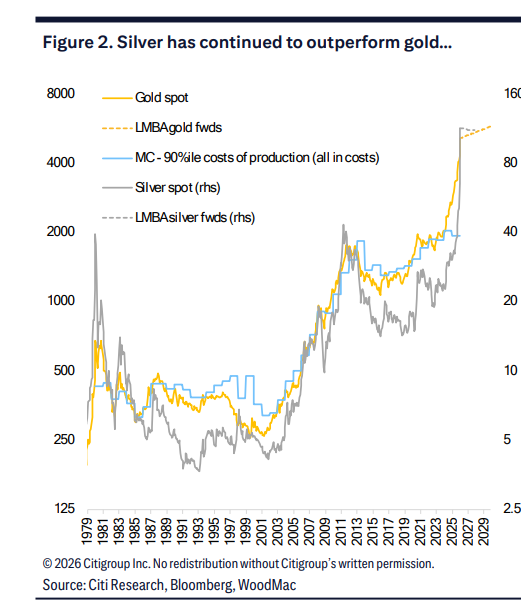
Jin Tou Wang· 2026-01-28 06:06
Core Viewpoint - Silver prices have surged significantly, with a notable increase in retail investor interest, leading to a revised price target by Citigroup for silver to $150 per ounce in the next 0-3 months, up from a previous target of $100 per ounce [1][2] Group 1: Market Performance - As of January 28, silver is trading above $115.00, having opened at $112.14 and reaching a high of $116.10, reflecting a 3.12% increase [1] - The recent trading activity indicates a bullish trend for silver, with the price remaining above the 50-day EMA, reinforcing the stability of the short-term upward trend [3] Group 2: Investor Behavior - Retail investors have shown significant interest, with approximately $171 million net inflow into the iShares Silver Trust, marking the largest single-day inflow on record, nearly double the previous high during the 2021 silver short squeeze [1] - Vanda analysts noted that silver has become a new favorite among retail investors, indicating a shift in market dynamics [2] Group 3: Future Projections - The next resistance level for silver is projected at $122.00, with a trading range expected between a support level of $107.00 and the resistance level of $122.00 [3] - The current bullish momentum is supported by strong indicators, suggesting potential for higher price levels in the future [3]
未来几周看涨到150美元!花旗高喊白银是“打了兴奋剂的黄金”,中国主导、印度跟买
Hua Er Jie Jian Wen· 2026-01-28 02:08
Core Viewpoint - Citi has significantly raised its short-term silver price target from $100 to $150 per ounce, indicating a strong bullish sentiment in the silver market, which is now seen as outperforming gold [1][13]. Group 1: Market Dynamics - The current silver market rally is driven by capital allocation logic rather than traditional industrial demand or supply constraints, positioning silver as a hedge against macroeconomic uncertainties and geopolitical risks [2]. - Silver has shown greater price elasticity and acceleration compared to gold, with silver prices increasing over 30% in the past two weeks, while gold rose about 10% [3]. Group 2: Regional Demand - The recent surge in silver prices, which has doubled since December, is primarily driven by demand from China, with India and global retail demand following suit [5]. - Notably, both China and India are exhibiting "chasing demand" despite the significant price increases, highlighting a key characteristic of the current silver bull market [5]. Group 3: Regulatory Environment - Recent regulatory measures in China, such as the suspension of new subscriptions for the only silver ETF and increased margin requirements for silver futures, are not expected to alter the overall upward trend in silver prices [6][7]. - The behavior of retail investors in China resembles trend-following strategies rather than value-based investing, which supports continued investment in silver as long as it remains relatively affordable compared to gold [8]. Group 4: Market Signals - Despite traditional bearish indicators such as significant outflows from COMEX silver inventories and global silver ETFs, silver prices have surged, indicating a disconnect between conventional supply-demand models and current market dynamics [9]. - The macro risk premium and strong retail demand from China have overshadowed these negative signals, leading to a situation where traditional supply-demand frameworks appear ineffective [9]. Group 5: Price Projections - Citi suggests using the gold-silver ratio as a key metric for determining silver's price ceiling, with potential prices reaching $160-$170 per ounce if the ratio falls to historical lows [10][11]. - In extreme scenarios, if the gold-silver ratio returns to its historical low of approximately 14 times, silver prices could theoretically exceed $300, although this scenario is deemed highly unlikely [12]. Group 6: Conclusion - Overall, Citi maintains a tactical bullish outlook for silver, with a target price of $150 per ounce over the next 0-3 months, driven by macroeconomic and geopolitical risk premiums, alongside strong retail and physical demand from China [13].

甲骨文百亿项目融资突然“告吹” 美国AI泡沫恐慌来袭
Xin Lang Ke Ji· 2025-12-19 06:22
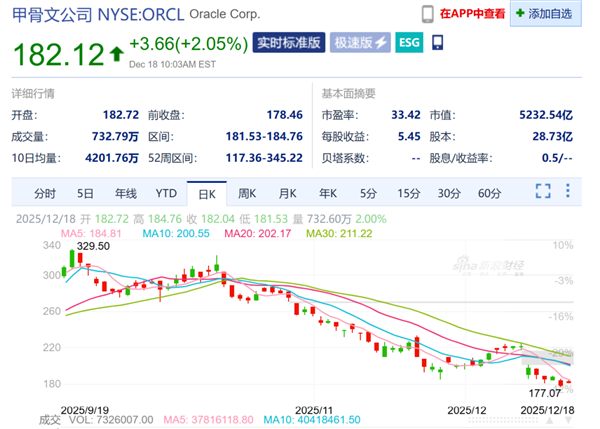
Core Viewpoint - Oracle's significant data center project in Michigan, valued at $10 billion, will not receive funding from Blue Owl Capital, raising concerns about the AI bubble and leading to a nearly 45% drop in Oracle's stock price since its peak in early September [1] Group 1: Financial Performance and Market Reaction - Oracle's stock price surged from approximately $122 on April 21 to over $320 in early September, driven by AI narratives, but has since retraced all gains as investors focus on the costs of realizing these promises [4] - Jim Chanos criticized Oracle's rapid asset expansion, indicating that the return on new capital investments is only about 8.5%, compared to nearly 40% for Microsoft, suggesting Oracle may struggle to recover its incremental capital costs [4][5] - Analysts are questioning how much Oracle is investing in AI, with management failing to provide clear financial guidance during a recent earnings call [6] Group 2: Funding and Project Viability - Blue Owl Capital, previously a key financier for Oracle's data center projects, has opted out of the Michigan project due to changing market attitudes towards AI spending and Oracle's debt levels, leading to stricter loan terms [7][9] - Concerns are growing regarding the reliability of OpenAI's commitments to Oracle, with analysts suggesting that Oracle should consider restructuring its contract with OpenAI to manage capital deployment more responsibly [11] Group 3: Competitive Landscape and Future Outlook - OpenAI's partnerships with Microsoft and Amazon indicate a diversification of its computing resources, potentially diminishing Oracle's role in OpenAI's ecosystem [12] - The competitive landscape is shifting, with stronger players like Google accelerating their AI capabilities, raising questions about OpenAI's ability to maintain its lead [13][14] - Uncertainties remain regarding a potential agreement between OpenAI and Nvidia, which could impact Oracle's future revenue from AI infrastructure [15] Group 4: Capital Structure and Investment Strategy - Oracle's traditional business model, characterized by predictable cash flows and high gross margins, is being challenged by the capital-intensive nature of AI investments, which require longer return periods [16] - The company's ability to sustain high levels of investment in AI will ultimately depend on decisions made by founder Larry Ellison, as the market shifts focus from grand AI visions to the sustainability of capital structures during prolonged return delays [16]