
资源置换

Search documents
春节档6部电影,背后站着几百家公司在赌什么?
虎嗅APP· 2026-02-20 09:23
Core Viewpoint - The article discusses the dynamics of the Chinese film industry during the Spring Festival, highlighting the capital investments behind major films and the strategic decisions made by production companies in a competitive landscape [4][5][6]. Group 1: Overview of the Spring Festival Box Office - The Spring Festival box office reached a historical high of 95.14 billion in 2025, largely due to the success of "Ne Zha," which contributed 48.41 billion, representing over 50% of the total box office [5]. - This year, the absence of a blockbuster like "Ne Zha" leads to a more balanced distribution of film types, with various genres represented, indicating a shift towards a "multi-strong competition" model [5][6]. - The Spring Festival holiday this year is the longest on record at 9 days, which is expected to provide a larger window for box office revenue, although estimates suggest a cautious 75 billion for the first 7 days, a 21% decline year-on-year [5]. Group 2: Capital Investment Landscape - A significant number of production companies are involved in this year's films, with some films having up to 39 co-producers, reflecting a strategy of risk diversification [8][11]. - Companies like China Film have invested in 5 films, showcasing a "broad net" strategy, while others like Huayi Brothers have chosen to invest in fewer films, indicating varying risk appetites [9]. - The rationale for multiple production companies includes risk distribution, resource exchange, profit alignment, and financial storytelling, which collectively enhance the viability of film projects [11][12][13][14]. Group 3: Market Reactions and Trends - The A-share film sector typically experiences "pre-emptive speculation" before the Spring Festival, with stock prices of companies like Huayi Brothers and Bona Film rising significantly in anticipation of box office success [16]. - Historical data shows that the Spring Festival box office has grown over 5.5 times from 14.51 billion in 2014 to 95.14 billion in 2025, with the festival becoming a critical period for the Chinese film market [18]. - The article concludes that while audiences choose films based on stories and actors, capital investors focus on probabilities and returns, highlighting the divergence between artistic and financial success [19][20].



伊朗谈判新策略曝光:与美联合开发油气田、矿区 采购美飞机
Mei Ri Jing Ji Xin Wen· 2026-02-17 01:51
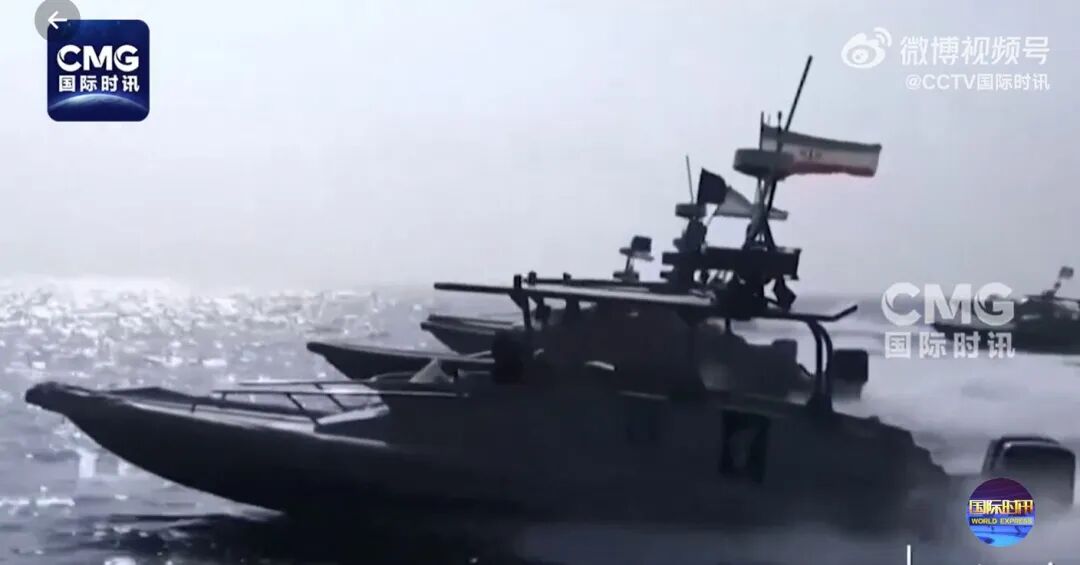
Core Viewpoint - The deployment of 18 F-35A fighter jets by the U.S. military to the Middle East reflects the current military strategy in response to rising tensions with Iran [1] Military Deployment - 18 F-35A fighter jets from the U.S. stationed at the Royal Air Force Lakenheath base have been deployed to the Middle East, marking one of the largest single deployments in recent months [1] - The USS Abraham Lincoln aircraft carrier has been spotted near the coast of Oman, indicating increased military presence in the region [1] - The USS Ford carrier group, which recently participated in an attack on Venezuela, has also been redirected to the Middle East [1] Iranian Military Exercises - The Iranian Revolutionary Guard Corps Navy conducted military exercises in the Strait of Hormuz, focusing on readiness and security plans against potential threats [4] - The exercises aimed to test the operational readiness of naval forces and review security control plans in the region [4] Diplomatic Negotiations - Indirect negotiations between Iran and the U.S. are set to take place in Geneva, with discussions focusing on achieving a mutually beneficial nuclear agreement [6][8] - Iran is willing to compromise on its nuclear program in exchange for the lifting of sanctions, indicating a shift in negotiation strategy towards economic benefits [6][7] - The Iranian delegation, led by Foreign Minister Zarif, emphasizes that they will not yield to threats during the negotiations [5] Economic Interests - Iran is proposing to open its oil and gas fields for joint development and is willing to discuss the procurement of U.S. civilian aircraft as part of the negotiations [6][7] - The Iranian government believes that a successful agreement could provide significant economic returns for both parties involved [6][7] U.S. Position - President Trump has indicated he will participate indirectly in the upcoming negotiations, expressing the importance of reaching an agreement [8] - Trump believes that Iran is interested in reaching a deal to avoid severe consequences, highlighting the ongoing tensions and stakes involved [8]
伊朗谈判新策略曝光:与美联合开发油气田、矿区,采购美飞机,“让美国能快速获得高额经济回报”!特朗普最新表态,美军大举增兵
Mei Ri Jing Ji Xin Wen· 2026-02-17 01:49
Group 1: Military Deployment and Tensions - The U.S. military has deployed 18 F-35A "Lightning II" fighter jets from the RAF Lakenheath base to the Middle East, marking one of the largest single deployments in recent months due to rising tensions with Iran [1] - The USS Abraham Lincoln aircraft carrier has been spotted near the coast of Oman, and the USS Ford carrier group, which recently participated in an attack on Venezuela, has also been redirected to the Middle East [1] - Iran's Islamic Revolutionary Guard Corps is conducting military exercises in the Strait of Hormuz, focusing on assessing naval combat readiness and reviewing security plans [4][2] Group 2: Diplomatic Negotiations - Iran's Foreign Minister has stated that Iran will not yield to threats, emphasizing the intention to reach a fair agreement during upcoming negotiations in Geneva [5][6] - The second round of indirect negotiations between Iran and the U.S. is scheduled for February 17, with Oman facilitating discussions [4][6] - Iran is proposing new negotiation strategies that focus on economic benefits, including joint development of oil and gas fields and potential aircraft purchases from the U.S. [6][7] Group 3: Economic Interests and Strategic Goals - Iran is willing to compromise on its nuclear program in exchange for the lifting of sanctions, indicating flexibility in negotiations [6][7] - The Iranian government aims to ensure that any agreement provides significant economic returns for both parties, particularly in the oil and gas sectors [7] - Israeli Prime Minister Netanyahu has reiterated concerns regarding any potential agreement, emphasizing the need for strict conditions related to uranium enrichment and missile capabilities [7][8]

超13亿美元!不是出海,是换仓!拆解科伦博泰与Crescent的资源置换
Xin Lang Cai Jing· 2025-12-08 04:14
Core Insights - The strategic collaboration between Kelun-Biotech and Crescent Biopharma is valued at over $1.3 billion, involving a $80 million upfront payment and up to $1.25 billion in milestone payments for the global rights to SKB105 outside Greater China, while Kelun-Biotech acquires exclusive rights to CR-001 in Greater China for a $20 million upfront payment [1][2] Strategic Supplementation - The partnership reflects a deep understanding of the competitive landscape in 2025, with a focus on securing foundational assets for the next decade in the evolving field of tumor immunotherapy [1][2] - The PD-1/VEGF dual antibody space has seen over $7 billion in disclosed licensing and collaboration deals in the past three years, indicating its significance in the post-PD-1 era [2] Differentiated Competition - Crescent's interest in SKB105 is driven by its unique design targeting ITGB6, which is seen as a promising ADC target due to its high expression in difficult-to-treat cancers and low expression in normal tissues [3][4] - SKB105 utilizes a novel Topo-I inhibitor as its payload, which may offer improved therapeutic windows compared to traditional payloads like MMAE used by competitors [3][4] Collaborative Model - Crescent Biopharma exemplifies an efficient development model focused on fast-following validated targets and differentiated innovation, enhancing asset value through rapid clinical advancement [5] - The collaboration allows both companies to leverage their strengths: Crescent gains a core ADC asset, while Kelun-Biotech secures funding and access to a critical immune pipeline [5] Industry Implications - The transaction signifies a maturation of the Chinese biotech outbound model, moving from one-way licensing to a more flexible resource exchange approach [6] - This partnership highlights a pragmatic choice in a complex market, emphasizing the importance of external collaborations to build a competitive product portfolio rather than solely relying on in-house development [7]