超大规模数据中心

Search documents
威銤智能完成新一轮融资 上市公司卡倍亿入股
Zheng Quan Shi Bao Wang· 2026-01-25 03:45
Group 1 - Weicon Intelligent has completed a business change, with Kaibeiyi (300863) becoming a new shareholder [1] - Weicon Intelligent, established in November 2017, focuses on intelligent manufacturing and precision injection molding using high-performance polymer materials [1] - The company has a stable customer base in the automotive, semiconductor, and robotics sectors, including over 10 listed companies with market values exceeding 10 billion [1] Group 2 - In the humanoid robotics sector, Weicon Intelligent has made breakthroughs and has supplied global leading robotics component companies [2] - The company has developed LCP materials applicable to various robotic components and other industries such as automotive and energy storage [2] Group 3 - Kaibeiyi, which has invested in Weicon Intelligent, has a background in the automotive cable industry and is expanding into high-speed copper cables and humanoid robotics cables [3] - Kaibeiyi has achieved mass production capabilities for advanced products, including 224G physical foaming products, meeting the demands of major global tech companies [3] Group 4 - The strategic investment by Kaibeiyi in Weicon Intelligent aligns with both companies' focus on humanoid robotics, potentially leading to business synergies [4]

卡倍亿:已具备224G铜缆产品量产能力 推进全球化产能布局
Zheng Quan Shi Bao Wang· 2026-01-20 09:32
Core Insights - The company has achieved significant advancements in the research and industrialization of high-speed copper cable products, establishing a comprehensive technical system and scalable delivery capabilities driven by AI computing demand [1][2] - The company has successfully mass-produced 56G, 112G, and 224G co-extruded products, with a particular emphasis on the 224G physical foaming products, which are now ready for mass production [1] - The company has a variety of mainstream structural design solutions for high-speed copper cables, showcasing its strong technological foresight and continuous innovation capabilities [1] Technical Developments - The company has fully mastered the mass production capabilities for 56G, 112G, and 224G products, with a complete product matrix established [1] - The company has successfully passed certification from major North American clients for its high-speed copper cable products, validating its technical specifications and quality management [2] - The performance and quality of the company's products meet the requirements of global tech giants like NVIDIA, Amazon, Google, and Huawei in AI computing clusters and large-scale data centers [2] Production Capacity and Global Strategy - The company has successfully deployed production lines for 224G foaming equipment, with three lines in Shanghai and two in Mexico, aimed at enhancing global capacity and responsiveness to market demands [1] - The company plans to strengthen its global capacity layout in line with its strategic and refinancing plans [1] - The company is committed to focusing on high-speed transmission and increasing R&D investment while deepening its global supply chain and production capacity layout [2]
卡倍亿高速铜缆业务进展顺利 已具备224G铜缆产品量产能力
Zheng Quan Shi Bao Wang· 2026-01-20 06:35
Core Viewpoint - The company has made significant advancements in the research and industrialization of high-speed copper cable products, achieving mass production capabilities for its 224G physical foaming products [1] Group 1: Product Development - The company has established a complete product matrix for high-performance requirements, including the 224G foaming specialized equipment production line, which is now operational [1] - The company has successfully received orders from domestic and North American clients for its 112G and 224G high-speed copper cable products, entering the stage of large-scale production [1] Group 2: Certification and Market Demand - Recently, the company's high-speed copper cable products have passed certification from a major North American client [1] - The performance and quality of the company's products meet the requirements of global technology companies such as NVIDIA, Amazon, Google, and Huawei for high-speed interconnect solutions in AI computing clusters and large-scale data centers [1]
蒸馏、GEO、氛围编程 2025年度“AI十大黑话” 能听懂几个?
3 6 Ke· 2025-12-26 09:16
Core Insights - The article discusses the rapid development of AI in 2025, highlighting ten key terms that reflect how AI is reshaping industries and society. Group 1: AI Concepts - Vibe Coding redefines programming by allowing developers to express goals in natural language, with AI generating the necessary code [2] - Reasoning models have emerged as a core focus in AI discussions, enabling complex problem-solving through multi-step reasoning [3] - World Models aim to enhance AI's understanding of real-world causality and physical laws, moving beyond mere language processing [4] Group 2: Infrastructure and Investment - The demand for AI has led to the construction of super data centers, exemplified by OpenAI's $500 billion "Stargate" project, raising concerns about energy consumption and local impacts [5] - The AI sector is experiencing a capital influx, with companies like OpenAI and Anthropic seeing rising valuations, though many are still in the high-investment phase without stable profit models [6] Group 3: AI Challenges and Trends - The term "intelligent agents" is popular in AI marketing, but there is no consensus on what constitutes true intelligent behavior [7] - Distillation technology allows smaller models to learn from larger ones, achieving high performance at lower costs [8] - The concept of "AI garbage" reflects public concern over the quality and authenticity of AI-generated content [9] Group 4: AI in Real-World Applications - Physical intelligence remains a significant challenge for AI, as robots still require human intervention for complex tasks [10] - The shift from traditional SEO to Generative Engine Optimization (GEO) indicates a change in how brands and content creators engage with AI-driven information retrieval [11]
2025,AI圈都在聊什么?年度十大AI热词公布
3 6 Ke· 2025-12-26 07:33
Core Insights - The development of AI in 2025 is marked by emerging concepts that are reshaping the industry landscape, as highlighted by the "MIT Technology Review" which identifies the top ten AI buzzwords of the year [1] Group 1: Emerging Concepts in AI - Vibe Coding redefines programming by allowing developers to express goals and logic in natural language, with AI generating the corresponding code [2] - Reasoning models have gained prominence, enabling AI to tackle complex problems through multi-step reasoning, with major advancements from OpenAI and DeepSeek [3] - World models aim to enhance AI's understanding of real-world causal relationships and physical laws, moving beyond mere language processing [4] Group 2: Infrastructure and Economic Implications - The demand for AI has led to the construction of super data centers, exemplified by OpenAI's $500 billion "Stargate" project, raising concerns about energy consumption and local community impacts [5] - The AI sector is experiencing a capital influx, with companies like OpenAI and Anthropic seeing rising valuations, although many are still in the high-investment phase without stable profit models [6] Group 3: Quality and Standards in AI - The term "intelligent agents" is widely used in AI marketing, but there is no consensus on what constitutes true intelligent behavior, highlighting a lack of industry standards [7] - Distillation technology allows smaller models to learn from larger ones, achieving high performance at lower costs, indicating that effective algorithms can drive AI advancements [8] Group 4: Content Quality and User Interaction - "AI garbage" refers to low-quality AI-generated content, reflecting public concerns about the authenticity and quality of information in the AI era [9] - Physical intelligence remains a challenge for AI, as robots still require human intervention for complex tasks, indicating a long road ahead for AI to fully understand and adapt to the physical world [10] - The shift from traditional SEO to Generative Engine Optimization (GEO) signifies a change in how brands and content creators engage with AI, emphasizing the importance of being referenced by AI in responses [11]
深夜,芯片巨头大涨!中概股走低
Zheng Quan Shi Bao· 2025-11-12 15:56
Group 1: Market Overview - US stock indices opened higher on November 12, with the Dow Jones up 0.93%, S&P 500 up 0.17%, and Nasdaq down 0.15% [1] Group 2: Semiconductor Sector Performance - Semiconductor stocks showed strong performance, with the Philadelphia Semiconductor Index rising over 2% at one point [2] - Advanced Micro Devices (AMD) saw a nearly 10% increase, with projected overall revenue growth of approximately 35% annually over the next three to five years, and AI chip business growth potentially reaching 80% [2] - AMD's CEO Lisa Su anticipates the AI chip market will reach $1 trillion by 2030, and the company aims to increase its market share [2] - AMD's CFO Jean Hu expects overall business growth of 35% annually, with data center business growth at 60%, leading to an estimated EPS of $20 by 2025, compared to the current analyst estimate of $2.68 for fiscal year 2025 [2] - GlobalFoundries experienced a nearly 7% increase initially but later saw a significant drop; the company reported Q3 revenue of $1.69 billion, a 2.9% year-over-year decline, exceeding expectations by $10 million [3] - GlobalFoundries' non-GAAP EPS was $0.41, surpassing expectations by $0.03, with strong growth in automotive, communication infrastructure, and data center markets [3] - Other semiconductor stocks like Microchip Technology rose over 3%, ON Semiconductor over 2%, and companies like Marvell Technology, Texas Instruments, and Qualcomm saw increases over 1% [3] Group 3: Financial Sector Performance - Financial stocks performed strongly, with Goldman Sachs, Morgan Stanley, and Citigroup rising over 3%, while Wells Fargo and JPMorgan Chase increased over 2% [4] Group 4: Technology Giants - Among the seven major tech companies, only Nvidia saw a slight increase [5] Group 5: Chinese Stocks Performance - Chinese stocks showed overall weakness, with the Nasdaq Golden Dragon China Index dropping over 1.6% [6] - Specific declines included Tencent Music down over 10%, Daqo New Energy down over 9%, and other companies like Huya, Yipin, and Dingdong down over 4%, with Baidu down over 3% [6]
电力巨头竞逐超大型数据中心,美国行业掀起新一轮并购潮
科尔尼管理咨询· 2025-11-12 09:40
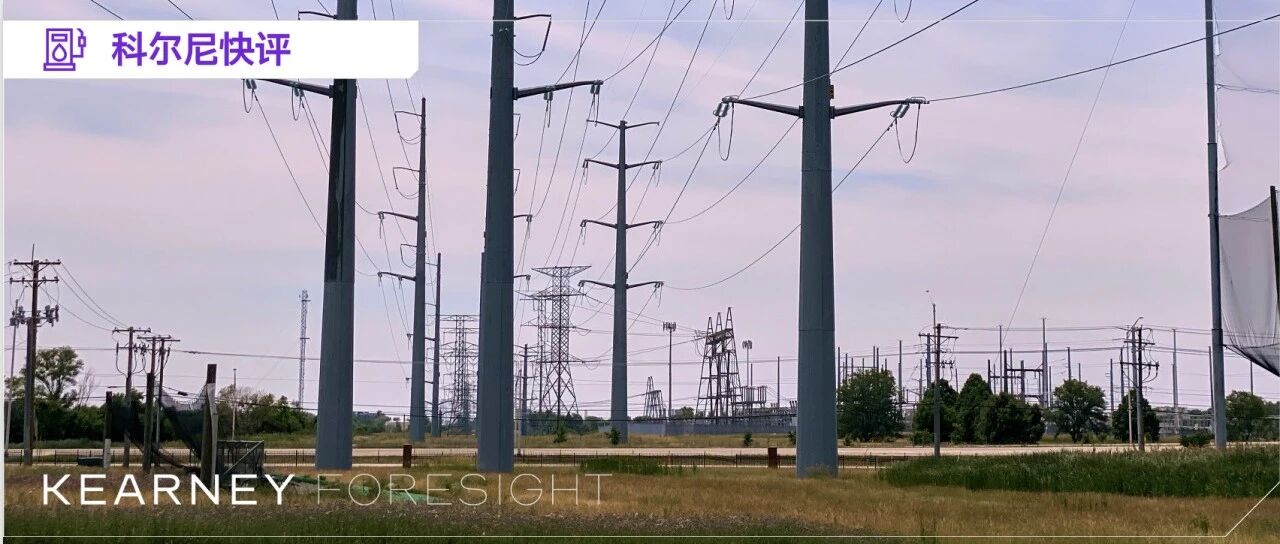
Core Viewpoint - The energy demand is rising, driven by the emergence of large-scale data centers, prompting power companies to restructure and optimize processes to attract these new clients [1]. Group 1: Industry Trends - Power companies are facing a new market reality with accelerating electricity load growth primarily driven by large-scale data centers [1]. - These data centers require substantial power supply, rapid project delivery, reliable supply chains, and a commitment to clean energy [1]. - There is a noticeable trend of mergers and business integrations among power companies to establish themselves as preferred partners for data centers [1]. Group 2: Case Studies - TXNM Energy partnered with Blackstone to enhance financial strength, enabling the company to undertake large data center and transmission projects [3][7]. - Black Hills Corp. and NorthWestern Energy merged to expand their geographic coverage and bargaining power, allowing them to cater to large electricity loads [4][10]. - Duke Energy's Carolinas business is merging operations to streamline planning and reduce redundancy, aiming to save over $1 billion for customers by 2038 [5][13]. - Duke Energy Florida is collaborating with Brookfield to secure funding for growth projects while maintaining a robust balance sheet [6][15]. Group 3: Strategic Insights - Smaller power companies can quickly enhance their competitiveness by forming strategic partnerships with infrastructure investors [9]. - A broader business coverage and a stronger balance sheet can improve bargaining power with large-scale data centers [12]. - Even industry giants are breaking down internal barriers to release scale effects and improve speed, making them more reliable partners for data centers [14]. Group 4: Key Questions for Power Companies - Do power companies have sufficient scale to attract large-scale data centers, which require over 500 MW of power? [18][19] - Is the operational and management structure capable of supporting rapid delivery as per market demands? [18][20] - Are the relevant functions supporting data center operations sufficiently centralized or integrated to achieve scale effects and quick responses? [18][21] - Is the supply chain prepared to support rapid load growth, considering the long delivery times for critical components? [18][22] Conclusion - The competition for large-scale data centers has begun, and the integration within the power industry is a necessary adaptation to unprecedented load growth and capital demands [23].

Uniti(UNIT) - 2025 Q3 - Earnings Call Transcript
2025-11-04 14:30
Financial Data and Key Metrics Changes - The company reported a consolidated pro forma revenue decline of approximately 6% year over year, primarily due to the decline in legacy TDM services and Uniti Solutions [17] - Fiber revenue grew by 13%, with the highest number of fiber gross adds ever and the highest net adds in two years at Kinetic [7][14] - Adjusted EBITDA is expected to reach $1.1 billion at the midpoint of the 2025 outlook, with consolidated revenue projected at $2.2 billion [20] Business Line Data and Key Metrics Changes - Kinetic consumer fiber revenue grew 26% year over year, driven by strong adoption of the fiber-to-the-home product [14] - Fiber penetration at Kinetic reached almost 29%, up 50 basis points sequentially and 130 basis points year over year [15] - The fiber infrastructure segment recorded consolidated pro forma bookings MRR of approximately $1.6 million, the second highest level in over two years [14] Market Data and Key Metrics Changes - The total addressable market for AI and hyperscalers for fiber providers is now estimated to be approximately 50% higher than earlier estimates [12] - Hyperscaler activity as a percentage of the total funnel has improved materially year over year to around 30% of MRR [11] - The company has seen a 13% growth in its hyperscaler funnel since the second quarter [11] Company Strategy and Development Direction - The company aims to continue building fiber into unique locations and overbuilding legacy networks while aggressively managing out of legacy products [4] - The strategy includes a focus on operational excellence and a customer-centric approach, which has led to industry-leading churn and NPS scores [5] - The company is well-positioned to capture share in the wholesale fiber market, particularly in dark fiber and waves, with a strong national footprint [8] Management's Comments on Operating Environment and Future Outlook - Management expressed confidence in the growth trajectory of the fiber business, expecting fiber revenue to overtake legacy services by the end of 2026 [18] - The company anticipates strong visibility into at least three years of value-accretive deal flow, particularly in the hyperscaler segment [12] - Management acknowledged ongoing headwinds from legacy services but emphasized the strong cash flow generation from the core fiber business [60] Other Important Information - The company has successfully closed its merger with Windstream, enhancing its position as a premier fiber provider [4] - The integration process is progressing smoothly, with no significant disruptions reported [25] - The company is focused on maintaining a healthy mix of ABS and non-ABS debt in its capital structure [24] Q&A Session Summary Question: What is the outlook for the hyperscale opportunity? - Management noted that the total addressable market for fiber is expanding, with strong demand outpacing supply, particularly in AI infrastructure [31][32] Question: What is the plan to reduce churn in Kinetic's fiber business? - The company is implementing several strategies, including targeted pricing adjustments and improving customer experience to reduce churn rates [70][72]

Uniti Group (UNIT) FY Conference Transcript
2025-05-13 20:50
Summary of Uniti Group (UNIT) FY Conference Call - May 13, 2025 Company Overview - **Company**: Uniti Group (UNIT) - **Industry**: Communications Infrastructure - **Key Speaker**: Kenny Gunderman, President and CEO Key Points and Arguments Fiber as a Critical Asset - Uniti Group emphasizes the importance of fiber as a mission-critical asset for all broadband services, including mobile wireless, fixed wireless, and fiber to the home [3][4] - The company believes fiber is essential for future growth in the industry, particularly with trends like convergence and the rise of hyperscalers and generative AI [3] Business Segments and Growth - Uniti Group operates a national wholesale business with 240,000 route miles and nearly 800,000 connected buildings, growing at 5% to 6% annually [4] - Uniti Fiber focuses on regional markets, providing lit and dark fiber to enterprises, schools, and government, also growing at 5% to 6% [4] - Kinetic, the fiber to the home business, aims to reach 4.4 million homes, with plans to build fiber to 2 million homes by the end of the year [5] Market Positioning - Uniti Group targets Tier two and Tier three markets, which are less competitive but offer higher growth potential due to early market entry [26] - The company maintains a diverse customer base across various use cases of fiber, independent of market tier [7] Merger with Windstream - Uniti is merging with Windstream, which has been a private company for five years, leading to asymmetrical information in the market [10][11] - The merger is expected to close in the third quarter of 2025, with 16 out of 18 necessary approvals already obtained [13][14] - The combined company will have a more robust product offering, including lit services and master lease agreements (MLAs) with hyperscalers, enhancing sales capabilities [65][66] Financial Guidance and Growth Projections - Uniti Group projects 4% to 6% strategic revenue growth and 8% to 10% adjusted EBITDA growth [25] - The company has low churn rates, with fiber churn around 0.2% to 0.4%, contributing to stable revenue growth [27][29] - The merger will initially reduce the percentage of revenue from fiber but aims to return to 80% to 90% fiber revenue as legacy services are replaced [30] Capital Expenditure and Financing - Uniti has successfully utilized the ABS market for financing, with plans to raise $3 billion to $4 billion in the midterm [53] - The company aims to manage capital intensity down from over 50% to 20% to 25% through leasing strategies [47] Hyperscaler Opportunities - Uniti sees significant growth potential in serving hyperscalers, estimating a total addressable market (TAM) of $15 billion, expected to triple in the next few years [38] - The company is not overly reliant on hyperscalers, with them currently representing a small percentage of revenue [35][62] Fixed Wireless and Fiber to the Tower - Fixed wireless access has been a competitive challenge for Kinetic but also provides opportunities for Uniti to sell fiber to wireless carriers [60][61] - Uniti plans to maintain a diversified revenue stream, with wireless carriers representing less than 10% of total revenue [62] Additional Important Insights - The company is focused on building anchor networks with initial cash flow yields of 5% to 10%, aiming for blended yields above 27% post-lease up [57][58] - The sales cycle for fiber solutions is lengthy, often taking 6 to 12 months, which impacts revenue recognition [43][45] This summary encapsulates the key insights and strategic directions discussed during the Uniti Group conference call, highlighting the company's focus on fiber infrastructure, growth opportunities, and the implications of the Windstream merger.
PCIe 7.0规范,最终草案发布
半导体芯闻· 2025-03-19 10:34
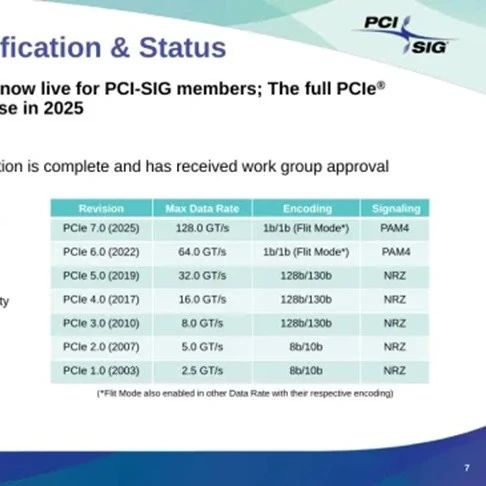
Core Viewpoint - The PCI Express 7.0 specification is expected to be finalized and released in late 2025, with the current version 0.9 available for member review, indicating no further functional changes are anticipated [1][3]. Summary by Sections Specification Overview - PCIe 7.0 will achieve a maximum data rate of 128.0 GT/s, utilizing PAM4 encoding, and is designed to support a bidirectional throughput of up to 512 GB/s [2][4]. - The specification aims to double the channel speed to meet the increasing demands of emerging applications and markets [3]. Historical Context - PCI-SIG has consistently doubled the bandwidth of PCIe specifications approximately every three years to adapt to evolving technology needs, with the last major update being PCIe 6.0 in 2022 [3]. Key Features - The PCIe 7.0 specification focuses on channel parameters, coverage, and energy efficiency while maintaining low latency and high reliability [4]. - It will support high-bandwidth applications such as 800 G Ethernet, AI/ML, cloud computing, and quantum computing, as well as data-intensive markets like large-scale data centers and high-performance computing [3]. Performance Metrics - The performance metrics for PCIe 7.0 in various lane configurations are as follows: - x1: 32 GB/s - x2: 64 GB/s - x4: 128 GB/s - x8: 256 GB/s - x16: 512 GB/s [5].