
软硬件结合

Search documents
安卓支持 AirDrop?一文为你详解谷歌如何真正「兼容苹果」
3 6 Ke· 2025-12-22 23:48
Core Viewpoint - The article discusses Google's recent introduction of AirDrop compatibility in its Pixel 10 series, marking a significant shift in the competitive landscape between Apple and Android devices, particularly in terms of interoperability and user experience [4][8]. Group 1: Compatibility Developments - Google has enabled AirDrop support in the Pixel 10 series, allowing seamless file sharing with Apple devices without the need for a dedicated app or shared Google accounts [5][6]. - This feature utilizes Android 16's Quick Share, which mimics AirDrop's functionality, providing a user experience indistinguishable from that of iPhone users [5][6]. Group 2: Technical Insights - AirDrop, previously a proprietary feature of Apple, relies on the Apple Wireless Direct Link (AWDL) protocol for high-speed data transfer between devices [16][18]. - Google's approach to achieving compatibility involves using low-energy Bluetooth for device discovery and mimicking the AWDL's frequency-hopping mechanism, allowing Pixel 10 to effectively communicate with Apple devices [36][42]. Group 3: Market Implications - The introduction of AirDrop compatibility by Google may set a precedent for other Android manufacturers, particularly those in China, to pursue similar interoperability with Apple products [12][46]. - The competitive dynamics between Apple and Google are influenced by regulatory pressures, such as the EU's Digital Markets Act, which may limit Apple's ability to restrict such compatibility features in the future [43][44].




中公教育今日涨停 市场关注的“学豆听考”小程序上线
中国基金报· 2025-12-16 13:22
Core Viewpoint - The strong stock price surge of Zhonggong Education (002607.SZ) is closely linked to the launch of its AI learning headset "AI Primary School Bean" and the accompanying content platform "Learning Bean Listening Exam" mini-program, indicating heightened investor expectations for the company's smart transformation [1][5]. Group 1: Product and Market Strategy - The AI learning headset has been validated in a small-scale trial, demonstrating market demand with its lightweight design and fragmented learning approach [3]. - The launch of the mini-program enhances the content ecosystem supporting the hardware, transforming the headset into a "personal mobile learning center" with features like step-by-step listening plans for exams [3]. - The combination of hardware and content could allow Zhonggong to tap into broader lightweight learning needs and potentially explore subscription service models [3]. Group 2: Strategic Transformation - The stock price increase reflects market recognition of Zhonggong Education's strategic shift from being a "course provider" to a "learning + employment solution operator" [5]. - By offering affordable hardware to lower learning barriers and using the mini-program for user retention and data accumulation, the company aims to enhance user engagement and possibly expand into other exam categories [5]. - Industry experts caution that the synergy between hardware and content needs long-term validation, with market focus shifting to user activity, headset repurchase rates, and actual conversion rates post-surge [5]. Group 3: Market Trends - The recent surge in Zhonggong's stock price signifies a revaluation of new business models in vocational education, with the potential to unlock the fragmented learning market [5]. - The strategic exploration of "integrated hardware and software" aligns with the industry's trends towards intelligence and personalization, garnering early attention from the capital market [5].


地平线HSD规模化量产上车,中国车企一夜赶超特斯拉?
Ge Long Hui· 2025-11-25 16:33
Core Insights - The Guangzhou Auto Show this year showcased 1,085 vehicles, with 629 new energy vehicles, accounting for 58%, indicating that China's automotive industry has fully completed its "three electrification" process [1] - Major automakers emphasized concepts like "AI cars" and "intelligent driving" at the show, with a consensus on advancing intelligent assisted driving technology [1] - The development trend of intelligent assisted driving technology is evident, evolving towards higher levels of safety and adaptability while also being made available in more vehicle models [1] Group 1 - Horizon's HSD (Horizon SuperDrive) has been rapidly integrated into multiple mass-produced models, showcasing its efficiency and effectiveness in the market [2][4] - The HSD system has been adopted by over 10 automotive brands and more than 20 models, with a goal of achieving mass production of 10 million units in the next 3-5 years [4][25] - The HSD's deployment signifies a significant opportunity for Chinese automakers to align with or even surpass Tesla's FSD capabilities [6][9] Group 2 - The HSD system utilizes a true end-to-end architecture, which enhances driving experience by eliminating delays and improving responsiveness [12][13] - The system's "intuitive model" allows for real-time feedback and human-like decision-making in complex driving scenarios, enhancing safety and efficiency [15][19] - The collaboration with automakers allows for customization without affecting their technological strategies, making HSD a flexible solution for various brands [28] Group 3 - The automotive industry is shifting from price wars to technology-driven competition, with Horizon's HSD playing a crucial role in this transition [29] - The HSD aims to democratize high-level assisted driving capabilities, making them accessible to a broader range of vehicles, not just high-end models [29][30] - The partnership with Horizon allows automakers to focus on product differentiation while benefiting from advanced driving technology without the burden of extensive R&D costs [27][28]
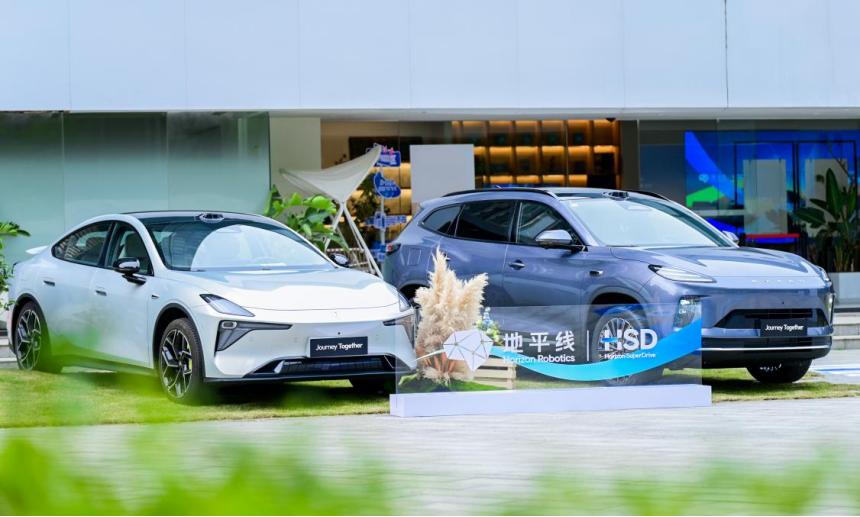
毫末智行停摆、地平线HSD量产,第三方智驾格局生变?
3 6 Ke· 2025-11-25 09:42
Core Insights - The Guangzhou Auto Show 2023 showcased 1,085 vehicles, with 629 new energy vehicles, indicating a 58% representation, highlighting the completion of China's automotive industry's electrification [1] - Major automakers emphasized "AI cars" and intelligent driving technologies, with a consensus on advancing smart assisted driving [1] - Horizon's HSD (Horizon SuperDrive) has rapidly integrated into multiple production models, demonstrating a significant leap in China's smart driving capabilities [2][4] Group 1: Industry Trends - The trend of smart assisted driving technology is evolving both upwards towards higher levels of safety and adaptability, and downwards to more vehicle models [1] - Most automakers are opting for third-party solutions from companies like Horizon, DJI, and Huawei, rather than developing in-house technologies [2][8] - Horizon's HSD has been adopted by over 10 automakers and is expected to achieve a production target of 10 million units in the next 3-5 years [6][24] Group 2: Technological Advancements - Horizon's HSD is designed with a true end-to-end architecture, providing seamless control and enhanced user experience [12][20] - The system's low latency and high computational power enable it to handle complex driving scenarios effectively, improving safety and efficiency [17][26] - The collaboration between Horizon and automakers allows for customization without compromising their technological strategies [25] Group 3: Competitive Landscape - Horizon's HSD positions itself as a viable alternative for automakers to compete with Tesla's FSD, offering a unique value proposition in the market [8][22] - The automotive industry is shifting from price wars to technology-driven competition, with Horizon's HSD facilitating this transition [26][27] - The integration of Horizon's technology allows Chinese automakers to enhance their global competitiveness by focusing on differentiation rather than cost-cutting [27][29]
AI观察|“杀手级”应用继续缺失,AI大模型开始寻求硬件加持
Huan Qiu Wang· 2025-06-24 07:34
Group 1 - The AI market has seen a decline in enthusiasm despite the continuous advancements in AI capabilities, with a consensus emerging that there is currently no "killer application" to drive significant investment returns [1] - The AI landscape is characterized by a "winner-takes-all" dynamic, where smaller AI startups face challenges as larger models like GPT-3 and deepSeek-R1 quickly overshadow their innovations [2] - The importance of hardware in AI development is emphasized, with the need for startups to establish "dual moats" in both software and hardware to remain competitive [3] Group 2 - The competition in the AI industry has shifted from solely algorithmic battles to a deeper engagement in software and hardware collaboration, indicating a need for AI to integrate into real-world applications for sustainable growth [4] - Significant investments are being made in AI hardware, as seen with OpenAI's acquisition of a hardware design company for $6.5 billion and Meta's collaboration with Oakley to develop AI-powered smart glasses [3][4] - Domestic companies like Yushu Technology are also focusing on optimizing hardware and integrating advanced algorithms, securing substantial funding to enhance their capabilities in the AI sector [4]