探月精神

Search documents
出发,去月球!
Ren Min Ri Bao· 2026-02-09 05:44
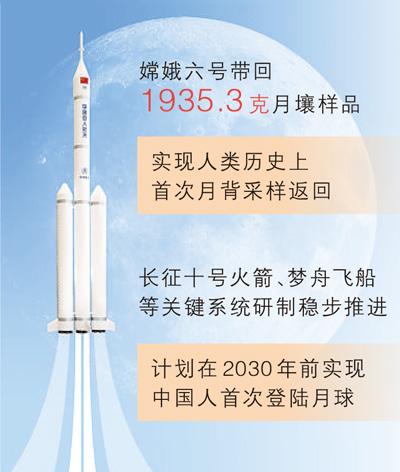
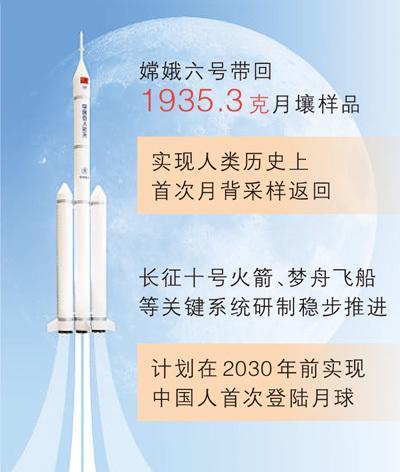
Core Perspective - The article emphasizes the renewed global interest in lunar exploration, highlighting it as a convergence of technological advancement, national strength, and innovative spirit, transforming the dream of "going to the moon" into a tangible reality [2][3]. Group 1: Historical Context and Achievements - The history of lunar exploration reflects humanity's courage to innovate and collaborate, from ancient calculations to modern scientific discoveries [2]. - China's lunar exploration program, particularly the Chang'e series, has made significant strides, including the first soft landing on the moon's far side and the successful return of samples, contributing valuable geological data to the international scientific community [3]. Group 2: Future Plans and Trends - Looking ahead, China has announced plans for a manned lunar mission, with key systems like the Long March 10 rocket and the Dream Chaser spacecraft under development, aiming for a lunar landing by 2030 [3]. - The rise of commercial space ventures in China is notable, with the establishment of launch facilities and an expanding industry chain, indicating a shift towards a more diverse and innovative approach to lunar exploration [3]. Group 3: Technological and Collaborative Needs - Successful lunar exploration requires a robust foundation of national strength and critical technologies, including advancements in rocket technology and lunar exploration instruments [4]. - Continuous innovation in basic research, engineering technology, and management practices is essential for overcoming the challenges of lunar exploration, necessitating collaboration across various fields and borders [5].

出发,去月球!(“咖”说科技)
Ren Min Wang· 2026-02-08 23:13
Group 1 - The article highlights the renewed global interest in lunar exploration, emphasizing that the phrase "to the moon" has transformed from a poetic expression into a practical pursuit of technological advancement and national strength [2][3] - China's lunar exploration program, particularly the Chang'e series, has made significant strides, including the successful soft landing on the moon's far side and the first sample return from there, showcasing China's commitment to innovation and collaboration in space exploration [3][4] - The future of lunar exploration is becoming more defined, with China's plans for a manned lunar mission by 2030 and the involvement of commercial space enterprises, indicating a growing and diverse approach to lunar and space exploration [4] Group 2 - The article stresses the importance of comprehensive national strength and technological capabilities in establishing a lunar base and developing potential resources, highlighting the need for continuous innovation in various fields [4] - The exploration of the moon is framed as a stepping stone for humanity's journey into deeper space, suggesting that future advancements may lead to human settlements on the moon and beyond [4]
“两弹一星”辉煌之路专题展开幕,亲历者讲述在金银滩的奋斗岁月
Xin Lang Cai Jing· 2026-01-07 12:04
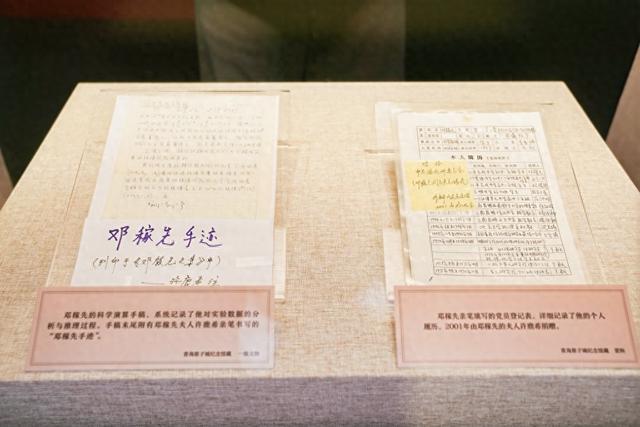
Core Viewpoint - The exhibition "Forging Dreams at Jinyintan: The Glorious Path of China's 'Two Bombs, One Satellite'" highlights the historical significance and achievements of China's nuclear and space programs, showcasing the dedication and sacrifices of the scientists involved in these endeavors [1][12]. Group 1: Exhibition Overview - The exhibition is organized by the Propaganda Department of the CPC Haibei Prefecture Committee, the Memorial Hall of the First National Congress of the Communist Party of China, and the Qinghai Atomic City Memorial Hall [1]. - It features 69 selected cultural relics, including manuscripts by Yu Min, resumes of Deng Jiaxian, and artifacts from the first atomic bomb explosion [4][6]. Group 2: Historical Context - The exhibition focuses on the Jinyintan area in Haibei Prefecture, Qinghai Province, where significant developments in China's nuclear program took place [3][4]. - It recounts the arduous journey of scientists and technicians who worked under extreme conditions at an altitude of 3,300 meters, emphasizing their commitment and bravery [3][6]. Group 3: Thematic Structure - The exhibition is divided into four sections: "Mission Call," "Climbing New Heights," "Great Achievements," and "Building Dreams for Revival," which collectively narrate the evolution of China's "Two Bombs, One Satellite" initiative [6]. - It illustrates the spirit of innovation and perseverance embodied by pioneers like Deng Jiaxian, Wang Ganchang, and Guo Yonghuai [7]. Group 4: Visual Representation - The first floor of the exhibition recreates the scene of General Li Jue leading a team to Jinyintan in August 1958, marking the beginning of the 221 Base construction [9]. - The second floor showcases models of China's first atomic bomb, hydrogen bomb, and the "Dongfanghong-1" satellite, alongside significant achievements in space exploration [9]. Group 5: Significance and Legacy - The exhibition serves as a spiritual dialogue across time and space, connecting the origins of the CPC's founding spirit to the development of the "Two Bombs, One Satellite" spirit [10]. - It aims to inspire visitors by highlighting the historical struggles and achievements of the scientists, reflecting a deep sense of national pride and dedication [10].
中国月壤样品首次走进维也纳联合国总部
Xin Hua She· 2025-06-25 23:41
Core Viewpoint - The exhibition of China's lunar samples at the United Nations highlights China's achievements in space exploration and its commitment to international cooperation in the peaceful use of outer space [1][2]. Group 1: Exhibition and Achievements - The "20 Years of China's Lunar Exploration" exhibition showcased samples from the Chang'e 5 and Chang'e 6 missions, including both the lunar front and back samples [1]. - The lunar soil samples symbolize the spirit of exploration and cooperation, emphasizing China's principles of equality, mutual benefit, and inclusive development [1]. Group 2: International Cooperation - Representatives from various countries expressed admiration for China's lunar exploration achievements, viewing them as a source of pride for all humanity [2]. - There is a strong interest from international representatives to participate in China's space cooperation projects, aiming to utilize the UN platform for collective exploration of the universe [2].
迎接全国科技工作者日 院士专家宣讲科学家精神
Huan Qiu Wang Zi Xun· 2025-05-29 09:08
Group 1 - The "Spirit of Scientists" forum series aims to inspire young scientists and students by sharing the achievements and values of prominent scientists and engineers [2] - The event features discussions on key technological breakthroughs in radar technology and deep space exploration, emphasizing the importance of perseverance and innovation in scientific endeavors [1][2] - The forum encourages collaboration and knowledge sharing among young researchers, highlighting the significance of core technology breakthroughs in fields such as new energy vehicles [2] Group 2 - The event is organized by the National Science Ethics and Academic Style Construction Education Leading Group, showcasing the contributions of strategic scientists and leading technology figures [2] - Presentations include insights from experts in radar technology and space exploration, illustrating the historical context and future goals of China's space missions [1][2] - The discussions reflect a commitment to fostering a culture of scientific inquiry and exploration, with a focus on the values of teamwork and shared success in technological advancements [2]
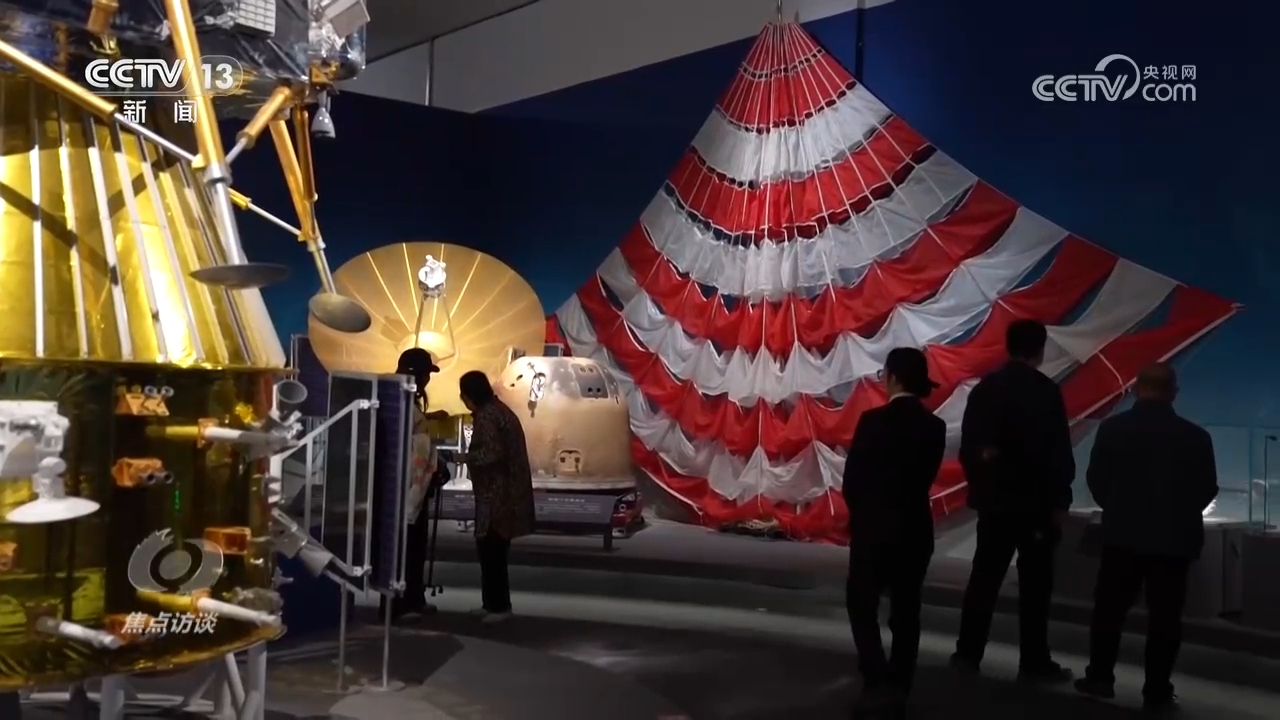
焦点访谈|从“跟跑”“并跑”到部分“领跑”,一起去看20年探月传奇
Yang Shi Wang· 2025-04-24 13:18
Core Viewpoint - The article highlights the significant achievements and future plans of China's lunar exploration program, particularly in the context of the 20th anniversary of the lunar exploration initiative and the ongoing exhibition showcasing its milestones [1][24]. Group 1: Lunar Exploration Milestones - The Chang'e program began in 2004 with a three-step strategy: orbiting, landing, and returning [6]. - Chang'e 1, launched on October 24, 2007, marked China's first lunar satellite, making China the fifth country to launch a lunar probe [4]. - Chang'e 3 successfully landed on the moon on December 14, 2013, carrying the Yutu rover, which set a record for the longest operational time on the lunar surface [8]. - Chang'e 4 achieved the first soft landing on the far side of the moon on January 3, 2019, a historic milestone in lunar exploration [8][11]. Group 2: Technological Innovations and Challenges - The Chang'e 5 mission, launched on November 24, 2020, successfully returned 1,731 grams of lunar samples to Earth on December 17, 2020, marking China's first retrieval of extraterrestrial materials [13]. - The mission involved a complex design with four spacecraft components, showcasing advancements in technology and engineering [13]. - The lunar samples collected have led to over 100 scientific papers, including the discovery of a new mineral named "Chang'e Stone" [19][21]. Group 3: Future Plans and International Collaboration - Future missions include Chang'e 7, aimed at exploring the lunar south pole for water, and Chang'e 8, which will focus on establishing communication and energy systems on the moon [22]. - The program emphasizes international collaboration, inviting other countries and research institutions to participate in lunar exploration efforts [22]. - The overarching goal is to advance lunar exploration and support the construction of a lunar space station over the next 10 to 20 years [22].