通用人工智能(AI)

Search documents
存储市场需求,吓人
半导体行业观察· 2025-12-20 02:22
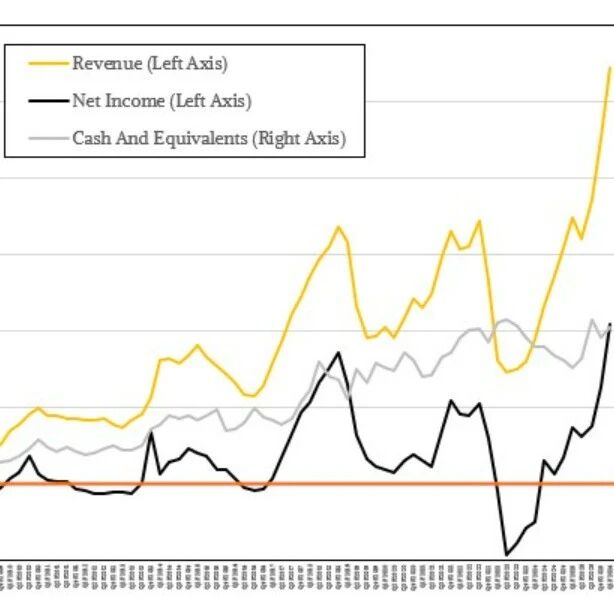
Core Insights - The total addressable market (TAM) for HBM memory is expected to grow significantly, with projections indicating a market size of $100 billion by 2028, reflecting a compound annual growth rate (CAGR) of over 40% from previous estimates [6][7] - The demand for high-performance memory and storage solutions is being driven by the expansion of AI data centers, with server sales expected to grow nearly 10% by 2025 [2][3] - Micron Technology is increasing its capital expenditures to $20 billion in 2026 to meet the rising demand for DRAM and HBM memory, with new facilities planned to come online by 2027 and 2030 [3][11] Market Dynamics - The HBM market is experiencing explosive growth, with Micron's forecasts indicating a TAM of $35 billion in 2025, rising to $100 billion by 2030, with a CAGR of 23.2% [5][6] - The overall DRAM industry is expected to see a bit shipment growth of around 20% in 2025, while NAND shipments are projected to grow by over 10% [3] - Micron's NAND storage business surpassed $1 billion for the first time in Q1 2026, indicating strong demand across data centers [2] Financial Performance - In Q1 2026, Micron reported revenues of $13.64 billion, a year-over-year increase of 56.7%, with net income reaching $5.24 billion, also reflecting a significant increase [10][11] - The data center business generated $7.66 billion in revenue, marking a 55.1% increase, with operating income nearly doubling compared to the previous year [16][18] - Micron's gross margins for cloud memory and core data center segments have shown substantial improvement, indicating a tightening supply in the DRAM and flash memory markets [14] Competitive Positioning - Micron is strategically positioned to capture a significant share of the HBM market, with expectations of achieving approximately 25% market share, translating to around $139 billion in revenue over the next six years [7][8] - The company is leveraging its technological advantages and U.S.-based operations to establish a dominant market presence in the rapidly growing HBM segment [16] - The competitive landscape is intensifying, with other companies also investing heavily in memory solutions, but Micron's unique positioning may allow it to capitalize on the growing demand for AI-related memory products [18]


新型人工神经元能模仿脑细胞电化学行为,有望降低能耗提升AI效率
Ke Ji Ri Bao· 2025-11-03 01:32
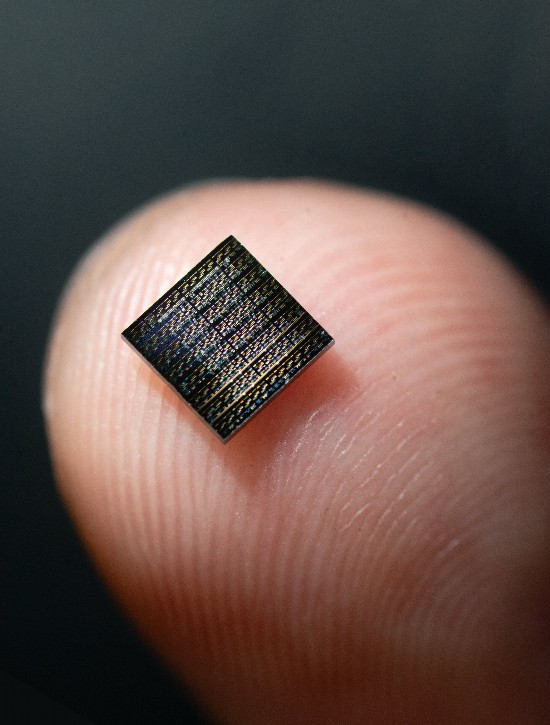
Core Insights - A research team from the University of Southern California has developed a new type of artificial neuron that mimics the electrochemical behavior of biological brain cells, marking a breakthrough in neuromorphic computing technology [1][3] - This innovation is expected to significantly reduce chip size and energy consumption, facilitating the advancement of general artificial intelligence (AI) [1][4] Summary by Sections Neuromorphic Computing - The new artificial neuron integrates a diffusion memristor and a resistor stacked on a single transistor, resulting in a compact and energy-efficient design suitable for neuromorphic computing systems [3][4] - Each artificial neuron occupies an effective area of approximately 4μm², showcasing the potential for miniaturization in chip design [3] Mechanism of Action - Unlike traditional digital processors or silicon-based "brain-like chips," this artificial neuron truly replicates the operational mechanisms of biological neurons, utilizing chemical reactions to drive information processing [3][4] - The neuron operates through a physical process that mimics the brain's signaling, where electrical signals are converted into chemical signals at synapses, triggering subsequent electrical signals in neighboring neurons [3][4] Efficiency and Structure - The diffusion memristor used in this artificial neuron allows for high-fidelity reproduction of neural processes at the physical level, relying on ion diffusion and memory effects rather than electron flow [4] - This design significantly simplifies the structure, requiring only one transistor per artificial neuron compared to traditional designs that may need dozens to hundreds, indicating a potential reduction in chip size and energy consumption by several orders of magnitude [4]
中国航信“启航”大模型及系列创新产品在青岛亮相
Zhong Guo Min Hang Wang· 2025-08-02 11:00
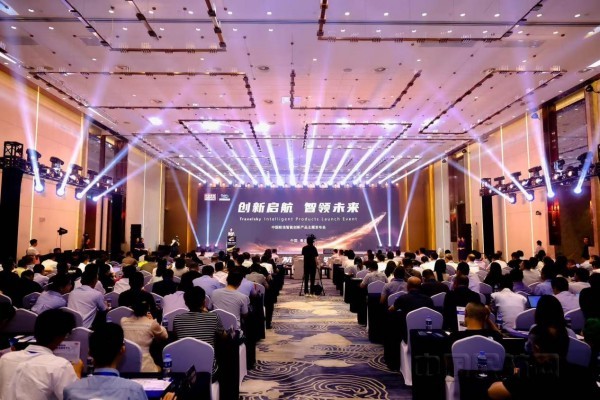
Core Viewpoint - China Aviation Information Network Co., Ltd. launched a series of innovative products centered around the "Qihang" large model, developed in collaboration with China Mobile, aimed at enhancing digital technology in the aviation industry [1][2]. Group 1: Product Innovations - The "Qihang" large model integrates general artificial intelligence with aviation expertise, creating a collaborative intelligent system that can adapt to multiple scenarios [2]. - The new generation of AI customer service platform, "Qihang Intelligent Customer Service," enhances user experience by improving semantic recognition, voice processing, and image recognition capabilities [3]. - The "Intelligent Dangerous Goods Service Assistant" combines AI and blockchain technologies to create a comprehensive knowledge base for the aviation industry, significantly improving service and safety levels in dangerous goods transportation [4]. Group 2: Technological Advancements - The "Qihang" model supports a flexible architecture that allows for seamless integration and replacement of multiple models, providing a comprehensive upgrade path for users [2]. - The airport baggage handling robot utilizes advanced technologies such as visual recognition and AI to improve the efficiency of baggage sorting and transportation [6]. Group 3: Collaborations and Partnerships - China Aviation Information Network signed cooperation agreements with various airports, including Qingdao Airport and Shenzhen Airport, to implement the new intelligent service solutions [6].