
避险与抗通胀

Search documents
ATFX策略师:黄金逼近历史高位!多头狂欢,还是风险前夜?
Sou Hu Cai Jing· 2025-12-18 09:14
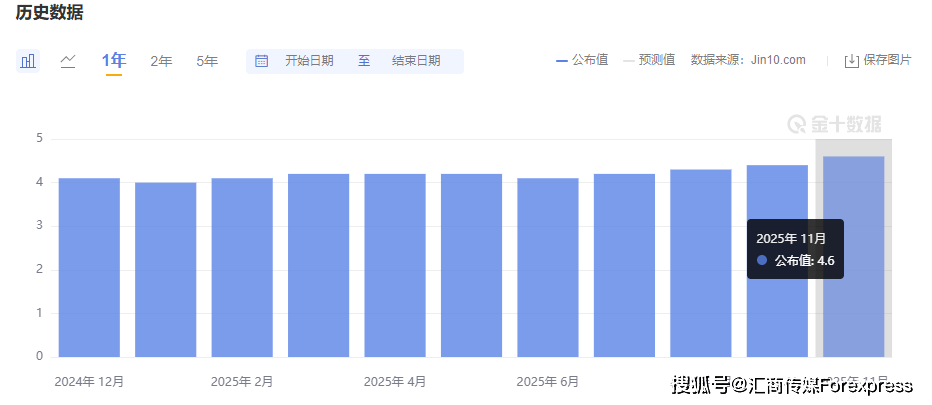
Core Viewpoint - The international gold price is rising significantly, approaching historical highs, driven by weakening U.S. economic data, renewed expectations for Federal Reserve rate cuts, and escalating geopolitical risks [1][4]. Group 1: U.S. Economic Indicators - The U.S. labor market shows signs of divergence, with November's unemployment rate unexpectedly rising to 4.6%, the highest in nearly four years, despite job additions exceeding expectations [4]. - The increase in unemployment raises doubts about the feasibility of a "soft landing" for the U.S. economy, leading to heightened expectations for future rate cuts by the Federal Reserve [4]. - Lower interest rates or expectations of rate cuts reduce the opportunity cost of holding gold, prompting a return of funds to the precious metals market, which is a key driver of rising gold prices [4]. Group 2: Geopolitical Risks - Escalating geopolitical tensions, particularly regarding Venezuela, have amplified demand for safe-haven assets like gold, as investors worry about energy supply and regional stability [4]. - Historical trends indicate that military or political conflicts involving energy-exporting countries often lead to a premium on gold prices, which is evident in the current market dynamics [4]. Group 3: Market Dynamics - The simultaneous decline in the U.S. stock market, particularly in the tech sector due to uncertainties around AI investment returns, has shifted some funds towards defensive assets like gold [5]. - The surge in silver and platinum prices indicates a rotation within the precious metals sector, with silver breaking historical highs, reinforcing the consensus on a cyclical strengthening of precious metals [5]. Group 4: Future Uncertainties - Gold bulls face uncertainties, including potential short-term rebounds in the U.S. dollar index and internal disagreements within the Federal Reserve regarding future policy paths [7]. - Upcoming U.S. CPI and PCE inflation data will significantly impact market expectations for monetary policy, with potential for gold price fluctuations based on inflation outcomes [7]. - The current high gold price environment is characterized by both risks and uncertainties, with geopolitical and macroeconomic expectations providing support, but short-term volatility may increase ahead of key data releases [7].

ATFX:多重风险共振 金价逼近历史高位
Xin Lang Cai Jing· 2025-12-18 08:27
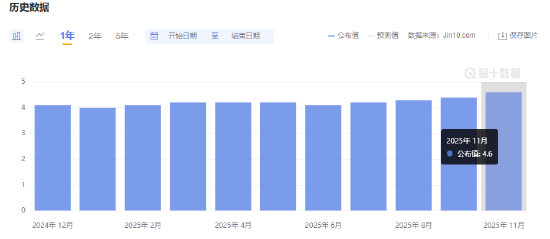
Core Viewpoint - The international gold price has been rising significantly, reaching above $4,348, approaching historical highs, driven by weakening U.S. economic data, renewed expectations for Federal Reserve rate cuts, and escalating geopolitical risks, highlighting gold's appeal as a safe-haven and inflation hedge [1][7]. Economic Indicators - The U.S. labor market shows signs of divergence, with November's unemployment rate unexpectedly rising to 4.6%, the highest in nearly four years, despite job additions exceeding expectations. This shift raises concerns about the U.S. economy's "soft landing" and fuels speculation about potential rate cuts by the Federal Reserve [4][10]. - The rising unemployment rate questions the justification for maintaining high interest rates, leading to increased market expectations for future rate cuts. In a low-rate environment, the opportunity cost of holding gold decreases, prompting a return of funds to the precious metals market, which is a key driver of rising gold prices [4][10]. Geopolitical Risks - Escalating geopolitical tensions, particularly regarding Venezuela, have heightened demand for safe-haven assets. Concerns over energy supply and regional stability due to U.S. actions against sanctioned oil tankers and speculation about potential military actions have intensified investor interest in gold [4][10]. - Historical trends indicate that military or political conflicts involving energy-exporting countries often lead to a premium on gold prices, which has been evident in the current surge [4][10]. Market Dynamics - The simultaneous decline in U.S. stock markets, particularly in the technology sector due to uncertainties surrounding AI investment returns, has reduced the attractiveness of risk assets, leading some investors to shift towards gold and other defensive assets [4][10]. - The rise of silver and platinum alongside gold indicates a notable rotation within the precious metals sector, with silver breaking historical highs, reinforcing market consensus on a cyclical strengthening of precious metals [4][10]. Future Outlook - Gold prices are currently at high levels, with risks and uncertainties coexisting. Short-term support for gold prices is expected from geopolitical and macroeconomic factors, with potential for prices to test historical highs if risk events escalate [12]. - However, volatility may increase ahead of key U.S. CPI and PCE inflation data, which will directly impact market expectations for monetary policy. If inflation exceeds expectations, gold prices may face profit-taking pressure [14].
万腾外汇:白银再次突破新高,贵金属涨势十足
Sou Hu Cai Jing· 2025-09-23 02:51
Core Insights - The silver market has seen a significant breakthrough, with prices surpassing previous highs and currently trading above $43.50 per ounce, while gold remains stable in its historical high range [1] - Silver has experienced a 50% increase this year, reaching its highest level since 2011, while gold has also performed well with a nearly 40% increase so far in 2025 [3] - The demand for silver is largely driven by the rising gold prices, as some investors who missed the opportunity in gold are turning to silver to catch up in the precious metals bull market [3] - The weakening US dollar and economic uncertainties have led investors to view precious metals as core assets for hedging against inflation and risk, resulting in significant inflows into gold and silver markets [3] - The rising gold prices are attracting more retail investors to the precious metals sector, with silver being a preferred choice due to its lower entry barriers and higher potential returns [3] Industry Analysis - Despite the similarities in financial attributes between silver and gold, silver's extensive industrial applications make its risk profile more pronounced, as its price is closely tied to macroeconomic cycles and industrial demand [4] - A potential global economic downturn or weaker industrial demand could lead to greater downside pressure on silver prices compared to gold [4]
金价回调引发连锁反应:银行金条告急、白银铂金受青睐
Di Yi Cai Jing· 2025-04-29 14:01
Group 1: Market Trends - Recent fluctuations in gold prices have led to a shift in investment focus towards silver and platinum, with silver futures reaching a 12-year high of $35.5 per ounce and platinum futures surpassing $1,000 per ounce, reflecting a year-to-date increase of approximately 10% [1][2] - As of April 29, 2023, spot gold prices fell to around $3,324 per ounce after peaking at $3,500, indicating a significant market correction [1][2] - The Shanghai Futures Exchange reported a slight increase in gold futures, with the main contract closing at 786.98 yuan per gram, while silver futures saw a minor rise of 0.12% [1] Group 2: Consumer Behavior - There is a noticeable shift in consumer interest from gold jewelry to platinum and silver, as consumers find these alternatives more affordable and stylish for everyday wear [1] - Despite a decline in overall gold consumption, demand for investment gold bars remains strong, with a year-on-year increase of 29.81% in gold bar and coin consumption [5] Group 3: Supply and Demand Dynamics - The rise in silver prices is attributed to increasing industrial demand, particularly in photovoltaic and electronic sectors, while platinum prices are recovering due to supply shortages [2][3] - Silver futures inventory has decreased for three consecutive weeks, indicating tightening supply conditions [2] Group 4: Investment Strategies - Analysts suggest that investors should consider adjusting their precious metal portfolios based on the gold-silver ratio to balance risk and return objectives [3] - The ongoing accumulation of gold by central banks is seen as a key factor supporting gold prices, although individual investors are advised to be cautious about the opportunity costs associated with gold investments [5]