量子算法

Search documents
【A股收评】三大指数震荡上扬,煤炭、锂电齐上涨!
Sou Hu Cai Jing· 2025-10-23 07:49
Market Overview - On October 23, major indices experienced fluctuations, with the Shanghai Composite Index rising by 0.22%, the Shenzhen Component Index also up by 0.22%, and the ChiNext Index increasing by 0.09%. The Sci-Tech Innovation 50 Index fell by 0.3%. Over 2900 stocks in the two markets rose, with a total trading volume of approximately 1.64 trillion yuan [2]. State-Owned Enterprise Reform - The concept of state-owned enterprise reform gained strength, with notable stock increases: JianKaoYuan (300675.SZ) surged by 20%, while TeFa Information (000070.SZ), TeLi A (000025.SZ), ShenSaiGe (000058.SZ), ShenFangZhi A (000045.SZ), and Shenzhen Energy (000027.SZ) rose by 10% [2]. Coal Sector Performance - The coal sector also showed strong performance, with DaYou Energy (600403.SH), YunMei Energy (600792.SH), and Shanxi Black Cat (601015.SH) each rising by 10%. ZhongMei Energy (601898.SH) and YanKuan Energy (600188.SH) also saw increases [3]. Lithium Battery Sector Activity - The lithium battery sector was active, with ShengXin Lithium Energy (002240.SZ) increasing by 10%, and RongJie Shares (002192.SZ) rising by 7.52%. Other companies like Tibet Mining (000762.SZ) and GanFeng Lithium (002460.SZ) experienced significant gains. The main contract for lithium carbonate futures rose by over 4%, with expectations of increased production in October due to new production lines coming online [4]. Quantum Technology Sector - The quantum technology sector performed well, with KeDa GuoChuang (300520.SZ) rising by 20%. Other companies such as DiPu Technology (300768.SZ), DaHua Intelligent (002512.SZ), ShenZhou Information (000555.SZ), and GuoDun Quantum (688027.SH) also saw substantial increases. This surge was driven by Google's announcement of a breakthrough in quantum algorithms, achieving a speed 13,000 times faster than the best supercomputers [4]. Declining Sectors - The oil and gas, as well as engineering machinery sectors, showed weakness, with companies like JianShe Machinery (600984.SH), LiuGong (000528.SZ), HengLi Hydraulic (601100.SH), and Sany Heavy Industry (600031.SH) experiencing declines. The pharmaceutical and semiconductor sectors also weakened, with Canxin Shares (688691.SH) dropping over 11%, alongside RongChang Bio (688331.SH) and Maiwei Bio (688062.SH) [5].




关于量子计算,我们仍不知道它到底能做什么
Hu Xiu· 2025-05-06 01:13
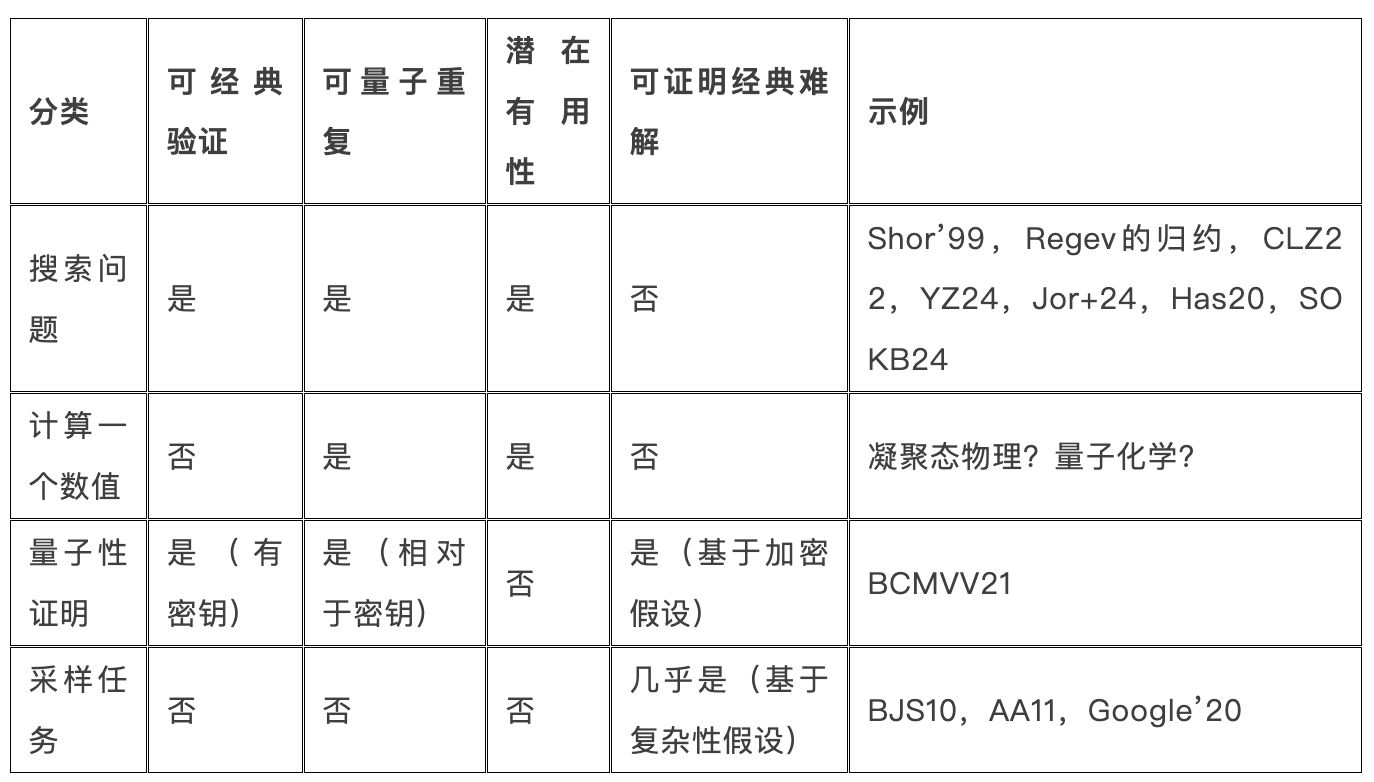
Core Insights - The quantum computing field is experiencing significant growth but still grapples with the fundamental question of its practical applications [1][2][3] - There is a call for a more pragmatic approach to developing quantum algorithms, focusing on verifiable and practical solutions rather than adhering strictly to traditional standards [4][5] Technological Momentum - The theoretical foundation for quantum error correction is solid, with several platforms nearing or achieving error correction thresholds [2] - A substantial investment of $100 billion over the next few decades could lead to the construction of a large-scale quantum computer [2] Application Challenges - Unlike nuclear fusion, which has clear application value if successful, quantum computing lacks sufficient application drivers to justify the massive investments in research and infrastructure [3] - The industry must accelerate algorithm development alongside hardware advancements to maintain investment momentum [4] Empowering Theorists - Theoretical research plays a crucial role in shaping the future of quantum computing, with historical examples like Geoffrey Hinton's work in AI demonstrating the impact of theoretical foundations [5] - The community is looking for new theoretical insights to drive practical advancements in quantum computing [5] Challenges in Quantum Algorithms - Ideal quantum algorithms are traditionally expected to meet three criteria: provable correctness, classical intractability, and practical applicability [6] - Strict adherence to these criteria may hinder the discovery of innovative quantum algorithms [7][10] New Standards for Quantum Algorithms - A shift towards a more pragmatic standard is suggested, where quantum algorithms should achieve super-quadratic speedup compared to the best classical algorithms [9] - The focus should be on finding quantum algorithms that are sensitive to input variations and produce outputs that can be verified or repeated [11][12] Classification of Quantum Algorithms - Quantum algorithms can be categorized based on their output types, including search problems, numerical calculations, quantum property proofs, and sampling tasks [14][17] - Hamiltonian simulation is highlighted as a well-known application of quantum computing, with potential to solve classically intractable problems [15] Future Directions - There is a need to explore new input distributions and frameworks to discover genuinely novel quantum algorithms [17] - Quantum technology also holds promise in areas like sensing, communication, and data processing, although current focus remains on achieving computational advantages [20] Research Landscape - Despite the importance of new quantum algorithms, the number of research efforts in this area remains low, attributed to the complexity of quantum algorithm research [21] - A "mission-driven" exploratory mindset is encouraged to advance the field, allowing for the pursuit of quantum advantages in underexplored areas [22][23]
2025年量子计算应用能力指标与测评研究报告
Sou Hu Cai Jing· 2025-04-27 08:02
Core Insights - The report aims to establish a framework for evaluating quantum computing application capabilities to promote the development of quantum computing applications [1][2]. Group 1: Research Background - Quantum computing, based on quantum mechanics, possesses powerful parallel computing capabilities but is currently in the Noisy Intermediate-Scale Quantum (NISQ) stage, raising questions about its ability to solve industry problems and outperform classical computing [1][2]. - There is a lack of tools and methods to accurately assess the overall performance of quantum computing, making the construction of an evaluation framework essential [1][2]. Group 2: Industry Scenarios and Demands - High-computing-demand industries such as mobile networks and finance face significant computational challenges, including complex signal processing and optimization problems [1][2]. - The mobile network sector requires solutions for issues like 512×8 dimensional MIMO matrix calculations and 500-cell joint coverage optimization, while the finance sector urgently needs to optimize investment portfolios and manage risks [1][2]. Group 3: Quantum Computing Application Capability Framework - The key indicators of application capability encompass computational demands such as computation time, accuracy, scale, and efficiency, as well as hardware and algorithm performance, enhancement capabilities, scalability, and deployment capabilities [2]. - The report introduces a grading system for quantum computing application capabilities based on the maturity of different types of quantum computing technologies [2]. Group 4: Evaluation Methods for Quantum Computing Application Capabilities - The evaluation is divided into three levels: basic technical capability, application technical capability, and comprehensive application and future prospects [2]. - The report provides examples of quantum algorithm application capability assessments, particularly in the context of mobile network computing demands [2]. Group 5: Standardization Needs for Quantum Computing Application Capability Evaluation - There is a significant need for standardization in evaluation methods due to unclear comprehensive capability indicators and inconsistent evaluation schemes [2]. - Future efforts should focus on advancing standardization from both industrial and academic perspectives, despite challenges such as varying industry maturity and diverse technological routes [2]. Group 6: Summary and Outlook - Evaluating quantum computing application capabilities is crucial for connecting industry demands with quantum computing capabilities, although the integration of industry needs and quantum computing is still in its early stages [2]. - Future attention should be directed towards research and standardization progress to refine the indicator and grading systems, providing more practical references for industry development [2].