
降低药价

Search documents
特朗普与九家药企达成协议 大幅降低药价
Sou Hu Cai Jing· 2025-12-19 21:51
Core Points - The agreement between President Trump and nine major pharmaceutical companies aims to significantly reduce drug prices for government Medicaid programs and cash-paying patients [1] - Companies involved in the agreement include Bristol-Myers Squibb, Gilead Sciences, Merck, and Genentech, with Novartis, Amgen, Boehringer Ingelheim, Sanofi, and GlaxoSmithKline also participating [1] - The pharmaceutical companies will lower prices for most drugs sold to low-income Medicaid patients and promise "substantial savings" on widely used medications [1] - Trump has pressured pharmaceutical companies to align U.S. drug prices with those paid by patients in other countries, previously sending letters to 17 major drug company leaders [1] - Five companies have already reached agreements with the government to control drug prices, while three companies—Regeneron, Johnson & Johnson, and AbbVie—have not yet announced agreements [1] - The Director of the Centers for Medicare and Medicaid Services, Mehmet Oz, indicated that these companies will attend the launch ceremony of the government website TrumpRx after the holidays [1]
旗舰药物Dupixent销售额单季度首超40亿欧元 赛诺菲(SNY.US)三季度利润超预期
智通财经网· 2025-10-24 07:05
Core Insights - Sanofi's Q3 profit growth exceeded analyst expectations, driven primarily by increased demand for its blockbuster drug Dupixent [1] - The company reaffirmed its full-year performance guidance [1] Financial Performance - Q3 revenue reached €12.43 billion, a year-on-year increase of 2.3% [1] - Earnings per share (EPS) were €2.91, surpassing the analyst average estimate of €2.65 [1] - Dupixent sales grew by 26.2%, reaching a record €4.16 billion, marking the first time quarterly sales exceeded €4 billion [1] - Overall drug sales increased by 57.1% to €1 billion, driven by ALTUVIIIO and Ayvakit [1] - Vaccine sales declined by 7.8% to €3.4 billion, attributed to a drop in flu vaccine sales [1] Market Dynamics - Sanofi is actively seeking new drugs to eventually replace Dupixent, which will lose patent protection in 2031 [1] - Dupixent is used to treat various conditions, including atopic dermatitis and asthma, with peak annual revenue expected to exceed €21 billion [1] - The vaccine business showed weaker performance, with flu vaccine sales down 17% due to increased price competition in Europe and lower vaccination rates in the U.S. [1] Strategic Initiatives - The CFO noted a global decline in vaccination rates, potentially linked to post-COVID vaccine fatigue and negative sentiment towards vaccines [2] - Sanofi is in discussions with the U.S. government to improve drug accessibility and has been negotiating to lower drug prices in exchange for tariff exemptions [2] - The CEO emphasized the company's drug development plans, pushing several potential blockbuster drugs through costly clinical trials [2] - An experimental eczema drug underperformed in late-stage trials, disappointing investors [2] - Two late-stage trials for itepekimab, developed in collaboration with Regeneron Pharmaceuticals, are ongoing [2]

阿斯利康(AZN.US)与特朗普政府达成协议降低美国药价 换取三年关税豁免期
Zhi Tong Cai Jing· 2025-10-11 06:30
Core Points - The U.S. government has reached an agreement with AstraZeneca to significantly reduce drug prices in exchange for a three-year tariff exemption [1][2] - This agreement follows a similar deal with Pfizer, which also aims to lower drug prices while investing $70 billion in U.S. production [1][2] - AstraZeneca plans to align the prices of all new drugs launched in the U.S. with the lowest levels in comparable countries [2] Group 1: Agreement Details - AstraZeneca will provide substantial discounts on drugs for low-income and disabled individuals through the Medicaid program [2] - The company will expand its direct sales platform, "AstraZeneca Direct," to offer drugs at reduced prices [2] - The financial impact of the agreement remains unclear, but AstraZeneca's exposure to tariffs is limited due to local production of most drugs sold in the U.S. [3] Group 2: Market Context - The agreement is part of a broader effort by the Trump administration to lower drug prices, which includes outreach to major pharmaceutical companies [3] - Initial investor concerns about the impact of tariffs and pricing rules on pharmaceutical profits have diminished as agreements have been established [4] - The agreements with AstraZeneca and Pfizer may encourage other pharmaceutical companies to engage in similar negotiations [3]

医药板块下跌 特朗普再放狠话:下调药品价格1400%至1500%
贝塔投资智库· 2025-08-26 04:02
Core Viewpoint - The U.S. government, led by President Trump, plans to significantly reduce drug prices by 1400% to 1500% and impose higher tariffs on imported drugs, although the mathematical validity of such claims is questionable [1][2]. Group 1: Drug Price Reduction - Trump emphasized the need for major reductions in drug prices, stating that the U.S. drug prices need to be drastically cut [1]. - A formal letter was sent to major pharmaceutical companies, including Johnson & Johnson, Pfizer, and AstraZeneca, demanding price reductions by September 29 [1]. - The letter insisted on providing all existing drugs at the Most Favored Nation (MFN) price for all Medicaid patients, with a warning of potential government action if compliance is not met [1]. Group 2: Tariff Plans - Trump revealed plans to impose tariffs on imported drugs, starting with lower rates and potentially increasing to 250% over time, aimed at encouraging domestic pharmaceutical production [1][2]. - The proposed tariff plan has raised doubts regarding its consistency, as previous threats of high tariffs were later retracted [2]. Group 3: Market Reaction - Following Trump's announcements, pharmaceutical stocks experienced a decline, with notable drops in companies such as Pfizer (down 2.86%) and Merck (down 2.36%) [2].


医药板块下跌 特朗普再放狠话:下调药品价格1400%至1500%
Zhi Tong Cai Jing· 2025-08-25 22:28
Core Viewpoint - The U.S. government, led by President Trump, plans to significantly reduce drug prices by up to 1400% to 1500%, while also proposing higher tariffs on imported drugs, although the mathematical validity of such claims is questionable [1][2] Group 1: Drug Price Reduction - President Trump has issued a strong statement regarding the need for drastic reductions in drug prices, emphasizing that the U.S. drug prices need to be cut significantly [1] - Trump has sent formal letters to major pharmaceutical companies, including Johnson & Johnson, Pfizer, AstraZeneca, and others, demanding they lower drug prices by September 29 [1] - The administration aims to extend the "Most Favored Nation" (MFN) pricing to all Medicaid patients, insisting that all existing drugs must be available at MFN prices [1] Group 2: Tariff Plans - Trump has revealed plans to impose tariffs on imported drugs, potentially reaching as high as 250%, marking the most severe proposal to date [1] - The tariff strategy will start with lower rates, gradually increasing to 150% within one to one and a half years, and ultimately reaching 250% [1] Group 3: Market Reaction - Following Trump's announcements, pharmaceutical stocks experienced a decline, with notable drops including Johnson & Johnson down 0.49%, Pfizer down 2.86%, and AstraZeneca down 1.62% [2] - The overall sentiment in the pharmaceutical sector appears negative, reflecting concerns over the proposed price cuts and tariffs [2]
令人尴尬!特朗普语出惊人称“要让药价降低1500%”,被批数学逻辑混乱
Huan Qiu Wang· 2025-07-25 02:13
Core Viewpoint - President Trump's recent statements on prescription drug prices have sparked controversy due to their unrealistic nature, claiming reductions of up to 1500% [1][3]. Group 1: Drug Pricing Issues - Trump has repeatedly discussed the high cost of prescription drugs during his first term, but has achieved little progress in addressing the issue [3]. - The U.S. prescription drug prices are nearly three times higher than in other regions, highlighting a significant problem in the healthcare sector [4]. Group 2: Trump's Statements and Criticism - Trump's claims of reducing drug prices by 1000%, 600%, 500%, and 1500% contradict basic mathematical principles, leading to criticism of his understanding of the issue [1][3]. - Critics have pointed out that Trump's tendency to fabricate statistics undermines the credibility of his economic policies, as evidenced by his previous exaggerated claims regarding trade agreements and fuel prices [4].
特朗普,突然出手!杀伤力有多大?
券商中国· 2025-05-12 09:03
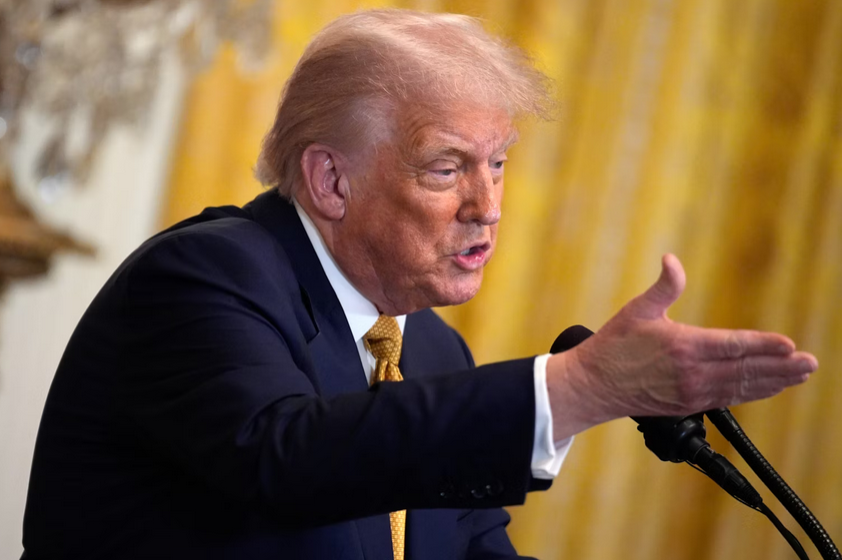
Core Viewpoint - The article discusses President Trump's announcement of a new drug pricing policy aimed at reducing prescription drug prices in the U.S. by 30% to 80%, which has led to a decline in pharmaceutical stocks in both U.S. and A-share markets [1][3][6]. Group 1: Policy Announcement - Trump plans to sign an executive order to lower prescription drug costs "almost immediately" by 30% to 80% [3]. - The announcement raises questions about why U.S. drug prices are significantly higher than those in other countries, sometimes 5 to 10 times more for the same drug [3]. - The policy may primarily affect drugs covered by Medicare and Medicaid, which together account for about 40% of the U.S. drug payment market [6][8]. Group 2: Market Reaction - Following the announcement, U.S. pharmaceutical stocks fell sharply, with notable declines in companies like Novo Nordisk (down 5.25%) and AbbVie (down 4.12%) [1]. - The A-share pharmaceutical sector also showed weakness, particularly in innovative drug stocks [1][6]. Group 3: Implications for Drug Pricing - The proposed policy links U.S. drug prices to those paid by other developed countries, which may face strong opposition from the pharmaceutical industry [4]. - The actual impact of the price reductions may be limited, as the negotiation power of the federal government over drug prices was previously restricted [6][7]. - The article highlights the significant difference between the list price (WAC) and the net price that consumers actually pay, indicating that a reduction in list prices may not substantially affect overall drug costs [7][8].
机构:特朗普拟降低药价 制药股面临抛售压力
news flash· 2025-05-12 07:25
Core Viewpoint - The announcement by Trump regarding plans to lower prescription drug prices in the U.S. is expected to create selling pressure on pharmaceutical stocks [1] Group 1: Impact on Pharmaceutical Companies - Pharmaceutical stocks in the U.S. may face significant selling pressure following Trump's announcement [1] - If Trump implements price caps on drug imports instead of tariffs, it could have a major impact on pharmaceutical companies and their profits [1]