隐性违约

Search documents
Top Charts | 海外债务风险将如何收场?
申万宏源证券上海北京西路营业部· 2026-01-23 02:51
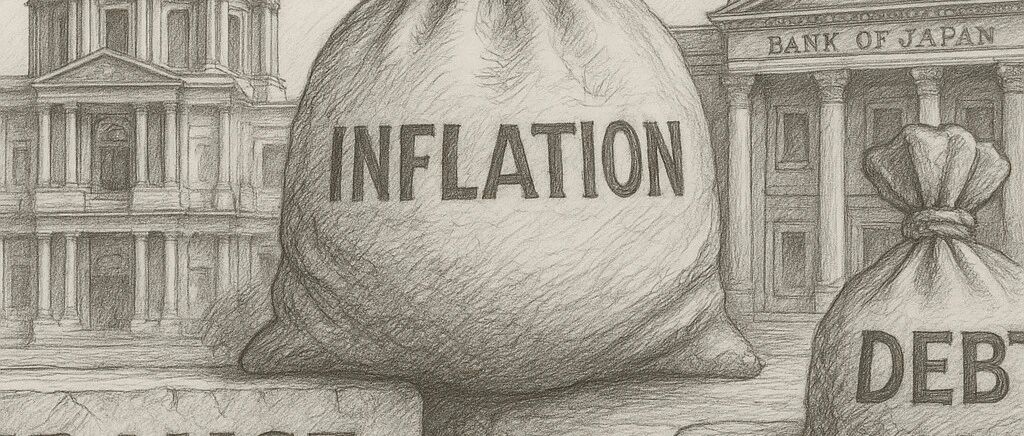
Core Viewpoint - The article discusses the recent global market turmoil characterized by simultaneous declines in stocks, bonds, and currencies, driven by geopolitical tensions and fiscal concerns in the US and Japan [1][6][10]. Group 1: Market Reactions - On January 20, a significant sell-off occurred in global markets, with the Nasdaq futures dropping by 1.9% and the Nikkei 225 falling by 1.11% [6]. - The US 10-year Treasury yield rose to 4.28%, while Japan's 30-year bond yield increased to 5.2% [1][6]. - Gold prices surged to a record high of $4,700 per ounce, indicating a flight to safety among investors [6]. Group 2: Triggering Factors - The first trigger was the US tariff risk stemming from the Greenland dispute, where President Trump threatened to impose tariffs on eight European countries, leading to market fears of a repeat of previous "sell America" trades [1][10]. - The second trigger involved Japan's fiscal risk, as Prime Minister Kishi announced early elections and aggressive tax cuts, raising concerns about Japan's financial stability [1][18]. - A third factor was the announcement by Danish pension fund Akademiker Pension to exit US Treasury investments, signaling potential shifts in investor sentiment [14]. Group 3: Future Outlook - Following Trump's speech at the Davos Forum on January 21, which downplayed military action regarding Greenland and suggested a delay in tariff implementation, market fears regarding geopolitical risks and tariffs were somewhat alleviated [1][21]. - The article suggests that the ongoing fiscal expansion in developed economies may lead to "implicit defaults" through financial repression, such as lowering nominal interest rates and increasing inflation tolerance [2].


为什么你没亏钱,却变穷了?
伍治坚证据主义· 2025-11-03 08:02
Core Viewpoint - The article discusses historical instances of debt management through inflation and the implications for modern economies, particularly focusing on France's "two-thirds bankruptcy" in 1797 and Japan's prolonged economic stagnation since the 1990s, highlighting how governments can manage debt without outright defaulting [2][7][10]. Group 1: Historical Context of Debt Management - In 1797, the French government reduced the value of government bonds by 67%, leading to significant losses for bondholders, a situation referred to as "two-thirds bankruptcy" [2]. - France's financial crisis was rooted in excessive debt accumulation due to continuous wars and ineffective tax reforms, resulting in a national debt of 5 billion livres by 1788, with interest payments consuming half of tax revenues [2][3]. - The introduction of the Assignat paper currency in 1789, initially backed by confiscated church lands, led to rampant inflation, with its total issuance reaching over 45 billion livres by 1796, nearly ten times France's GDP [3][5]. Group 2: Economic Consequences of Inflation - The inflation primarily affected the urban middle class, leading to protests and a loss of confidence in the currency, culminating in the abolition of the Assignat system in 1796 [5][6]. - The radical debt reduction plan proposed by Finance Minister La Meillur in 1797 effectively reduced France's debt-to-GDP ratio from 120% to below 40%, allowing the government to regain borrowing capacity [6]. - The aftermath of the debt reduction saw the "interest class" suffer significant losses, while the government stabilized its finances, illustrating the harsh realities of economic recovery post-crisis [6][14]. Group 3: Modern Parallels in Japan - Japan's economic situation post-1990 mirrors France's historical experience, with a debt-to-GDP ratio exceeding 250%, the highest globally, yet maintaining low bond yields due to the Bank of Japan's monetary policies [7][9]. - The implementation of "Abenomics" in 2013, particularly through aggressive monetary easing, has allowed the government to manage its debt without triggering market panic, effectively achieving a form of "implicit default" [7][9]. - Current inflation rates in Japan reached 3.1% in 2023, while bond yields remained low, resulting in negative real returns for investors, akin to the historical experiences of the French middle class [9][11]. Group 4: Lessons and Insights - Governments can manage debt through inflation rather than outright default, as seen in both historical and modern contexts, allowing for a "silent wealth transfer" from creditors to debtors [11][12]. - Investors should focus on real returns after accounting for inflation, as nominal returns can be misleading, with historical examples illustrating the erosion of purchasing power over time [12][13]. - Economic recoveries post-debt crises can be prolonged, with structural adjustments taking decades, as evidenced by both France and Japan's slow paths to recovery following their respective financial upheavals [14][15].