
金融压制

Search documents
比金银飙涨更惊心:鲍威尔遭刑事传唤,市场必须搞懂的5个真相
Sou Hu Cai Jing· 2026-01-13 02:57
Group 1 - The investigation into Federal Reserve Chairman Jerome Powell by the Department of Justice is unprecedented and has shocked many political veterans, with the inquiry linked to the renovation of the Fed's historical headquarters [1] - Powell claims the investigation is a smokescreen, asserting that the real reason is his refusal to bow to Trump regarding interest rates [1] - Trump stated he was unaware of the subpoena issued by the DOJ [1] Group 2 - Powell's actions may benefit gold and silver markets but could destabilize the U.S. Treasury market, with U.S. households holding approximately $4.3 trillion in Treasury securities [3] - The total assets of North American gold ETFs amount to $290 billion, while silver funds hold about $50 billion [4] - The core conclusion suggests that while the move may be welcomed in the gold and silver circles, the risks of financial losses outweigh the benefits [5] Group 3 - Trump has been attempting to remove Powell since shortly after taking office, urging the Fed to lower short-term interest rates to 1% or lower, which has been proven incorrect by market developments [6] - Trump incorrectly claims that lowering rates would save the government $1 billion daily in debt interest, conflating short-term rates with longer-term bond rates [7] - A significant portion of the government's $30 trillion debt is tied to longer-term bonds, making a broad reduction in rates risky for inflation [7] Group 4 - Trump's attempts to dismiss Powell are part of a broader strategy, including efforts to remove Powell's deputy and control economic data compilation [8] - If Trump succeeds in replacing Powell and his deputy with loyalists, it could lead to greater political control over the Federal Reserve [9] - The timing of Trump's actions coincides with economic slowdown, as evidenced by a recent non-farm payroll report showing a significant increase in unemployment [9]
为什么你没亏钱,却变穷了?
伍治坚证据主义· 2025-11-03 08:02
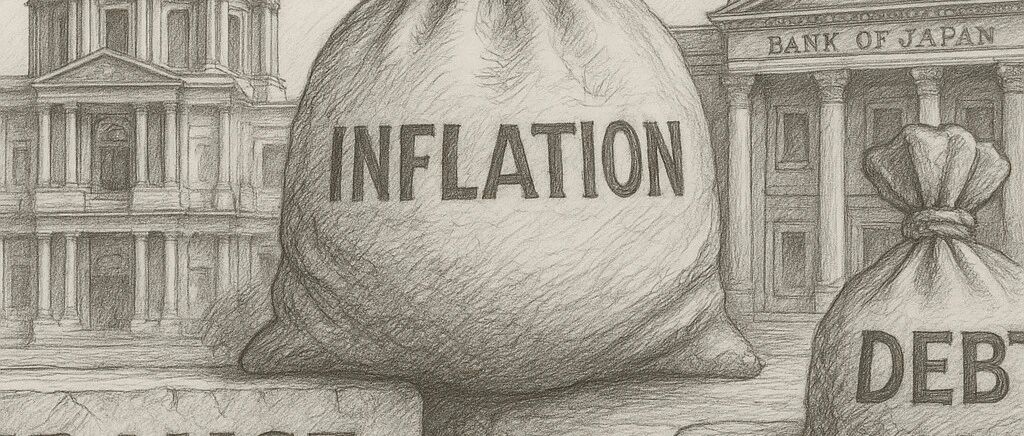
Core Viewpoint - The article discusses historical instances of debt management through inflation and the implications for modern economies, particularly focusing on France's "two-thirds bankruptcy" in 1797 and Japan's prolonged economic stagnation since the 1990s, highlighting how governments can manage debt without outright defaulting [2][7][10]. Group 1: Historical Context of Debt Management - In 1797, the French government reduced the value of government bonds by 67%, leading to significant losses for bondholders, a situation referred to as "two-thirds bankruptcy" [2]. - France's financial crisis was rooted in excessive debt accumulation due to continuous wars and ineffective tax reforms, resulting in a national debt of 5 billion livres by 1788, with interest payments consuming half of tax revenues [2][3]. - The introduction of the Assignat paper currency in 1789, initially backed by confiscated church lands, led to rampant inflation, with its total issuance reaching over 45 billion livres by 1796, nearly ten times France's GDP [3][5]. Group 2: Economic Consequences of Inflation - The inflation primarily affected the urban middle class, leading to protests and a loss of confidence in the currency, culminating in the abolition of the Assignat system in 1796 [5][6]. - The radical debt reduction plan proposed by Finance Minister La Meillur in 1797 effectively reduced France's debt-to-GDP ratio from 120% to below 40%, allowing the government to regain borrowing capacity [6]. - The aftermath of the debt reduction saw the "interest class" suffer significant losses, while the government stabilized its finances, illustrating the harsh realities of economic recovery post-crisis [6][14]. Group 3: Modern Parallels in Japan - Japan's economic situation post-1990 mirrors France's historical experience, with a debt-to-GDP ratio exceeding 250%, the highest globally, yet maintaining low bond yields due to the Bank of Japan's monetary policies [7][9]. - The implementation of "Abenomics" in 2013, particularly through aggressive monetary easing, has allowed the government to manage its debt without triggering market panic, effectively achieving a form of "implicit default" [7][9]. - Current inflation rates in Japan reached 3.1% in 2023, while bond yields remained low, resulting in negative real returns for investors, akin to the historical experiences of the French middle class [9][11]. Group 4: Lessons and Insights - Governments can manage debt through inflation rather than outright default, as seen in both historical and modern contexts, allowing for a "silent wealth transfer" from creditors to debtors [11][12]. - Investors should focus on real returns after accounting for inflation, as nominal returns can be misleading, with historical examples illustrating the erosion of purchasing power over time [12][13]. - Economic recoveries post-debt crises can be prolonged, with structural adjustments taking decades, as evidenced by both France and Japan's slow paths to recovery following their respective financial upheavals [14][15].

马丁·沃尔夫拉响警报:美国或面临金融危机与通胀并存
2 1 Shi Ji Jing Ji Bao Dao· 2025-10-24 14:07
Core Viewpoint - The U.S. may face a scenario of simultaneous financial crisis and inflation in the coming years, with significant risks already evident [1] Economic Outlook - The global economy is entering a highly turbulent phase, with risks expected to escalate further in 2026, particularly due to accumulating financial instability factors [1] - The trade war initiated by the U.S. is stabilizing, but global trade growth may slow down [1] Dollar Dominance - The dominance of the U.S. dollar is under threat, with high public debt, large fiscal deficits, and elevated interest rates in developed countries contributing to financial system instability [1][2] - A consensus that "the dollar is no longer safe" could lead to capital flight from dollar assets, significantly increasing the prices of safe-haven assets like gold [2] Impact of AI - Artificial intelligence is causing profound technological changes, particularly impacting knowledge workers, which may lead to significant social and political consequences [2] Inflation Risks - The combination of fiscal and labor market policies in the U.S., especially measures limiting immigration, could create a highly expansionary macro environment, significantly raising inflation [2] - Current U.S. policies resemble those of the late 1960s and early 1970s, which led to significant inflationary pressures [3] Financial Deregulation - The financial deregulation policies promoted by the Trump administration, including a lenient stance on cryptocurrencies, are reminiscent of past risks that led to prolonged instability [3] Crisis Timing and International Cooperation - The exact timing of a potential U.S. financial crisis is uncertain, with possibilities ranging from two to three years or longer [3] - There are no signs of a reversal in the current political landscape, with a lack of tightening in fiscal or monetary policies and insufficient efforts to restore international confidence [3]
21对话|马丁·沃尔夫拉响警报:美国或面临金融危机与通胀并存
2 1 Shi Ji Jing Ji Bao Dao· 2025-10-24 13:53
Group 1 - The core viewpoint is that the U.S. may face a simultaneous financial crisis and inflation in the coming years, with significant risks already evident [1] - The global economy is entering a highly volatile phase, with risks expected to escalate further in 2026, particularly due to accumulating financial instability factors [1] - The trade war initiated by the U.S. is stabilizing, but global trade growth is likely to slow down [1] Group 2 - The most pressing risk is the erosion of the dollar's dominant position, exacerbated by high public debt, large fiscal deficits, and elevated asset prices, particularly in the U.S. stock market [2] - A potential U.S. financial crisis could lead countries to reduce their reliance on the dollar, creating a highly unstable situation due to the lack of alternatives [2] - If a consensus emerges that the dollar is no longer safe, it could trigger a significant withdrawal from dollar assets, driving up prices of safe-haven assets like gold [2] Group 3 - The combination of fiscal and labor market policies in the U.S., especially measures to restrict immigration, could create a highly expansionary macro environment, significantly increasing inflation [3] - Current U.S. policies resemble those of the late 1960s and early 1970s, which led to significant inflationary pressures [3][4] Group 4 - The exact timing of a potential U.S. financial crisis is difficult to predict, with possibilities ranging from two to three years or longer [5] - There are no signs of a reversal in the current political landscape, with no tightening of fiscal or monetary policies, nor substantial efforts to restore international confidence [5]