青年科技人才培养

Search documents
35位青年科学家亮相“黄金广告位”,给科创青年全链条托举
Xin Lang Cai Jing· 2026-02-05 11:01
Core Viewpoint - The article highlights the "Shanghai Technology Youth 35 Leaders Program," which recognizes and supports 35 outstanding young talents in the field of science and technology each year, emphasizing the importance of nurturing young talent for the city's development [1][3]. Policy Support - The program aims to establish a special fund for technological innovation, reduce funding application barriers, and simplify approval processes, with a focus on providing financial support for cutting-edge research [3]. - It advocates for breaking traditional barriers in career advancement for young talents, offering expedited pathways for title evaluations and promotions for those making significant contributions [3]. - Comprehensive living support policies are proposed, including talent apartments and housing subsidies, to alleviate concerns for scientific talents [3]. Industry Collaboration - The initiative emphasizes building deep connections between research and market applications, facilitating the transition of scientific achievements from laboratories to production lines [4]. - It encourages collaboration between young scientific talents and local tech enterprises, supporting researchers in entrepreneurial endeavors to enhance the industrial application of advanced technologies [4]. - The program promotes joint laboratories and technology incubation bases to drive targeted research and development, fostering the integration of research and industry [4]. Platform Development - The article calls for the establishment of a comprehensive innovation support system to provide a broad platform for young scientific talents to grow and succeed [4]. - Previous awardees have noted that the program has been crucial for their personal development, indicating the importance of such platforms in enhancing the growth of scientific talents [4]. - It suggests integrating resources from universities, enterprises, and society to strengthen dialogue and collaboration among young scientific talents, thereby enhancing their international competitiveness [4]. Broader Implications - The article expresses hope that more cities will follow Shanghai's example in prioritizing the cultivation and growth of young scientific talents, contributing to the construction of a strong technological nation [5].


“精心育才”,好技术有了好出路
Xin Lang Cai Jing· 2025-12-20 21:04
Core Insights - The report titled "GEI China Potential Unicorn Enterprises Research Report 2025" indicates that by the end of 2024, Xi'an will have nine potential unicorn companies, highlighting the city's support for technology enterprises to enhance quality and efficiency [5][6]. Group 1: Support Mechanisms - Xi'an's Xixian New Area has implemented a "carefully nurturing talent" mechanism that focuses on evaluating capabilities rather than titles, which has led to an increase in young entrepreneurs with solid technology finding viable paths for their innovations [5]. - The area has established a regular communication mechanism with the China Association for Science and Technology, leveraging national pilot advantages to create high-level platforms for technology achievement display and innovation model promotion [6]. Group 2: Tailored Services - Xixian New Area integrates national-level mentor teams from platforms like the Central Enterprises Yixing Innovation and Creativity Competition to provide customized solutions covering key areas such as technology breakthroughs, market expansion, and financing connections [6]. - The region organizes industry matchmaking activities to facilitate precise connections between upstream and downstream enterprises, addressing the "last mile" of technology transfer [6]. Group 3: Ecosystem Optimization - Xixian New Area is committed to creating a favorable environment for the growth of young technology talents through initiatives like the Youth Talent Support Project, which encourages collaboration between young talents and enterprises in the industry chain [7]. - Over 200 young technology talents have been identified and nurtured through the "carefully nurturing talent" mechanism, with 40% receiving provincial or higher project support, contributing to nearly 100 technical problem resolutions for enterprises [7].
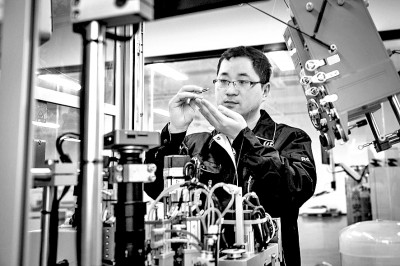
加力培养高层次创新型青年人才——我国博士后制度实施40年招收培养40余万人
Xin Hua She· 2025-11-25 12:32
Core Points - The postdoctoral system in China has been implemented for 40 years, training over 400,000 postdoctoral researchers, with 135,000 currently active [1] - The system aims to cultivate high-level innovative talents to support technological independence and self-reliance [1] Funding and Support - The funding for postdoctoral programs has significantly increased, with central government funding reaching 12.58 billion yuan and provincial funding at 13.83 billion yuan over the past five years [2] - The number of annual funding slots for youth talent at Peking University has increased to 380, reflecting a broader trend of expanding financial support for postdoctoral researchers [2] Contributions to Innovation and Industry - Postdoctoral researchers are making significant contributions to various sectors, including satellite data processing and traditional manufacturing, with one researcher’s work benefiting over 30 companies [3] - The establishment of innovation and entrepreneurship platforms is accelerating the commercialization of research outcomes, with over 70% of postdoctoral stations located in advanced manufacturing enterprises [4] Research Output - In the last five years, postdoctoral researchers have published 385,000 papers, filed 83,000 patents, and received over 20,000 various scientific awards, with about 80% entering research roles in universities and enterprises after graduation [5] System Reform and Development - The introduction of a new registration system for establishing postdoctoral research stations has made it easier for companies to recruit talent and integrate research projects with existing R&D efforts [6] - Continuous reforms in the postdoctoral management system aim to enhance the quality of recruitment and training, contributing to a competitive international postdoctoral system [7]
激发青年科技人才活力
Jing Ji Ri Bao· 2025-10-30 22:16
Core Insights - The article emphasizes the importance of supporting young scientific and technological talents in innovation and entrepreneurship as a key driver for China's future development [1][2]. Group 1: Talent Development - During the "14th Five-Year Plan" period, the number of basic research talents in China increased from 472,000 to 575,000, with 180,000 new postdoctoral recruits, marking a 64% growth compared to the "13th Five-Year Plan" [1]. - 43.3% of the leaders of national key R&D projects are under 45 years old, and 80% of the National Natural Science Foundation projects are undertaken by young talents under 45 [1]. - There is a systemic leap in the scale, structure, and status of young scientific and technological talent cultivation, although challenges such as inadequate evaluation systems and resource allocation remain [1]. Group 2: Mechanism and System Innovation - The article suggests breaking structural barriers in training mechanisms and evaluation systems through innovative policies like "ranking by merit" for major research tasks, encouraging young talents to take the lead [1]. - It advocates for establishing dedicated pathways and exploring feasible support schemes for young scientific talents, along with reforming traditional rigid funding management systems [1]. Group 3: Technology Transfer and Capitalization - Establishing a technology information officer system to connect high-value results databases with industrial internet platforms is proposed to facilitate technology transfer [2]. - The creation of a shared concept verification and pilot platform for young talents aims to reduce early project failure risks [2]. - A green channel for listing innovative enterprises on the Sci-Tech Innovation Board is suggested, reducing the listing cycle to six months for qualifying companies [2]. Group 4: Supportive Ecosystem - The article calls for creating a failure-tolerant and innovation-encouraging social atmosphere, promoting a sense of responsibility and mission among young talents [2]. - It encourages local governments to implement targeted policies to support young scientific and technological talents in innovation and entrepreneurship [2]. - A comprehensive service ecosystem from R&D to industrialization is proposed to provide all-around support for young talents' projects and innovations [2].
让更多青年科技人才脱颖而出
Jing Ji Ri Bao· 2025-10-11 22:15
Core Insights - A team of young scientists, primarily from the "post-90s" generation, has gained attention for their research paper on the DeepSeek-R1 inference model, published in the prestigious journal Nature [1] - Young scientific talent has become a backbone in major national technology projects and emerging fields like artificial intelligence, with 43.3% of project leaders in key national R&D plans during the 14th Five-Year Plan being under 45 years old [1] Group 1 - The current cultivation and utilization of young scientific talent in China face several challenges, including insufficient early career support, lack of growth platforms, and inadequate evaluation mechanisms tailored to their characteristics [2] - Young scientists are considered the most dynamic group for innovation, with optimal invention ages ranging from 25 to 45 years [2] - National laboratories and major technology tasks are crucial for nurturing young innovative talent, necessitating greater trust and support for these individuals to take on significant roles [1][2] Group 2 - Early career support for young scientific talent is primarily competitive project-based, which disadvantages those with fewer early research results [2] - There is a need to create a favorable innovation ecosystem, as nearly 60% of young talents feel burdened by administrative tasks, which detracts from their research focus [2] - Improving the institutional mechanisms that align with the growth patterns of young scientific talent will encourage more individuals to excel in building a strong technological nation [2]
2024年度省科学技术奖提名工作启动优先提名第一完成人35周岁以下的项目
Xin Hua Ri Bao· 2025-04-28 23:21
Core Points - The Jiangsu Provincial Science and Technology Award nomination for 2024 has been initiated, marking the first implementation of the new award regulations [1] - The awards aim to encourage the nomination of projects led by individuals under 35 years old, highlighting support for young scientific talent [1] Award Categories and Quantities - The 2024 Jiangsu Provincial Science and Technology Awards include: Outstanding Contribution Award, Natural Science Award, Science and Technology Progress Award, Young Scientific Talent Award, and International Scientific Cooperation Award [1] - The Outstanding Contribution Award will have a maximum of 2 recipients, while the Natural Science and Science and Technology Progress Awards will be divided into first, second, and third prizes, with a total of no more than 300 awards [1] - The first prize is limited to 60, the second prize to 120, and the third prize to 120 [1] - The Young Scientific Talent Award will have a maximum of 10 recipients, and the International Scientific Cooperation Award will be awarded to no more than 10 individuals or organizations [1] Nomination Process - Nominations can be made by experts or organizations, with a focus on establishing a scientific, standardized, and reasonable selection mechanism [1] - Experts eligible for nomination include recipients of the National Highest Science and Technology Award and the Jiangsu Provincial Outstanding Contribution Award, as well as academicians [2] - Local science and technology bureaus are encouraged to nominate significant achievements from local enterprises, research institutes, and universities [1] Nomination Requirements - The Outstanding Contribution Award requires nominees to have made significant breakthroughs in contemporary science and technology or to have created outstanding economic, social, or ecological benefits [2] - The Natural Science Award nominations should focus on original major achievements in basic research that enhance Jiangsu's technological innovation capabilities [2] - The Science and Technology Progress Award should highlight significant contributions to Jiangsu's economic and social development, particularly in addressing major local industrial needs [2]
中经评论:为推进高水平科技自立自强贡献青春力量
Zhong Guo Jing Ji Wang· 2025-03-10 22:48
Group 1 - The core viewpoint emphasizes the importance of high-level innovative talent, particularly young scientific and technological personnel, in achieving self-reliance and strength in technology [1] - The government has proposed strong support and bold utilization of young scientific talents, recognizing their critical role in national strategic talent development [1] - Recent policies aim to reform the evaluation of scientific talent, breaking away from traditional metrics like publications and degrees, thus providing a nurturing environment for young talents [1] Group 2 - There is a significant representation of young talents in key research projects, with over 80% of participants in national key R&D programs being under 45 years old [1] - Young talents are encouraged to take on responsibilities and leadership roles, as evidenced by successful contributions from younger engineers in major projects [2] - The need for early career support is highlighted, as young talents often face challenges in securing research funding due to limited early achievements [2] Group 3 - The article reflects on the spirit of perseverance and dedication among young scientists, drawing parallels with historical figures who achieved great success through hard work [3] - It calls for young scientific talents to take on significant challenges in foundational research and major projects to secure future technological and industrial advancements [3] - The expectation is set for more young individuals to contribute to scientific innovation and become leaders in the field [3]