韩中合作

Search documents
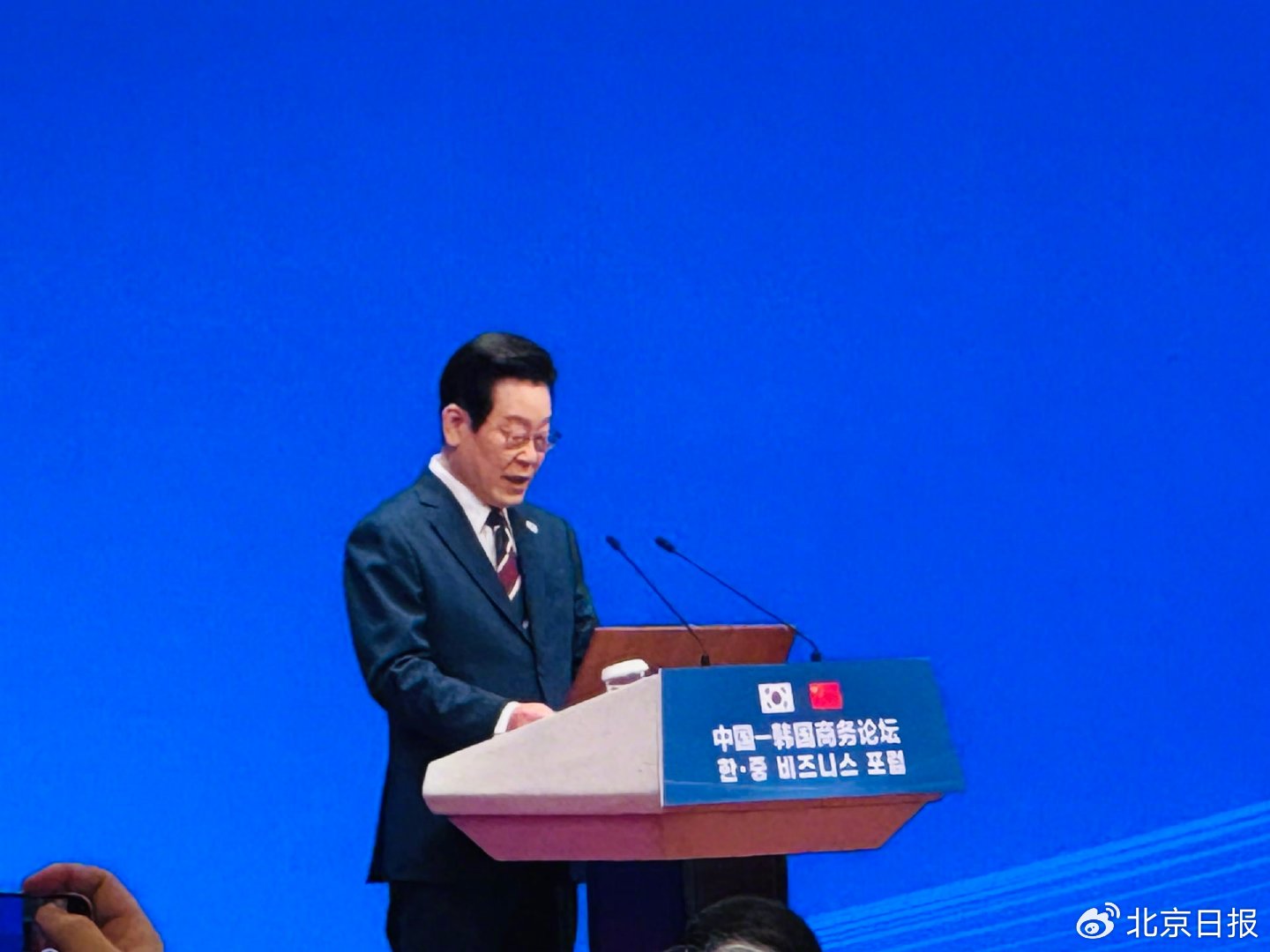
李在明:千金难买好邻居,韩中应在国际环境变化中坚持合作
Bei Jing Ri Bao Ke Hu Duan· 2026-01-05 12:01
Core Points - The China-Korea Business Forum held on January 5 in Beijing emphasized the importance of mutual trust and benefit in advancing cooperation between China and South Korea, which is considered the most valuable asset in their relationship [1][6] - This year marks the 34th anniversary of diplomatic relations between China and South Korea, with significant achievements in various fields of cooperation since the establishment of ties [1][6] Group 1: Historical Context and Trade Relations - Historical trade exchanges between Korea and China have played a crucial role, with Korean paper becoming an important carrier of Chinese knowledge and culture, which in turn promoted the development of Korean scholarship and culture [3][8] - Despite tensions in bilateral relations, trade between the two countries has never ceased, contributing to the prosperity, stability, and lasting peace in East Asia [3][8] Group 2: Current Cooperation and Future Opportunities - Both countries are enhancing their manufacturing competitiveness through innovation, with companies encouraged to learn from each other's policies and technologies to explore collaborative solutions [5][10] - Increased youth exchanges and cultural experiences are creating new cooperation opportunities in sectors such as content industry, gaming, performances, and cultural platforms, which serve as important links for further business collaboration [5][10] - The acceleration of negotiations on the China-Korea Free Trade Agreement for services and investments is expected to provide new momentum for business cooperation [5][10] Group 3: Forum Participation and Discussions - The China-Korea Business Forum was co-hosted by the China Council for the Promotion of International Trade and the Korea Chamber of Commerce and Industry, with over 400 attendees including government officials, business leaders, and scholars from both countries [5][10] - Key topics discussed included "manufacturing innovation, supply chain cooperation," "new markets for consumer goods," and "service industry cooperation," facilitating in-depth exchanges among entrepreneurs [5][10]

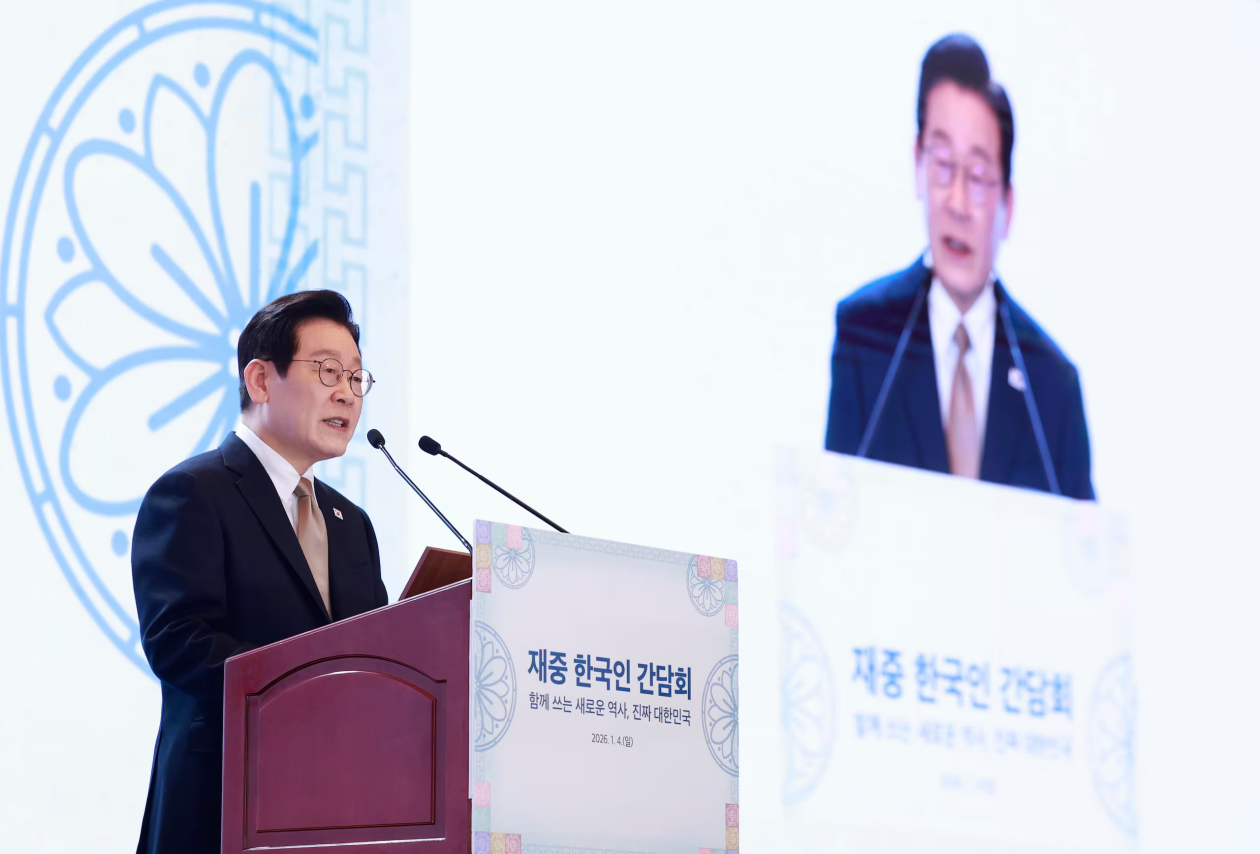
李在明抵京后表态:韩中两国在多领域合作方面拥有“无限机会”
Huan Qiu Wang· 2026-01-04 14:51
Group 1 - The core achievement of the current South Korean government is the comprehensive restoration of South Korea-China relations, which is seen as a significant diplomatic success [2][3] - The visit is intended to mark the beginning of "pragmatic diplomacy" for South Korea in 2024 and is expected to serve as an important milestone for the development of bilateral relations over the next 30 years [2][3] - There is an emphasis on the importance of economic cooperation between South Korea and China, with potential collaboration opportunities in renewable energy, biotechnology, and the silver economy, among other fields [3] Group 2 - The South Korean government aims to strengthen communication and cooperation between the two countries based on mutual respect and understanding [2][3] - The visit is also seen as a way to bridge past gaps in the relationship and restore mutual trust, with a commitment to maintaining positive momentum and preventing past difficulties from recurring [3] - The Chinese Ministry of Foreign Affairs expressed anticipation that this visit will positively contribute to the advancement of the strategic partnership between China and South Korea under the leadership of both countries' leaders [3]
韩国各界:元首会谈推动两国务实合作
Zhong Guo Xin Wen Wang· 2025-11-01 18:05
Core Viewpoint - The visit of Chinese President Xi Jinping to South Korea is significant for enhancing practical cooperation between the two countries, marking an opportunity for strategic dialogue after 11 years [1][2]. Group 1: Bilateral Relations - The meeting between Xi Jinping and South Korean President Yoon Suk-yeol is expected to have a positive impact on Sino-South Korean relations [1]. - The establishment of a strategic partnership is based on the principle of "cooperation and mutual prosperity" [1]. Group 2: Economic Cooperation - There is a high degree of complementarity in the economic structures of China and South Korea, particularly in industries such as robotics and drones, where both countries have unique advantages and complementary demands [1]. - The potential for cooperation between China and South Korea is substantial, especially in emerging technology fields where China holds a leading position and South Korea has strengths in smart manufacturing and core components [1]. Group 3: Cultural and Social Exchange - Following the meeting, there is an expectation for substantial progress in economic cooperation, with a long-term view of deepening cultural and social exchanges in areas such as youth, culture, and sports [2].
2025中韩媒体合作论坛
Ren Min Ri Bao· 2025-10-13 22:20
Group 1: Industry Transformation and Cooperation - The forum emphasizes the importance of cooperation between South Korea and China in the context of digital transformation and emerging industries, aiming to enhance mutual understanding and trust [1][3] - The second phase of the South Korea-China Free Trade Agreement negotiations should be expedited, with a suggestion to lower some standards if a consensus cannot be reached [1][3] Group 2: Tourism and Cultural Exchange - Recent policies, such as South Korea's temporary visa exemption for Chinese group tourists, have led to a significant increase in travel interest, with a 70% rise in searches for travel products to Seoul [6][7] - The cultural exchange facilitated by social media platforms like Xiaohongshu is fostering deeper connections between Chinese and Korean citizens, enhancing mutual understanding [5][6] Group 3: Technological Innovation and AI - The rapid development of artificial intelligence is expected to reshape industries, with companies like Yalecar leading innovations in the global tourism sector through AI-driven data platforms [4][9] - The integration of AI in manufacturing processes is being prioritized, with companies like LingShu Intelligent focusing on industrial applications and collaborations with South Korean firms [10] Group 4: Robotics Industry Collaboration - The demand for robots is increasing, but challenges remain for small and medium enterprises in adopting AI technologies; collaboration between South Korea and China in robotics can enhance the industry ecosystem [8][9] - Companies like ZhiYuan Robotics are pushing for deep integration of AI and robotics, promoting open data sharing to foster industry growth [9] Group 5: Cultural and Media Cooperation - The importance of long-term perspectives in media reporting is highlighted, suggesting that both countries' media should focus on fostering positive narratives and mutual understanding [11][12] - Collaborative projects between mainstream media and self-media can help shape public opinion positively and mitigate cognitive biases [12][13]