
页岩油开发

Search documents
大庆永铸取得页岩油开发用纳米水基钻井液专利
Sou Hu Cai Jing· 2026-02-04 03:26
Group 1 - The core point of the article is that Daqing Yongzhu Petroleum Technology Development Co., Ltd. has obtained a patent for a "nano-water-based drilling fluid for shale oil development and its preparation method" with the authorization announcement number CN120829766B, applied on September 2025 [1] - Daqing Yongzhu Petroleum Technology Development Co., Ltd. was established in 2019 and is located in Daqing City, primarily engaged in the oil and gas extraction industry [1] - The company has a registered capital of 20 million RMB and has participated in 51 bidding projects, holds 45 patent information, and possesses 18 administrative licenses according to data analysis from Tianyancha [1]
这群年轻人将“钻”劲儿写在岩“页”里
Xin Lang Cai Jing· 2025-12-19 23:35
Core Insights - The annual production of Gu Long shale oil has exceeded 1 million tons, achieving the target 28 days ahead of schedule [1] - The development of Gu Long shale oil is a significant strategic resource, with a production increase from 15,000 tons in 2021 to 86,000 tons in 2022, and then surpassing 1 million tons in 2025 [1][2] Group 1: Production Milestones - As of December 3, the Gu Long shale oil production reached over 1 million tons [1] - The production in 2021 was 15,000 tons, which increased to 86,000 tons in 2022 [1] - The production milestone of 1 million tons was achieved in 2025, indicating rapid growth [1] Group 2: Exploration and Development Challenges - Shale oil extraction is more challenging than conventional oil due to its dense rock structure, requiring advanced techniques [2] - The exploration team began analyzing the Qing Shankou formation in 2018, leading to significant discoveries about oil presence [2][3] - The team faced skepticism regarding the economic viability of shale oil, with doubts about its storage and production potential [3][4] Group 3: Youth Involvement and Innovation - A youth task force was formed to tackle exploration and development challenges, leading to breakthroughs in key technologies [4] - The task force has grown from about 20 members to around 50, reflecting increased youth engagement in the sector [5][6] - Young professionals are actively involved in addressing urgent tasks and developing new methodologies for resource identification [6][7]
中国陆上最大油田实现页岩油规模化效益开采
Xin Hua She· 2025-12-10 13:30
Core Viewpoint - The Daqing Gulong continental shale oil national demonstration zone has achieved an annual production of over 1 million tons, marking a significant milestone in the large-scale extraction of shale oil in China [2][4] Group 1: Production and Development - The Gulong shale oil demonstration zone's annual production increased from 15,000 tons in 2021 to over 1 million tons by 2025, demonstrating a historic leap from "oil generation" to "oil production" [4] - The single well lifecycle production has risen from 11,000 tons to 32,000 tons over five years, indicating improved extraction efficiency [4] Group 2: Technological and Strategic Advances - The Daqing Oilfield has confirmed the significant theoretical breakthrough that "shale can also produce oil," which is expected to greatly enhance the prospects for oil and gas resources in China [4] - The development of Gulong shale oil has been supported by national investment and technology, with local policies facilitating the establishment of 18 oil service companies, creating a complete industrial chain [4] Group 3: Challenges and Innovations - The Gulong shale oil, recognized as a typical representative of mudstone-type shale oil, faced significant development challenges, which were overcome through innovative drilling techniques [2][4] - The successful drilling of the "Guyu Oil Ping 1 Well" marked a turning point, leading to the first industrial oil and gas flow in June 2020 after overcoming various geological challenges [2]

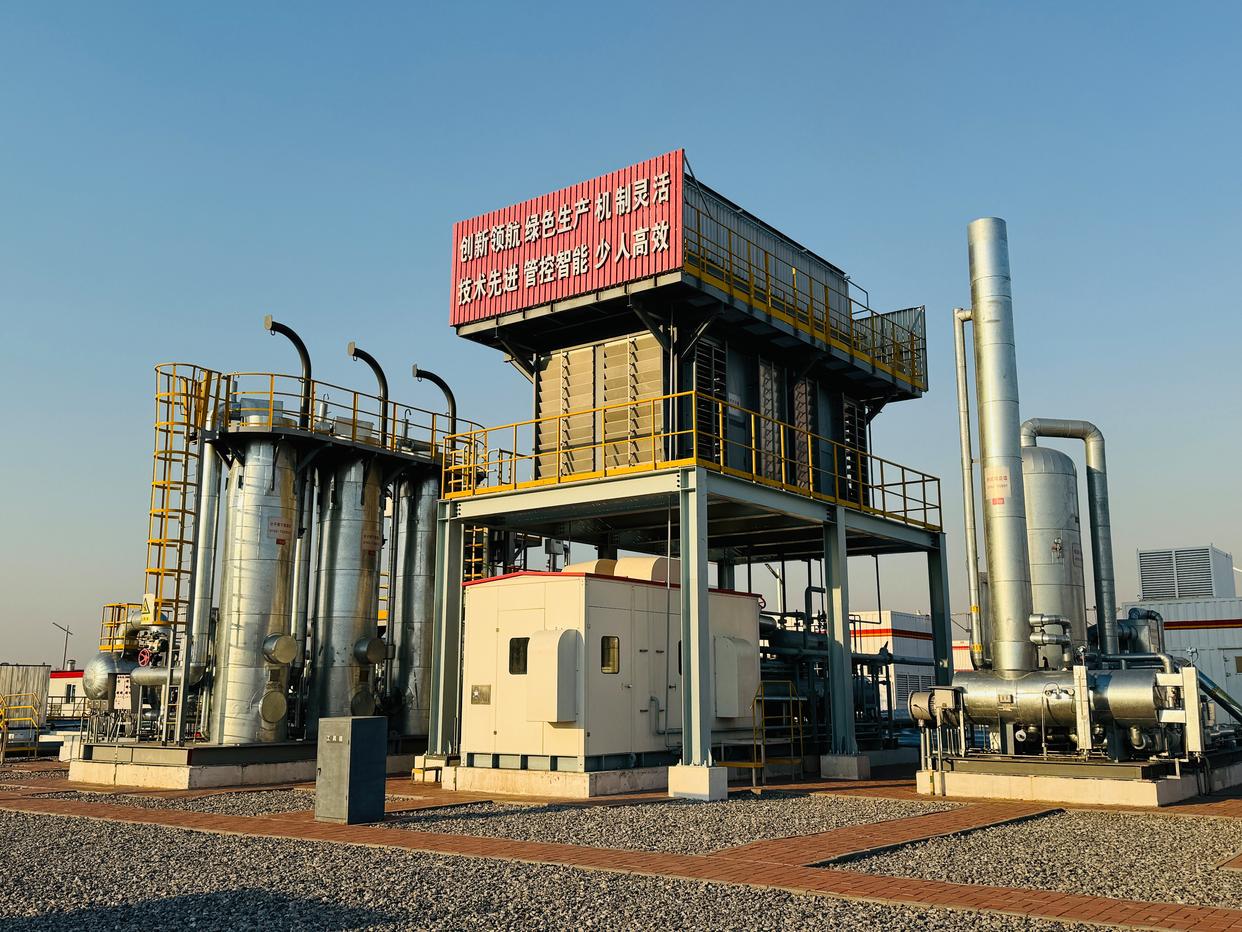
我国页岩油国家级示范区建设取得重大突破 能源保供再添新动力
Yang Shi Wang· 2025-12-05 08:28
Core Viewpoint - The Daqing Gulong continental shale oil demonstration zone has achieved a significant milestone by surpassing an annual production of 1 million tons for the first time, marking a historic high for the same period in China’s shale oil national demonstration zone development [1] Group 1: Production Achievements - The Daqing Gulong shale oil demonstration zone, located in the northern part of the Songliao Basin, covers an area of 2,778 square kilometers and has seen its annual production exceed 1 million tons [1][3] - The Daqing Oilfield has optimized key processes such as drilling and fracturing, leading to a significant increase in development efficiency, with single well production rising from 7.7 tons to 17.3 tons and a 56% improvement in single well construction cycle [3] - Daily shale oil production has surpassed 3,700 tons, with expectations to exceed 1.08 million tons by the end of the year [3] Group 2: Historical Context and Future Projections - The Daqing Oilfield initiated the construction of the Gulong shale oil national demonstration zone in 2021, entering the initial phase of large-scale trial production in 2022, which yielded nearly 100,000 tons of oil that year [5] - The cumulative drilling of horizontal wells has reached 393, with a total oil production exceeding 1.67 million tons [5] - The successful development of Gulong shale oil has achieved breakthroughs in exploration and core technology, providing a reference for similar shale oil developments, with proven reserves of 158 million tons and a production target of 3 million tons by the end of the 14th Five-Year Plan [7]


YPF(YPF) - 2025 Q3 - Earnings Call Transcript
2025-11-10 15:02
Financial Data and Key Metrics Changes - Revenues for the third quarter amounted to $4.6 billion, a 12% decrease year-on-year, reflecting a 13% decline in Brent prices [3][4] - Adjusted EBITDA reached approximately $1.4 billion, showing a sequential increase of over 20% while remaining flat compared to the previous year [3][4] - Free cash flow was negative at $759 million, primarily due to the acquisition of shale assets and the impact of the mature field exit strategy [8][29] Business Line Data and Key Metrics Changes - Shale production increased by 35% year-on-year, reaching 170,000 barrels per day, with preliminary figures indicating a further 12% increase in October [4][14] - Total hydrocarbon production averaged 523,000 barrels of oil equivalent per day, down 4% sequentially and 6% year-on-year [11] - Downstream segment achieved the highest processing level since 2009 at 326,000 barrels per day, a 9% increase year-on-year [7][22] Market Data and Key Metrics Changes - Crude oil realization price averaged $60 per barrel, flat sequentially but down 12% year-on-year [12] - Natural gas prices increased by 6% quarter-over-quarter to an average of $4.3 per MBTU [13] Company Strategy and Development Direction - The company continues to focus on operational efficiency and the development of unconventional resources, with 70% of CapEx directed towards shale activities [5][18] - YPF aims to become a 100% pure shale player with a competitive lifting cost structure of around $5 per BOE in the near future [18] - The Argentina LNG project is progressing, with a Technical FID signed for a fully integrated LNG project expandable to 18 million tons per year [9][27] Management's Comments on Operating Environment and Future Outlook - Management expressed confidence in maintaining profitability despite international price contractions, driven by an improved production mix and operational efficiencies [3][4] - The company anticipates a clean year in 2026, with improved visibility on results and shareholder value creation [72][74] Other Important Information - Net debt increased to $9.6 billion, with a net leverage ratio of 2.1x, but pro forma adjustments would show a lower ratio [8][29] - The company successfully issued $500 million in international bonds at an 8.25% yield, the lowest interest rate for an international bond in recent years [9][33] Q&A Session Summary Question: Production growth outlook for 2026 and 2027 - Management expects production to average around 215,000 barrels per day in 2026 and 290,000 barrels per day in 2027 [38] Question: Development of the Refinor asset and refining portfolio - Refinor provides logistical advantages, and management is focused on maximizing shareholder value through strategic decisions [39] Question: Future M&A activities and capital allocation - The company will remain active in portfolio management but does not foresee major acquisitions in the near term [43] Question: Working capital losses and future expectations - Negative working capital was driven by seasonality and longer collection days, with normalization expected in the coming quarters [53] Question: Lifting costs trajectory and leverage comfort level - Management is working to reduce unit costs and aims to maintain leverage at comfortable levels, with a reduction expected in 2026 [59] Question: Update on downstream pricing and divestment of MetroGAS - The company is implementing a dynamic pricing model and is in the process of negotiating divestments from conventional assets [61][65]

我国首个国家级陆相页岩油示范区年产量突破150万吨
Xin Lang Cai Jing· 2025-10-28 23:33
Core Insights - The first national-level continental shale oil demonstration zone in China, located in Jimsar, Xinjiang, has achieved an annual production of over 1.5 million tons for the first time, marking a historical peak for the same period [1] - This milestone indicates a transition in China's shale oil development from technical exploration to a new phase of large-scale and stable output [1] Industry Summary - The establishment of the Jimsar shale oil demonstration zone signifies a significant advancement in China's shale oil industry, showcasing the country's commitment to enhancing domestic energy production [1] - The achievement of over 1.5 million tons of annual production reflects the potential for further growth and development within the shale oil sector in China [1]
俄罗斯赖以立国与维持战争的石油生产,正在战争和制裁中缓慢消亡
Sou Hu Cai Jing· 2025-09-30 19:16
Core Insights - Russian oil production is facing significant challenges due to war and sanctions, with traditional oil fields aging and shale oil development restricted. OPEC+ has increased production to capture market share, leading to a drop in oil prices from $80 to $60, with predictions of a potential decline to $50 [1][3][19]. Group 1: Impact of Sanctions and War - Sanctions have severed Western technology and equipment supplies, leaving Russia without advanced software, trained workers, and high-end drilling equipment, making it difficult to maintain or expand production [1][5][6]. - By 2030, Russian oil production is expected to decline by 20% to 50%, posing a threat to its economy and the funding of the war in Ukraine [1][19]. Group 2: Challenges in Oil Production - The aging of traditional production centers in Western Siberia and the Volga-Ural region has been exacerbated by sanctions, which hinder the ability to utilize Western technology for shale extraction [5][9]. - The lack of trained personnel due to the war has made it challenging for Russia to expand shale oil production, as many potential workers are engaged in military efforts [11][12]. Group 3: Technological Limitations - Russia lacks modern directional drilling tools and advanced hydraulic fracturing equipment, which are essential for efficient shale oil extraction [14][16]. - The absence of updated software for analyzing geological data has severely limited Russia's ability to locate and extract oil effectively [9][19]. Group 4: Global Oil Demand and Future Outlook - As global oil demand is projected to increase, with estimates suggesting it could reach 103.4 million barrels per day by 2030, Russia's declining oil production could lead to its diminished role in the global oil market [21]. - The potential reduction in Russian oil supply amidst rising global demand signals a need for countries reliant on Russian oil to adjust their supply structures [21].
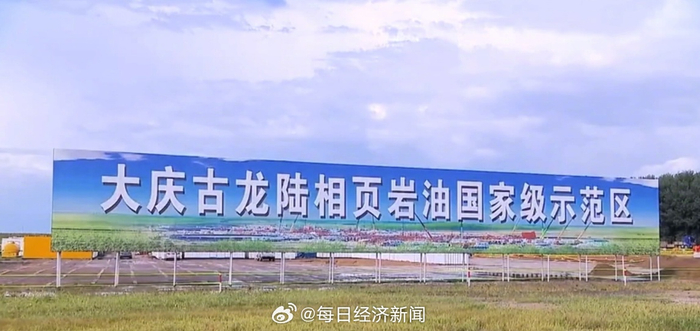
大庆古龙页岩油新增1.58亿吨探明储量,日产超3500吨
Mei Ri Jing Ji Xin Wen· 2025-09-26 00:29
Core Insights - China has added 158 million tons of proven shale oil reserves in the Daqing Gulong continental shale oil national demonstration area, providing crucial support for the development of continental shale oil in the country [1] Group 1: Development and Production - The Daqing Gulong continental shale oil national demonstration area is located in the northern part of the Songliao Basin, covering an area of 2,778 square kilometers [1] - Daily production of shale oil in the Daqing Gulong area exceeds 3,500 tons, marking a rapid transition from "proven reserves" to "effective development" [1] - The Daqing oilfield initiated the construction of the Gulong shale oil national demonstration area in 2021, with initial pilot production starting in 2022, yielding nearly 100,000 tons of oil that year [1] - The projected annual oil production for 2024 is expected to exceed 400,000 tons, achieving a doubling of production for three consecutive years [1] - As of now, a total of 398 horizontal wells have been drilled in the demonstration area, with cumulative oil production exceeding 1.4 million tons [1] Group 2: Future Outlook - The newly added proven reserves will provide essential resource support for the establishment of a million-ton-level national demonstration area by 2025 [1] - China's shale oil production is expected to surpass 6.8 million tons this year [1]
我国首个国家级页岩油示范区累计产量突破500万吨
Yang Shi Xin Wen Ke Hu Duan· 2025-09-24 16:40
Core Insights - The first national-level continental shale oil demonstration zone in China, located in Jimsar, Xinjiang, has achieved a cumulative production of over 5 million tons, marking a transition from technical exploration to stable output in shale oil development [1][5] - Shale oil is recognized as a resource with significant development potential, despite being difficult to extract [1][3] - The Jimsar shale oil demonstration zone covers an area of 1,278 square kilometers with oil reservoirs buried over 3,800 meters deep [1] Production and Development - The demonstration zone has accelerated capacity construction, completing 48 wells this year, with daily production surpassing 5,000 tons, setting a historical record [1][5] - The estimated resource volume in the Jimsar shale oil zone exceeds 1 billion tons, laying the foundation for large-scale development [5] - By the end of this year, China's shale oil production is expected to exceed 6.8 million tons, fully completing the national shale oil demonstration zone construction [5] Technological Advancements - The shale oil extraction in Jimsar faces challenges due to the extremely dense rock formations, likened to "squeezing oil from a whetstone" [3] - To address these challenges, a comprehensive technical system and standards for continental shale oil development have been established, achieving a drilling speed record of 1,860 meters per day for horizontal wells [3] - The first "unmanned inspection" oil management area in China has been established in this zone, utilizing digital management for 24-hour intelligent operations [3]
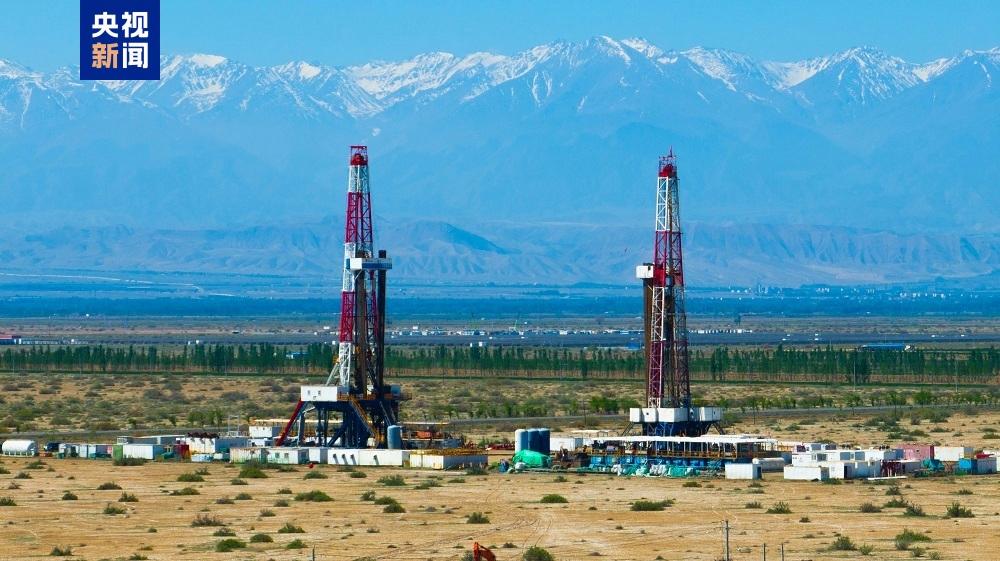
长庆油田页岩油日产量首次突破万吨
news flash· 2025-07-23 05:23
Group 1 - The core point of the article is that Changqing Oilfield has achieved a significant milestone by surpassing a daily shale oil production of 10,000 tons, reaching 10,006 tons, indicating a new breakthrough in China's shale oil development capabilities [1] Group 2 - Changqing Oilfield is recognized as the largest oil and gas field in China, highlighting its importance in the country's energy sector [1] - The achievement reflects advancements in technology and production methods within the shale oil industry in China [1] - This milestone may have implications for China's overall energy strategy and its efforts to enhance domestic oil production [1]