风光大基地

Search documents
特变电工20260304
2026-03-06 02:02
Summary of the Conference Call for TBEA Co., Ltd. Industry and Company Overview - TBEA operates in the energy sector, focusing on power transmission and transformation, new energy, traditional energy (coal), and new materials (aluminum) [2][3] - The company has established a comprehensive energy industry chain, leveraging resources primarily from Xinjiang [3] Key Points and Arguments Power Transmission and Transformation Business - The business is expected to benefit from ultra-high voltage (UHV) projects and international expansion, with projected revenue growth of approximately 20% for 2023-2024 [2] - TBEA holds a market share of over 20% in UHV DC converter transformers and over 30% in UHV AC transformers [2][4] - Domestic investment in power grids is supported by a planned investment of approximately 4 trillion yuan over five years, with a compound annual growth rate (CAGR) of 6%-7% [4] International Market Dynamics - The overseas transformer market is experiencing a supply-demand imbalance, with delivery cycles extending to 3-4 years [5] - TBEA's overseas orders are expected to grow by over 50% from 2022 to 2024, driven by high demand and limited supply [5] - The company has increased its focus on securing high-margin overseas contracts, which are expected to enhance profit margins [5] Coal Business - The coal segment is projected to have a profit base of approximately 2 billion yuan in 2025, with expectations of improved performance in 2026 due to rising thermal power demand and supply constraints [2][7] - The total coal reserves are approximately 74 million tons, with potential for further growth [6] - Factors such as U.S. electricity shortages and Indonesian coal production controls may support higher coal prices [7] Gold Business - TBEA's gold production is estimated at 2.5-3 tons annually, with a profit of about 700 million yuan per ton, contributing over 2 billion yuan to overall performance [2][10] - The valuation for the gold segment could reach over 30 billion yuan, supported by high gold prices [10] New Energy Silicon Material - The company has a silicon material capacity of 300,000 tons, with prices expected to recover from current lows [2][6] - TBEA's cost structure is favorable, which may lead to significant profit elasticity when prices rebound [6] Aluminum Business - The aluminum segment has a capacity of 180,000 tons, with a profit contribution of approximately 400 million yuan [9] - The valuation for the aluminum segment could reach around 4 billion yuan [9] Additional Important Insights - The overall market valuation for TBEA appears low, with combined expected contributions from coal, gold, and aluminum exceeding 70 billion yuan [2][10] - The company is positioned to benefit from various macroeconomic factors, including energy transition policies and international market dynamics [3][4][5]

世界头号发电大国,中国与美国的差距有多大?发电量不及我国一半
Sou Hu Cai Jing· 2026-02-09 13:46
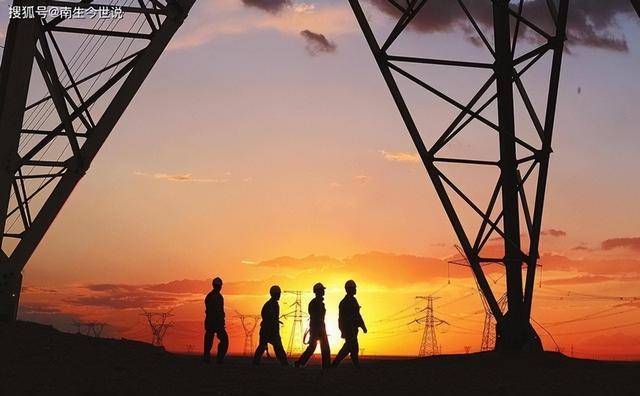
Core Viewpoint - China's electricity generation capacity has significantly surpassed that of the United States, with projections indicating a stable annual generation exceeding 9.5 trillion kilowatt-hours by the end of 2025, approaching 10 trillion [3]. In contrast, the U.S. is estimated to be around 4.3 trillion kilowatt-hours, highlighting a substantial gap in energy production capabilities [3]. Group 1: Current Electricity Generation - China's annual electricity generation has surpassed 9.5 trillion kilowatt-hours, nearing the 10 trillion mark [3] - The U.S. electricity generation is approximately 4.3 trillion kilowatt-hours, indicating a significant disparity [3] - This difference is likened to a race where China has completed two laps while the U.S. is still at the first lap's finish line [3] Group 2: Infrastructure and Technological Advancements - China's "wind and solar power bases" in the northwest are described as a vast expanse of solar panels, showcasing the country's commitment to renewable energy [5] - The use of ultra-high voltage transmission lines allows China to efficiently transport electricity over long distances, a technology that is considered a unique advantage [5] - In contrast, the U.S. faces challenges with an aging electrical grid, primarily built in the 1960s and 1970s, which is not comparable to modern smart grids [7] Group 3: Demand for Electricity in Technology - Major tech companies in Silicon Valley are facing electricity shortages, hindering their ability to build new data centers due to insufficient grid capacity [9] - In China, data centers in Guizhou and Inner Mongolia benefit from robust electricity support, allowing for continuous operation [9] Group 4: Historical Context and Future Outlook - Over the past thirty years, China has transformed from a state of electricity scarcity to one of abundance, moving from "electricity difficulties" to "electricity freedom" [11] - China's advancements in hydropower and nuclear energy, such as the Three Gorges Dam and the Hualong One nuclear power plant, illustrate the country's commitment to expanding its energy infrastructure [13] - The U.S. will face significant challenges in bridging the electricity generation gap, requiring not just financial investment but also a new generation of engineers and strong organizational capabilities [15]

龙源电力(001289):电价下降影响业绩表现,加快建设大基地和海上风电项目
Guoxin Securities· 2025-08-24 13:25
Investment Rating - The investment rating for the company is "Outperform the Market" [6][25][29] Core Views - The company's operating revenue and net profit attributable to shareholders have decreased year-on-year due to factors such as the disposal of a subsidiary and a decline in average electricity prices [1][8] - The company is actively developing new energy projects, with a focus on expanding wind and solar power capacity, and has achieved significant growth in installed capacity [2][24] - The profit forecast has been adjusted downward due to the impact of declining electricity prices, with expected net profits for 2025-2027 being 67.7 billion, 70.9 billion, and 74.5 billion yuan respectively [3][25] Summary by Sections Financial Performance - In the first half of 2025, the company achieved operating revenue of 15.657 billion yuan, a decrease of 18.61% year-on-year, and a net profit of 3.374 billion yuan, down 13.79% [1][8] - The decline in revenue was attributed to the disposal of a subsidiary, increased solar power revenue, and a decrease in average electricity prices for wind power [1][8] New Energy Development - The company has added 2.0535 million kilowatts of new energy capacity in the first half of 2025, with wind and solar power contributing 987,000 and 1,096,600 kilowatts respectively [2][24] - As of June 2025, the total installed capacity reached 43.1967 million kilowatts, with wind power at 31.3957 million kilowatts and solar power at 11.7949 million kilowatts [2][24] Profit Forecast and Valuation - The profit forecast for 2025-2027 has been revised to 67.7 billion, 70.9 billion, and 74.5 billion yuan, reflecting a growth rate of 6.7%, 4.7%, and 5.1% respectively [3][25] - The expected earnings per share (EPS) for the same period are 0.81, 0.85, and 0.89 yuan, with corresponding price-to-earnings (PE) ratios of 20.5, 19.6, and 18.6 [3][25]