马年文化

Search documents
热气腾腾的中国年 | 非遗守匠心 福马贺新春
Xin Lang Cai Jing· 2026-02-21 11:04
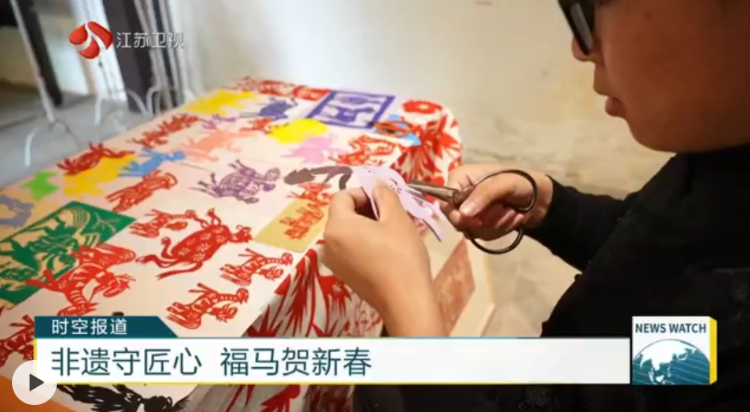
Core Viewpoint - The article highlights the cultural significance of the Year of the Horse in Chinese tradition, showcasing various traditional crafts and artworks that celebrate this theme, particularly through paper-cutting and other intangible cultural heritage (ICH) forms [2] Group 1: Cultural Significance - The horse symbolizes perseverance and courage in Chinese traditional culture, and artisans in Jiangsu's Xuzhou and Yangzhou are creating ICH works themed around the Year of the Horse [2] - Liu Guanyu, a representative inheritor of Xuzhou paper-cutting, created "Hundred Horses Welcoming Spring," featuring 100 horses in various poses, to celebrate the New Year [2] - Zhang Zhenmei, a Yangzhou paper-cutting inheritor, designed the "Fortune Horse" series, combining the horse with the character for fortune, symbolizing prosperity [2] Group 2: Artistic Innovations - Artisans are integrating contemporary cultural elements into traditional crafts, using national style to express modern festive sentiments and convey good wishes for the new year [2] - Gu Xiaoci, a Yangzhou woodblock printing inheritor, collaborated with Tsinghua University to create the "Cloud Steed Presenting Auspiciousness" design, featuring a horse leaping on clouds [2] - Chen Zhikang, a Yangzhou lantern artisan, mentioned that decorative items can be used in cars, symbolizing wealth and success [2] - Meng Xiaohong, a Yangzhou dough figurine inheritor, created both traditional and modern interpretations of horses, including a trendy version called "Chosen Black Horse," wishing for success and prosperity [2]

大年初二北京市属公园接待游客超50万人次
Xin Lang Cai Jing· 2026-02-18 15:12
Group 1 - The article highlights the significant increase in visitor numbers at city parks during the Spring Festival, with a total of 504,500 visitors, showcasing the popularity of cultural and creative activities [1] - Major parks such as Temple of Heaven, Summer Palace, and Jingshan Park led in visitor numbers, indicating a strong interest in cultural experiences and traditional customs during the holiday [1] - The Temple of Heaven hosted dual cultural markets focusing on intangible cultural heritage and trendy consumer goods, creating immersive shopping experiences for visitors [1] Group 2 - The giant panda "Menglan" is featured prominently in various Spring Festival activities, including a large art lantern display and a pop-up store, enhancing the festive atmosphere [2] - The China Garden Museum offers diverse cultural experiences through exhibitions and intangible cultural heritage activities, allowing visitors to engage with traditional crafts [2] - The Lu County Ancient City Ruins Park launched a themed event centered around horse culture, encouraging visitors to participate in a scavenger hunt and educational activities [2]
周深与“贵州村T”合作《吉量》,解锁千年文化密码
Xin Lang Cai Jing· 2026-02-16 14:09
Core Viewpoint - The performance of the song "Jiliang" during the 2026 Spring Festival Gala highlights the cultural significance of the ancient mythical creature from "Shan Hai Jing," symbolizing longevity and prosperity, while resonating with the themes of the Year of the Horse [2][5][7]. Group 1: Cultural Significance - "Jiliang" is rooted in the classic text "Shan Hai Jing," describing a mythical horse that embodies the romantic expression of longevity and well-being [5]. - The song's themes align with the Year of the Horse, emphasizing the auspicious meanings of "Jiliang" and its connection to the New Year blessings [7][13]. - The cultural essence of "Jiliang" is revealed through the dissection of its characters, representing the ultimate imagination of a beautiful life [9][11]. Group 2: Symbolism of Characters - The character "Ji" signifies auspiciousness and is a core symbol of the Spring Festival, representing family reunion and good fortune [9]. - The character "Liang" relates to measurement and capacity, symbolizing the breadth of life and the hope for longevity, as reflected in the phrase "乘之寿千岁" [11]. - Together, "Ji" and "Liang" form a perfect embodiment of the ancient people's ultimate symbol of longevity and vastness [11][13]. Group 3: New Year Aspirations - The spirit of the Year of the Horse is about progress, which aligns perfectly with the dual meanings of "Jiliang," reflecting aspirations for success and growth in the new year [13]. - The performance transcends mere entertainment, serving as a vibrant example of the transmission of Chinese "Jiliang" culture, wishing for longevity and prosperity for all [16].
研学|招募!岁朝非遗 解锁马年文化新玩法!
Xin Lang Cai Jing· 2026-02-16 07:48
Core Viewpoint - The article discusses the significance of the China Garden Museum in promoting cultural heritage and environmental awareness through various exhibitions and educational programs [1] Group 1: Cultural Impact - The China Garden Museum serves as a platform for showcasing traditional Chinese garden culture, enhancing public understanding and appreciation of this art form [1] - The museum hosts a variety of exhibitions that highlight the historical and cultural significance of gardens in Chinese society [1] Group 2: Environmental Awareness - The museum emphasizes the importance of ecological conservation and sustainable practices in gardening, aiming to educate visitors on environmental issues [1] - Through its programs, the museum encourages the integration of nature into urban living, promoting green spaces in cities [1] Group 3: Educational Programs - The China Garden Museum offers educational workshops and activities for different age groups, fostering a deeper connection between the community and nature [1] - The museum collaborates with schools and organizations to provide resources and knowledge about gardening and environmental stewardship [1]
涨知识!这些博物馆里的马,你认得几匹?
Xin Lang Cai Jing· 2026-02-16 04:36
Core Viewpoint - The article highlights the cultural significance of horses in Chinese tradition, showcasing various historical artifacts that symbolize power, order, and auspiciousness associated with horses during the Year of the Horse. Group 1: Artifacts and Their Significance - The Bronze Galloping Horse from the Eastern Han Dynasty, displayed at the Gansu Provincial Museum, represents a spirit of determination and was designated as a national tourism symbol in 1983 [5]. - The Copper Chariot with Horse from the Eastern Han Dynasty, also from the Gansu Provincial Museum, is part of a ceremonial chariot procession and reflects the power and order symbolized by horses in a ritualistic society [8]. - The White Jade Horse Sculpture from the Western Han Dynasty, exhibited at the Xianyang Museum, illustrates the romantic imagination of the Han people and their eternal wishes for ascension [10]. - The Six Steeds Stone Carvings from the Tang Dynasty, currently displayed at the Shanghai Museum, celebrate the military achievements of Emperor Taizong of the Tang Dynasty [11]. - The Red Ground Patterned Silk with Horse Motif from the Tang Dynasty, housed in the Xinjiang Uygur Autonomous Region Museum, showcases the fusion of Greek and Persian styles, symbolizing the cultural exchanges along the Silk Road [12][13]. - The "Bole Evaluating Horses" Pen Holder from the Ming Dynasty, located in the Shanghai Museum, serves as a reminder or commendation for mentors who recognize talent [14][15]. - The Black Lacquered Plate with Horse Design from the Qing Dynasty, displayed at the Shanghai Museum, symbolizes longevity and features intricate inlays that depict various natural elements alongside horses [17][18].
文博日历丨灵骏除夕送祥瑞 国宝里的小马含量超高
Xin Lang Cai Jing· 2026-02-16 03:39
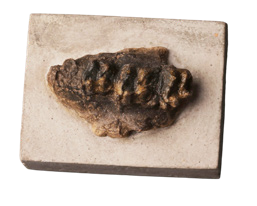
Group 1 - The article highlights the significance of horses in Chinese culture, symbolizing vitality, progress, and auspiciousness, especially as the Year of the Horse begins [1][50] - It traces the historical evolution of horses from their ancestors, the Eohippus, which appeared 58 million years ago, to their integration into human life and culture [1][5] - The article discusses the role of horses in ancient Chinese society, including their use in transportation, military, and as symbols of power and status [7][13][23] Group 2 - The article mentions various archaeological findings, such as horse bones and artifacts from prehistoric sites, indicating that China was one of the earliest countries to domesticate horses [5][9] - It describes the development of horse-related tools and equipment throughout different dynasties, showcasing the advancements in horsemanship and the cultural significance of horses [26][34] - The article also emphasizes the artistic representations of horses in various forms, including pottery, paintings, and sculptures, reflecting their importance in daily life and cultural practices [50][58]
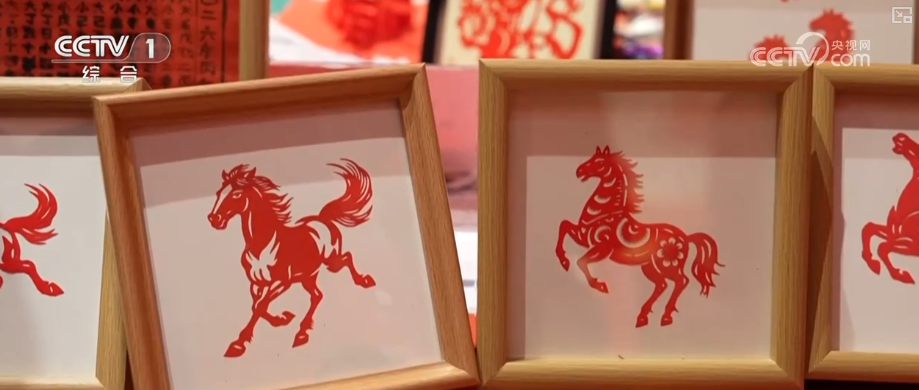
丙午马年奔腾而来 马年说“马”透过非遗中的马元素感受浓浓年味
Yang Shi Wang· 2026-02-16 01:40
Group 1 - The article highlights the significance of the Year of the Horse in Chinese culture, symbolizing strength, resilience, and a prosperous future [1] - The theme exhibition at the Chinese Intangible Cultural Heritage Museum focuses on the horse, showcasing various artistic representations and cultural elements related to the horse [3][5] - The horse has become a popular element in intangible cultural heritage creations, with many visitors engaging in crafting their own horse-themed artworks [6] Group 2 - Various traditional crafts are featured, including paper-cutting, pottery, and embroidery, all depicting horse imagery, reflecting the cultural importance of the horse in different regions [8][10][12] - The exhibition includes a new creation based on ancient paper-cut patterns, symbolizing the aspiration for a better life through the imagery of eight horses [8] - The Guizhou water tribe's horse tail embroidery technique is highlighted, showcasing the intricate craftsmanship involved in creating large decorative pieces [12]
全省9家一级博物馆游客暴增3倍
Xin Lang Cai Jing· 2026-02-15 22:17
Group 1 - The tourism industry in Liaoning province experienced a significant increase during the Spring Festival, with visitor numbers rising by 15.57% and total tourism revenue increasing by 14.35% compared to the previous year [1] - The number of visitors to the nine national first-class museums in the province surged, with a remarkable growth of 300.08% [1] - Various museums, including the Liaoning Provincial Museum and Dalian Natural History Museum, hosted themed exhibitions related to the Year of the Horse, enhancing cultural engagement and attracting more visitors [1][2] Group 2 - The "Ten Thousand Horses Galloping" exhibition at the Liaoning Provincial Museum featured over a hundred horse-related cultural relics, utilizing multimedia and interactive technology to enhance visitor experience [1] - The Dalian Natural History Museum's exhibition "Dalian Horse Arrives!" showcased the unique charm of the 17,000-year-old "Dalian Horse" fossil from multiple perspectives: natural, historical, and cultural [2] - The popularity of horse-themed cultural and creative products was evident, with many visitors specifically seeking out these items, including the "Fuma" themed products launched at the Shenyang Palace Museum [2]
快收藏!海淀“博物馆里过大年”最强攻略,马年福气一网打尽
Xin Lang Cai Jing· 2026-02-15 13:48
Group 1 - The article promotes various cultural activities and exhibitions in Haidian District's museums during the Spring Festival, encouraging families to engage in traditional Chinese New Year celebrations [3][22][44] - Activities include collecting "Fu" characters, participating in traditional crafts, and enjoying new exhibitions, all designed to enhance the festive atmosphere [3][5][12] - Specific events such as the ringing of the Yongle Bell at the Dazhong Temple Museum and the "Stone Horse" themed activities at the Beijing Stone Carving Art Museum are highlighted as key attractions [14][15][16] Group 2 - The article outlines the operational hours of various museums during the Spring Festival, with some extending their hours to accommodate visitors [5][19][21] - Notable exhibitions include the "Spring Full of Blessings" at Tsinghua University Art Museum, showcasing over 150 cultural artifacts related to New Year customs [25][27] - The National Library is hosting a themed exhibition on horse culture, featuring interactive elements and cultural displays [39][40]
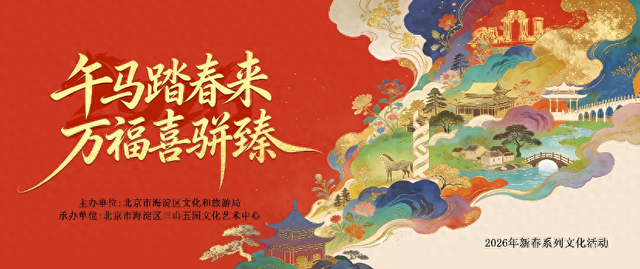
京城艺展“策马迎春”
Bei Jing Ri Bao Ke Hu Duan· 2026-02-13 21:27
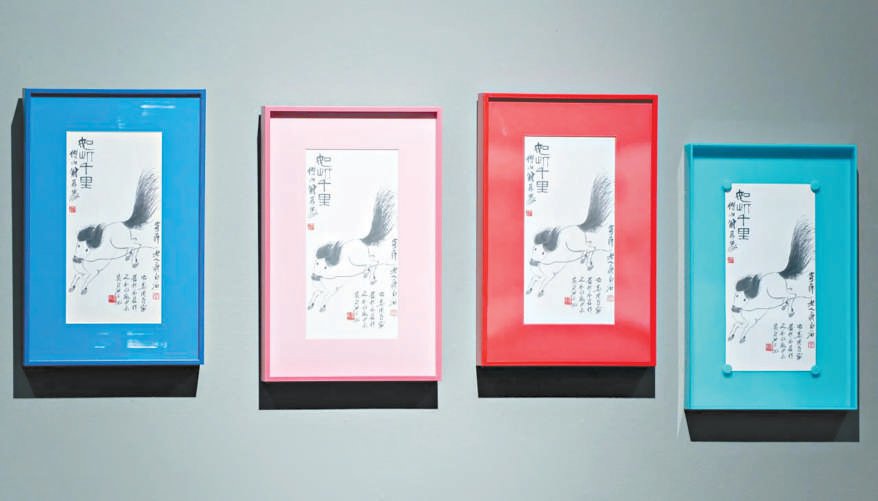
Core Viewpoint - Multiple art venues in Beijing are celebrating the Year of the Horse with themed exhibitions and cultural activities, allowing audiences to experience the charm of art and take home cultural gifts [1]. Group 1: Exhibitions and Installations - The Central Academy of Fine Arts Museum features a nearly 5-meter tall red horse head art installation, symbolizing a connection between ancient and modern art, marking the start of the 2026 art exhibition season [6]. - The museum is showcasing 221 works in the "Paintings in the Depths of Time" exhibition, which spans from 1938 to 2008, highlighting the artistic journey of Zhou Lingzhao [6]. - The "Vibrant Imagination" exhibition presents over 300 original works and 10 animation pieces from outstanding graduates of the Central Academy of Fine Arts over the past decade [6]. Group 2: Special Activities and Cultural Gifts - During the Spring Festival, the Central Academy of Fine Arts Museum is offering a "Fortune" activity where visitors can receive a fortune character to take home [7]. - The Beijing Painting Academy Museum is hosting a special exhibition titled "Dream as a Horse," featuring the artwork "Such a Thousand Miles," which is inspired by Qi Baishi's "Twelve Zodiac Pictures" [8]. - The Beijing Painting Academy is releasing a limited edition of 1,000 replicas of "Such a Thousand Miles" as a New Year gift [8]. Group 3: Other Art Venues and Events - The Xu Beihong Memorial Museum is open during the Spring Festival, showcasing a collection of valuable works from different periods [9]. - The Tsinghua University Art Museum is hosting an exhibition that explores the deeper meanings of New Year traditions with over 150 components from its collection [9]. - The China Guardian Art Center is featuring a selection of 80 masterpieces from Xu Beihong, Qi Baishi, and Zhang Daqian [9].