驰名商标保护

Search documents
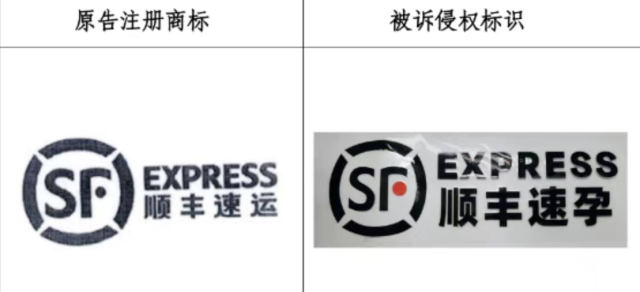
“顺丰速孕”碰瓷“顺丰速运”?法院判赔20万
Xin Jing Bao· 2026-02-05 14:02
Group 1 - The Guangzhou Intellectual Property Court ruled that "SF Express" is a well-known trademark and that the defendant's product "SF Speed Pregnancy" infringes on this trademark by diluting its distinctiveness and damaging its brand reputation [1][6] - The court found that the design of the "SF Speed Pregnancy" sticker closely resembles the "SF Express" trademark, retaining the "SF" letters and "EXPRESS" English label while only changing the core Chinese character from "运" to "孕," which could confuse consumers [1][6] - The court emphasized that the use of the term "速孕" is a humorous expression that undermines the serious nature of the logistics brand, creating a vulgar atmosphere in public spaces and violating public order and morals [6][7] Group 2 - The court ordered the defendant to compensate the plaintiff for economic losses and other expenses totaling 200,000 yuan and to publish a statement in the media to eliminate the negative impact [6] - The case highlights the dual boundaries of protection for well-known trademarks, prohibiting not only traditional infringement that confuses the source of goods but also actions that weaken trademark distinctiveness and damage brand reputation [7]


商标法5年来首次修订,剑指“千禾0”“多半桶”等重大乱象
凤凰网财经· 2025-12-24 12:42
Core Viewpoint - The long-awaited trademark law revision draft has entered the legislative process, aiming to address issues such as malicious trademark registration and litigation, which have garnered significant public attention [4][6]. Group 1: Background and Context - The State Intellectual Property Office released a draft for public consultation in January 2023, which has undergone nearly three years of refinement before being presented for legislative review [5]. - As of the end of 2024, China has accumulated 83.52 million trademark applications, with 49.77 million valid registered trademarks, leading the world in both categories [8]. Group 2: Issues in Trademark Registration - Malicious trademark registrations and lawsuits have become prevalent, with examples including the malicious registration of terms like "Bing Dwen Dwen" and "Gu Ailing" [6][8]. - The current trademark law, enacted in 1983, has undergone four minor revisions, with this being the first major overhaul in over five years [7]. Group 3: Legislative Changes - The revision draft emphasizes problem-oriented solutions, focusing on improving trademark registration, management, and protection systems [15]. - The draft specifies that applications for trademark registration that are not intended for use and exceed normal business needs will be rejected, enhancing the criteria for registration [16]. - It strengthens the protection of well-known trademarks by prohibiting the registration of similar trademarks across different product categories, regardless of their registration status [17]. Group 4: Enforcement and Penalties - The draft introduces penalties for misleading public use of registered trademarks, including fines of up to 50,000 yuan for non-compliance [18]. - It aims to address cases of malicious registration and litigation effectively, thereby maintaining market order and protecting consumer rights [19]. Group 5: Judicial Experience and Future Considerations - The draft incorporates judicial experiences by imposing penalties for malicious trademark litigation and holding offenders liable for damages [22]. - There are suggestions to increase official fees for trademark applications to deter malicious registrations, as the current fee structure presents minimal economic barriers [20].

商标法5年来首次修订,剑指“千禾0”“多半桶”等重大乱象
21世纪经济报道· 2025-12-24 07:35
Core Viewpoint - The long-awaited trademark law revision draft has entered the legislative review process, aiming to address issues such as malicious trademark registration and litigation, which have garnered significant social attention [3][4]. Group 1: Trademark Law Revision - The current trademark law, in effect since 1983, is undergoing its first major revision in over five years, with the draft consisting of 9 chapters and 84 articles [3][4]. - As of the end of 2024, China has a cumulative trademark registration application volume of 83.523 million, with 49.777 million valid registered trademarks, both ranking first in the world [4]. - The revision focuses on prominent issues in the trademark field, including the prevalence of malicious registrations and the phenomenon of "heavy registration, light usage" [4][8]. Group 2: Malicious Trademark Registration - Malicious trademark registration has become a persistent social issue, with cases like "Bing Dwen Dwen" and "Gu Ailing" being maliciously registered, leading to public outcry [3][4]. - The revision draft aims to prevent registrations that are not intended for legitimate use and to strengthen the protection of well-known trademarks [9][10]. - The draft specifies that applications for trademarks that are clearly beyond normal production and business needs will not be registered, enhancing the criteria for registration [9][10]. Group 3: Enforcement and Penalties - The revision includes provisions for penalties against misleading use of registered trademarks, with fines of up to 50,000 yuan for non-compliance [10]. - It also introduces measures to address malicious litigation, holding those who file such lawsuits accountable for damages [11][12]. - The draft aims to close loopholes that allow malicious trademark holders to exploit legitimate businesses through litigation [12].