高校基金会资产管理

Search documents
高校基金会如何在资本市场创出一片天?
Sou Hu Cai Jing· 2025-11-29 07:51
Core Viewpoint - The rise of university foundations is crucial for providing long-term support for education, and their ability to navigate capital markets for stable investment opportunities will determine their sustainable development in the new era [1][31]. Group 1: Investment Strategies and Market Conditions - The Chinese economy demonstrates strong resilience amid various challenges, and companies with sustainable profitability are becoming more apparent [3]. - In a low-interest-rate environment, equity assets are increasingly recognized for their continued attractiveness, making it essential to focus on companies with core competitiveness for excess returns [3]. - ESG investment is highlighted as a significant force for promoting coordinated economic, environmental, and social development, representing an innovative investment philosophy [5]. Group 2: Characteristics of University Foundations - University foundations are characterized by long-term funding, public asset status, and strict liquidity requirements, which pose unique challenges for asset management [8]. - The goal is to achieve a trillion RMB in asset scale for university foundations in the future, drawing on international experiences to enhance their contributions to society [8][19]. Group 3: Sustainable Investment Principles - The principle of "investing for good" emphasizes financial sustainability and the importance of generating positive social impacts through investments [16]. - Collaborating with institutions that align with investment philosophies is crucial for achieving long-term value and supporting companies with positive market or social impacts [18]. - The long-term advantages of university foundations allow them to capitalize on undervalued opportunities in the market, fostering a virtuous cycle of investment and fundraising [19]. Group 4: Asset Allocation and Risk Management - The fundamental principle of asset allocation is that all returns are compensation for risk taken, necessitating a careful balance between risk exposure and expected returns [10][11]. - ESG factors should be integrated into investment decisions to enhance stability and mitigate potential negative risks, even if they do not significantly boost returns [25]. - A diversified investment strategy that includes low-correlation assets is recommended to maintain balanced performance across different risk environments [27]. Group 5: Future Market Outlook - The current market environment suggests a preference for a slow bull market, with caution advised regarding potential overvaluation in certain sectors, particularly technology [22][29]. - The management of university foundations is experiencing robust growth, with a reported annual compound growth rate exceeding 9% for "Double First-Class" universities from 2020 to 2023 [31].

践行“投资·向善”,共议ESG与高校基金会资产管理新路径——2025复旦管院·兴动ESG大讲堂成功举办
Zheng Quan Shi Bao Wang· 2025-09-24 03:24
Core Insights - The forum "Investment for Good" focused on ESG investment, asset management for university foundations, and asset allocation strategies, highlighting the importance of collaboration between asset management institutions and university foundations [1][2][3] Group 1: ESG Investment - ESG investment is recognized as a crucial force for promoting economic, environmental, and social development, representing both an innovative investment philosophy and a deep exploration of future development models [2] - The establishment of a comprehensive ESG product system in fixed income and the creation of multi-asset strategies reflect the growing emphasis on ESG products in the asset management industry [2] Group 2: University Foundations - University foundations are characterized by long-term investment horizons, public attributes, and liquidity requirements, necessitating a strategic approach to asset management [2][3] - The shift towards "asset allocation + entrusted management" signifies a professionalization journey for university foundations, emphasizing the need for strategic support and a fault-tolerant mechanism [2] Group 3: Investment Strategies - The discussion highlighted the need for university foundations to transition from direct investments to enhanced external cooperation and resource sharing, as well as from single asset investments to diversified allocations [4] - The importance of systematic decision-making over experiential judgment in investment strategies was emphasized, aiming to improve professional management capabilities [4] Group 4: Market Insights - Multi-asset allocation is viewed as an effective strategy to navigate high-volatility markets, with a focus on controlling portfolio volatility and optimizing risk-return profiles [4][5] - The current equity market environment is driven by declining risk-free rates, enhancing the attractiveness of equity assets compared to bonds, despite some concerns about localized bubbles in certain sectors [5]
践行“投资·向善”,共议ESG与高校基金会资产管理新路径——2025复旦管院·兴动ESG大讲堂举办
Zhong Guo Jin Rong Xin Xi Wang· 2025-09-23 12:14
Core Viewpoint - The forum "Investment for Good" focused on ESG investment, asset management of university foundations, and asset allocation, emphasizing the importance of collaboration between asset management institutions and university foundations to foster long-term growth and value creation [1][2]. Group 1: ESG Investment - ESG investment is recognized as a crucial force for promoting economic, environmental, and social development, representing an innovative investment philosophy and a deep exploration of future development models [3]. - The establishment of a comprehensive ESG product system in fixed income and the creation of multi-asset and equity products highlight the commitment of financial institutions to ESG investment [3]. Group 2: University Foundations - University foundations are transitioning from direct investments to enhanced external cooperation and resource sharing, indicating a shift towards diversified asset allocation and systematic decision-making in investment strategies [2]. - The characteristics of university foundation investments include long-term focus, low-risk preference, and liquidity constraints, which necessitate a tailored approach to investment management [2]. Group 3: Collaboration and Innovation - The collaboration between asset management firms and university foundations aims to deepen understanding and cooperation, fostering a supportive environment for professional management and investment growth [1][2]. - The discussions highlighted the need for strategic support and the establishment of error tolerance mechanisms to drive innovation in investment practices within university foundations [2].
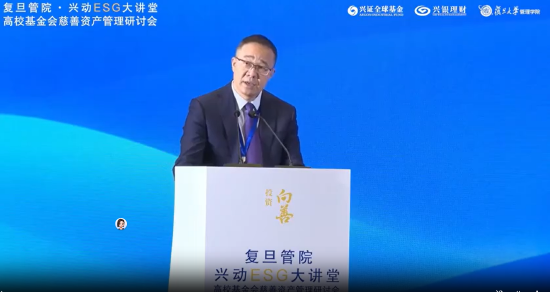
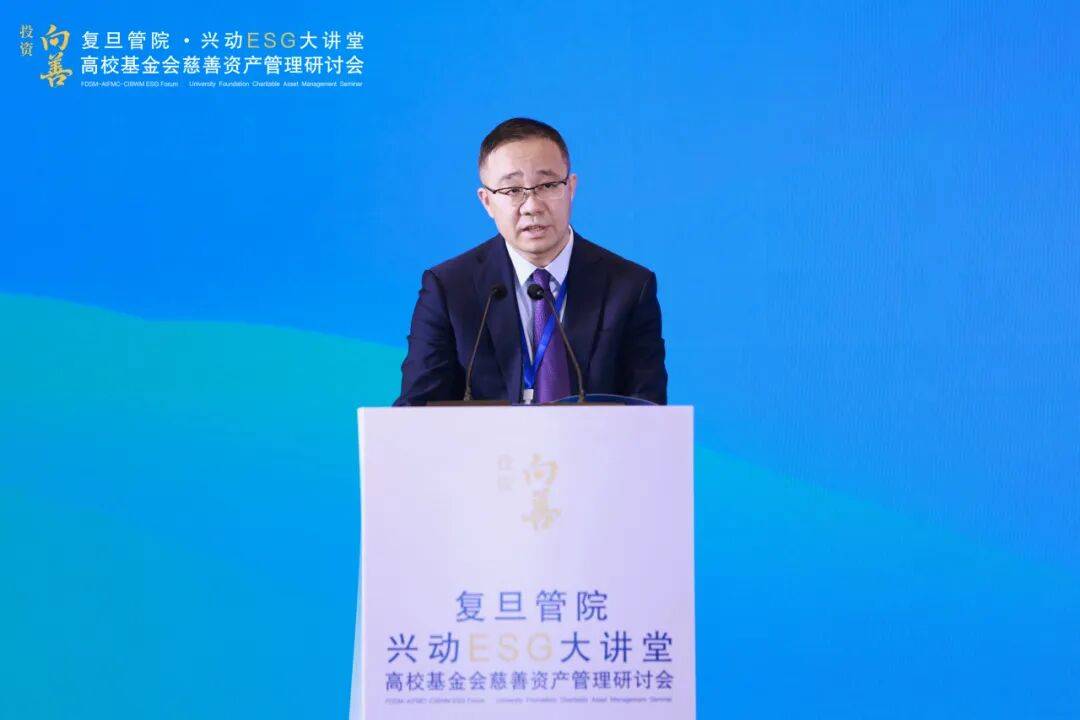
视频|兴证全球基金陈锦泉:高校基金会与资管机构的价值共创之道
Xin Lang Ji Jin· 2025-09-22 07:37
Core Insights - The event "Investment for Good" focused on the asset management of university foundations and sustainable development, highlighting the importance of preserving and increasing the value of charitable assets [1][3] - The growth of university foundation net assets in China is driven by increased donations and the need for effective long-term investment strategies amidst a challenging macroeconomic environment [3][4] - The collaboration between top universities and experienced asset management institutions aims to explore investment practices and sustainable investment directions for university foundations [4][5] Investment Strategies - The company emphasizes a philosophy of "risk control, long-term investment, and value investment," aiming to provide stable and sustainable returns for university foundations through a multi-asset and multi-strategy investment system [4][5] - The introduction of social responsibility products in 2016 aims to ensure the preservation and appreciation of charitable assets while reinvesting a portion of investment returns into university public welfare projects [4][5] - The current investment environment is complex, with a focus on core competitive companies as the optimal solution for achieving excess returns in a low-interest-rate environment [5] Economic Context - The Chinese economy demonstrates strong resilience, with government initiatives reflecting efforts to stimulate growth amid trade tensions and other challenges [5] - The discussion at the event also included the evolution of asset management for university foundations in the new economic environment, emphasizing the need for collaboration between foundations and asset management institutions [5]