
高校科研成果转化

Search documents
苏州打造价值转化闭环 赋能高校成果“落地生金”
Zhong Guo Jin Rong Xin Xi Wang· 2026-01-04 08:37
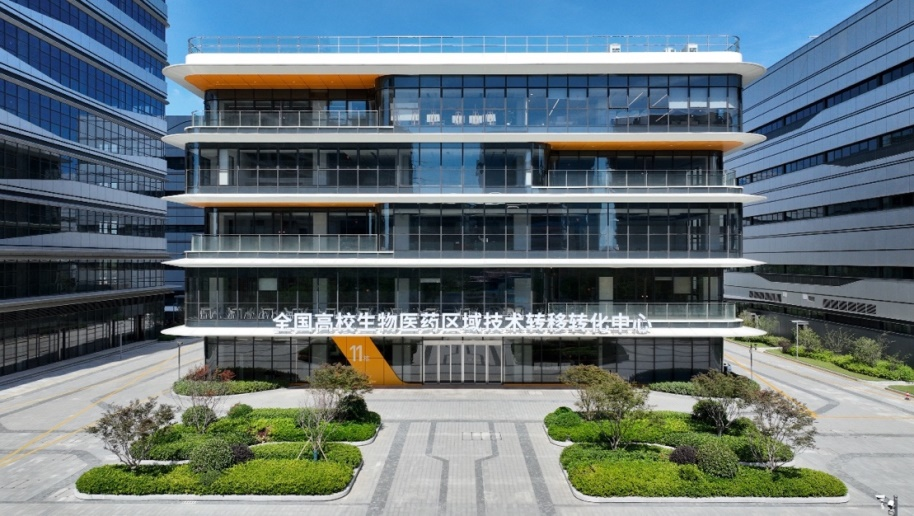
Core Insights - The innovative small molecule analgesic drug YJ2301 developed by Professor Li Fei's team at Nanjing Medical University has successfully transitioned from laboratory to market with a total transaction value of nearly 400 million yuan through a partnership with Jiutian Pharmaceutical [1] - The establishment of the first national university regional technology transfer center in Jiangsu aims to facilitate the commercialization of academic research, having already connected over 50 domestic and international universities and generated a total intended transaction value exceeding 800 million yuan [1][2] Value Discovery - The BioMatch initiative launched in February 2025 aims to actively promote high-potential projects like YJ2301 by facilitating connections between universities and enterprises, moving away from passive approaches to technology transfer [2][4] - The center's proactive model of "active exploration + precise matching" has fostered an innovative atmosphere where universities are encouraged to transfer technologies and companies are willing to engage [2] Value Cultivation - The center provides technical guidance and financial support to help early-stage projects navigate challenges such as target validation and safety research, which are critical for moving from laboratory to industry [3][6] - For the YJ2301 project, the center's concept validation team conducted comprehensive evaluations and provided tailored plans to facilitate technology transfer [3] Value Protection - The center has introduced a "pay after use" model to alleviate concerns regarding intellectual property risks for both universities and enterprises, allowing companies to test technologies without significant upfront investments [7] - This model has led to the collection of over 1,000 patent results from more than 20 universities, with agreed "post-payment" amounts exceeding 100 million yuan, enhancing opportunities for early-stage projects to reach the market [7] Value Realization - The center acts as an intermediary to bridge the gap between academic research and market needs, providing professional support in negotiations and contract management to ensure successful collaborations [8] - The comprehensive service model established by the center encompasses the entire process from original research to large-scale production, significantly enhancing the commercialization of academic innovations in the biopharmaceutical industry [8]

钢厂旧址蝶变医疗器械创新城,昌平医药健康产业再添新动能
Bei Jing Ri Bao Ke Hu Duan· 2025-12-02 09:28
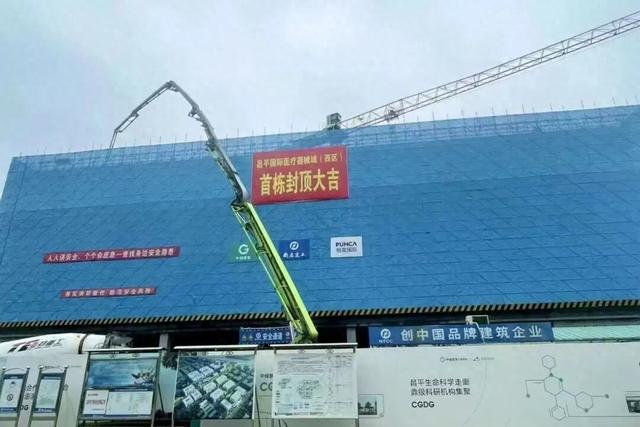
Core Viewpoint - The Changping International Medical Device City (West District) has completed the topping-out of its first phase, transforming the former Hongye Steel Plant site into a high-tech innovation hub for the medical and health industry in Changping [1][3]. Historical Context - The Hongye Steel Plant, established in 1958, was a significant part of China's industrial development, producing over 300,000 tons of steel products annually at its peak [3]. - The plant was a complete industrial community, providing housing, healthcare, and recreational facilities for workers, reflecting the industrial heritage of the region [3]. Transformation and Development - The site has been repurposed to meet the dual needs of industrial upgrading and urban renewal, with a focus on creating the Changping International Medical Device City [12]. - The project covers an area of 886,000 square meters and is designed with the concept of "industrial relics + technological innovation," preserving parts of the historical fabric of the Hongye Steel Plant [12][14]. - The park aims to create a beautiful innovation park that retains the historical essence while meeting modern demands for high-end medical device research and production [14]. Future Prospects - Upon completion, the medical device city is expected to become a significant source of innovation for high-end medical devices globally [17]. - Future phases of the project are planned to expand the industrial scale to 850,000 square meters by 2029, focusing on high-end medical equipment and artificial intelligence in healthcare [17].
办好人民满意的教育
Ren Min Ri Bao· 2025-10-30 22:37
Group 1 - The core theme of the event is the promotion of high-quality education development in China, with a focus on the "14th Five-Year Plan" period and the establishment of a modern education system in Xiong'an New Area [1][3] - Key discussions include the importance of top-level design, policy synergy, and the collaboration between leading enterprises and high-level universities to enhance the integration of talent, technology, industry, and innovation [2][3] - The event highlights the role of universities as a convergence point for education, technology, and talent, emphasizing the need for innovative organizational models and the transformation of research outcomes into practical applications [2][3] Group 2 - High-quality education is defined as a leap from quantity to quality, aiming to meet people's satisfaction and better serve economic and social development while achieving world-class standards [3] - The construction of a modern education system in Xiong'an is accelerating, with the first batch of relocated universities commencing construction, indicating significant progress in educational collaboration and resource sharing [3] - The event showcases various educational leaders sharing their experiences in cultivating innovative talents and reforming educational mechanisms to enhance the quality of education [2][3]
办好人民满意的教育——二〇二五中国品牌论坛推动教育高质量发展主题研讨会侧记
Ren Min Ri Bao· 2025-10-30 22:31
Core Viewpoint - The forum held in Xiong'an on October 30 focused on promoting high-quality education development, emphasizing the need for strategic planning and collaboration among educational institutions and industries to enhance talent cultivation and innovation capabilities [1][2]. Group 1: Strategic Planning and Collaboration - The "14th Five-Year Plan" period aims to strengthen top-level design, consolidate policy efforts, and accelerate the construction of world-class universities and advantageous disciplines [2]. - There is a call for deep cooperation between leading enterprises and high-level universities and vocational colleges to promote the organic connection of talent, technology, industry, and innovation chains [2]. - The establishment of a comprehensive reform demonstration area for integrated education from primary to higher education in Xiong'an is highlighted as a significant step forward [2]. Group 2: Innovation and Research - High-level research universities are identified as key players in national basic research and sources of major technological breakthroughs, with a focus on fields such as artificial intelligence, new materials, and biomedical imaging [2][3]. - The transformation of research results from laboratories to production lines is continuously expanding, enhancing the capability for research outcome conversion [2]. Group 3: Talent Development - Talent is recognized as a strategic resource for national rejuvenation and international competitiveness, with universities reforming talent cultivation mechanisms to produce elite talents [2][3]. - The implementation of a full-time mentorship system for undergraduates and the creation of specialized talent training programs are part of the efforts to develop a unique talent cultivation model [2]. Group 4: Educational Quality and Community Impact - High-quality education is defined as a leap from quantity to quality, aiming to satisfy the public and better serve economic and social development [3]. - The construction of educational facilities in Xiong'an is not only about infrastructure but also about sharing educational resources and collaborative development [3]. - The rapid development of a modern educational system in Xiong'an is underway, with significant achievements in educational collaboration and support capabilities during the "14th Five-Year Plan" period [3].
1.22亿元,内蒙古科技大学采购大批仪器(含设备更新项目)
仪器信息网· 2025-07-18 03:00
Core Viewpoint - Inner Mongolia University of Science and Technology has announced two procurement intentions for laboratory equipment, with a total budget of 122 million yuan, aimed at upgrading educational and research facilities by 2025 [1][2]. Procurement Intentions - The procurement includes flow cytometers (sorting), gel imaging systems, ultra-high resolution laser scanning equipment, and high-resolution live cell imaging systems, with an expected procurement period from March to August 2025 [2][4]. - The total budget for the procurement is 122 million yuan, which is approximately 18.5 million USD [2]. Educational and Research Goals - The primary goal of the procurement is to support five major tasks in medical education services, enhance the quality of education and research equipment, and improve talent cultivation quality [4]. - The project aims to replace 50 outdated devices over two years, with 44 new devices planned for purchase, including specific equipment like flow cytometers and gel imaging systems [4][5]. Institutional Background - Inner Mongolia University of Science and Technology, located in Baotou, Inner Mongolia, is a multi-disciplinary university established in 1956, focusing on metallurgy, mining, coal, and rare earths [5]. - The university has 21 teaching colleges and offers 67 undergraduate programs, with approximately 28,000 students and nearly 1,900 faculty members [5]. Research Strengths - The university is recognized for its research capabilities, particularly in metallurgy, materials science, energy chemistry, and rare earth resource development, with several disciplines ranked in the top 1% globally [6][7]. - It has established numerous national and regional research platforms, including 4 national-level and 17 regional key laboratories [8]. Research Achievements - In 2023, the university undertook 180 national-level research projects and has received multiple awards for its scientific advancements, including 34 provincial and ministerial-level science and technology awards [10][11]. - The university has published over a thousand high-level papers and holds more than 200 patents, demonstrating its strong research output [12]. International Collaboration - The university has established partnerships with 100 universities and research institutions across 36 countries and regions, contributing to initiatives like the Belt and Road and the China-Mongolia-Russia Economic Corridor [13]. Future Prospects - With ongoing efforts in "Double First-Class" construction and regional economic demands, the university is expected to achieve breakthroughs in more academic fields in the future [34].

运营近半年,南京生物医药分中心已入驻项目31个
Nan Jing Ri Bao· 2025-05-12 02:28
Core Insights - The Nanjing Biomedicine Center is enhancing the transformation of early-stage biomedical projects by providing comprehensive support services for research teams from various universities [1][2][3] Group 1: Project Development and Support - The Nanjing Biomedicine Center has selected 1,123 medical research results and has 31 projects currently residing at the center [1] - The center has established a team of over 140 technical managers to facilitate the connection between technology and market needs, engaging with 68 universities nationwide [2] - The center provides high-end equipment, such as over 40 high-resolution mass spectrometers, which are essential for new drug development [3][4] Group 2: Financial and Resource Support - The center has created a funding support system with a scale of 8.4 billion yuan, including various financial instruments like angel funds and bank loans [5] - Quick loan approvals have been reported, with one project receiving 6 million yuan in just two weeks, showcasing the center's proactive financial support [5] - The center offers a range of services including intellectual property support and rapid customs clearance for research materials, aimed at reducing barriers for project teams [6] Group 3: Innovation and Collaboration - The center acts as a bridge for technology transfer and innovation, helping teams to "move in with their bags" and focus on development [4] - Collaboration with various universities and institutions is emphasized, with the center attracting diverse project teams from across the country [2][4] - The center aims to facilitate the transition of research outcomes from academic settings to commercial applications, promoting a dual-directional engagement between universities and enterprises [6]