
拔尖创新人才培养

Search documents
培养人工智能时代拔尖创新人才
Xin Hua Ri Bao· 2026-02-26 23:06
Core Viewpoint - The article emphasizes the need for a revolutionary approach in the identification and cultivation of top innovative talents, leveraging artificial intelligence to address existing challenges in education and talent development [1][2]. Group 1: Challenges in Identification and Cultivation - The current education system faces three main challenges in identifying and cultivating top innovative talents: the debate between "selecting a few" versus "inclusive education," the conflict between "linear selection" and "natural emergence," and the choice between "specialized depth" and "general foundation" in training paths [3][4]. - The existing selection mechanisms often favor early labeling of students, which can overlook those with late-emerging potential or non-traditional advantages [3]. - The linear selection process simplifies the complexity of innovation potential, making it difficult to identify truly innovative talents and create a supportive environment for their natural emergence [3][4]. Group 2: Innovative Models for Talent Development - A new system aims to integrate the identification, discovery, and cultivation of top innovative talents into a dynamic continuum, creating a supportive growth framework [4][5]. - The identification process should be continuous and utilize a variety of quantitative and qualitative methods, including AI-driven assessments to create dynamic profiles of students' potential [4][5]. - The evaluation of students should shift from traditional metrics to a multi-faceted approach that considers innovation, feasibility, and social value, fostering a natural emergence of talent in an innovative ecosystem [5][6]. Group 3: Integrated Growth Community - An integrated growth community should be established, connecting primary, secondary, and higher education to ensure a seamless cultivation process [6]. - Collaboration between high-level universities, research institutions, and secondary schools is essential for early intervention in cultivating innovative qualities [6]. - The curriculum should be reformed to include modules that promote deep learning, ethical reflection, and interdisciplinary application in real-world projects [6].
【省教育厅】陕西推动高校育人体系系统性重构
Shan Xi Ri Bao· 2026-02-24 23:54
Group 1 - The core viewpoint of the news is the introduction of four core competency courses in Shaanxi Province's higher education system, aimed at transforming the talent cultivation model from knowledge transmission to capability development [1][6] - The courses include "Introduction to Logic," "Scientific Research Methods," "Introduction to Artificial Intelligence," and "Innovative Entrepreneurship Thinking," which are designed to enhance students' core competencies for sustainable development [1][5] - The initiative is part of a broader educational reform in Shaanxi, focusing on systematic restructuring of the higher education system to better prepare students for future challenges [1][6] Group 2 - "Introduction to Logic" aims to cultivate high-level thinking and rational literacy among students, addressing the lack of systematic training in logical thinking in many universities [2][3] - "Scientific Research Methods" focuses on teaching students the essential elements and processes of scientific research, fostering research interest and comprehensive skills necessary for high-level talent development [4][5] - "Introduction to Artificial Intelligence" and "Innovative Entrepreneurship Thinking" are designed to equip students with the understanding of AI principles and entrepreneurial skills, reflecting the need for education to align with technological advancements [5][6] Group 3 - The courses are interconnected, with "Introduction to Logic" shaping critical thinking, "Scientific Research Methods" enhancing research capabilities, "Introduction to Artificial Intelligence" improving digital literacy, and "Innovative Entrepreneurship Thinking" focusing on practical application [6] - The courses are now available on various online educational platforms, making them accessible to all higher education institutions in Shaanxi Province [6]
“优本扩容”何以实现一举多得
Xin Lang Cai Jing· 2026-02-24 10:04
Core Viewpoint - The "Outline for Building a Strong Educational Nation (2024-2035)" emphasizes the strategic goal of fostering "outstanding innovative talents" but lacks clarity on the specific pathways to achieve this goal [1] Group 1: Strategic Goals and Mechanisms - The outline suggests exploring new models for discovering and cultivating outstanding innovative talents in strategic and emerging fields [1] - The outline proposes to "orderly expand the enrollment scale of quality undergraduate education" as a tactical measure to optimize higher education layout [1] Group 2: Paths for "Quality Undergraduate Expansion" - The first path for "quality undergraduate expansion" involves increasing the enrollment scale of first-year students at "Double First-Class" universities through the traditional college entrance examination, which may dilute the quality of talent [2] - The second path involves allowing "Double First-Class" universities to recruit third-year transfer students from other universities, which historically has been beneficial for fostering innovative talents [3] Group 3: Historical Context and Evidence - Historical examples from the Republic of China show that universities like Peking University and Tsinghua University successfully promoted innovative talents through transfer students [3] - In the 1950s, a planned transfer system at Peking University produced a large number of key talents in nuclear technology, demonstrating the effectiveness of the transfer model [3] Group 4: International Comparisons - The transfer model has been crucial in forming world scientific centers, with Germany and the United States emphasizing student mobility as a key feature for continuous talent emergence [3][4] - In the U.S., research universities actively recruit transfer students, allowing for a more flexible and efficient educational experience compared to first-year students [4] Group 5: Implications for Talent Development - The transfer model could theoretically double the scale of "quality undergraduate expansion," meeting the demand for quality universities more effectively [4] - By leveraging the strengths of both "Double First-Class" and other universities, the transfer model can enhance educational outcomes and align with the goals of optimizing higher education layout [4][5] - The transfer model provides empirical support for allowing underperforming students to access better developmental environments, making it a promising avenue for cultivating outstanding innovative talents [5]
多维发力绘就教育强国新图景
Xin Hua Ri Bao· 2026-02-09 23:26
Core Viewpoint - The article emphasizes the ambitious goal of building a strong education nation by 2035, as outlined in the "Education Strong Nation Construction Plan Outline (2024-2035)", marking a fundamental shift in the development stage of China's education sector [1] Group 1: Resource Allocation - The changing scale and structure of school-age population is a fundamental variable affecting education development, with Jiangsu province utilizing census data and predictive models to assess trends in school-age population changes [2] - Education resource allocation is transitioning from "experience-driven" to "data-driven", establishing a dynamic allocation mechanism that adapts to population changes [2] Group 2: Small Class Teaching - The implementation of small class teaching is a key requirement of the "Education Strong Nation Construction Plan" and is seen as essential for enhancing educational quality [3] - Jiangsu has made significant progress in small class teaching, addressing challenges such as uneven implementation pace and insufficient teacher allocation through various measures [3] Group 3: Elite Talent Cultivation - The cultivation of elite innovative talents is crucial for achieving technological self-reliance and enhancing national competitiveness, as highlighted by national policies [4] - Jiangsu is actively working on early-stage cultivation of elite talents but faces challenges such as an incomplete competition management system and a weak professional coaching team [4] Group 4: Digital Transformation - Education digitalization is viewed as a critical breakthrough for shaping new competitive advantages, with a focus on transforming educational concepts, teaching models, and governance systems [5] - Jiangsu's progress in building smart campuses is uneven between urban and rural areas, prompting initiatives to strengthen strategic leadership and enhance digital resource availability [6] Group 5: Teacher Education - Teacher education reform is essential for building a strong education system, with various explorations underway to enhance teacher training and development [7] - Jiangsu has implemented innovative teacher education models and is focusing on creating a collaborative mechanism among universities, government, schools, and communities to support teacher development [7] Group 6: Future Outlook - To achieve the goal of becoming a strong education nation by 2035, continuous theoretical research and practical exploration are necessary, addressing resource imbalances, enhancing quality through small class teaching, and leveraging digital technology [8]
北京市青少年“脱颖”创新冬令营开营
Xin Lang Cai Jing· 2026-01-30 23:52
Core Viewpoint - The 2026 Beijing Youth "Outstanding" Innovation Winter Camp aims to cultivate innovative talents among middle school students through a series of themed camps focusing on advanced topics such as artificial intelligence, quantum computing, life sciences, and aerospace [1][2] Group 1: Program Overview - The winter camp consists of 11 themed camps that will be held during the winter vacation, inviting experts and academicians to guide students in cutting-edge research [1] - The program is organized by the Beijing Youth Innovation Academy and various district branches, exploring a collaborative education model that connects high schools with universities and research institutions [1] Group 2: Educational Approach - The camps will utilize interest-driven and potential-stimulating methods to provide a sustainable and continuous training system for students identified as having innovative potential during events like "Math Festival" and "Science Festival" [1] - Students will engage in project-based learning to enhance their interdisciplinary innovative capabilities by tackling real-world complex problems [1] Group 3: Specific Camp Activities - In the "Extreme Intelligence Challenge" AI-themed camp, students will learn about AI technology principles, applications, and safety challenges through theoretical courses and practical experiments [1] - The "Deep Blue Intelligent Brain" camp will allow students to visit research facilities and understand the design and intelligent applications of marine unmanned systems [1] Group 4: Faculty and Curriculum - Zhang Ruixun, deputy director of the Financial Mathematics Department at Peking University, will teach in the "Mathematics Talent" camp, focusing on the intersection of mathematics and finance [2] - Students will experience a full training process from data organization to model implementation, applying mathematical knowledge to real-life investment analysis [2] Group 5: Educational Goals and Future Plans - The winter camp serves as a platform for students to explore the unknown, exchange ideas, and practice innovation, contributing to the city's educational development goals [2] - The Beijing Municipal Education Commission plans to deepen cooperation with technology companies and explore a dual-teacher education model to enhance the collaboration between primary and secondary schools, universities, and research institutions [2]
福耀科技大学50名大一学生被企业抢光?校长王树国回应:本科生不是目标,要把他们培养成卓越创新人才!曹德旺曾称“对标斯坦福”
Mei Ri Jing Ji Xin Wen· 2026-01-22 16:40
Core Viewpoint - The news highlights the rapid employment of students from Fuyou University, with all 50 first-year students being recruited by major companies, indicating strong industry interest and collaboration with the university [1][3]. Group 1: University Overview - Fuyou University was established with a significant investment of 10 billion yuan from the He Ren Charity Foundation, founded by Cao Dewang, with an initial budget of 800 million yuan for the first year to enroll 50 students [5]. - The university aims to cultivate innovative talents at the master's and doctoral levels, rather than focusing solely on undergraduate education [3][7]. - The university's president, Wang Shuguo, has a vision to model the institution after Stanford University, emphasizing the importance of substantial investment in education and research [5][9]. Group 2: Employment and Industry Collaboration - The first cohort of 50 students has been fully booked by various large companies, showcasing the high demand for graduates from Fuyou University [1][3]. - Wang Shuguo noted that while companies are eager to recruit students, the university's goal is to ensure that students have the freedom to choose their career paths [3]. - The university is currently in the process of expanding its enrollment, with plans to increase the number of students beyond 50, pending approval from the Ministry of Education [3][7]. Group 3: Leadership and Vision - Wang Shuguo, who previously led two top-tier universities, is serving as the president of Fuyou University without a salary, emphasizing his commitment to educational ideals [7][9]. - He expressed a desire to create a leading research university that prioritizes innovation and quality education over financial gain [9].

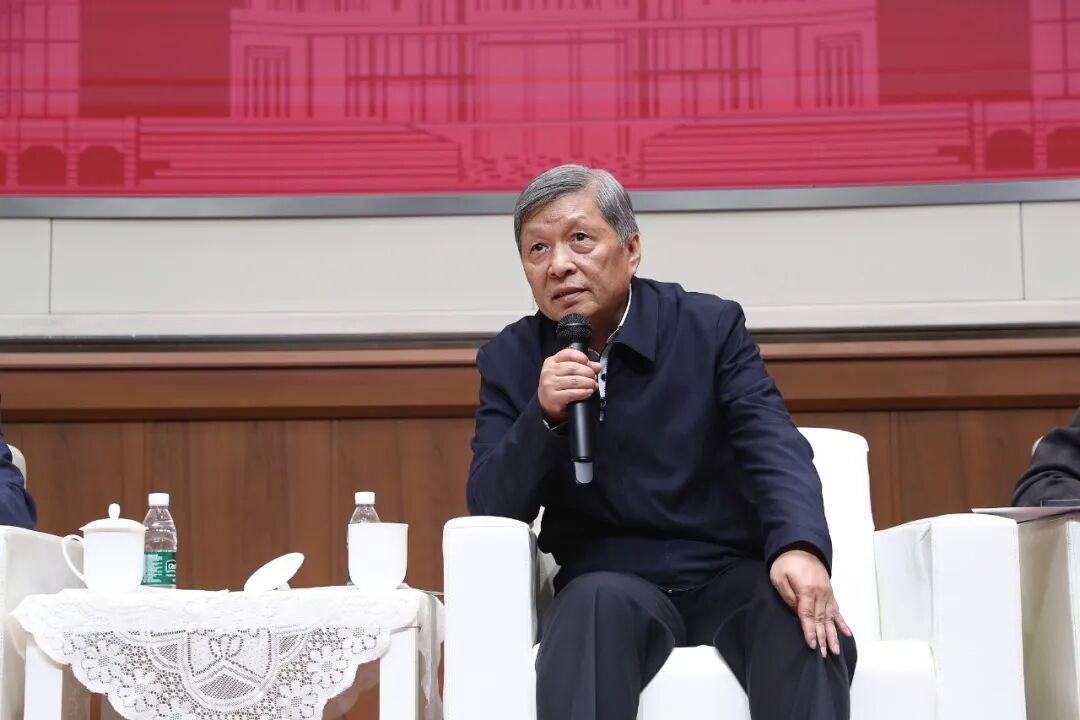
天津师大举行新型智库学术研讨会 发布多项重要成果
Xin Lang Cai Jing· 2026-01-18 21:30
Group 1 - The conference titled "Wisdom Gathering in Tianjin: Leading the Future" was held by Tianjin Normal University, focusing on the role of think tanks in promoting high-quality development in Tianjin, with over 400 experts and scholars in attendance [1] - The university released significant results in areas such as Tianjin culture, innovative talent cultivation, and the construction of a Chinese independent knowledge system, and signed strategic cooperation agreements to advance collaborative development of new-type think tanks [1][2] - A large-scale historical and cultural series titled "Wenjin Library," edited by Professor Wang Zhenliang, was showcased, which aims to promote the dissemination of Tianjin's local culture and support the inheritance of Tianjin's cultural heritage [1] Group 2 - The book "Let Talent Better Serve Human Development" led by Professor Bai Xuejun is the first comprehensive study of international experiences in cultivating top innovative talents from a national education management perspective, covering 19 countries [2] - The conference released 18 specialized think tank reports and 6 sets of independent knowledge system reports, focusing on various topics such as the Shanghai Cooperation Organization Tianjin Summit, industrial chains, business environment, and rural revitalization, providing valuable decision-making references [2] - The "Yusuda 3.0" platform was launched, which is a multimodal open-source data intelligence analysis platform for public events, utilizing comprehensive data and deep learning models for data aggregation and analysis [3] Group 3 - Strategic cooperation agreements were signed between Tianjin Normal University and the Tianjin Municipal Committee of the Chinese Democratic League, as well as the Municipal Social Work Department, to promote high-quality development of think tanks [3] - The collaboration aims to establish a "Political Literacy - Participation Ability - Governance Wisdom" training system and focus on theoretical research, public opinion monitoring, and skills training in key areas such as grassroots governance [3]
从“夯实底部”到“贯通链条” 山西忻州筑根基 激活力 育人才
Xin Lang Cai Jing· 2026-01-06 13:19
Core Viewpoint - Shanxi's Xinzhou City is prioritizing education development, leading to significant improvements in educational quality and access, with a focus on building a robust foundation, enhancing educational links, and nurturing talent. Group 1: Foundation Building - Xinzhou's public budget for education has increased by over 4% annually since the 14th Five-Year Plan, with preschool enrollment rates rising from 95% to 98%, and net enrollment rates for primary and junior high school children reaching 100% [1][4] - Over 36 billion yuan has been invested in the renovation and expansion of 208 schools and kindergartens, adding 18,360 new student places [1][4] - The city has made significant strides in building inclusive kindergartens and standardized boarding schools, effectively narrowing the urban-rural and inter-school gaps [1][4] Group 2: Educational Equity - Xinzhou has achieved full coverage of "eye protection lamps" in compulsory education schools and established special education schools in counties with populations over 200,000 [2][3] - A comprehensive education welfare network has been created, ensuring the implementation of various student support policies [2][3] Group 3: Reform and Quality Enhancement - Educational reforms are being driven by innovative practices, including the "county-managed school employment" system and the establishment of a "teacher rotation pool," resulting in the recruitment of 4,299 new teachers over five years [4][5] - Continuous tracking of student performance and quality assessments are being conducted to enhance classroom teaching and after-school services [4][5] Group 4: Talent Development - Xinzhou's vocational schools have achieved a 100% compliance rate with educational standards, and the establishment of industry-education integration initiatives is fostering the development of skilled professionals tailored to local industry needs [7][8] - The city is collaborating with top universities to cultivate innovative talents in fields such as aerospace and medicine, while also training practical craftsmen for rural revitalization and specialized industries [9][8]
这些实验班,在大师精神引领下启智创新
Xin Lang Cai Jing· 2026-01-06 00:55
Core Insights - The cultivation of top innovative talents is closely related to the platforms and environments provided for their development [1] - Recent trends show a shift from traditional competition-based selection to more open experimental classes in middle and high schools, focusing on personalized education and comprehensive quality development [1] Group 1: Yeqi Sun Experimental Class - The Yeqi Sun Experimental Class at Dongzhimen Middle School emphasizes a three-year program with 100 experiments to stimulate students' exploratory enthusiasm [2] - The curriculum integrates a "three-layer, five-field" system, combining school-based, external, and collaborative learning to enhance students' academic and humanistic qualities [2][3] - The class promotes hands-on learning through various experiments and social practice activities, ensuring students engage with real-world applications of their studies [3] Group 2: Wang Yanan Experimental Class - The Wang Yanan Experimental Class aims to cultivate innovative talents in the humanities by integrating deep teaching in subjects like Chinese, history, and politics [6][7] - The program utilizes a "high school + university" collaborative education model, leveraging resources from Xiamen University to enhance the learning experience [6][7] - Students participate in practical activities and research projects, guided by both high school and university mentors, fostering a comprehensive understanding of their subjects [7] Group 3: Wang Huzhang Experimental Class - The Wang Huzhang Experimental Class at North China University of Water Resources and Electric Power focuses on creating a flexible educational pathway for students, allowing for both entrance and exit options [9] - The program includes a unique "3+1+2" training model, combining undergraduate and master's level coursework with practical training [9][10] - The class emphasizes small group instruction and hands-on learning experiences, ensuring students are well-prepared for advanced studies and research [10]
共建创新人才培养新范式!深技大举办研讨会并签署合作协议
Nan Fang Du Shi Bao· 2025-12-10 00:56
Group 1 - The core viewpoint of the article emphasizes the collaboration between Shenzhen Technology University, Zero One Academy, and Shenzhen Qingli Technology Co., Ltd. to enhance innovative talent cultivation and research innovation through a strategic partnership [1][2] - The strategic cooperation agreement focuses on two main areas: the establishment of a top-tier innovative talent training system and the construction of joint laboratories [2] - The "Zero One Class" project will be established to integrate the "advanced research - in-depth learning" concept of Zero One Academy, targeting students with innovative potential nationwide, particularly in AI and self-superlubrication technology [2] Group 2 - The joint laboratories will provide high-level research training and innovation practice bases, focusing on cutting-edge experiments and engineering validation in self-superlubrication technology [2] - The collaboration aims to create a talent growth ecosystem that integrates government, industry, academia, research, and finance, promoting the training of "trial engineers" and "technical managers" [2] - The seminar featured discussions on the critical role of basic education in talent cultivation, advocating for a holistic approach to education that emphasizes moral education and innovation capability development [3][4]