
高端旅游

Search documents
中青旅:持续细分客群,针对银发客群,推出涵盖欧洲、中东非等六大目的的15条适老路线
Cai Jing Wang· 2026-01-15 04:06
Core Viewpoint - The company is leveraging its strong product development and service capabilities in the travel agency business to lead the market with innovative products, focusing on diverse experiences and in-depth exploration of niche destinations [1] Group 1: Product Offerings - The company has launched a series of premium travel routes covering over 100 countries and regions, including themes like "Exploring World Heritage," "Pursuing Cultural Relics," and "Visiting Natural Wonders" [1] - For the senior demographic, the company introduced 15 age-friendly routes across six major destinations, including Europe and the Middle East [1] - High-end products targeting affluent customers include the "Planet Exploration" series and charter projects in polar regions, focusing on destinations like Switzerland, Egypt, and Australia [1] Group 2: Business Performance - For the period from January to September 2025, the company achieved a revenue of 8.027 billion yuan, representing a year-on-year growth of 13.89% [1] - The net profit attributable to the parent company was 121 million yuan, reflecting a year-on-year decline of 21.06% [1] Group 3: Market Position - The company maintains a competitive advantage in outbound visa services in terms of both scale and quality, supported by its brand, product offerings, and customer resources [1]

游客人均消费下降 斯里兰卡计划发展高端旅游拉动收入
Shang Wu Bu Wang Zhan· 2026-01-14 16:54
Core Insights - Sri Lanka's tourism sector is experiencing an increase in visitor numbers, yet the average daily spending per tourist has decreased from $181 in 2018 to $148 currently, indicating a "more visitors, less money" phenomenon [1] - The government aims to attract high-spending tourists to boost revenue, but faces challenges such as inadequate domestic air travel and resort facilities [1][2] Group 1: Visitor Statistics - In 2018, Sri Lanka welcomed 2.33 million tourists, with projections to reach 2.36 million by 2025 [1] - Tourism revenue has declined from $4.3 billion in 2018 to $3.2 billion this year [1] Group 2: Spending Trends - A survey of 10,000 tourists revealed that the decline in overall spending is part of a global trend, with average daily expenditures in neighboring countries being lower: India at $100, Thailand at $90, and Malaysia at $120 [1] - The depreciation of the Sri Lankan rupee, from approximately 180 LKR per USD in January 2018 to nearly 300 LKR per USD now, has allowed tourists to purchase more goods for the same amount of USD, leading to reduced spending in dollar terms [1] Group 3: Government Strategy - The government plans to develop the high-end tourism market while also recognizing the importance of budget travelers, who contribute to local economies through public transport and street-level spending [1][2]
【环球财经】2025年突尼斯旅游收入超8亿第纳尔
Xin Hua Cai Jing· 2026-01-08 15:15
Core Insights - Tunisia's tourism revenue is projected to reach 809 million dinars (approximately 276 million USD) by 2025, reflecting a year-on-year growth of 6.5% [1] - As of December 22, 2025, Tunisia has welcomed over 11 million tourists, surpassing the 9.4 million tourists received in 2019 [1] - The Tunisian Minister of Tourism, Toukaya, emphasized the focus on developing high-end tourism and diversifying tourism products by leveraging regional unique resources [1]
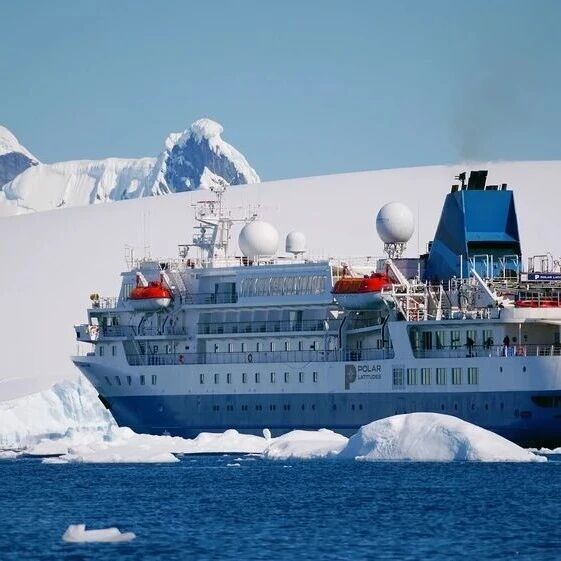
企业家为什么爱去南极?
虎嗅APP· 2025-11-19 13:38
Core Viewpoint - The article discusses the contrasting perceptions of the Antarctic and Arctic regions, highlighting the growing popularity of Antarctic tourism among Chinese entrepreneurs and the unique experiences it offers compared to the Arctic [4][8][12]. Group 1: New Oriental's Anniversary and Public Reaction - On November 16, New Oriental celebrated its 32nd anniversary, with founder Yu Minhong expressing gratitude to employees and supporters from Antarctica, emphasizing themes of perseverance and hope [4]. - Some employees responded critically to Yu's message, sharing their own struggles and contrasting their situations with his Antarctic experience, leading to a wave of online commentary [5][6]. Group 2: Antarctic Tourism Trends - Antarctic tourism is becoming a significant choice for high-end travelers, with Chinese tourists reaching 11,705 in the 2024-2025 season, accounting for 10% of global visitors [8]. - In contrast, the Arctic attracts significantly fewer Chinese tourists, with estimates of 250-500 annually, highlighting the disparity in appeal between the two polar regions [8]. Group 3: Reasons for Antarctic Appeal - The Antarctic is perceived as more mysterious and less accessible than the Arctic, which is home to several countries and has more familiar landscapes [9][10]. - The extreme conditions and unique geography of Antarctica, including its vast ice-covered landmass, contribute to its allure as a destination for adventure and exploration [10]. Group 4: Entrepreneurial Interest in Antarctica - Notable Chinese entrepreneurs, such as Hu Run and Wang Shi, have visited Antarctica, indicating its status as a prestigious destination for business leaders [12]. - The high costs associated with Antarctic travel, ranging from 250,000 to 800,000 yuan for a 10-15 day trip, align with the luxury and exclusivity sought by this demographic [14][15]. Group 5: High-End Custom Services - The emergence of high-end custom travel services for Antarctic tourism caters to the needs of business networking and personal growth, offering unique experiences that blend nature and social interaction [16][17]. - Promotional materials for these trips emphasize the combination of natural beauty, personal reflection, and valuable networking opportunities among elite business leaders [17].

去新加坡旅游的中国人悄悄变了,高端自由行散客快速猛增
3 6 Ke· 2025-11-11 03:00
Core Insights - The tourism landscape for Chinese visitors to Singapore has undergone a significant transformation, shifting from budget group tours to high-end independent travel experiences [1][8][10] Group 1: Changes in Tourist Demographics and Preferences - There has been a sharp decline in budget group tourists from China, while high-end independent travelers have surged [1] - The proportion of high-net-worth families and senior travelers among Chinese guests at luxury hotels has increased significantly [3] - Chinese tourists are now spending more time in hotels, with some families staying for one to two weeks, focusing on relaxation rather than rushing through itineraries [4][7] Group 2: Evolving Travel Behavior - Chinese tourists are less interested in popular social media spots and prefer to engage in local life, exploring community areas [5] - Dining preferences have shifted towards Michelin-starred restaurants and local hawker centers [6] - There is a growing interest in niche attractions and international cultural events, such as concerts and exhibitions [7] Group 3: Market Positioning and Strategy - Southeast Asian countries are adopting different strategies: some focus on attracting budget tourists, while Singapore aims for high-quality, high-value visitors [8][10] - Singapore has responded to the changing demands of Chinese tourists by enhancing its infrastructure and services, aiming to attract high-matching tourists [10][11] - The Singapore Tourism Board is launching targeted marketing campaigns to appeal to specific demographics, including health-conscious travelers and high-net-worth families [12][13] Group 4: Economic Impact and Visitor Statistics - From January to September 2023, Singapore welcomed 12.9 million international visitors, with Chinese tourists contributing significantly to tourism revenue, amounting to 2.3 billion SGD [14] - Although the number of Chinese visitors may not return to pre-pandemic levels by 2025, the focus has shifted from sheer visitor numbers to the quality and spending power of tourists [14][15]