
高质量减重

Search documents
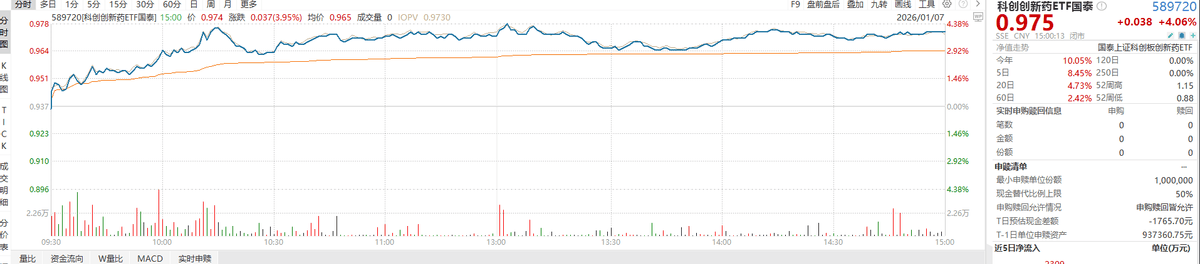
小核酸“高质量减重”数据超预期,重塑减重治疗范式——科创创新药ETF(589720)大涨4.06%点评
Mei Ri Jing Ji Xin Wen· 2026-01-08 02:05
Core Viewpoint - The pharmaceutical sector, particularly in innovative drugs, is experiencing a surge driven by significant clinical data in the small RNA weight loss field, leading to a notable increase in the STAR Market's innovative drug index and the corresponding ETF [1][3]. Group 1: Small RNA Weight Loss Data - Arrowhead Pharmaceuticals presented mid-stage data from its two small RNA weight loss projects, ARO-INHBE and ARO-ALK7, indicating a new paradigm in "high-quality weight loss" that focuses on visceral fat reduction rather than just weight loss [3][4]. - ARO-INHBE demonstrated a 9.4% weight loss in type 2 diabetes patients when combined with tirzepatide, significantly outperforming tirzepatide alone, which achieved a 4.8% reduction. Key metrics showed visceral fat reduction of 23.2%, total fat reduction of 15.4%, and liver fat reduction of 76.7%, approximately three times better than monotherapy [3][4]. - ARO-ALK7, the first RNAi therapy to validate fat cell gene knockdown effects in humans, achieved an average knockdown of 88% of ALK7 mRNA, with a maximum of 94%. After eight weeks of a single dose, visceral fat decreased by 14.1%, confirming the feasibility of targeting fat cell metabolic pathways [3][4]. Group 2: Significance of Visceral Fat Reduction - The ultimate goal of weight loss treatment is not merely the reduction of weight but the improvement of long-term cardiovascular, renal, and metabolic outcomes. Visceral fat, despite its low absolute quantity, is crucial as it surrounds vital organs and is linked to insulin resistance, fatty liver, and cardiovascular diseases [4]. - Effective reduction of visceral fat could significantly enhance metabolic status and lower the risk of long-term cardiovascular and renal events, providing higher clinical value for managing diabetes, obesity, and related complications [4]. Group 3: Synergy of Small RNA and GLP-1 - Current GLP-1 drugs are foundational in weight loss treatment but have unmet needs regarding visceral fat improvement, muscle loss, and rebound weight gain. The data suggests that small RNA drugs could complement fat metabolism pathways, enhancing the quality of weight loss rather than just the quantity [5]. - This validation of the synergistic logic between small RNA and GLP-1 strengthens market perception of the long-term value of the small RNA technology platform, leading to increased investment in high-research, innovative assets within the STAR Market [5]. Group 4: Future Outlook - The year 2026 is anticipated to be pivotal for small RNA drugs, with significant growth and validation expected, including commercial progress for Plozasiran and larger sample data readouts for ARO-INHBE and ARO-ALK7 [6]. - The capital market may see small RNA companies listing on the Hong Kong stock exchange, further enhancing market focus on this niche sector as overseas RNAi technology matures and domestic pipelines advance [6]. Group 5: Investment Opportunities - Following a period of adjustment, the innovative drug sector's overall valuation has returned to historically low levels. With the upcoming release of high-quality data and international conference catalysts, funds may begin reallocating towards high-elasticity sectors with medium to long-term industrial logic [7]. - Investors are encouraged to monitor developments in high-quality clinical data and international business development progress, which could drive further capital back into the innovative drug sector, potentially leading to a phase of upward trends [8].

2025年GLP_1行业深度:最新进展、市场空间、未来趋势、产业链及相关公司深度梳理
Sou Hu Cai Jing· 2026-01-01 03:43
Core Insights - The GLP-1 (Glucagon-Like Peptide-1) drug class is evolving from a simple diabetes treatment to a comprehensive metabolic therapy, showing potential in weight loss, cardiovascular benefits, and fatty liver disease, leading to intensified competition among pharmaceutical companies [1][2]. Industry Developments - The GLP-1 drug development has transitioned from single-target to multi-target approaches, with drugs like Eli Lilly's Tirzepatide (GLP-1/GIP dual-target) and Innovent's Ma Shidu (GLP-1/GCG dual-target) gaining approval, enhancing metabolic control across various indicators [2][3]. - Chinese pharmaceutical companies are emerging as significant players, with Innovent's Ma Shidu showing promising Phase III clinical trial results for weight loss and liver fat reduction, while other companies like Hengrui and Zhongsheng are advancing their own dual-target and oral formulations [3][4]. Market Expansion - The future growth of the GLP-1 market is shifting from traditional Type 2 diabetes and obesity treatments to broader disease areas, including metabolic dysfunction-related fatty liver disease (MASH), with drugs like Semaglutide already approved for MASH treatment [4][5]. - The concept of "high-quality weight loss" is gaining traction, focusing on preserving muscle mass while reducing fat, with several companies developing combination therapies that include GLP-1 and muscle-preserving agents [5]. Competitive Landscape - The GLP-1 market is dominated by Novo Nordisk and Eli Lilly, with their combined revenue expected to grow from approximately $2.9 billion in 2015 to about $49.4 billion by 2024, indicating a robust growth trajectory [43]. - The sales of Tirzepatide are projected to surpass those of Semaglutide, with significant revenue growth observed in both diabetes and weight loss indications [46][48]. Clinical Advancements - Innovent's Ma Shidu achieved a 20.08% average weight reduction in a Phase III trial, significantly outperforming the placebo group, and demonstrated a 71.9% reduction in liver fat content among non-diabetic participants [32][33]. - Hengrui's dual-target drug HRS9531 has shown positive results in its Phase III trials, with its application for market approval accepted by the NMPA [37]. Future Trends - The GLP-1 industry is at a pivotal point of rapid technological iteration and expanding indications, with a clear trajectory towards more comprehensive, convenient, and personalized metabolic disease management solutions [6].





礼来叫停bima糖尿病联用试验,来凯“被点名”股价大涨
Hua Er Jie Jian Wen· 2025-09-26 08:04
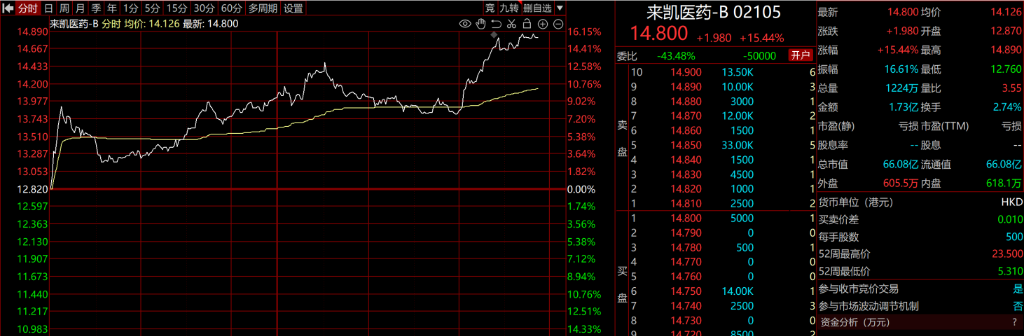
Core Insights - Eli Lilly has withdrawn its Phase IIb clinical trial for bimagrumab combined with tirzepatide for treating type 2 diabetes due to "strategic business reasons" [1] - The company is shifting focus to more promising obesity indications, with a Phase II trial for non-diabetic obese adults still ongoing [1][2] - The decision reflects a prioritization of resources towards areas with higher potential for approval and market success [2][3] Clinical Trial Details - The original trial aimed to enroll 180 participants with obesity and diabetes, monitoring weight loss and body composition over 70 weeks, scheduled from October 21, 2024, to January 2027 [1] - The ongoing obesity trial is expected to yield results by 2026, a year earlier than the diabetes trial [3] - The complexity of diabetes evaluation and established efficacy of GLP-1 drugs may have influenced the decision to halt the diabetes trial [3] Market Reaction - Following the news of the trial cancellation, the stock price of Lai Kai Pharmaceutical surged over 15%, indicating reduced competition and highlighting the value of its collaboration with Eli Lilly on the LAE102 pipeline [4] LAE102 Development - LAE102, developed by Lai Kai, is an ActRIIA monoclonal antibody that aims to provide high-quality weight loss by preserving lean body mass while reducing fat [6][9] - Lai Kai plans to announce preliminary results from its multi-dose study in China and Phase I trials in the U.S. in the second half of 2025 [5][6] Industry Trends - The market for muscle-protecting weight loss drugs is projected to reach hundreds of billions by 2035, with various companies exploring combinations of GLP-1 drugs and muscle-regulating factors [9] - The shift in Eli Lilly's focus towards obesity treatments may signal a broader industry trend towards prioritizing high-quality weight loss solutions that minimize muscle loss [9]
迈入减肥药2.0时代:从减重到增肌,催化剂来了?
Hua Er Jie Jian Wen· 2025-06-03 00:39
Core Insights - The market is anticipating significant business development (BD) transactions at the upcoming ADA (American Diabetes Association) conference in late June 2025, particularly in the obesity treatment sector [9][11] - Regeneron and Hansoh Pharmaceutical have announced a major licensing deal for Hansoh's GLP-1/GIP dual receptor agonist HS-20094, indicating a strategic shift towards high-quality weight loss solutions [1][2] Group 1: Company Developments - Regeneron has committed to enhancing obesity treatment quality, focusing on sustainable weight loss and muscle preservation, as highlighted by their management during the Q1 2025 earnings call [2][3] - The licensing agreement for HS-20094 includes an upfront payment of $80 million and potential milestone payments totaling up to $1.93 billion, emphasizing the financial stakes involved in this partnership [1] - HS-20094 has shown promising results in Phase II trials, demonstrating significant weight loss comparable to existing treatments while currently undergoing Phase III and Phase IIb trials in China [1][3] Group 2: Industry Trends - The obesity treatment industry is transitioning from a focus on mere weight loss to a more nuanced approach that emphasizes fat loss without muscle loss, termed "weight loss 2.0" [4][5] - There is a growing emphasis on developing "muscle-friendly" weight loss drugs that not only reduce fat but also preserve or enhance muscle mass, addressing a significant unmet need in the market [4][6] - Multiple pharmaceutical companies are exploring various pathways to achieve muscle preservation during weight loss, with several candidates currently in development [5][7] Group 3: Future Outlook - The ADA 2025 conference is expected to showcase important research findings in weight management, potentially catalyzing further collaborations and transactions in the industry [9][10] - The trend of "conference-driven transactions" is anticipated to continue, with the ADA conference serving as a pivotal moment for innovation in obesity treatments [10][11] - The expansion of high-quality weight loss medications could broaden the market's reach, appealing to diverse patient populations, including the elderly and those with sarcopenic obesity [8][7]
