魔芋产业升级

Search documents
卫龙“魔”变:构筑魔芋产品矩阵,市占率达61%
Chang Jiang Shang Bao· 2025-12-15 06:55
Core Viewpoint - The konjac industry, driven by the health food trend, is transforming from a niche ingredient to a popular snack, with Weidong playing a pivotal role in this transition [1][4]. Group 1: Industry Transformation - China has over 200 konjac processing companies, with more than 10 national-level agricultural leading enterprises and over 150 large-scale companies, primarily located in major production areas like Sichuan, Hubei, Shaanxi, and Yunnan [1]. - China is the world's largest konjac producer, accounting for 65% of global production, with a planting area of approximately 1.6 million acres [1]. - The konjac industry has evolved from being a mere hot pot ingredient to a recognized snack food, largely due to Weidong's innovative efforts [2][5]. Group 2: Weidong's Innovations - Weidong identified the potential of konjac in 2009 and launched the first ready-to-eat konjac product, "Konjac Shuang," in 2014 after five years of development [2]. - The company has continuously innovated within the konjac category, introducing new flavors and products, such as "Sesame Konjac" and "High-Fiber Mushroom Konjac," to cater to diverse consumer preferences [3][5]. - As of 2025, Weidong's konjac products have achieved a 61% market share, maintaining its position as the industry leader and establishing the first group standard for "ready-to-eat konjac food" [5]. Group 3: Financial Performance - Weidong's konjac products have become a significant revenue source, with the vegetable products segment generating 2.11 billion yuan in revenue in the first half of 2025, marking a 44.3% growth [5]. - The company's total revenue reached 3.483 billion yuan in the same period, reflecting an 18.5% year-on-year increase [5]. Group 4: Industry Growth and Future Outlook - The konjac industry in China is projected to reach a total output value of 32 billion yuan by 2024, with an expected annual compound growth rate of 11.8%, potentially growing to 45 billion yuan by 2030 [10]. - The Ministry of Agriculture and Rural Affairs has emphasized the importance of konjac in the "Food and Nutrition Development Outline (2025-2030)," promoting the supply of fiber-rich foods [10]. - The konjac industry is seen as a key driver for rural revitalization, contributing to local economies and creating jobs [11].

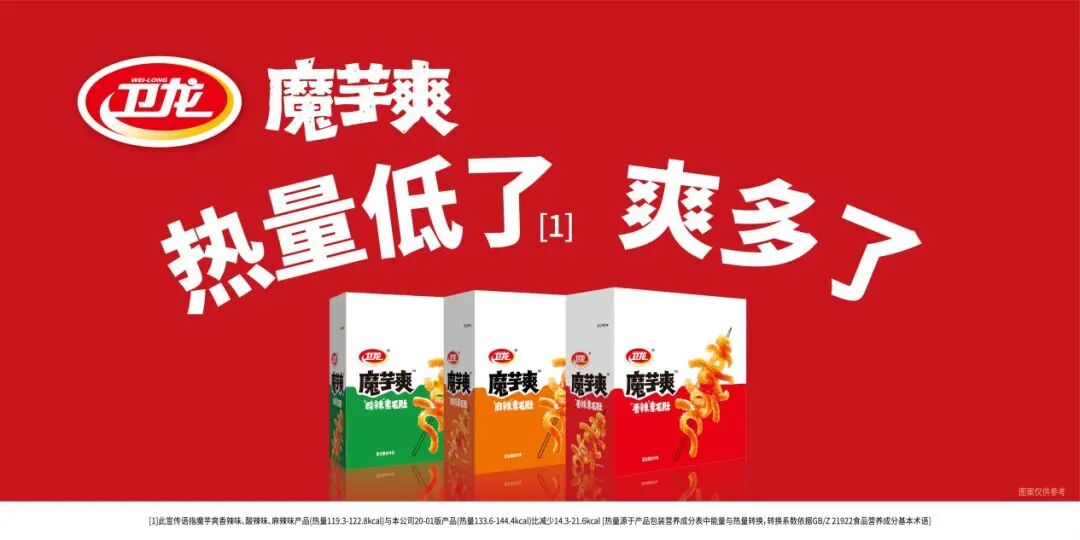
“国民零食”撬动千亿市场 卫龙超级食材魔芋爽发布会在西双版纳举办
Zhong Guo Jing Ji Wang· 2025-12-11 06:48
Core Insights - The event held on December 10 in Xishuangbanna focused on the transformation and future opportunities of the konjac industry, highlighting the release of a report on the development of the konjac food industry in China, marking a new phase of standardization and value creation [1][10] Industry Overview - China is the world's largest producer and consumer of konjac, accounting for over 60% of global planting area and production, with Yunnan, Sichuan, Hubei, and Shaanxi as the four core production regions [1][5] - The konjac industry has evolved from traditional products to a diverse range of offerings, including snacks, meal replacements, and plant-based foods, with the entire industry chain exceeding 100 billion yuan [5] Policy and Market Dynamics - The release of the "China Food and Nutrition Development Outline (2025-2030)" by the Ministry of Agriculture and Rural Affairs emphasizes increasing the supply of konjac and other fiber-rich foods, driving industry growth [1] - The konjac market is experiencing a shift towards health-conscious, younger, and convenience-oriented consumers, with a notable increase in demand for low-fat, high-fiber konjac products, particularly in Japan and Europe, where annual growth rates reach 15% [5][8] Company Innovations - Weidong, a leading company in the konjac snack sector, holds a 61% market share since launching its first konjac product in 2014 and has established the first industry standard for konjac ready-to-eat foods [3][12] - The company has invested in R&D centers in Henan and Shanghai, continuously optimizing product taste and expanding its product line with innovative flavors [12][14] Health Benefits and Consumer Trends - Konjac is recognized for its low-calorie, high-fiber properties, which can enhance satiety and slow down the absorption of sugars and fats, addressing the dietary fiber deficit in the Chinese population [7][8] - The report indicates a transition in konjac consumption from niche markets to broader demographics, with a focus on health, youthfulness, and convenience [8][10] Future Directions - Experts suggest that the konjac industry needs to overcome technological bottlenecks in breeding and processing, and establish a comprehensive standard system for the entire industry chain [16] - The event showcased the integration of traditional culture with modern trends, emphasizing the potential of konjac in various sectors beyond food, including pharmaceuticals and green packaging [16]

一致魔芋20250513
2025-05-13 15:19
Summary of the Conference Call for Yizhi Konjac Company Overview - Yizhi Konjac primarily engages in deep processing of konjac, with three main product lines: konjac powder, konjac food, and konjac beauty products. Konjac powder constitutes 70% of the revenue in 2024, with sales exceeding 6,000 tons and a global market share of 12%, leading the market [2][3][4]. Industry Insights - The konjac food segment, including snacks and tea additives, accounts for 28% of revenue, with rapid growth driven by health trends, particularly the "konjac crystal ball" favored by brands like Mixue Ice City [2][4]. - The konjac industry in China consists of four main segments: planting, initial processing, deep processing, and application. The deep processing segment is primarily focused on food but also extends to chemical, skincare, and medical applications [12]. Financial Performance and Projections - Yizhi Konjac is expected to benefit from rising raw material prices and overseas replenishment demand, projecting a revenue growth of over 15% in 2025, with potential for over 50% growth if external orders are secured [2][5]. - Forecasted net profits for 2025, 2026, and 2027 are 98 million, 126 million, and 174 million yuan respectively, with a compound annual growth rate exceeding 30% [2][6]. - The company's current valuation corresponds to a PE ratio of approximately 48 for 2025, which is above historical averages [6][23]. Cost Structure and Profitability - The gross margin is influenced by raw material prices, inventory levels, and procurement strategies. Historically, the gross margin has improved significantly, with a notable increase of nearly 4 percentage points in 2024 [8][9]. - The company has seen a decrease in expense ratios from 22.7% in 2014 to 10.2% in 2020, but this has increased due to expansion efforts [9]. Market Dynamics - The konjac raw material prices are primarily driven by demand, with expectations for prices to remain high or increase further in 2025 due to a projected 20% growth in downstream applications [13][14]. - China is a major producer of konjac, with annual production increases of 10%-20%. However, supply constraints due to seed shortages and adverse weather conditions are anticipated [14][16]. Competitive Landscape - Major competitors in the konjac market include Yizhi Konjac, Yizhi Magic, and others, with leading companies enhancing customer loyalty through vertical and horizontal integration [17][18]. - The company has established strong procurement relationships and a proprietary technology system, allowing for high-value konjac micro-powder production with a gross margin of 20%-25% [16]. Growth Drivers - Future growth is expected to stem from advancements in blending technology in mature markets and the exploration of new applications in pet food and health products [18][22]. - The company is positioned to capitalize on the rapid growth of the konjac snack and tea additive markets, benefiting from integrated service advantages and strong raw material control [18][21]. Overall Outlook - The company is anticipated to benefit from both supply and demand dynamics in the short term, with a strong potential for long-term growth driven by industry upgrades and increased market penetration [24].