
健康零食

Search documents
中国烘焙工厂系列· 正翼良品⑯ | 0 添加、短保、非遗工艺,正翼良品新鲜零食到底有多硬核?
东京烘焙职业人· 2026-03-30 11:50
Core Viewpoint - The article emphasizes the growth and innovation in the Chinese baking market, particularly focusing on a company that combines traditional craftsmanship with modern health trends to create popular baked goods [3][5]. Group 1: Company Overview - Zhengyi Liangpin integrates two production bases, Dixiang Foods and Linjia Foods, with a sales platform, Zhengyi Foods, specializing in traditional Chinese baked goods [3][5]. - The company has a heritage of four generations and is known for its unique products, including Tiao Sheng Su and Linjia Peach Crisp, which are recognized as intangible cultural heritage [5][21]. Group 2: Product Focus - Main products include Tiao Sheng Su, rice crisps, peach crisps, candies, traditional pastries, and puffed snacks [10]. - The company emphasizes health and quality, with products featuring low oil, low sugar, and no additives, while maintaining the original flavor of ingredients [15][21]. Group 3: Production and R&D Capabilities - The company operates a 20,000 square meter cleanroom facility in Chengdu with over 200 workers, certified by HACCP and ISO 22000 [8]. - It has a robust R&D team of 6 members and produces over 30 new products annually, focusing on healthy and high-repurchase snacks [21]. Group 4: Supply Chain and Logistics - Zhengyi Liangpin offers a full supply chain service from raw material procurement to production, packaging, and logistics, ensuring quality control at every stage [24][25]. - The company collaborates with numerous well-known retail channels across more than 20 provinces in China, including major supermarkets and convenience stores [8][28]. Group 5: Market Position and Recognition - The company has achieved significant sales milestones, with annual shipments exceeding 500,000 boxes and monthly sales of a flagship product surpassing 17,000 boxes [16]. - It has received various honors, including recognition as an advanced enterprise in Chengdu and accolades for its founder's contributions to the community [37].

燕荚年货节:解锁 “健康无负担” 零食自由,让年味与身材两全
Sou Hu Wang· 2026-01-30 01:44
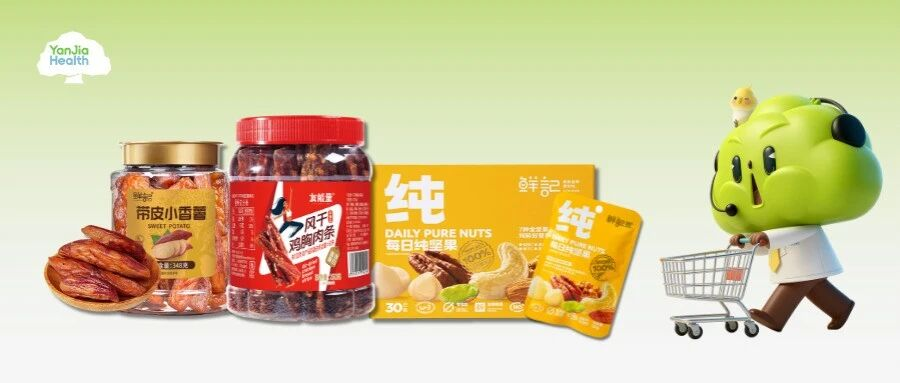
Core Insights - The article highlights the emergence of YanJia as a brand that successfully merges traditional festive snacks with modern health-conscious demands, offering consumers a guilt-free snacking experience during the New Year [1][13] Group 1: Health-Focused Product Offerings - YanJia emphasizes a "0 additives" policy, ensuring that its products, such as the skin-on sweet potato, contain no added sugars, preservatives, colorings, or flavorings, appealing to health-conscious consumers [3] - The brand's high-protein chicken breast strips are designed for fitness enthusiasts, featuring a dual cooking process that retains flavor while providing a high-protein, low-fat nutritional profile [5] - YanJia's pure nut offerings boast a high content of omega-3 fatty acids, promoting cardiovascular health and brain development, thus aligning with consumer preferences for nutritious snacks [8] Group 2: Value Proposition and Consumer Experience - YanJia is offering significant discounts during the New Year festival, challenging the notion that healthy snacks must be expensive, thereby making quality health products accessible to families [10][11] - The brand has streamlined the purchasing process through a user-friendly mini-program, allowing consumers to easily browse and select from a variety of products, enhancing the overall shopping experience [11] - YanJia aims to redefine the festive snacking experience by providing healthier options that foster emotional connections and shared moments among families and friends during the New Year celebrations [13]
从溜溜果园看梅产品休闲零食行业发展
East Money Securities· 2026-01-26 13:09
Investment Rating - The report maintains a "Strong Buy" rating for the industry, indicating a positive outlook for investment opportunities in the sector [5]. Core Insights - The report highlights the growth potential of the plum products, fruit snacks, and jelly industries, with projected CAGR from 2025 to 2029 being 13.2%, 8.6%, and 13.0% respectively [1][19]. - The natural jelly segment is noted for its rapid growth and high concentration, with a projected CAGR of 39.8% from 2025 to 2029, indicating strong market demand for healthier snack options [1][32]. - The report emphasizes the leading market position of Liu Liu Guo Yuan in the plum products, fruit snacks, and natural jelly sectors, with market shares of 4.9%, 7.0%, and 45.7% respectively in 2024 [1][33]. Industry Overview - The leisure food industry in China is approaching a trillion yuan market size, with significant growth potential as per capita consumption remains below global averages [18][19]. - The fruit snack segment, particularly focusing on green and black plums, shows high growth potential with a CAGR of 15.5% and 14.6% respectively from 2020 to 2024 [24][26]. - The jelly market is experiencing a shift towards natural products, with manufacturers responding to consumer health trends by producing jellies with natural ingredients and no artificial additives [30][32]. Company Profile: Liu Liu Guo Yuan - Liu Liu Guo Yuan has over 20 years of experience in the plum products industry, establishing itself as a market leader with a strong brand presence [2][52]. - The company reported revenues of 1.62 billion yuan and 960 million yuan for 2024 and the first half of 2025, respectively, reflecting year-on-year growth of 22.2% and 24.9% [2][52]. - The company has a concentrated ownership structure, with the founders holding 87.77% of the shares, ensuring strong control over strategic decisions [2][57]. Growth Drivers - Liu Liu Guo Yuan's diverse product matrix, including dried plums, fruit snacks, and jellies, along with strong R&D capabilities, creates competitive barriers [2][3]. - The company is leveraging multiple sales channels, including self-operated online stores and membership-based retail, which are showing significant growth rates [3][4]. - Continuous improvement in revenue growth, profitability, and inventory turnover is noted, with net profit margins increasing from 5.83% to 11.01% from 2022 to the first half of 2025 [3][4].
健康零食方兴未艾,量贩之风蒸蒸日上 - 零食行业2026年投资策略
2025-12-16 03:26
Summary of the Snack Industry Conference Call Industry Overview - The snack industry is experiencing significant differentiation in performance among companies, with leading firms benefiting from health-oriented product categories, while others face challenges due to high raw material costs and low-priced competition [1][2] - The market is dominated by two major players in the bulk snack segment, with "Very Busy" focusing on store expansion and "Wancheng" emphasizing profitability per store [1][2] Key Companies and Performance - **Hecha Food**: Under pressure due to high costs of sunflower seeds and nuts, as well as competition from private label brands [1][2] - **Jinzai and Ganyuan**: Focused on e-commerce and retail channels, but increased channel costs are suppressing short-term profits [1][2] - **Very Busy**: Over 21,000 stores, leading in store count [2] - **Wancheng**: 19,000 stores, focusing on single-store profitability [2] - **Market Share**: The two leading companies hold nearly 80% of the C22 market share [2] Investment Recommendations - **Focus on Leading Brands**: There is a recommendation to pay attention to Wancheng Group and Very Busy due to their potential for category expansion and supply chain efficiency [1][4] - **Innovative Categories**: The potential for innovation in konjac and oat products is highlighted, with companies like Weilong, Yanjin, and Ximai expected to perform well [1][4] - **Profitability Trends**: The snack industry is entering a phase of profit elasticity release, with net profit margins expected to improve through reduced subsidies, upstream price negotiations, and scale effects [3][6] Market Dynamics - **Consumer Demand**: The snack industry remains highly fragmented with diverse consumer demands, leading to two main investment themes: expansion of product categories by leading brands and innovation in specific product lines [4] - **Konjac Market**: The konjac snack market is currently valued at approximately 18 billion yuan, with potential growth to 30-80 billion yuan, indicating sustained high growth in the coming years [5] Competitive Landscape - Concerns about new brands entering the konjac market and the impact of declining raw material prices are deemed manageable, as established brands like Weilong and Yanjin are expected to maintain their market positions through brand and shelf competition [5] - The focus on brand loyalty and market expansion is anticipated to continue, with both companies likely to lead industry growth [5] Future Outlook - The snack industry is expected to continue its growth trajectory, with emphasis on multi-category models, store operations, membership systems, and private label development as key areas for future development [6] - Recommendations for investment include Ximai, Wancheng, Yanjin, and Weilong, with a note on the potential for Very Busy’s IPO to catalyze investment returns [3][6]
卫龙“魔”变:构筑魔芋产品矩阵,市占率达61%
Chang Jiang Shang Bao· 2025-12-15 06:55
Core Viewpoint - The konjac industry, driven by the health food trend, is transforming from a niche ingredient to a popular snack, with Weidong playing a pivotal role in this transition [1][4]. Group 1: Industry Transformation - China has over 200 konjac processing companies, with more than 10 national-level agricultural leading enterprises and over 150 large-scale companies, primarily located in major production areas like Sichuan, Hubei, Shaanxi, and Yunnan [1]. - China is the world's largest konjac producer, accounting for 65% of global production, with a planting area of approximately 1.6 million acres [1]. - The konjac industry has evolved from being a mere hot pot ingredient to a recognized snack food, largely due to Weidong's innovative efforts [2][5]. Group 2: Weidong's Innovations - Weidong identified the potential of konjac in 2009 and launched the first ready-to-eat konjac product, "Konjac Shuang," in 2014 after five years of development [2]. - The company has continuously innovated within the konjac category, introducing new flavors and products, such as "Sesame Konjac" and "High-Fiber Mushroom Konjac," to cater to diverse consumer preferences [3][5]. - As of 2025, Weidong's konjac products have achieved a 61% market share, maintaining its position as the industry leader and establishing the first group standard for "ready-to-eat konjac food" [5]. Group 3: Financial Performance - Weidong's konjac products have become a significant revenue source, with the vegetable products segment generating 2.11 billion yuan in revenue in the first half of 2025, marking a 44.3% growth [5]. - The company's total revenue reached 3.483 billion yuan in the same period, reflecting an 18.5% year-on-year increase [5]. Group 4: Industry Growth and Future Outlook - The konjac industry in China is projected to reach a total output value of 32 billion yuan by 2024, with an expected annual compound growth rate of 11.8%, potentially growing to 45 billion yuan by 2030 [10]. - The Ministry of Agriculture and Rural Affairs has emphasized the importance of konjac in the "Food and Nutrition Development Outline (2025-2030)," promoting the supply of fiber-rich foods [10]. - The konjac industry is seen as a key driver for rural revitalization, contributing to local economies and creating jobs [11].
从“深山土疙瘩”到“国民新零食”,卫龙魔芋爽的超级单品增长密码
Jing Ji Wang· 2025-12-12 07:31
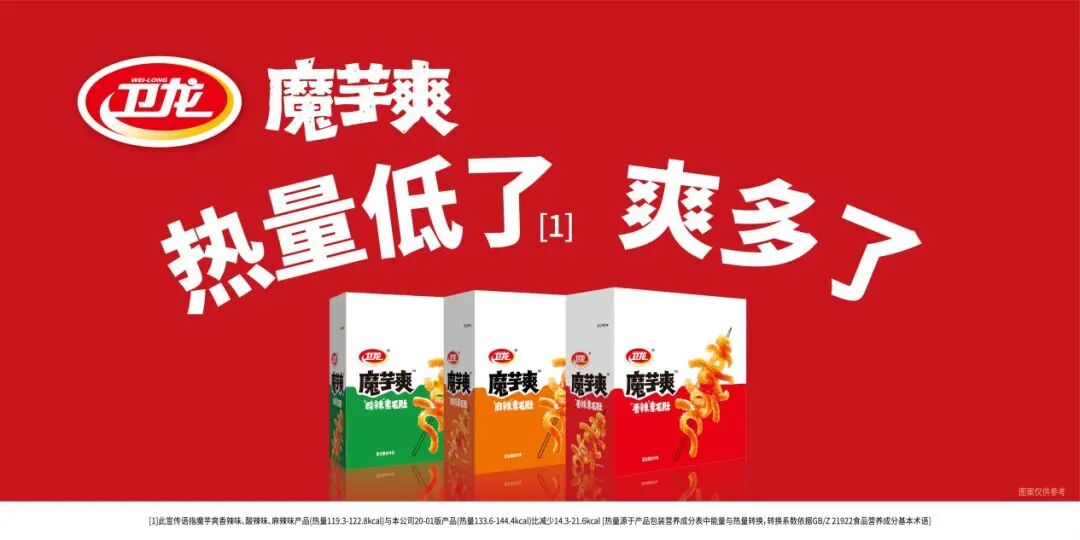
Core Insights - The event held by Weilong on December 10 focused on the theme of "Healthy Snack New Proposition: Super Ingredient Konjac," gathering various stakeholders to discuss the transformation and future opportunities in the konjac industry [1] Company Performance - Since its launch in 2014, Weilong's Konjac Snack has achieved annual sales exceeding 3 billion yuan, with revenue from vegetable products centered around Konjac expected to grow by 59.1% year-on-year to 3.371 billion yuan in 2024, accounting for 54% of total revenue [3] - By the first half of 2025, this revenue is projected to further increase to 6.055 billion yuan, establishing a strong second growth curve for the company [3] Product Strategy - The success of Weilong's Konjac Snack is attributed to a systematic approach involving brand, product, and channel strategies, effectively capturing industry trends and young consumers' demands [4] - The product strategy focuses on continuous improvement of basic flavors, with classic spicy flavors being the core of repeat purchases, supported by 24 production processes that ensure a chewy and crispy texture [6] - Recent innovations include regional and scenario-based products, such as the launch of Hunan-style spicy crayfish flavor and collaborations with Sam's Club for high-fiber products, aligning with health trends [6] Market Strategy - Weilong has adapted its marketing strategies to resonate with young consumers, emphasizing fun and engaging content through social media platforms like Douyin and Kuaishou, leading to a 38% year-on-year increase in online channel revenue, reaching 700 million yuan in 2024 [6] - The brand's marketing also focuses on emotional resonance, creating social conversations through limited edition flavors and creative packaging [7] Industry Outlook - The konjac industry in China is projected to have a total output value of 32 billion yuan in 2024, with an expected annual compound growth rate of 11.8%, potentially reaching 45 billion yuan by 2030, indicating significant growth opportunities [9] - The development of konjac food enterprises is fostering regional agricultural clusters, enhancing farmers' income and contributing to the industry's overall growth [9] - The chairman of Weilong stated that the konjac ingredient is undergoing a value redefinition, with the company holding a 61% market share in the category and leading the establishment of industry standards [9][11]
“国民零食”撬动千亿市场 卫龙超级食材魔芋爽发布会在西双版纳举办
Zhong Guo Jing Ji Wang· 2025-12-11 06:48
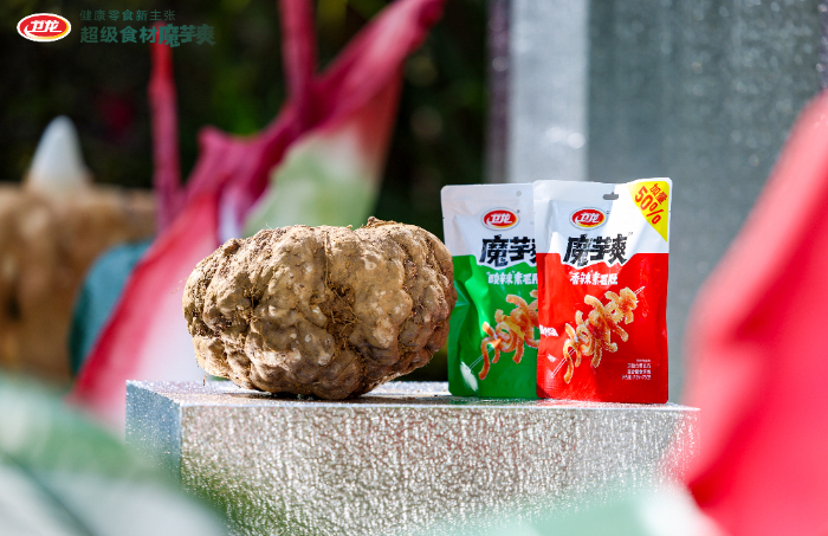
Core Insights - The event held on December 10 in Xishuangbanna focused on the transformation and future opportunities of the konjac industry, highlighting the release of a report on the development of the konjac food industry in China, marking a new phase of standardization and value creation [1][10] Industry Overview - China is the world's largest producer and consumer of konjac, accounting for over 60% of global planting area and production, with Yunnan, Sichuan, Hubei, and Shaanxi as the four core production regions [1][5] - The konjac industry has evolved from traditional products to a diverse range of offerings, including snacks, meal replacements, and plant-based foods, with the entire industry chain exceeding 100 billion yuan [5] Policy and Market Dynamics - The release of the "China Food and Nutrition Development Outline (2025-2030)" by the Ministry of Agriculture and Rural Affairs emphasizes increasing the supply of konjac and other fiber-rich foods, driving industry growth [1] - The konjac market is experiencing a shift towards health-conscious, younger, and convenience-oriented consumers, with a notable increase in demand for low-fat, high-fiber konjac products, particularly in Japan and Europe, where annual growth rates reach 15% [5][8] Company Innovations - Weidong, a leading company in the konjac snack sector, holds a 61% market share since launching its first konjac product in 2014 and has established the first industry standard for konjac ready-to-eat foods [3][12] - The company has invested in R&D centers in Henan and Shanghai, continuously optimizing product taste and expanding its product line with innovative flavors [12][14] Health Benefits and Consumer Trends - Konjac is recognized for its low-calorie, high-fiber properties, which can enhance satiety and slow down the absorption of sugars and fats, addressing the dietary fiber deficit in the Chinese population [7][8] - The report indicates a transition in konjac consumption from niche markets to broader demographics, with a focus on health, youthfulness, and convenience [8][10] Future Directions - Experts suggest that the konjac industry needs to overcome technological bottlenecks in breeding and processing, and establish a comprehensive standard system for the entire industry chain [16] - The event showcased the integration of traditional culture with modern trends, emphasizing the potential of konjac in various sectors beyond food, including pharmaceuticals and green packaging [16]

盐津铺子的“增长神话”,是零食行业的“幸存者偏差”吗?
Sou Hu Cai Jing· 2025-11-29 04:41
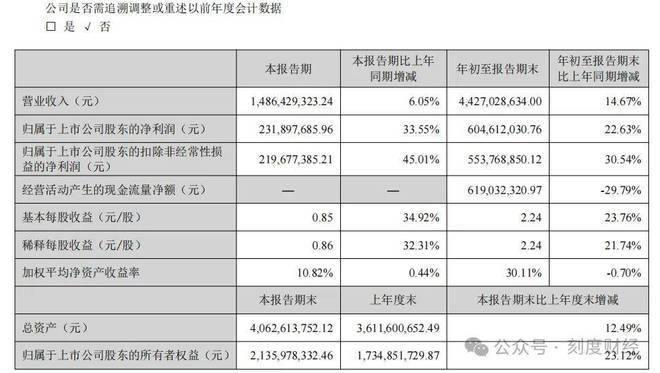
Core Insights - The snack industry is experiencing intense competition, with companies like Salted Fish and others facing challenges in profitability despite revenue growth [1][3] - Salted Fish has shown resilience, reporting a revenue of 44.27 billion yuan and a net profit of 6.05 billion yuan for the first three quarters of 2025, marking year-on-year growth of 14.67% and 22.63% respectively [1][3] - The company is expanding its market presence by targeting high-end channels and investing in a production base in Thailand [3][19] Financial Performance - For Q3 2025, Salted Fish achieved a revenue of 14.9 billion yuan, a 6.1% increase year-on-year, with a net profit of 2.3 billion yuan, reflecting a significant 33.6% growth [1][3] - The company's gross margin improved by 1.0 percentage points to 31.6%, driven by higher sales of high-margin konjac products and optimization of product structure [3][5] - The first three quarters of 2025 saw a net profit margin of 13.66%, with a cash flow from operating activities of 619 million yuan, indicating a decline of 29.79% [2][8] Market Position and Strategy - Salted Fish has successfully captured market share in the high-end snack segment while also expanding its distribution channels, covering over 40,000 retail outlets [5][15] - The company relies heavily on its konjac products, which accounted for 26.9% of total revenue in the first half of 2025, with a staggering year-on-year growth of 155.10% [10][12] - Despite its successes, Salted Fish faces challenges due to over-reliance on a single product category and the potential for market saturation [12][13] Industry Challenges - The snack industry is shifting from a focus on channel expansion to a need for innovation and efficiency, with many companies struggling to adapt [9][16] - Salted Fish's growth strategy has not addressed fundamental industry issues such as product homogeneity and weak innovation capabilities [9][17] - The competitive landscape is intensifying, with companies needing to enhance supply chain efficiency and product differentiation to maintain market relevance [16][20] Future Outlook - The snack market is projected to exceed 3.8 trillion yuan in 2025, but the underlying challenges of low entry barriers and intense competition remain [20][21] - Salted Fish's current growth model, which capitalizes on health trends and channel advantages, may not be sustainable in the long term without significant innovation and market adaptation [20][21] - The company must transition from being a beneficiary of market trends to a creator of lasting value to avoid potential declines in growth [21]
达利欧投资了这家“农产品独角兽”
财富FORTUNE· 2025-11-07 13:54
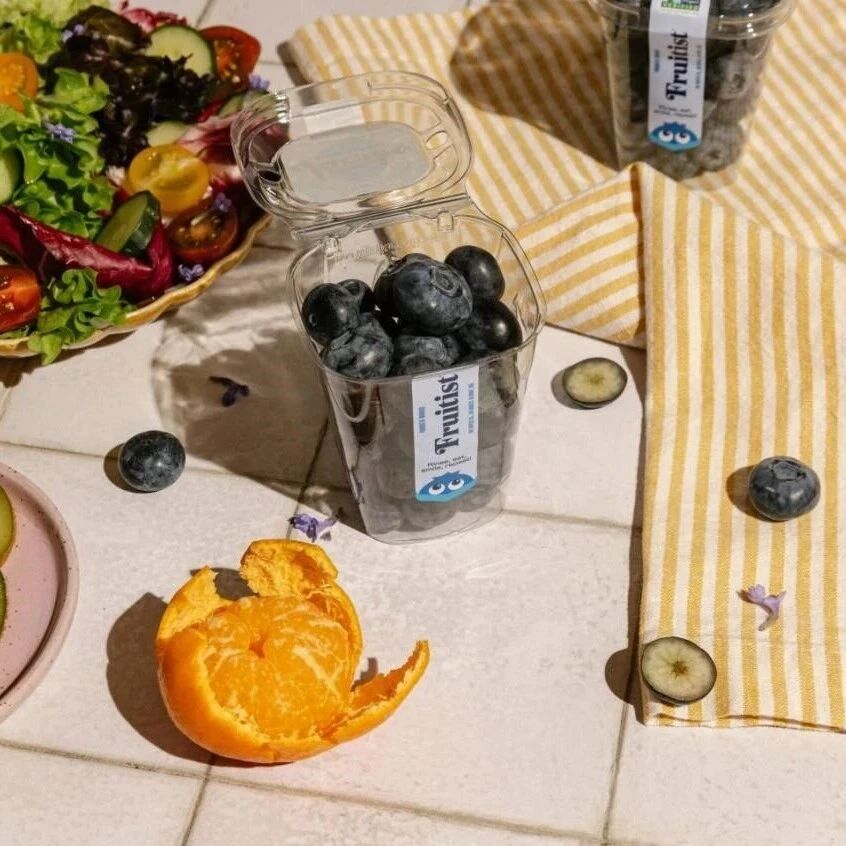
Core Insights - Fruitist is revolutionizing the blueberry market by offering consistently high-quality blueberries, aiming to eliminate the unpredictability often associated with berry purchases [3][4] - The company has achieved a valuation of $1 billion, supported by significant investments from notable financial entities, including Ray Dalio's family office and J.P. Morgan Asset Management [1][5] - Fruitist's innovative approach includes a complete value chain from patented varieties to global farms, utilizing data-driven logistics to ensure year-round supply [4][5] Company Strategy - The company focuses on redesigning blueberries to ensure quality stability, addressing the common issue of inconsistent fruit quality in the market [3][4] - Fruitist operates farms in eight countries, including Peru, Oregon, Morocco, Egypt, and Yunnan, China, to provide a seamless supply chain [4][5] - The company has developed algorithms to predict optimal quality and yield, showcasing a blend of technology and agriculture [5] Market Position - Fruitist's blueberries are positioned as a healthier snack option in a global snack market projected to reach $800 billion, with the healthy snack segment potentially hitting $100 billion [6][7] - The introduction of grab-and-go "snack cups" reflects the company's strategy to cater to the growing demand for convenient, nutritious snacks [7] - The pricing strategy for Fruitist's blueberries ranges from $5 to $12, with a focus on consumer loyalty driven by quality rather than luxury [8][9] Consumer Trends - The rise of GLP-1 medications, which reduce overall food intake except for fruits and vegetables, is seen as beneficial for Fruitist, aligning with health-conscious consumer trends [8] - The company aims to provide a reliable product that consumers can trust year-round, enhancing customer loyalty through consistent quality [9]
溜溜梅股份有限公司 (前称為溜溜果园集团股份有限公司)(H0350) - 申请版本(第一次呈交)
2025-10-27 16:00
香港交易及結算所有限公司、香港聯合交易所有限公司與證券及期貨事務監察委員會對本申請版本 的內容概不負責,對其準確性或完整性亦不發表任何意見,並明確表示概不就因本申請版本全部或 任何部分內容而產生或因倚賴該等內容而引致的任何損失承擔任何責任。 Liuliu Orchard Group Co., Ltd. 溜 溜 果 園 集 團 股 份 有 限 公 司 (「本公司」) (於中華人民共和國註冊成立的股份有限公司) 的申請版本 警告 本申請版本乃根據香港聯合交易所有限公司(「聯交所」)及證券及期貨事務監察委員會(「證監會」)的 要求而刊發,僅用作提供資料予香港公眾人士。 本申請版本為草擬本,其內所載資料並不完整,亦可能會作出重大變動。閣下閱覽本文件,即代表閣 下知悉、接納並向本公司、本公司的聯席保薦人、整體協調人、顧問或包銷團成員表示同意: 於本公司招股章程根據香港法例第32章《公司(清盤及雜項條文)條例》送呈香港公司註冊處處長登記 前,不會向香港公眾人士提出要約或邀請。倘於適時向香港公眾人士提出要約或邀請,有意投資者務 請僅依據於香港公司註冊處處長登記的本公司招股章程作出投資決定,該文件的文本將於發售期內 向公眾刊 ...