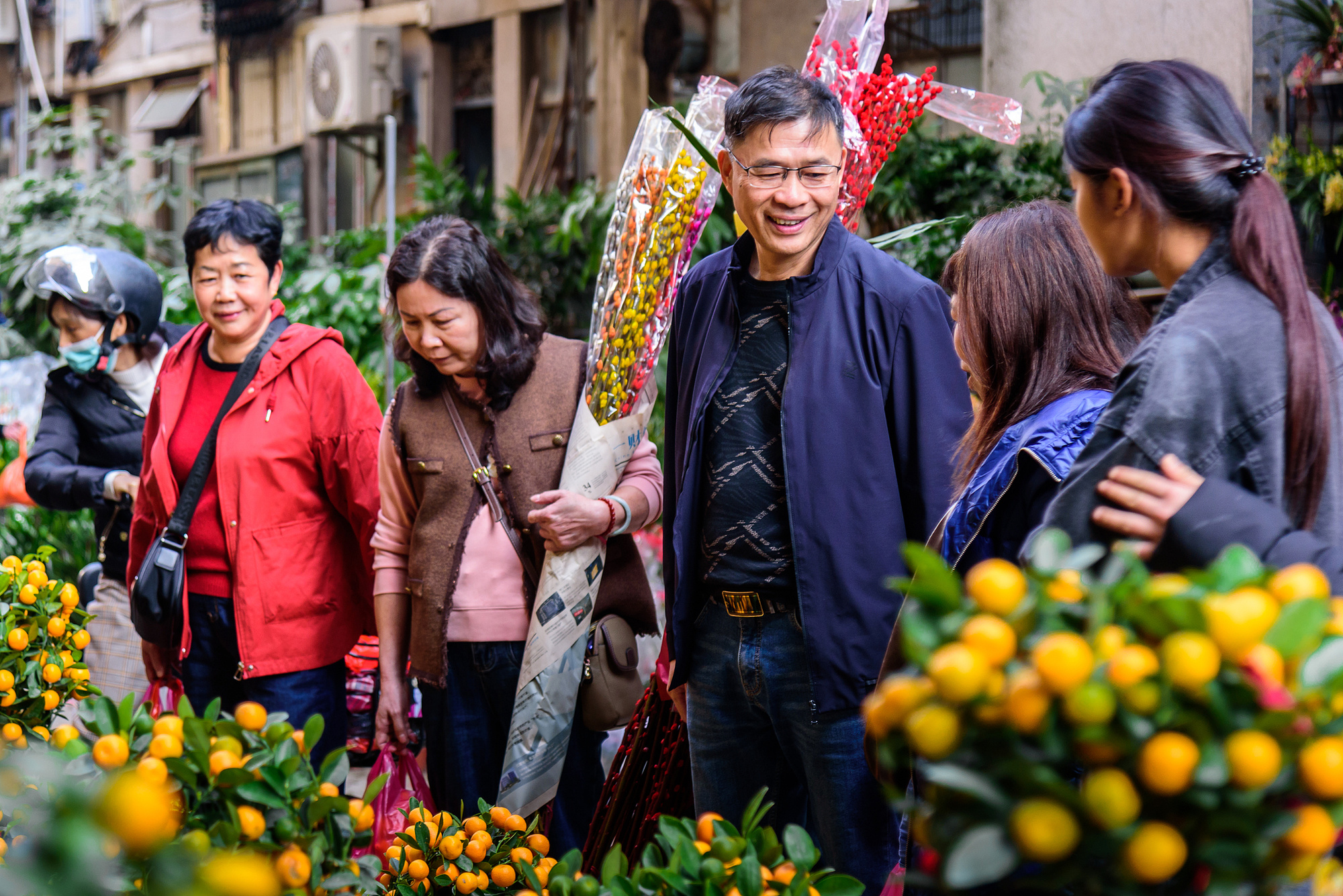
鲜花经济

Search documents
曾经的“中产三件套”,被云南干成土特产
吴晓波频道· 2026-03-29 00:29
Core Viewpoint - The article emphasizes the transformation of the blueberry market in China, particularly in Yunnan, where the production of blueberries has surged, making them more affordable and accessible to the middle class, thus redefining their status from luxury to common fruit [5][12][19]. Group 1: Blueberry Market Dynamics - Blueberries have become a prominent fruit in supermarkets, with large sizes and affordable prices, challenging previous perceptions of them as a luxury item [2][5]. - The cultivation area for blueberries in China is projected to increase from 96,000 hectares in 2024 to 110,000 hectares in 2025, with an expected production increase of nearly 180,000 tons [12]. - Yunnan province has emerged as a leading region for blueberry production, contributing 22% of the national output, with a 510% increase in production over four years [14][19]. Group 2: Agricultural Innovations - Modern agricultural techniques, such as LED lighting, substrate cultivation, and integrated water and fertilizer systems, have significantly boosted blueberry yields [16][17]. - The introduction of new blueberry varieties, like the "fragrant blueberry," caters to consumer preferences for taste and health, while also extending the harvest season [17][19]. - Over 3,000 domestic and international companies have invested in Yunnan's blueberry industry, indicating strong market interest and growth potential [18]. Group 3: Broader Agricultural Trends - The article also highlights the rising trend of coffee consumption in China, with a projected annual growth rate of 15%, and the increasing popularity of Yunnan coffee as a cost-effective alternative [22][28]. - Yunnan's flower industry is experiencing a similar transformation, with advancements in technology and logistics enabling rapid delivery and lower prices, thus democratizing access to flowers for consumers [30][32]. - The combination of these agricultural developments reflects broader trends in technology, supply chain efficiency, and consumer behavior in China, showcasing a shift towards more accessible luxury goods [32][34].


鲜花经济迎春绽放
Xin Lang Cai Jing· 2026-02-22 23:06
Core Insights - The flower market in Kunming, particularly the Dongnan Flower Market, has experienced a significant surge in flower consumption during the Spring Festival, driven by a vibrant atmosphere and strong consumer demand [1][3] Group 1: Market Performance - During the Spring Festival, approximately 50 million stems of fresh flowers were sold through the Kunming International Flower Auction Trading Center, with a peak daily supply of 6.7 million stems, reflecting a 17% month-on-month increase and an 18% year-on-year increase [1] - The average price index for fresh cut flowers remained around 300 points, which is a 20% increase compared to regular days [1] - The demand for household flowers surged, with significant growth in sales of celebratory flowers such as red roses and tulips, indicating a robust market response to consumer needs [1] Group 2: Product Diversification - Merchants have diversified their offerings to include creative bouquets, potted plants for the New Year, and fresh flower gift boxes, catering to various consumer segments [2] - The sales strategy includes both online and offline channels, enhancing accessibility and stimulating holiday consumption potential [2] Group 3: Cultural and Tourism Integration - The flower market has transformed into a popular cultural and tourism destination, featuring activities such as flower parades and night tours, which have significantly increased daily foot traffic compared to regular days [3] - From February 19 to 20, the average daily sales volume reached 4 million stems, showcasing the integration of industry, consumption, and tourism [3] - The Kunming Dongnan Flower Market has effectively leveraged the Spring Festival consumption boom and innovative cultural tourism models to achieve both increased visitor numbers and sales [3]
“鲜花经济”拓宽致富路
Xin Lang Cai Jing· 2026-02-16 23:40
Core Viewpoint - The "flower economy" is being promoted to enhance income opportunities for farmers and support rural revitalization efforts [1]. Group 1 - Farmers in Xingtai City, specifically in the Nanha District, are being guided to develop specialty flower planting based on local conditions [3]. - The initiative aims to broaden income channels for the community, contributing to comprehensive rural revitalization [3].
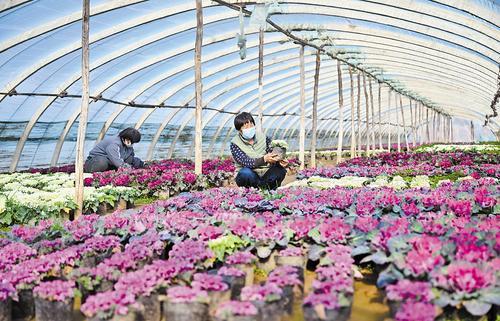
年宵花市场升温,国内超百万家花卉种植相关企业催热“年味”
Qi Cha Cha· 2026-02-11 06:36
Core Insights - The flower market in China is experiencing a surge as the Spring Festival approaches, with over one million flower-related enterprises contributing to the festive atmosphere and economic growth [2] Group 1: Market Overview - As of January 19, there are 1.7621 million existing flower-related enterprises in China, showing a consistent increase in the number of enterprises over the past decade, from 225,000 at the end of 2016 to an expected 1.7541 million by the end of 2025 [3] - In 2025, a total of 297,900 new flower-related enterprises are projected to be registered, with 11,500 already registered this year [3] Group 2: Enterprise Characteristics - The majority of flower-related enterprises are lightweight, with over half (54.38%) having registered capital of less than 1 million yuan. Additionally, 17.48% have registered capital between 1 million and 2 million yuan, while 7.99% have capital exceeding 10 million yuan [4] Group 3: Regional Distribution - The East China region has the highest concentration of flower-related enterprises, accounting for 35.44% of the total. The Central and Southwest regions follow, with 16.93% and 16.44% respectively, while other regions each account for less than 10% [5]
“春城”赏花正当时 多彩“颜值”变产值
Xin Lang Cai Jing· 2026-02-10 20:03
Group 1 - The core viewpoint of the article highlights the integration of the "flower economy" with ecological tourism in Kunming, leveraging the local flower industry to attract tourists and promote economic development [3]. Group 2 - The city of Kunming is actively enhancing its floral landscapes in various parks to draw in a large number of visitors, especially as the Spring Festival approaches [3]. - The initiative aims to utilize the resource advantages of Yunnan's flower industry to foster a beautiful economy [3].
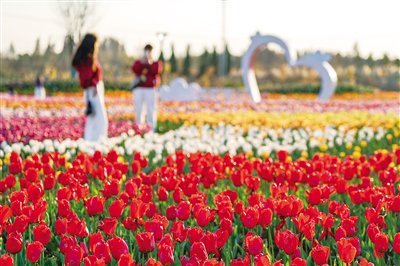
新闻有观点·行业洞察丨佛山里水蝴蝶兰,如何点燃“鲜花经济”?
Yang Guang Wang· 2026-02-09 06:41
Core Insights - The butterfly orchid has become a top choice in the flower market during the Spring Festival, with the production scale in Lishui Town, Nanhai District, Foshan, Guangdong reaching 4,500 acres and an annual output exceeding 65 million plants, accounting for about one-third of the national market share [1][3]. Industry Overview - The flower economy is thriving, driven by changing consumer preferences, solid industry foundations, and cultural confidence. The annual output value of the flower industry in China exceeds 520 billion yuan, with nearly 220,000 seedling flower enterprises [7]. Consumer Trends - There is a polarization in consumer preferences between younger and older generations. Young consumers, especially women, prefer pastel or retro colors, while older consumers favor traditional bright colors. Online sales focus on smaller desktop flowers, while offline sales feature larger pot combinations [4][6]. Market Dynamics - The global annual production of butterfly orchid seedlings is approximately 350 to 380 million, with mainland China producing about 250 million, showing a growing market share. However, high-end varieties still rely on imports due to insufficient brand development [9]. Competitive Advantages - Butterfly orchids have advantages such as good symbolism, long flowering periods, simple maintenance, and a wide price range. Although other flower varieties are gaining attention, butterfly orchids are expected to remain irreplaceable in the next 5 to 10 years [10]. Future Outlook - The flower consumption trend is shifting towards daily use rather than being limited to festivals. The industry is expected to become more personalized, branded, and internationalized, with online channels evolving from transactional to educational roles [10].

新春走基层|当春节遇见浪漫 昆明年宵花市场热度持续攀升
Xin Lang Cai Jing· 2026-02-04 12:22
Group 1 - The core viewpoint of the article highlights the booming demand in the flower market in Kunming, particularly due to the overlap of the Spring Festival and Valentine's Day, leading to a peak supply period for the flower market [3][10] - The peak supply period is expected to last from February 6 to February 12, with an average daily supply of 5 to 5.5 million stems, and a potential peak daily transaction volume nearing 7 million stems, indicating a return to historical growth levels [3][4] - The average price for fresh-cut flowers during this peak period is projected to be between 2.2 and 2.3 yuan per stem, with single rose prices expected to exceed 20 yuan per stem [4] Group 2 - The market is experiencing significant growth in export demand, particularly from Malaysia as a new key market, while stable procurement continues from Kazakhstan, Russia, Vietnam, and Japan [6] - Popular flower varieties in the market include roses, lilies, and carnations, with pink-themed varieties being particularly favored among consumers [4][8] - Traditional popular flowers such as large-flowered orchids, butterfly orchids, and wintergreen remain mainstream products, with specific price ranges for these flowers indicating a healthy market [8]
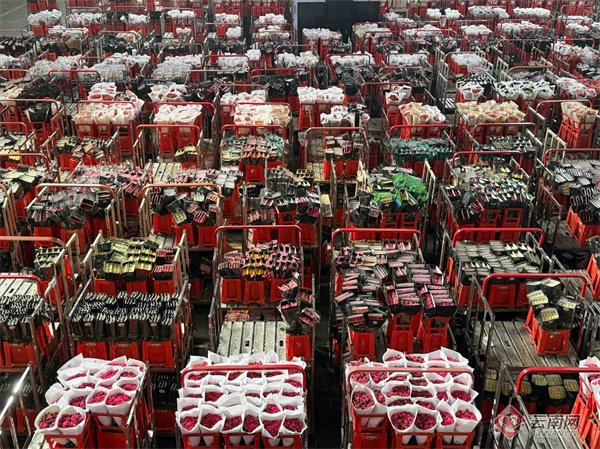
从卖花到卖风景,东方乐妹村玩转“鲜花经济”
Hai Nan Ri Bao· 2026-02-03 06:10
Core Viewpoint - The transformation of Leimei Village from a flower-selling focus to a scenic attraction highlights the successful implementation of the "flower economy," attracting tourists and increasing local income [5][6]. Group 1: Economic Transformation - Leimei Village has shifted its business model from solely selling flowers to creating a scenic experience, which has led to increased tourist visits and revenue [5]. - In the past year, the village welcomed over 60,000 tourists, generating more than 1.4 million yuan in collective income [5]. - The village operates on a points system, incentivizing residents to participate actively in tourism-related activities, leading to shared financial benefits [5]. Group 2: Community Development - The village has developed a comprehensive rural tourism model that includes flower cultivation, educational programs, dining, and accommodation [6]. - The manager of the flower base, who was once a poor villager, has transformed into an expert managing a 25-acre flower farm, exporting orchids to markets in Yunnan, Guangdong, and Southeast Asia [6]. - The village's approach has not only improved economic conditions but also fostered a sense of community ownership and pride among residents [5][6]. Group 3: Agricultural Practices - The cultivation of orchids is emphasized as a meticulous process, with current efforts focused on preparing for the peak sales season after the Spring Festival [6]. - The village is nurturing approximately 700,000 orchid plants, ensuring they are in optimal condition for upcoming orders [6].
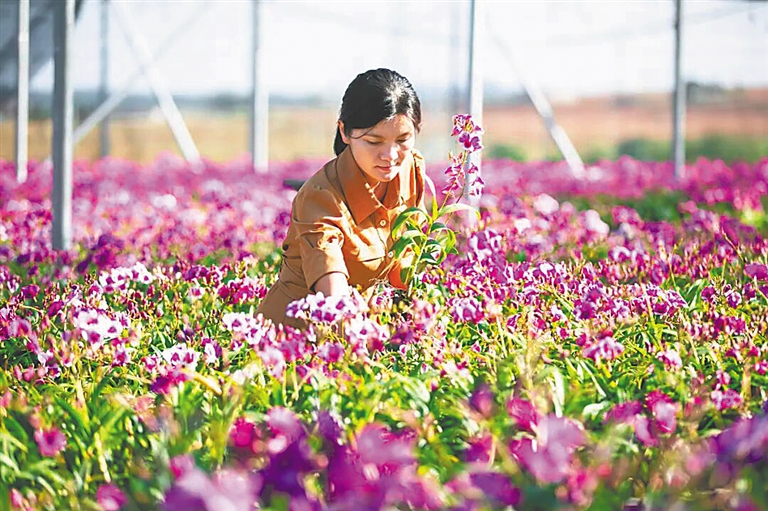
国产花卉怎样“出新”又“出彩”?数智驱动让年宵花走出新“花路”
Xin Lang Cai Jing· 2026-02-01 06:55
Group 1 - The core viewpoint of the article highlights the vibrant sales season of the Chinese New Year flower market, showcasing the growth of the "fresh flower economy" which has reached a market scale of over 100 billion yuan [5][9][26] - The Beijing flower market is experiencing a shift in consumer preferences, with traditional large, festive potted plants still popular among families, while smaller, aesthetically pleasing, and affordable "fresh style" potted plants are favored by urban youth and office workers [3][5] - The flower industry in China is thriving, with significant government support for modern agriculture and flower industry development, utilizing advanced agricultural technology for optimal growth conditions [5][9] Group 2 - The article discusses the innovative "flash" marketing strategies in flower fields, attracting visitors to engage in flower picking, enhancing the festive experience [7][9] - A digital transformation is evident in the flower industry, with a data-driven supply chain from cultivation to consumer, allowing for a more efficient and creative approach to flower sales [9][15][13] - E-commerce platforms are facilitating direct transactions between flower farmers and retailers, streamlining the process and expanding market reach [16][15] Group 3 - Customization services in flower arrangements are gaining popularity, allowing consumers to create personalized gifts, which enhances the emotional value of the products [18][20] - The "demand-driven production" model is improving the quality and variety of domestic butterfly orchids, enabling them to secure new orders in international markets [24][26] - Data from the General Administration of Customs indicates that China's flower exports are projected to reach a new high of $57.34 million by 2025, reflecting a 12.4% increase [26][28]
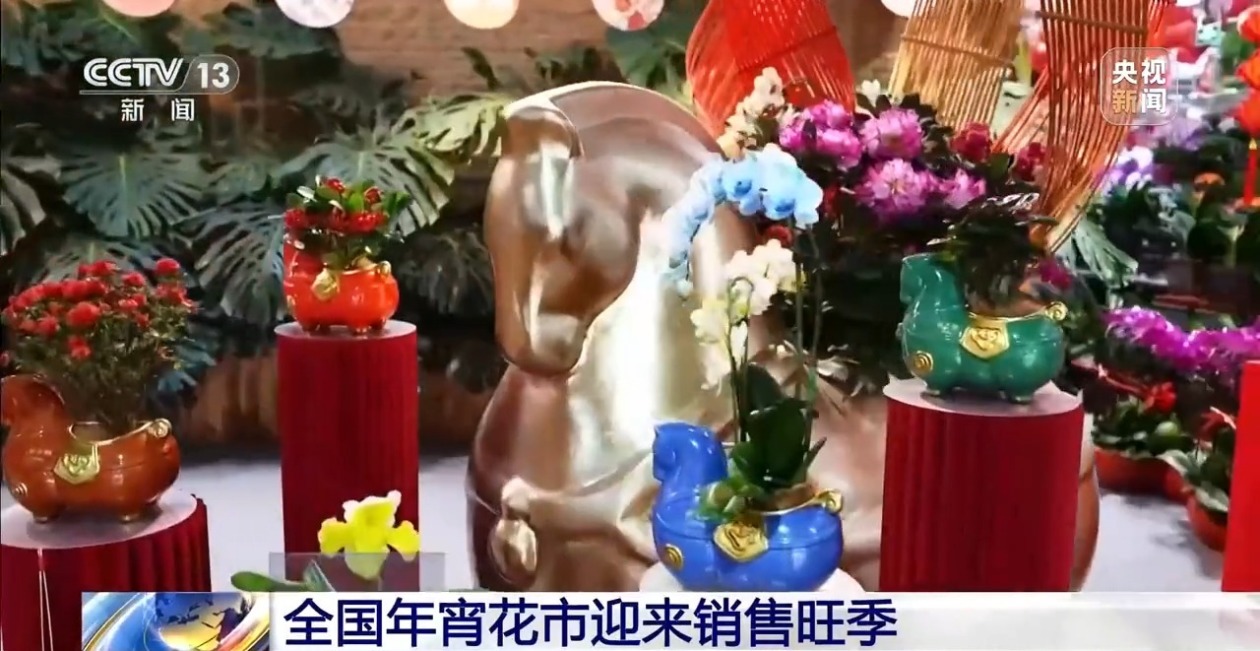
好评中国丨年味拉满!年节经济涌动消费新潮流
Yang Guang Wang· 2026-01-28 05:10
Core Insights - The Chinese New Year consumption market is particularly vibrant this year, showcasing new consumption scenarios, business models, and innovative practices that reflect the robust vitality of the festive economy [1] Group 1: Flower Market - The flower market is entering a peak sales season, with popular domestic varieties like Amaryllis and artificially cultivated orchids gaining favor due to their affordability and auspicious meanings [1] - The "fresh flower economy," valued in the billions, is particularly prominent during the New Year flower season, adding warmth and novelty to the festive economy [1] Group 2: Traditional Markets and Local Products - Traditional "New Year goods fairs" are thriving nationwide, supported by electronic consumption vouchers to attract customers, with notable regional events like the "Winter Fishing Festival" in Northeast China and the "Mountain Lake Goodies" in Qinghai [3] - Local traditional products, such as painted gourds symbolizing good fortune and woodblock New Year paintings, are gaining popularity alongside trendy zodiac-themed toys [3] Group 3: Cultural Experiences and Events - The bustling atmosphere of traditional markets includes live cooking of famous local foods, cultural performances, and interactive experiences that resonate with consumers, especially the younger demographic [4] - The Ministry of Commerce reported that last year's key events for traditional brands generated over 5 billion yuan in direct sales and stimulated more than 16 billion yuan in online and offline consumption [4] Group 4: Family Activities and New Trends - Families are increasingly interested in capturing memories through family portraits, with the business growing over 30% annually, reflecting a trend towards personalized and emotional experiences [5] - New consumption highlights include family outings to cinemas for festive films, traveling for unique New Year experiences, and customized beauty services, indicating a shift towards experiential consumption [5] Group 5: Consumer Trends - The evolving consumption landscape reflects a shift from product consumption to service and experiential consumption, emphasizing cultural significance, emotional value, and spiritual satisfaction [7] - The interaction between innovative supply and changing consumer demand is fostering a positive cycle, laying a strong foundation for consumption growth throughout the year [7]