黄金交易税收政策调整

Search documents
个人卖金饰免征增值税
2 1 Shi Ji Jing Ji Bao Dao· 2025-11-05 07:48
Core Points - The new tax policy for gold trading, effective from November 1, aims to reduce taxes for transactions conducted through exchanges while maintaining existing tax rules for non-exchange channels [1][3] - The policy differentiates between the "financial" and "commodity" attributes of gold, encouraging investment through regulated exchange channels [1][3] Tax Policy Changes - Transactions of standard gold through the Shanghai Gold Exchange and Shanghai Futures Exchange will be exempt from value-added tax (VAT) when sold [1] - If gold is not withdrawn from the exchange, it is directly exempt from VAT; if physical gold is withdrawn, investment gold will enjoy a tax refund policy, while consumer gold can deduct VAT at a rate of 6% [1] - Non-exchange channels, such as purchasing gold bars or jewelry from stores, will still incur a 13% VAT [1] Impact on Consumers - Personal sales of used gold jewelry will be exempt from VAT, allowing individuals to sell items like old gold rings without tax implications [2] - The direct impact on retail prices of gold jewelry is minimal, but potential supply shortages from increased demand for investment gold through exchanges could lead to higher prices in the future [2] Investment Recommendations - For those looking to invest in gold for inflation hedging or asset preservation, it is advisable to use exchange channels like gold futures, which offer tax benefits and higher liquidity [2] - Consumers interested in purchasing gold jewelry or bars for personal use can continue to buy from stores without concern [2] Policy Background - The adjustment aims to create a more regulated and fair gold market, addressing previous lax tax management in non-exchange transactions and preventing tax loopholes [3] - The policy supports the gold industry and strengthens Shanghai's position as an international financial center for gold pricing [3]
个人卖金饰免征增值税
21世纪经济报道· 2025-11-05 07:34
Core Viewpoint - The new tax policy on gold trading aims to reduce taxes for transactions conducted through exchanges while maintaining existing tax rules for non-exchange channels, thereby distinguishing between gold as a commodity and as a financial investment [1][2]. Summary by Sections Tax Policy Changes - The new policy reduces the tax burden for gold purchased through exchanges, while the tax rules for non-exchange purchases, such as buying gold bars or jewelry from stores, remain unchanged with a 13% value-added tax [1][2]. - Personal sales of used gold jewelry are exempt from value-added tax, allowing individuals to sell their personal items without incurring tax liabilities [1]. Impact on Gold Jewelry Prices - The direct impact on retail prices of gold jewelry is minimal since the tax policy for jewelry remains unchanged. However, if investment demand shifts to exchanges, it may lead to reduced supply for jewelers, potentially increasing retail prices due to higher processing costs [2]. Investment Recommendations - For those looking to invest in gold for inflation hedging or asset preservation, it is advisable to use exchange channels such as gold futures, which offer tax advantages and higher liquidity [2][3]. - Purchasing gold jewelry for personal use or as gifts can still be done through traditional retail channels without concern for tax changes [2]. Policy Background - The adjustment in tax policy is aimed at creating a more regulated and fair gold market, addressing previous lax tax management in non-exchange transactions, and supporting the gold industry while enhancing Shanghai's position as an international financial center [2][4]. Summary of Key Points - Buy gold jewelry as usual without concern; prioritize exchange channels for investment to maximize benefits; personal sales of small amounts of used gold do not incur tax, but larger operations must comply with regulations [4].


“买金”暂停!两大国有银行最新公告!
券商中国· 2025-11-03 10:34
Core Viewpoint - The recent announcement by Industrial and Commercial Bank of China (ICBC) to suspend certain gold accumulation business has drawn market attention, following new tax regulations on gold transactions issued by the Ministry of Finance and the State Administration of Taxation [1][3]. Group 1: Business Adjustments - ICBC announced the suspension of its "Ruyi Gold Accumulation" business effective November 3, 2025, which includes the cessation of new account openings, active accumulation, new regular accumulation plans, and physical gold withdrawal applications, while existing customers' plans remain unaffected [3]. - China Construction Bank (CCB) also announced similar suspensions for its "Easy Storage Gold" business, effective from the same date, impacting real-time purchases, new investment plans, and physical gold exchanges, but not affecting existing customers [1][3]. Group 2: Regulatory Changes - The new tax policy, effective from November 1, 2025, to December 31, 2027, introduces specific tax rules for gold transactions, including VAT exemptions for certain trading activities and differentiating between investment and non-investment uses of gold [3][4]. - The policy aims to manage the VAT treatment of gold transactions, particularly focusing on the physical delivery aspect and the tax implications for different types of gold usage [3][4]. Group 3: Market Implications - Analysts suggest that the suspension of gold accumulation services by banks is a response to macroeconomic policy changes and increased market risks due to international economic conditions, which may help investors manage their positions more prudently [4]. - The new regulations may slow down the previously booming gold trading market, with some gold service providers temporarily halting buying and selling activities until further clarity on the policy is provided [6][7]. - The changes may pose structural challenges for small gold merchants, including cost pressures and compliance requirements, while potentially shifting consumer preferences towards standardized products that benefit from tax exemptions [6][7].



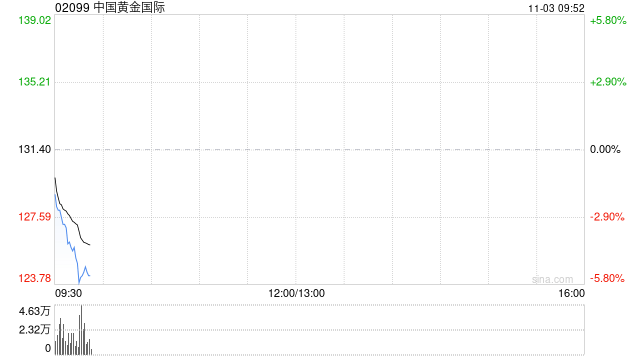
港股黄金股普跌,中国黄金国际跌超5%,山东黄金跌超4%,紫金矿业跌超3%!金价早盘走低,黄金交易税收政策迎来调整
Ge Long Hui· 2025-11-03 02:21
Group 1 - The Hong Kong gold stocks experienced a collective decline, with China Gold International dropping over 5%, Shandong Gold down more than 4%, and several other companies like Zijin Mining, Zijin Gold International, and Chifeng Jilong Gold falling over 3% [2] - In the Asian market, spot gold prices fell below $3970 per ounce, reflecting a decrease of 0.84% [4] - A new tax policy regarding gold was announced by the Ministry of Finance and the State Taxation Administration, set to take effect from November 1, 2025, until December 31, 2027, aimed at regulating gold trading and speculation [4] Group 2 - Professor Gong Xiuguo from Sichuan University highlighted that the current global uncertainties and high gold prices have attracted many investors to the gold market, which poses significant risks [4] - The new tax policy is expected to use tax leverage and clarify investment purposes to curb excessive speculation in gold trading, thereby reflecting true market demand more accurately [4]