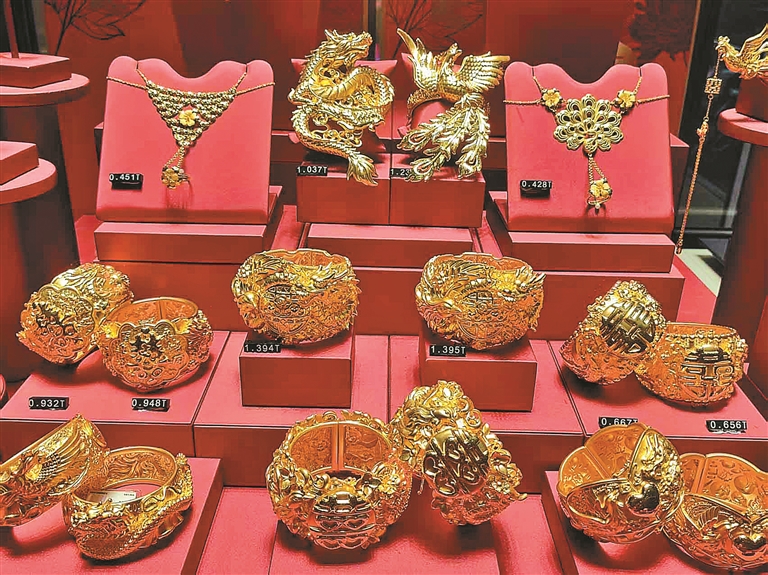
金首饰

Search documents
打金店1个月扫出1700克金粉 黄金加工损耗是消费者承担吗?
Yang Guang Wang· 2026-02-06 05:30
Core Viewpoint - The gold price remains high, leading to increased consumer interest in "gold crafting" due to its customizable experience and lower costs compared to branded gold jewelry [1]. Group 1: Gold Crafting Process - Gold crafting stores have reported collecting significant amounts of gold dust, with one store claiming to gather 1,700 grams in a month, which has sparked public curiosity about the source of this gold dust [1][2]. - The process of gold crafting involves normal losses, with craftsmen estimating that they collect around 1 kilogram of gold dust annually from the polishing and finishing processes [2]. - Gold dust is collected in a designated area during both manual and machine processing to minimize waste [2]. Group 2: Losses and Consumer Impact - Losses during the gold crafting process are considered normal, even in standardized factories, and can occur during various stages such as polishing and engraving [2][4]. - Craftsmen calculate the expected loss beforehand and include this in the initial material weight to ensure the final product's weight aligns closely with the customer's original material [4]. - Some shops claim to operate with "zero loss" but may still add gold to compensate for processing losses, which raises questions about the purity of the added gold [4][5]. Group 3: Transparency and Quality Assurance - Consumers can request purity testing of the added gold using a spectrometer before the crafting process, ensuring that the added material meets quality standards [5]. - The industry maintains a level of transparency, allowing customers to verify the purity of the gold used in their crafted items [5].
金店一个月扫出1700克金粉!同行揭秘
Yang Shi Wang· 2026-02-06 05:00
Core Viewpoint - The rising popularity of "gold crafting" is attributed to its customizable experience and lower prices compared to branded gold jewelry, leading to significant consumer interest and discussions about the gold powder generated during the crafting process [1] Group 1: Gold Powder Generation - A gold crafting shop reported collecting 1,700 grams of gold powder in one month, sparking widespread curiosity about the source and legitimacy of such quantities [1] - Goldsmiths explain that normal losses occur during the crafting process, with one shop collecting approximately 1 kilogram of gold powder annually due to the need for polishing and refining jewelry [1] - The process of using lathes for special designs also contributes to gold powder loss, which is collected in designated areas to minimize waste [1] Group 2: Losses and Consumer Responsibility - Shop owners acknowledge that while some gold powder is lost, it can still be melted down and retains value, but truly lost gold that cannot be collected represents actual losses [2] - Many shop owners expressed skepticism about the claim of generating 1,700 grams of gold powder, suggesting that such a loss would require processing hundreds of kilograms of gold, which is typically unfeasible for most shops [2] - Goldsmiths calculate expected losses before crafting, adding the estimated loss to the original material to ensure the final weight aligns with customer expectations, and they offer refunds based on current gold prices for any significant weight reductions [3] Group 3: Quality Assurance - The practice of adding gold to compensate for losses is common in the industry, and consumers are encouraged to request purity testing using spectrometers before and during the crafting process [3][4] - The added gold is generally of high purity, often at 99.99%, and consumers can verify this on-site, although post-processing verification may be more challenging [4]
黄金回收火热!金价如何计算?消费者要注意什么?
Huan Qiu Wang· 2026-02-03 12:27
Core Viewpoint - Recent fluctuations in gold prices have led to an increase in consumers selling their gold products, despite prices remaining relatively high after significant increases in recent years [1] Group 1: Differences in Gold Products - Gold purity is primarily distinguished by two standards: the thousandths system and the K gold system, with higher gold content indicating higher purity [2] - Common gold types include Au999 (999‰ purity, known as "pure gold") and Au990 (990‰ purity, known as "foot gold") [2] - K gold is an alloy of gold and other metals, with 24K gold theoretically being 1000‰ pure, while 18K gold contains 750‰ gold and can come in various colors depending on the alloying metals used [3] Group 2: Methods for Testing Gold Authenticity and Purity - The fire assay method is the industry "gold standard" for determining gold purity but is destructive and time-consuming [4] - X-ray fluorescence is a non-destructive method that is faster and suitable for preliminary checks, though less precise than fire assay [4] - The density method, based on Archimedes' principle, is a low-cost, non-destructive test but is less accurate and typically used as a supplementary verification method [4] Group 3: Main Gold Recycling Channels - Major gold recycling channels include brand gold stores, banks, and pawn shops, with the industry typically using a combination of fire assay and non-destructive testing methods [5] - The gold recycling price is based on the real-time price from the Shanghai Gold Exchange, adjusted for weight and purity, minus any fees [6] Group 4: Characteristics of Different Recycling Channels - Brand gold stores may accept gold products from various brands and often combine recycling with "old for new" services [7] - Banks generally have a more standardized process and lower fees but may not accept gold jewelry and often require appointments [7] - Pawn shops and individual merchants have lower entry barriers but may lack standardization in pricing and testing, leading to potential disputes [7] Group 5: Consumer Preparation for Gold Redemption - Consumers should be aware of the specific requirements of different institutions, such as needing purchase receipts or certificates for gold redemption [8] - It is advisable for consumers to compare different institutions and understand their rules before proceeding with gold redemption [8] - Proper storage of gold products and related documentation is crucial to avoid issues during the redemption process [8] Group 6: Consumer Considerations During Gold Redemption - Consumers should check the current gold price and inquire about all associated fees before proceeding with redemption [10] - It is important to supervise the weighing and testing process and to avoid letting the gold out of sight until all terms are clear [10] - Consumers are advised to choose reputable channels for transactions and to keep all receipts to protect their rights in case of disputes [10]
金价涨跌怎么看?买来佩戴和买来投资思路大不同
Sou Hu Cai Jing· 2025-12-21 09:06
Core Viewpoint - Recent trends indicate a decline in gold prices, particularly in the raw material segment, which has led to a slight decrease in retail prices for gold jewelry and bars [1][2]. Group 1: Price Dynamics - The term "gold price" can refer to two categories: the standard gold bar price (raw material price) and the retail price of gold jewelry or bars (finished product price) [1][2]. - The raw material price has recently decreased, causing a ripple effect that has led to a minor reduction in the prices displayed in gold shops [1][2]. - There is a significant price difference between gold jewelry and investment gold bars, with the former including additional costs such as design, craftsmanship, and brand premiums [2][5]. Group 2: Purchasing Considerations - When purchasing gold, the purpose of the purchase is crucial; for jewelry, aesthetic and sentimental value may outweigh price fluctuations, while for investment, lower processing fees and premiums are advisable [7]. - Different purchasing locations can lead to price variations; buying from reputable brand stores may include brand assurance costs, while wholesale markets may offer more competitive pricing due to fewer intermediaries [5][7]. - It is essential for buyers to compare prices and understand the real costs involved, especially when considering investment gold bars, to make informed decisions [7].

个人卖金饰免征增值税
21世纪经济报道· 2025-11-05 07:34
Core Viewpoint - The new tax policy on gold trading aims to reduce taxes for transactions conducted through exchanges while maintaining existing tax rules for non-exchange channels, thereby distinguishing between gold as a commodity and as a financial investment [1][2]. Summary by Sections Tax Policy Changes - The new policy reduces the tax burden for gold purchased through exchanges, while the tax rules for non-exchange purchases, such as buying gold bars or jewelry from stores, remain unchanged with a 13% value-added tax [1][2]. - Personal sales of used gold jewelry are exempt from value-added tax, allowing individuals to sell their personal items without incurring tax liabilities [1]. Impact on Gold Jewelry Prices - The direct impact on retail prices of gold jewelry is minimal since the tax policy for jewelry remains unchanged. However, if investment demand shifts to exchanges, it may lead to reduced supply for jewelers, potentially increasing retail prices due to higher processing costs [2]. Investment Recommendations - For those looking to invest in gold for inflation hedging or asset preservation, it is advisable to use exchange channels such as gold futures, which offer tax advantages and higher liquidity [2][3]. - Purchasing gold jewelry for personal use or as gifts can still be done through traditional retail channels without concern for tax changes [2]. Policy Background - The adjustment in tax policy is aimed at creating a more regulated and fair gold market, addressing previous lax tax management in non-exchange transactions, and supporting the gold industry while enhancing Shanghai's position as an international financial center [2][4]. Summary of Key Points - Buy gold jewelry as usual without concern; prioritize exchange channels for investment to maximize benefits; personal sales of small amounts of used gold do not incur tax, but larger operations must comply with regulations [4].

得知我买房,我妈让我把房过户给我哥,给小侄子读书用,房贷我还
Sou Hu Cai Jing· 2025-10-28 13:27
Core Points - The article illustrates a complex family dynamic, highlighting favoritism and emotional struggles within a mother-daughter relationship [1][2][3] - The protagonist's efforts to achieve independence and financial stability are contrasted with the mother's expectations and demands [5][6][7] - The narrative culminates in a decision to sever ties with the mother's influence, emphasizing the need for self-reliance and personal happiness [21][22][23] Summary by Sections Family Dynamics - The mother exhibits favoritism towards the son, leading to feelings of resentment and neglect in the daughter [5][10] - The daughter recalls her upbringing, where her achievements were overshadowed by her brother's needs and the mother's bias [6][7][10] Financial Independence - The daughter works hard to support herself and eventually buys a house, which becomes a point of contention with her mother [8][19] - The mother's reaction to the daughter's financial success reveals deep-seated issues regarding gender roles and expectations within the family [22][23] Conflict and Resolution - The mother's attempts to take control of the daughter's property lead to a breaking point in their relationship [21][22] - The daughter resolves to prioritize her own well-being and plans to live independently, indicating a shift towards self-empowerment [23]

黄金价格再度暴涨!现在入市是良机吗?到底应当买金条还是金首饰
Sou Hu Cai Jing· 2025-10-21 10:33
Core Insights - Gold prices have entered a "surge mode," with international gold prices nearing $4,500 per ounce, and domestic jewelry gold prices increasing daily by 30 to 50 yuan per gram, leading to predictions from U.S. investment leaders that prices could reach $5,000 to $10,000 per ounce in the next two to three years [1] Group 1 - Gold should be part of asset allocation but should not constitute the entirety of one's investments; it is recommended to limit gold investments to 5% to 10% of total assets and to focus on physical gold while avoiding speculation and leveraged trading [3][7] - The current high gold prices suggest that entering the market with a speculative mindset could lead to significant losses due to market volatility; gold's primary value lies in its role as a hedge and a store of value rather than a short-term profit vehicle [3][7] Group 2 - The choice between gold jewelry and gold bars depends on individual needs; gold jewelry is suitable for those who appreciate its decorative value and are willing to incur additional costs for craftsmanship, while gold bars are better for pure investment purposes due to lower costs and ease of resale [5] - For investment purposes, purchasing gold bars from reputable banks is advisable to minimize transaction risks, and it is crucial to avoid exceeding a 10% allocation of total assets to gold to mitigate exposure to market fluctuations [7]

同样是金子,为什么金条是资产,金首饰却不是?
Sou Hu Cai Jing· 2025-10-09 10:46
Core Viewpoint - The article discusses the distinction between gold bars as a standardized safe-haven asset and gold jewelry or artifacts as consumer goods, emphasizing that their intrinsic values and market behaviors are fundamentally different [1][5][32]. Group 1: Characteristics of Safe-Haven Assets - The primary requirement for a safe-haven asset is its ability to facilitate quick, transparent, and fair value exchange, rather than its aesthetic appeal [3]. - Gold bars are considered standardized assets, while gold jewelry is classified as consumer goods, leading to different attributes from the outset [5]. Group 2: Market Liquidity Differences - Purchasing gold jewelry is easy, but selling it back can be challenging, often resulting in significant losses [7]. - Gold bars can be quickly converted to cash due to their standardized specifications and global recognition, unlike jewelry which incurs additional costs such as craftsmanship and brand premiums [8][12]. Group 3: Psychological Misconceptions - Many consumers mistakenly believe that buying gold jewelry is a form of investment, which is a significant misconception [11]. - The core value of jewelry lies in its decorative purpose, while that of artifacts is in their artistic value, not in investment potential [13][15]. Group 4: Gold Bars as a Safe-Haven - Gold bars are recognized globally as a substitute for currency, historically serving as the basis for monetary systems [18]. - During economic turmoil, such as the 2008 financial crisis, demand for gold bars surged, highlighting their role as a safe-haven asset [22][24]. Group 5: Recommendations for Ordinary Consumers - For investment and risk aversion, consumers should purchase gold bars, preferably those issued by banks, ensuring liquidity and maintaining their original packaging [28]. - For decorative purposes, gold jewelry can be purchased, but consumers should be prepared for potential depreciation in value [30]. Conclusion - Different forms of gold possess distinct attributes; gold bars serve as a recognized safe-haven asset, while gold jewelry and artifacts are primarily for consumption and aesthetic enjoyment [32][34].
黄金价格近期持续上涨,带动回收市场升温,有商户表示:“回收金量已达平日5倍”
Shen Zhen Shang Bao· 2025-09-20 04:35
Core Insights - Recent surge in gold prices has led to increased activity in the gold recovery market, with prices reaching historical highs [2][4] - The price of gold in Shenzhen's market has seen significant fluctuations, with selling prices hitting 846 RMB per gram and recovery prices at 830 RMB per gram [2] - The demand for gold recovery has surged, with some merchants reporting recovery volumes five times higher than usual [2] Gold Pricing and Market Dynamics - As of September 16, gold selling prices in Shenzhen reached 844 RMB per gram in the morning and increased to 846 RMB per gram by afternoon [2] - On September 18, a brand gold store reported that the price for pure gold jewelry was 1078 RMB per gram, while investment gold bars were priced at 953 RMB per gram [2] - Banks in Shenzhen primarily offer gold bars and do not typically recover gold jewelry due to lack of testing facilities [3] Investment Trends - The London spot gold price has increased by nearly 40% this year, with a cumulative increase of approximately 130% since 2019 [4] - Factors contributing to the rise in gold prices include Federal Reserve interest rate cuts, geopolitical risks, and central banks' ongoing accumulation of gold [4] - Investors have noted significant volatility in gold prices this year, contrary to previous perceptions of gold as a stable investment [4]