
黄金商品属性

Search documents
黄金白银为啥又暴跌啦?
Sou Hu Cai Jing· 2026-02-06 03:31
Core Viewpoint - The recent sharp decline in gold and silver prices is attributed to a complex interplay of factors, indicating a fundamental shift in the global monetary system and the role of central banks, as well as a reevaluation of the definition of safe-haven assets [1][3]. Group 1: Changes in Monetary System and Safe-Haven Assets - Gold's traditional role as an "anti-inflation" and "hedge against dollar credit risk" is being challenged, particularly with the potential rise of digital currencies and regional currency alliances, which could diminish gold's insurance value [3][4]. - The market's perception of a changing global monetary system, including the advancement of Central Bank Digital Currencies (CBDCs), may lead to a reassessment of gold's status as the ultimate reserve asset [3][4]. Group 2: Central Bank Dynamics - The role of central banks in supporting gold prices has been significant, but economic pressures may lead emerging market central banks to sell gold reserves, similar to past crises [4]. - There is growing skepticism in the market regarding the sustainability of central bank gold purchases, which may have already influenced price movements [4]. Group 3: ETF and Market Liquidity Risks - The structural risks and liquidity vulnerabilities of gold ETFs can exacerbate market volatility, as large-scale redemptions could trigger physical gold shortages or futures market squeezes [4]. - The disconnect between "paper gold" and physical delivery poses a risk, especially during periods of market stress [4]. Group 4: Competition from Digital Assets - The rise of cryptocurrencies, particularly Bitcoin, is competing with gold for the safe-haven asset market, attracting younger investors and potentially reducing traditional demand for gold [5]. - A shift of funds from gold to cryptocurrencies, especially during market recoveries, could significantly alter gold's market position [5]. Group 5: Geopolitical Risks - The potential for gold to be used as a financial weapon in geopolitical conflicts may undermine its attractiveness, as concerns about the safety and accessibility of gold reserves grow [5]. - The indirect effects of geopolitical events may be quietly eroding the consensus on gold as a safe-haven asset [5].


金价涨跌的内在逻辑|国际
清华金融评论· 2026-01-19 10:33
Core Viewpoint - The current rise in gold prices, which has increased by 52.06% in 2025 and over 5% this year, reflects a strong investment value and is driven by growing global macroeconomic uncertainties [1]. Group 1: Attributes Determining Gold Prices - Gold has three main attributes: monetary, financial, and commodity. The monetary attribute refers to gold's role as a general equivalent and its function as a central bank reserve, which has diminished but still exists as a counter to the US dollar [3]. - The financial attribute highlights gold as an investment asset, particularly through gold ETFs, which have lowered the entry barrier for investors and amplified price volatility [3]. - The commodity attribute pertains to gold's use in jewelry and technology, with demand increasing in countries like China and India due to economic growth [4]. Group 2: Historical Bull Markets in Gold - The first major bull market occurred from 1968 to 1980, where gold prices surged from $35/oz to $850/oz, a total increase of 2328.57% [8][10]. - The second bull market spanned from 2001 to 2011, with prices rising from $272.50/oz to $1921.15/oz, marking a 605.01% increase [11][15]. - Both bull markets were driven by significant challenges to the US dollar's credibility, with the first linked to economic crises and the second to the aftermath of the tech bubble and the financial crisis [10][15]. Group 3: Current Gold Bull Market Analysis - The current bull market began in 2022, with gold prices rising from $1614/oz to a peak of $4690.88/oz, a maximum increase of 190.64% [19]. - The primary driver of this bull market is the significant increase in gold purchases by central banks, which reached 456.9 tons in Q3 2022, a year-on-year increase of 404.30% [22]. - Central bank purchases have consistently outpaced other demand categories, indicating a shift in the gold market dynamics [23]. Group 4: Future Outlook for Gold - The total value of global central bank gold reserves is projected to exceed $3.93 trillion by the end of 2025, surpassing the total value of US Treasury holdings [26]. - Factors contributing to the ongoing demand for gold include the deterioration of US fiscal discipline, challenges to the US's international standing, and the potential decline of its technological edge [26][27]. - The current gold bull market is expected to last over ten years, with potential price increases comparable to historical bull markets, possibly exceeding 2000's 605.01% rise and approaching the 1970's 2328.57% increase [28].

中国11月外汇储备规模环比上涨0.09%,央行连续第13个月增持黄金
Sou Hu Cai Jing· 2025-12-07 02:35
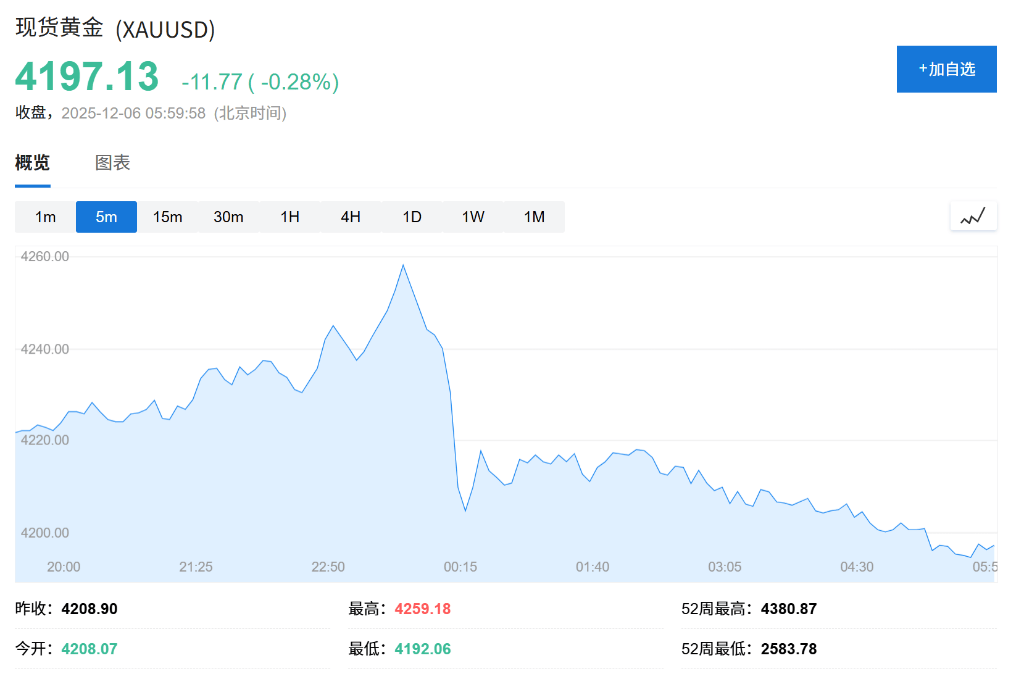
Group 1: Foreign Exchange Reserves - As of November 2025, China's foreign exchange reserves reached $33,464 billion, an increase of $30 billion from the end of October, representing a growth rate of 0.09% [1] - The increase in foreign exchange reserves is attributed to factors such as macroeconomic data from major economies and expectations regarding monetary policy, which led to a decline in the US dollar index and mixed performance in global financial asset prices [1] - China's economy is maintaining a stable and progressive development trend, which supports the stability of foreign exchange reserves [1] Group 2: Gold Reserves - As of the end of November, China's gold reserves stood at 7,412 million ounces (approximately 2,305.39 tons), with a month-on-month increase of 3,000 ounces (about 0.93 tons), marking the 13th consecutive month of gold accumulation [2] - The current spot gold price has decreased by 0.28% to $4,197 per ounce [2] Group 3: Gold Market Dynamics - Gold has entered its third upward cycle since 2019, with a cumulative increase of 219% over six years, indicating potential for further growth compared to previous cycles [3] - The rise in gold prices is supported by three attributes: monetary (challenges to the US dollar credit system), commodity (average annual growth of central bank gold purchases from 2020 to 2024 at 44%), and financial (the pricing framework of real interest rates partially failing in a high inflation environment) [3] - Key variables influencing future gold prices include geopolitical risks, growth in gold reserves, and changes in real interest rates [3] Group 4: Future Gold Demand and Price Projections - Official demand for gold is expected to replace price-sensitive consumer demand, with projections indicating a rebound to 1,053 tons per year by 2026 [4] - The normalization of inflows into gold ETFs has led to a significant upward revision of the average price target for 2026 from $4,000 per ounce to $4,450 per ounce [4]
个人卖金饰免征增值税
2 1 Shi Ji Jing Ji Bao Dao· 2025-11-05 07:48
Core Points - The new tax policy for gold trading, effective from November 1, aims to reduce taxes for transactions conducted through exchanges while maintaining existing tax rules for non-exchange channels [1][3] - The policy differentiates between the "financial" and "commodity" attributes of gold, encouraging investment through regulated exchange channels [1][3] Tax Policy Changes - Transactions of standard gold through the Shanghai Gold Exchange and Shanghai Futures Exchange will be exempt from value-added tax (VAT) when sold [1] - If gold is not withdrawn from the exchange, it is directly exempt from VAT; if physical gold is withdrawn, investment gold will enjoy a tax refund policy, while consumer gold can deduct VAT at a rate of 6% [1] - Non-exchange channels, such as purchasing gold bars or jewelry from stores, will still incur a 13% VAT [1] Impact on Consumers - Personal sales of used gold jewelry will be exempt from VAT, allowing individuals to sell items like old gold rings without tax implications [2] - The direct impact on retail prices of gold jewelry is minimal, but potential supply shortages from increased demand for investment gold through exchanges could lead to higher prices in the future [2] Investment Recommendations - For those looking to invest in gold for inflation hedging or asset preservation, it is advisable to use exchange channels like gold futures, which offer tax benefits and higher liquidity [2] - Consumers interested in purchasing gold jewelry or bars for personal use can continue to buy from stores without concern [2] Policy Background - The adjustment aims to create a more regulated and fair gold market, addressing previous lax tax management in non-exchange transactions and preventing tax loopholes [3] - The policy supports the gold industry and strengthens Shanghai's position as an international financial center for gold pricing [3]
个人卖金饰免征增值税
21世纪经济报道· 2025-11-05 07:34
Core Viewpoint - The new tax policy on gold trading aims to reduce taxes for transactions conducted through exchanges while maintaining existing tax rules for non-exchange channels, thereby distinguishing between gold as a commodity and as a financial investment [1][2]. Summary by Sections Tax Policy Changes - The new policy reduces the tax burden for gold purchased through exchanges, while the tax rules for non-exchange purchases, such as buying gold bars or jewelry from stores, remain unchanged with a 13% value-added tax [1][2]. - Personal sales of used gold jewelry are exempt from value-added tax, allowing individuals to sell their personal items without incurring tax liabilities [1]. Impact on Gold Jewelry Prices - The direct impact on retail prices of gold jewelry is minimal since the tax policy for jewelry remains unchanged. However, if investment demand shifts to exchanges, it may lead to reduced supply for jewelers, potentially increasing retail prices due to higher processing costs [2]. Investment Recommendations - For those looking to invest in gold for inflation hedging or asset preservation, it is advisable to use exchange channels such as gold futures, which offer tax advantages and higher liquidity [2][3]. - Purchasing gold jewelry for personal use or as gifts can still be done through traditional retail channels without concern for tax changes [2]. Policy Background - The adjustment in tax policy is aimed at creating a more regulated and fair gold market, addressing previous lax tax management in non-exchange transactions, and supporting the gold industry while enhancing Shanghai's position as an international financial center [2][4]. Summary of Key Points - Buy gold jewelry as usual without concern; prioritize exchange channels for investment to maximize benefits; personal sales of small amounts of used gold do not incur tax, but larger operations must comply with regulations [4].

国际金价下跌,老铺黄金们却越来越贵?|2025消费趋势跟踪
Sou Hu Cai Jing· 2025-11-04 09:58
Core Viewpoint - The global and domestic gold markets are experiencing significant divergence, with international gold prices fluctuating while domestic gold jewelry prices remain high, reflecting the different investment and consumption attributes in varying market environments [1][3]. Group 1: International Gold Market - International gold prices reached a historical high of over $4,300 per ounce before dropping below $3,950 per ounce, indicating volatility driven by macroeconomic signals and geopolitical factors [1][3]. - The short-term pressure on international gold prices is attributed to reduced safe-haven demand due to easing geopolitical tensions, technical corrections, and a stronger dollar [3]. - Despite short-term fluctuations, long-term support for gold prices remains, as central banks globally increased their gold purchases by 28% in Q3 2025, totaling 220 tons [3]. Group 2: Domestic Gold Jewelry Market - Domestic gold jewelry prices are experiencing a high premium, with brands like Lao Pu adjusting prices by 18% to 25%, and Chow Tai Fook's gold price rising from 1,198 RMB per gram to 1,259 RMB per gram [1][4]. - The pricing structure of domestic gold jewelry includes a combination of raw gold price, processing fees, brand premiums, and operational costs, which account for 30% to 50% of the total price, leading to price rigidity [4][5]. - The domestic market shows resilience in demand, with consumers shifting towards new consumption patterns, such as "small weight gold jewelry" and "old-for-new" exchanges, despite a decrease in gold consumption volume [5][6]. Group 3: Tax Policy Impact - A new tax policy effective from November 1, 2025, exempts value-added tax for standard gold transactions, aiming to differentiate tax treatment based on investment and non-investment uses, enhancing market transparency [2][6]. - The differentiated tax arrangements are expected to influence trading decisions and the flow of gold in the market, promoting a more efficient and regulated gold market [2]. Group 4: Future Outlook - The divergence between investment and consumption markets for gold is likely to persist, with investment gold relying on its safe-haven attributes and branded gold jewelry focusing on cultural premiums and craftsmanship [6]. - Investors are advised to avoid misconceptions equating jewelry gold with investment gold, while consumers should prioritize craftsmanship and brand value within their budget [6].
降温措施频出,黄金“现象级行情”还能走多远?
经济观察报· 2025-10-19 10:16
Core Viewpoint - Recent regulatory measures may adjust the pace of gold price movements but will not change the overall trend of gold prices, which are influenced by multiple attributes of gold in different environments [1][16]. Regulatory Measures - On October 16, the Shanghai Futures Exchange issued a risk warning, followed by an announcement on October 17 to adjust the price fluctuation limits for gold and silver futures to 14%, with margin requirements also increased [2][12]. - Following these announcements, COMEX gold prices fell from a peak of $4,392 per ounce to $4,267.90, reflecting a significant market reaction [2][13]. Market Dynamics - Gold prices surged nearly $1,000 per ounce in less than two months, driven by macroeconomic factors, geopolitical risks, and market liquidity [4][6]. - The Federal Reserve's dovish signals regarding interest rate cuts have weakened the dollar and lowered real interest rates, enhancing gold's appeal as a non-yielding asset [6][20]. Geopolitical Factors - Increased geopolitical uncertainties, including trade tensions and conflicts, have bolstered gold's safe-haven demand, providing substantial support for its price [7][21]. - Events such as the U.S. government shutdown and ongoing global political instability have heightened market risk premiums, further supporting gold prices [7][21]. Institutional Demand - Continuous inflows from official reserves and institutional investors have established a solid demand foundation for gold [8][9]. - The SPDR Gold ETF has seen a consistent increase in holdings, indicating strong institutional interest in gold as an investment [8][14]. Attributes of Gold - Gold possesses multiple attributes: financial, safe-haven, monetary, and commodity, with financial attributes currently being the most influential on its price [18][20]. - The financial attribute is highlighted by the negative correlation between gold prices and market interest rates, particularly real rates, which are expected to remain a key variable influencing gold prices [20][22]. - The safe-haven attribute provides ongoing support for gold prices amid global uncertainties, while its monetary attribute reinforces its long-term value [21][22]. - The commodity attribute has a relatively limited impact on current price movements, as investment demand is driving the market rather than physical consumption [20].
黄金突破4000美元后急转直下!三大信号说明危险来了,普通人的黄金该怎么办?
Sou Hu Cai Jing· 2025-10-14 20:17
Core Insights - Gold prices have shown volatility in 2025, initially breaking the $3500 mark before dropping to around $3120, reflecting a decline of over 10% within a week, followed by a rebound to $3365 [1] - Central banks globally have been accumulating gold at an unprecedented rate, with Q1 2025 seeing purchases of 244 tons, marking the 14th consecutive quarter of over 100 tons [3] - The traditional safe-haven status of gold appears to be weakening, as recent U.S. economic data and U.S.-China trade negotiations have not revealed significant risk factors [3] Central Bank Activity - Poland's central bank increased its gold reserves by 29 tons in a single month, while countries like Kazakhstan opted to sell, indicating a divergence in national strategies regarding the dollar credit system [3] - The World Gold Council reported that global investment demand for gold surged by 170% year-on-year in Q1 2025, while gold jewelry consumption fell by 32%, indicating a shift from commodity to financial attributes [7] Market Dynamics - Goldman Sachs noted that approximately 35% of current gold prices reflect non-traditional factors, a 12 percentage point increase from 2024, influenced by macroeconomic variables like dollar credit crises and global debt expansion [5] - The volatility in gold prices is exacerbated by external factors such as trade tensions and geopolitical events, with significant price fluctuations observed in response to U.S. Treasury Secretary's comments on tariff negotiations [5][7] Investment Strategies - Experts recommend that investors consider multiple factors such as changes in safe-haven demand, dollar exchange rates, and global economic data when making investment decisions [7] - Suggested strategies include avoiding herd mentality, diversifying investment channels, and setting clear stop-loss levels to manage risk effectively [7] Future Outlook - The trend of increasing central bank gold purchases is expected to continue, primarily driven by the need to diversify away from dollar-denominated assets amid rising U.S. policy uncertainties and concerns over the sustainability of U.S. debt [9] - As gold becomes more driven by investment demand, its prices are likely to be more sensitive to capital flows, reflecting broader shifts in the global monetary system [11]
