如意金积存业务

Search documents
金价震荡,工行紧急提示
21世纪经济报道· 2026-03-20 09:24
Core Viewpoint - The article emphasizes the increasing volatility in the precious metals market due to global macroeconomic factors and geopolitical tensions, urging investors to maintain a calm and rational investment mindset while assessing their risk tolerance [1][4]. Group 1: Market Conditions - The international gold market has experienced significant fluctuations, with prices dropping below $5000 per ounce, reaching a low of $4502.01 per ounce on March 19, before rebounding to $4712.87 per ounce by March 20 [4]. - The U.S. Producer Price Index (PPI) for February rose by 0.7%, exceeding expectations of 0.3%, which has raised inflation concerns and influenced the Federal Reserve's hawkish stance [5][6]. Group 2: Investment Recommendations - The Industrial and Commercial Bank of China (ICBC) recommends a long-term asset allocation strategy that includes "total control, phased entry, and diversified layout" to mitigate short-term market volatility [1]. - Investors are advised to closely monitor geopolitical developments and the flow of safe-haven funds, as the market is currently favoring a "cash is king" strategy [7]. Group 3: Risk Management Measures - Several major banks, including ICBC and Agricultural Bank of China, have issued multiple risk warnings regarding precious metal investments and have implemented stricter measures, such as raising risk assessment thresholds and transaction limits [8][9]. - ICBC has raised the minimum investment amount for its gold accumulation products and has introduced dynamic limit management for transactions on non-trading days [8].


工商银行近期业务合作与股价表现分析
Jing Ji Guan Cha Wang· 2026-02-12 11:18
Group 1 - The core viewpoint of the article highlights that Industrial and Commercial Bank of China (ICBC) has made significant progress in business cooperation and internationalization, while its A-share stock price is under pressure [1][2]. Group 2 - Recent events include ICBC successfully assisting Malayan Banking Berhad in issuing its first Panda bond of 3 billion RMB with a 2-year term, which enhances financial cooperation between China and Malaysia and promotes the internationalization of the RMB [2]. - ICBC signed a comprehensive strategic cooperation agreement with CITIC Group to strengthen collaboration in comprehensive finance and technological innovation [2]. - A working seminar was held by ICBC focusing on financial services to promote consumption and expand domestic demand, involving discussions with government departments, industry associations, and business representatives [2]. - ICBC implemented dynamic limit management for its "Ruyi Gold Accumulation" business and suspended non-trading day precious metal repurchase during the Spring Festival to enhance risk control [2]. Group 3 - The recent stock performance of ICBC shows that its A-share price closed at 7.18 RMB on February 12, 2026, down 1.51% for the day, with a 5-day cumulative decline of 1.64% and a year-to-date decline of 9.46% [3]. - On February 12, 2026, there was a net outflow of approximately 300 million RMB from major funds, while retail investors showed slight inflows, indicating significant short-term selling pressure [3]. - The technical analysis indicates that the stock price is in a consolidation phase, with current support around 7.18-7.20 RMB and resistance at 7.30-7.32 RMB; the MACD indicator shows slight improvement, but trading volume remains low, indicating insufficient rebound momentum [3]. Group 4 - A market analysis report from February 9, 2026, indicates that the news sentiment regarding ICBC is neutral to slightly positive, but lacks major catalysts; the technical outlook suggests a short-term rebound is needed, with an expected price range of 7.22-7.35 RMB [4].
节假日暂停贵金属回购业务!部分品牌金店调整交易规则
Sou Hu Cai Jing· 2026-02-08 03:40
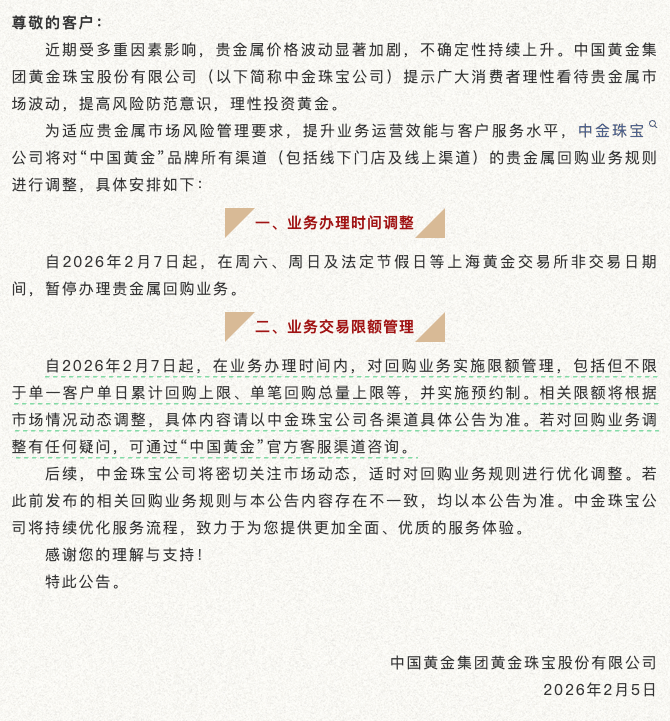
Core Viewpoint - The recent volatility in gold prices has prompted China Gold Group to adjust its gold buyback business rules, aiming to mitigate operational risks and ensure orderly operations [1][5]. Group 1: Business Adjustments - Starting from February 7, China Gold will suspend gold buyback services on non-trading days, including weekends and public holidays [2]. - The company will implement limit management on buyback transactions, including daily limits for individual customers and total limits for single transactions, along with an appointment system [3]. Group 2: Rationale Behind Adjustments - The adjustments aim to align with market pricing mechanisms, as gold prices are based on real-time quotes from the exchange, avoiding pricing disputes and operational risks on non-trading days [5]. - The changes are designed to control the company's risk exposure during periods of significant price fluctuations, preventing potential losses from acquiring physical gold without market price references [5]. - The adjustments also seek to enhance service consistency by standardizing buyback rules across online and offline channels, improving operational efficiency and reducing consumer misunderstandings [5]. Group 3: Industry Context - Other leading brands, such as Caibai Co., have also announced similar adjustments to their gold buyback services, reflecting a broader trend in the industry [7]. - Major commercial banks have made corresponding adjustments to their gold accumulation services, indicating a collective response to the current market conditions [7].

头部金店紧急调整回购规则!啥信号?
Xin Lang Cai Jing· 2026-02-08 02:40
Core Viewpoint - The company, China Gold Group, announced that it will suspend precious metal repurchase services during non-trading days starting February 7, 2026, due to significant price volatility in the precious metals market [1][12]. Group 1: Business Adjustments - Starting February 7, 2026, China Gold will halt precious metal repurchase services on weekends and public holidays when the Shanghai Gold Exchange is closed [1][12]. - The company will implement limit management on repurchase transactions during business hours, including daily repurchase limits per customer and total transaction limits, with a reservation system in place [2][9]. - Other companies, such as Cai Bai Jewelry, will also adjust their precious metal repurchase services similarly, indicating a broader industry trend [9][17]. Group 2: Market Conditions - Precious metal prices have experienced significant fluctuations, with international gold prices rising nearly 15% and silver prices over 8% since the beginning of the year [6][15]. - On February 6, 2026, gold prices saw a drop of over 2% before rebounding to above $4,950 per ounce, while silver prices dropped nearly 10% before recovering to above $77 per ounce [6][15]. - The trading sentiment in the precious metals market has shifted from risk aversion to speculation, increasing trading volatility and valuation risks [18]. Group 3: Company Performance - China Gold's stock price has shown significant volatility, peaking at 14.85 yuan per share on January 30, 2026, a 77.21% increase from 8.38 yuan on January 22, 2026, before falling to 11.42 yuan by February 6, 2026, a decline of 23.1% from the peak [6][15]. - The company has been increasing its gold reserves, reporting 7,419 million ounces at the end of January 2026, up from 7,415 million ounces at the end of December 2025, marking the 15th consecutive month of increases [10][18].
紧急调整规则!中国黄金发布公告
证券时报· 2026-02-08 00:09
Core Viewpoint - The article discusses the recent adjustments in precious metal repurchase policies by China Gold and other leading gold retailers due to significant fluctuations in gold prices and increasing market uncertainties [1][3]. Group 1: Company Actions - China Gold announced the suspension of its precious metal repurchase business during non-trading days starting February 7, 2026, to enhance risk management and operational efficiency [1]. - Other companies, such as Caibai Co., also announced similar adjustments to their repurchase policies, including limits on repurchase amounts during operational hours [3]. Group 2: Market Trends - The gold market has experienced notable volatility, with the latest price of gold T+D at 1111 RMB per gram, reflecting a 2.97% increase from the previous trading day, but down 11.47% from a recent high of 1255 RMB per gram [1]. - China Gold's stock price saw significant fluctuations, peaking at 14.85 RMB per share on January 30, 2023, a 77.21% increase from 8.38 RMB per share on January 22, but subsequently fell by 23.1% to 11.42 RMB per share by February 6 [2]. Group 3: Economic Insights - Analysts from CITIC Futures suggest that the current bull market in precious metals is primarily driven by a contraction in dollar credit, indicating a shift in gold's pricing mechanism from interest rate assets to physical currency [4]. - The report highlights that the ongoing rise in debt levels in developed countries and the strengthening trend of de-globalization are contributing to increased demand for gold as a safe-haven asset [4].

中国黄金回购新规今起实施,周末不能卖金了?
Sou Hu Cai Jing· 2026-02-07 20:05
Core Viewpoint - The recent changes in gold buyback policies by major companies in China, including China Gold Group and Caibai Jewelry, are significantly impacting investors' ability to liquidate their gold investments, particularly during weekends and holidays [1][3]. Group 1: Policy Changes - China Gold Group announced that starting February 7, all offline and online gold buyback services will be adjusted, with buyback operations suspended on weekends and public holidays [1]. - Caibai Jewelry also issued a similar announcement on February 2, halting buyback services on non-trading days and implementing dynamic limits on buyback amounts [3]. - Industrial and Commercial Bank of China (ICBC) announced on January 30 that it would implement limit management for its gold accumulation business starting February 7 [3]. Group 2: Market Reactions - The spot gold price experienced a significant drop of over 2% on February 6, followed by a rebound that pushed it above $4,950 per ounce, marking a nearly 4% increase in a single day [3]. - Year-to-date, international gold prices have risen by nearly 15% [3]. - A surge in customer traffic was observed at Caibai's buyback counters, with queues reaching nearly 200 people, indicating high demand for gold liquidation [3]. Group 3: Buyback Pricing and Costs - China Gold's buyback price is approximately 2 yuan per gram lower than the daily price set by the Shanghai Gold Exchange for its branded gold bars, while non-China Gold products incur a deduction of 5 yuan per gram [5]. - Caibai's buyback standard deducts 3.8 yuan per gram for investment gold bars and 5 yuan per gram for gold jewelry or ornaments [5]. - The purchase of investment gold bars from China Gold incurs an additional fee of 8 yuan per gram, meaning gold prices must rise by more than 10 yuan for investors to recover their costs [5]. Group 4: Market Dynamics and Consumer Behavior - As of January 2026, China's gold reserves stood at 74.19 million ounces, reflecting an increase of 40,000 ounces from the previous month, marking the 15th consecutive month of gold accumulation by the central bank [5]. - Consumers are increasingly cautious, with many comparing prices across different counters and considering the costs associated with gold purchases and sales [5][7]. - The gold buyback market is becoming more complex, with limited channels for non-China Gold products and higher depreciation fees imposed by some gold investment companies [7]. Group 5: Regulatory and Industry Standards - The China Gold Association has previously released standards to regulate the gold recycling market, aiming to enhance service quality and consumer protection [9]. - The recent announcements from China Gold Group emphasize the need for consumers to rationally assess market fluctuations and enhance risk awareness [9].
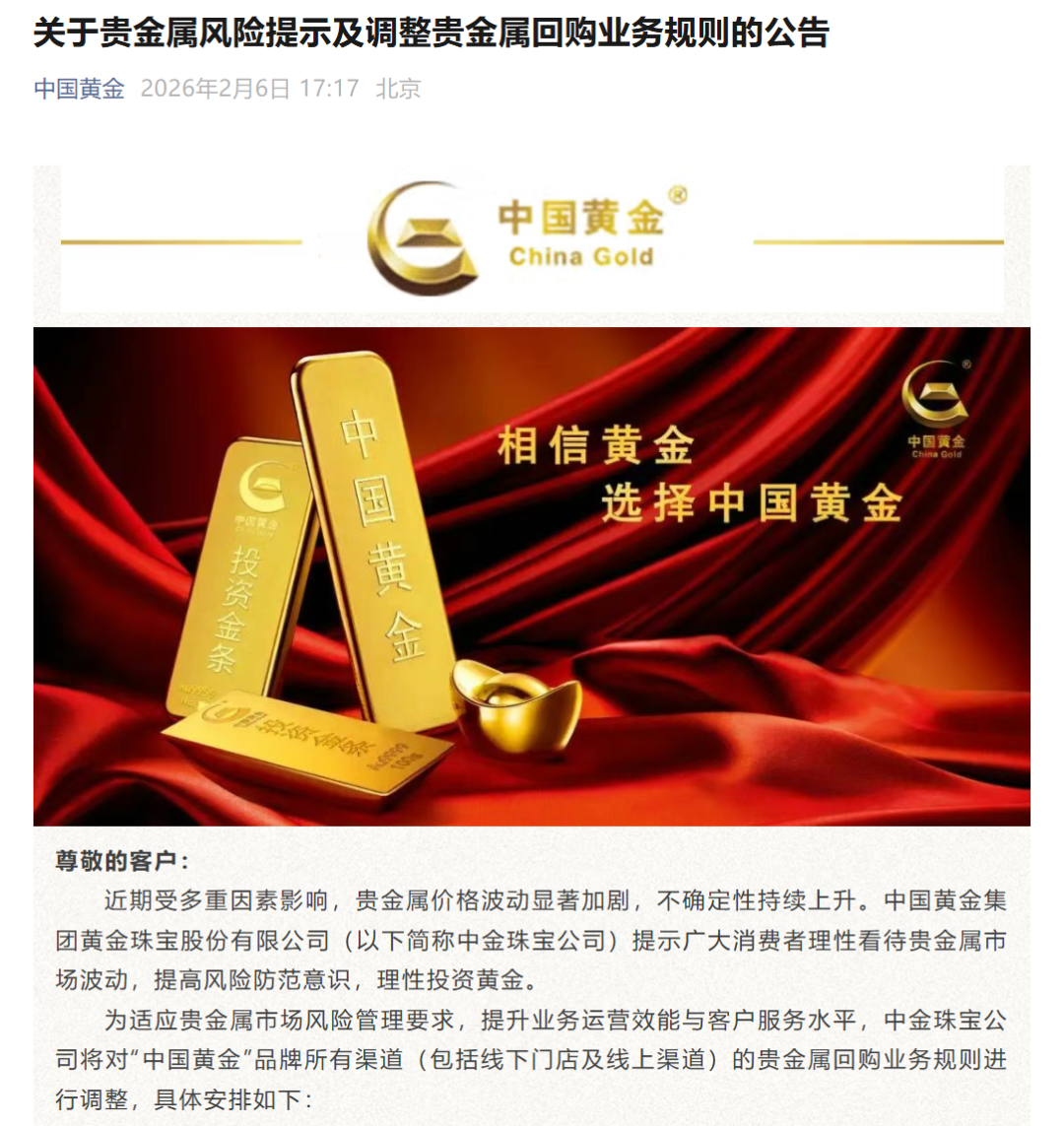
中国黄金今起调整回购规则
券商中国· 2026-02-07 14:48
Core Viewpoint - China Gold announced the suspension of precious metal repurchase services during non-trading days starting February 7, 2026, due to significant price volatility and rising uncertainty in the precious metals market [1]. Group 1: China Gold's Announcement - Starting February 7, 2026, China Gold will suspend precious metal repurchase services on weekends and public holidays when the Shanghai Gold Exchange is not trading [1]. - The company emphasized the need for consumers to approach the precious metals market with caution and to enhance risk awareness [1]. - China Gold will implement limit management on repurchase transactions, including daily limits for individual customers and total limits per transaction, with a reservation system in place [1]. Group 2: Industry-Wide Adjustments - Other leading gold retailers have also announced adjustments to their precious metal repurchase services [4]. - Cai Bai Co., Ltd. will similarly suspend repurchase services on non-trading days starting February 6, 2026, and will implement limit management during business hours [5]. - Several banks, including Industrial and Commercial Bank of China, will adjust their gold-related rules, including limit management for gold accumulation and redemption services starting February 7, 2026 [5].

中国黄金今起调整回购规则
Zhong Guo Xin Wen Wang· 2026-02-07 14:05
Core Viewpoint - China Gold (600916.SH) will suspend its precious metal repurchase business during non-trading days starting from February 7, 2026, due to significant price volatility and rising uncertainty in the precious metals market [1][2]. Group 1: Business Adjustments - The company aims to align its repurchase business with market price mechanisms, avoiding pricing disputes by only conducting transactions on trading days when fair market prices are available [2][4]. - The adjustments include implementing limit management on repurchase transactions, such as daily repurchase limits per customer and total repurchase limits per transaction, which will be dynamically adjusted based on market conditions [4][7]. - The company will also unify the rules for online and offline repurchase channels to enhance service consistency and operational efficiency [2][4]. Group 2: Market Context - Recent fluctuations in gold prices have been notable, with the latest price for gold T+D at 1111 CNY per gram, up by 32.01 CNY (2.97%) from the previous trading day, but down 11.47% from a recent high of 1255 CNY per gram [2][5]. - The overall sentiment in the precious metals market has shifted from risk aversion to speculation, exacerbating trading volatility and valuation risks [7]. Group 3: Industry Trends - Other leading gold retailers, such as Caibai Co. (605599.SH), have also announced similar adjustments to their repurchase business, indicating a broader industry trend towards managing operational risks amid market volatility [7]. - Banks, including Industrial and Commercial Bank of China, are also implementing limit management on gold-related services during non-trading days, reflecting a comprehensive approach to risk management across the sector [7].

中国黄金官宣:回购规则调整!
Zhong Guo Ji Jin Bao· 2026-02-06 11:17
Core Viewpoint - The recent announcement by China Gold Group regarding adjustments to its precious metal buyback business rules highlights the increasing volatility and uncertainty in the precious metals market, prompting the company to enhance risk management and operational efficiency [5][6]. Group 1: Business Adjustments - Starting from February 7, 2026, China Gold will suspend its precious metal buyback business on weekends, public holidays, and other non-trading days of the Shanghai Gold Exchange [5]. - The company will implement limit management on buyback transactions, including daily cumulative buyback limits per customer and total buyback limits per transaction, with a reservation system in place [5][6]. - The limits will be dynamically adjusted based on market conditions, indicating a proactive approach to managing market risks [5]. Group 2: Market Context - The announcement follows similar adjustments made by other leading gold retailers, such as Caibai Jewelry, which also suspended buyback services on non-trading days and introduced limit management on February 6, 2026 [6]. - Additionally, major state-owned banks, including Industrial and Commercial Bank of China, have announced similar measures for their gold accumulation services, indicating a broader trend in the industry towards stricter risk management practices [9]. Group 3: Company Profile - China Gold Group is a large professional gold jewelry production and sales enterprise, operating under the "China Gold" brand and is a subsidiary of China National Gold Group Corporation [5]. - As of February 6, 2026, China Gold's stock price was reported at 11.42 yuan per share, with a total market capitalization of 19.186 billion yuan [6].
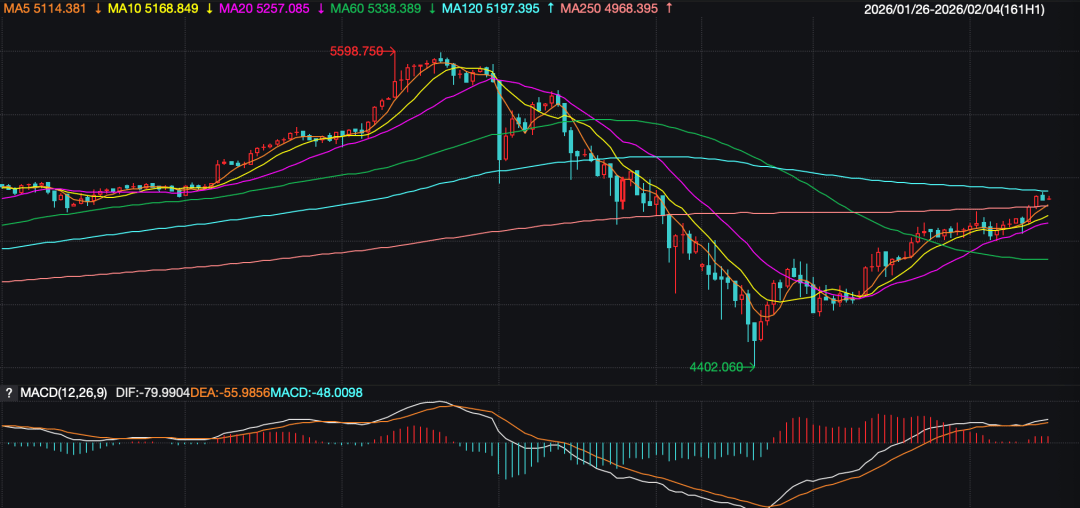
“短短几天坐了一趟过山车”!金价狂震,各大银行密集公告
Sou Hu Cai Jing· 2026-02-04 07:40
Core Viewpoint - International gold prices have experienced significant volatility, rebounding from a previous drop and surpassing the $5000 per ounce mark as of February 4, 2026, prompting banks to enhance risk management for gold investment businesses [1][2]. Group 1: Gold Price Fluctuations - Gold prices saw a dramatic rise and fall, peaking near $5600 per ounce on January 29, 2026, followed by a nearly 10% drop on January 30, and falling below $4500 per ounce by February 2, before rebounding with over a 6% increase on February 3 [2]. - Analysts from Guangzhou Futures Co. noted that concerns over future monetary policy, coupled with technical selling pressure, contributed to the significant price drop, while long-term factors such as central bank gold purchases and geopolitical risks are expected to support gold prices [3]. Group 2: Bank Responses to Volatility - Major state-owned banks, including Bank of China and Agricultural Bank of China, have announced adjustments to margin requirements and trading limits for gold and silver contracts in response to the volatility [4][5]. - The Bank of China adjusted the margin ratio for gold contracts from 16% to 17% and for silver contracts from 26% to 23%, effective February 3, 2026 [4]. - Agricultural Bank of China also modified the trading limits for gold and silver contracts, reducing the daily price fluctuation limit from 25% to 22% for silver and from 15% to 16% for gold [5]. Group 3: Changes in Investment Products - Some banks have raised the minimum purchase threshold for gold accumulation products to 1500 yuan, reflecting a tightening of investment conditions [10]. - Industrial and Commercial Bank of China announced limits on gold accumulation business during weekends and holidays, indicating a more cautious approach to managing gold investments [8]. - Analysts emphasize the importance of viewing gold as a stabilizing asset in investment portfolios, advising against speculative trading practices [10][11].