
消费税

Search documents
税事秒懂丨日常消费购物是否需要缴纳消费税?
蓝色柳林财税室· 2026-03-14 02:29
Group 1 - The article discusses the categories of goods subject to consumption tax in China, including non-essential items and high-energy or high-pollution products such as tobacco, alcohol, luxury cosmetics, and motor vehicles [5][12][18] - It explains that consumption tax is primarily paid by manufacturers, importers, and specific wholesale and retail enterprises, and is typically included in the product price, meaning consumers do not need to file separately [5][12] - The article outlines the criteria for whether a product is subject to consumption tax, such as the price thresholds for luxury cosmetics and the retail price for certain high-value items [5][12] Group 2 - The article highlights that certain industries, including tobacco manufacturing, real estate, and entertainment, are specifically mentioned in the context of consumption tax regulations [12][13] - It details the research and development (R&D) tax deduction policies, indicating that failed R&D activities do not qualify for tax deductions, while successful R&D expenses can be deducted [14][16][21] - The article specifies that companies with sound accounting practices and accurate expense tracking can benefit from R&D tax deductions, while certain activities, such as routine upgrades or market research, do not qualify [18][19][21]


——海外税制学习系列二:如果糖税落地,该有何流程?
Huachuang Securities· 2026-03-03 13:13
Group 1: Tax Legislation Process - The implementation of a new tax, such as a sugar tax, requires adherence to the principle of tax legality, necessitating legislative procedures by the National People's Congress (NPC) if it is classified as a new tax type[1] - The legislative process for a new tax typically involves at least four steps: proposal, review, voting, and publication, with an additional 2-3 preparatory steps, totaling 6-7 steps[2] - Historical examples show that significant tax reforms can take years; for instance, the Environmental Protection Tax Law took 2 years from draft completion to enactment, while the Value-Added Tax Law is projected to take nearly 5 years[2] Group 2: Sugar Tax Implementation Scenarios - The potential implementation of a sugar tax can be categorized into three scenarios: as a new tax type requiring NPC legislation, as a new tax item under existing laws requiring NPC legislation, or as a new tax item under unlegislated tax types that can be adjusted directly by the State Council[7] - If classified as a new tax type (e.g., "health tax"), the sugar tax would require NPC legislative procedures, potentially taking several years to implement[10] - If classified as a new tax item under the consumption tax, the sugar tax could be implemented directly by the State Council, allowing for quicker implementation within the year[10] Group 3: International Context and Trends - Internationally, 36 out of 41 countries that have implemented sugar taxes have done so as excise taxes, which is nearly 90% of the cases, indicating a trend towards consumption tax formats[8] - The rising diabetes prevalence in China, projected to reach approximately 12% by 2024, underscores the urgency for health-related tax measures like a sugar tax[29]
2025年我国进口货物增值税、消费税18263亿元,比上年下滑4.8%
Chan Ye Xin Xi Wang· 2026-02-25 03:31
Core Insights - The report by Zhiyan Consulting outlines the competitive landscape and investment strategies for the tax service industry in China from 2026 to 2032 [1] Group 1: Tax Revenue Trends - In 2025, the value-added tax and consumption tax from imported goods in China is projected to be 1,826.3 billion yuan, reflecting a decline of 4.8% compared to the previous year [1] - The share of these taxes in total tax revenue is expected to be 10.36%, which is a decrease of 0.6 percentage points from the previous year [1]

凯投宏观:日本第四季度GDP增长疲软可能刺激进一步的财政宽松
Xin Lang Cai Jing· 2026-02-16 00:40
Core Viewpoint - Japan's fourth-quarter GDP growth is weak, which may lead to further fiscal easing measures by the government [1] Economic Indicators - Preliminary data for the fourth quarter shows that corporate investment increased by only 0.2% quarter-on-quarter, net exports remained flat, and public demand decreased by 0.2% [1] - The large supplementary budget passed at the end of November has not yet boosted public spending in the previous quarter [1] Government Response - Weak economic activity increases the likelihood that Prime Minister Fumio Kishida will not only push for a suspension of the consumption tax on food but also formulate a supplementary budget for the first half of the fiscal year starting in April, rather than waiting until the end of 2026 [1]
高市早苗胜选无济于事?市场警告:赤字空间已尽,日元仍悬利剑
Jin Shi Shu Ju· 2026-02-09 09:51
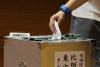
Core Viewpoint - The recent election victory of Prime Minister Sanna Takashi provides her with significant authority to revitalize Japan's economy, but investors are concerned about the limited room for increasing deficits, which could soon pressure bonds and the yen [1][2]. Group 1: Election Impact - Takashi's Liberal Democratic Party won over two-thirds of the seats in the House of Representatives, allowing her to advance her agenda without needing to negotiate with other parties [1]. - The victory was praised by U.S. President Trump, who noted the electorate's dissatisfaction with high living costs, although her expansionary fiscal agenda has raised market concerns [1][2]. Group 2: Market Reactions - Following the election, the Tokyo stock market surged to historical highs, with the Nikkei index rising by 3.9% and the broader Topix index increasing by 2.3% [2]. - The yen, which had depreciated by 6% since Takashi took over the Liberal Democratic Party in October, showed signs of strengthening, while the benchmark 10-year Japanese government bond yield rose by 5.5 basis points to 2.28% [2]. Group 3: Economic Policy Challenges - Analysts emphasize that the focus is not merely on the election results but on the substance, scale, funding sources, and consistency of economic and fiscal policies [2]. - A key challenge for Takashi will be how to manage the commitment to suspend the 8% food consumption tax, which could create an estimated annual revenue shortfall of 5 trillion yen (approximately $32 billion) [5]. Group 4: Monetary Policy Outlook - There is a slight increase in market bets on a potential interest rate hike by the Bank of Japan, reflecting that political stability may clear the way for action [3]. - However, pressure from the U.S. to support the yen could complicate Takashi's approach to monetary policy, as any signals of maintaining the status quo could lead to further yen depreciation [3][4].
高市豪赌!日本大选又来了
第一财经· 2026-02-08 03:36
Core Viewpoint - The article discusses the recent Japanese House of Representatives election, highlighting the political landscape, voter sentiment, and key issues affecting the election outcome, including high inflation and the impact of adverse weather conditions on voter turnout [3][6][9]. Election Overview - The election involves 465 seats, with 289 from single-member districts and 176 from proportional representation [3][6]. - Over 1,200 candidates are contesting, with Prime Minister Fumio Kishida emphasizing the need for the ruling coalition to secure a majority to maintain his position [3][6]. Political Landscape - The ruling coalition, consisting of the Liberal Democratic Party (LDP) and the Japan Innovation Party, is projected to potentially secure a majority, with estimates suggesting they could achieve between 261 to over 300 seats [6][9]. - The main opposition, the Constitutional Democratic Party and the Komeito Party, are expected to perform poorly, possibly securing fewer than 167 seats [6][9]. Voter Sentiment and Weather Impact - Adverse weather conditions, including heavy snowfall, are anticipated to affect voter turnout, particularly among the elderly [7][9]. - The "black money scandal" involving LDP candidates is also expected to influence public sentiment and voter behavior [7][9]. Economic Issues - Rising food prices have led to an increase in the Engel coefficient to 28.6%, the highest since 1981, indicating a significant portion of household spending is on food [3][9]. - The election has seen debates over consumption tax policies, with proposals to reduce or eliminate the food consumption tax being central to campaign discussions [9][10]. Foreign Policy Debate - Immigration policy is a contentious issue, with the LDP advocating for stricter controls, while other parties propose more inclusive approaches [11]. - The number of foreign workers in Japan has reached a record high of 2.57 million, raising concerns about social cohesion and political rhetoric surrounding immigration [11].

高市豪赌!“恩格尔系数”26年新高之际 日本大选又来了
Di Yi Cai Jing· 2026-02-08 03:06
Group 1 - The Japanese House of Representatives election is taking place on February 8, with 465 seats contested, including 289 single-member districts and 176 proportional representation seats [1] - Over 1,200 candidates are expected to participate, with Prime Minister Sanna Takashi stating that he will resign if the ruling coalition fails to secure a majority [2] - The election is facing criticism due to adverse weather conditions, including heavy snowfall, which may impact voter turnout [2][4] Group 2 - The ruling coalition, consisting of the Liberal Democratic Party (LDP) and the Japan Innovation Party, is projected to secure a majority of seats, with some polls suggesting they could achieve an absolute stable majority of 261 seats [4] - The LDP currently holds 196 seats, falling short of the 233-seat majority, and will need to rely on the Japan Innovation Party to maintain control [3] - The election is also influenced by the "black money" scandal, which has raised concerns about the LDP's candidate list, including 37 members linked to the scandal [5] Group 3 - Rising living costs are a central issue in the election, with the Engel coefficient reaching 28.6%, the highest since 1981, indicating a significant increase in food expenditure [2][6] - Various parties are proposing measures to address high prices, with the LDP suggesting a temporary suspension of the 8% food consumption tax, while opposition parties advocate for a zero rate [7][8] - The debate over foreign labor policies is also prominent, with the LDP advocating for stricter controls, while other parties push for multicultural coexistence [8]
高市豪赌!“恩格尔系数”26年新高之际,日本大选又来了
Di Yi Cai Jing· 2026-02-08 02:40
Group 1 - The Japanese House of Representatives election is taking place on February 8, with 465 seats contested, including 289 single-member districts and 176 proportional representation seats [1][3] - Over 1,200 candidates are expected to participate, with Prime Minister Kishi Sanae emphasizing that if the ruling coalition does not secure a majority, she will resign [1][3] - The election is criticized by public opinion due to poor weather conditions and insufficient reasons for the early dissolution of the House [1][4] Group 2 - The ruling coalition of the Liberal Democratic Party (LDP) and the Japan Innovation Party is projected to potentially secure a majority, with some media suggesting they could achieve over 300 seats [3][4] - As of now, the LDP holds 196 seats, which is below the 233-seat majority threshold, and the coalition's stability is uncertain [3][4] Group 3 - The Engel coefficient, indicating the proportion of food expenditure in household consumption, has reached 28.6%, the highest since 1981, due to rising food prices [1][5] - Various political parties are proposing measures to address high prices, with the LDP suggesting a temporary suspension of the 8% food consumption tax [5][6] - The opposition party, "Center Reform Party," advocates for a zero food consumption tax policy, while other parties propose broader tax reductions [5][6] Group 4 - The election is also influenced by the "black money" scandal, which has previously impacted the LDP's performance in elections, with 37 candidates linked to the scandal [4][6] - The weather conditions, including heavy snowfall, are expected to affect voter turnout, particularly among the elderly [4][6] Group 5 - The foreign labor policy is a significant topic in the election, with the LDP advocating for stricter controls, while other parties promote multicultural coexistence [6] - As of January 2025, the number of foreign workers in Japan reached a record 2.57 million, marking an 11.7% increase from the previous year [6]
研究显示:美国消费者承担了96%的关税成本
Xin Lang Cai Jing· 2026-01-21 15:50
Group 1 - The analysis indicates that Americans bear approximately 96% of the tariff burden, which is projected to reach about $200 billion by 2025, functioning similarly to a consumption tax [1][2] - Economists warn that this situation may lead to an increase in inflation in 2026 [1][2]
日本大选推抗通胀食品减税 国际黄金借势攀升
Jin Tou Wang· 2026-01-19 06:18
Group 1: International Gold Market - The latest international gold price is reported at 1045.69 CNY per gram, reflecting an increase of 17.08 CNY, or 1.66%, from the previous trading day, indicating a strong rebound trend [1] - The opening price for the day was 1028.51 CNY per gram, with a daily high of 1049.79 CNY and a low of 1028.51 CNY [1] Group 2: Japanese Political and Economic Context - The upcoming Japanese election is focusing on reducing the food consumption tax, with the ruling Liberal Democratic Party (LDP) planning to include this in their campaign platform [2] - The current food consumption tax is at 8%, down from a standard rate of 10%, and the LDP aims to implement a reduction plan by early next year [2] - High inflation, driven by soaring food prices, has led to core inflation exceeding the Bank of Japan's 2% target for four consecutive years, with household food expenditure reaching a record high of 28.9% in November [2] - The opposition coalition also supports tax reduction while emphasizing fiscal discipline, indicating a competitive political landscape [2] - Following rumors of tax cuts, Tokyo food stocks saw significant gains, with Yamazaki Baking rising by 7.1%, marking its largest increase since August 2025 [2]