
1.5℃温控目标

Search documents
COP30进入下半场,“贝伦一揽子计划”成谈判焦点
2 1 Shi Ji Jing Ji Bao Dao· 2025-11-19 11:46
Core Points - The "Belém Package" has become the focal point of the second half of the COP30 negotiations, with expectations for its completion this week [1][9][10] - The negotiations have faced challenges, particularly regarding climate financing, with significant disagreements remaining unresolved [1][3][11] - The first week of negotiations saw slow progress, with a focus on multilateral cooperation and commitments from various countries [5][6] Group 1: Negotiation Progress - The COP30 negotiations are entering a critical phase, with the first week marked by slow progress, particularly in funding discussions [3][5] - The United States has announced its withdrawal from the Paris Agreement and is absent from key negotiations, while the EU has set a target to reduce greenhouse gas emissions by 90% by 2040 [3][4] - The establishment of the "Open Coalition on Compliance Carbon Markets" aims to create a global compliance carbon market network [3][4] Group 2: Climate Financing - The UNFCCC has highlighted the need for increased climate financing, with calls for developed countries to double their adaptation funding by 2023 compared to 2019 levels [10][11] - Despite commitments from various nations, the overall climate financing remains insufficient and inequitable, with a significant gap in adaptation funding [10][11] - The COP30 has seen a rise in new Nationally Determined Contributions (NDCs), with 113 parties submitting 86 contributions, but the global climate ambition still falls short of the 1.5°C target [4][11] Group 3: China's Role - China has actively participated in COP30, showcasing its climate action initiatives and promoting international cooperation [6][7][8] - The "China Corner" at COP30 has highlighted China's contributions to climate adaptation and technology innovation, emphasizing its leadership in global climate governance [6][8] - Chinese enterprises have shared their green practices, enhancing international understanding of China's sustainable development path [7][8]
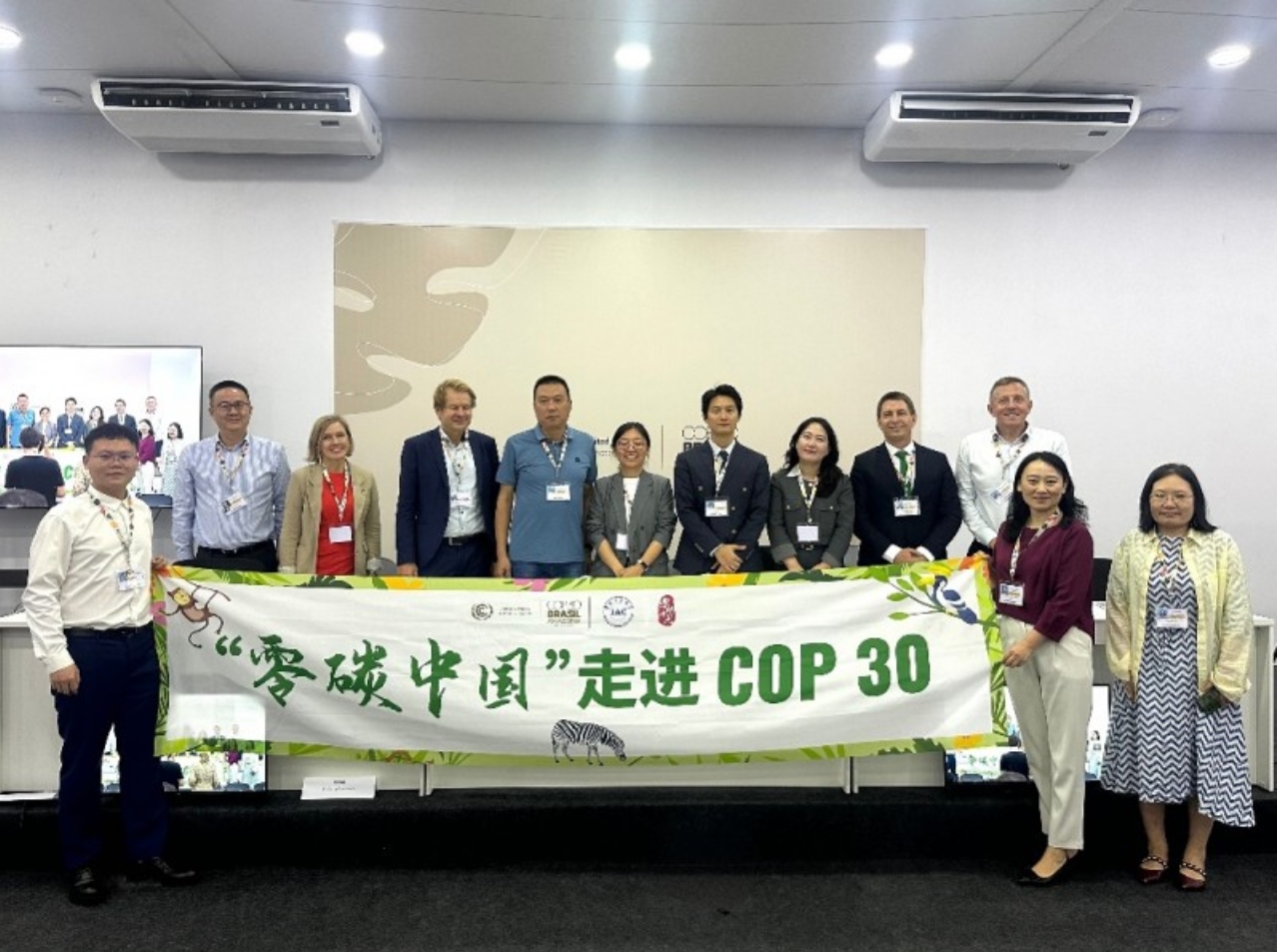
多国代表聚首COP30边会,共绘可再生能源创新路径
Zhong Guo Neng Yuan Wang· 2025-11-15 13:34
Core Viewpoint - The event during COP30 emphasized the importance of renewable energy in achieving global low-carbon development and the need for collaboration between countries, particularly between Brazil and China, to promote sustainable development and technological advancement [3][5]. Group 1: Event Overview - The event titled "Promoting Global Low-Carbon Development through Renewable Energy in the Context of Climate Change" was co-hosted by the China Investment Association, the Renewable Energy Committee of the China Energy Research Society, and the One Earth Natural Foundation of Shenzhen [1]. - The conference gathered representatives from international organizations, research institutions, and key industry enterprises to discuss the synergy between renewable energy production and consumption, as well as technological innovation and application [1]. Group 2: Key Insights from Speakers - Brazilian Ambassador to China, Marcos Galvão, highlighted the need to translate the commitments of the Paris Agreement into concrete actions, emphasizing that the global proliferation of renewable energy is crucial for achieving climate goals [3]. - Experts discussed global renewable energy development trends and the potential for emissions reduction, advocating for collaborative goals and technological innovation to drive energy system transformation [3]. - The China 21st Century Agenda Management Center presented a research outcome titled "China's Carbon Neutral Technology Development Roadmap," focusing on technology research and development, standard formulation, and industrial implementation [3]. Group 3: Roundtable Discussion Highlights - Industry leaders discussed the need for customized solutions combining multi-energy systems and energy efficiency management technologies to enhance renewable energy application in industrial sectors [4]. - There was a consensus on the necessity to promote the industrialization of biofuels and green hydrogen technologies, along with establishing a comprehensive standard system from raw material supply to end-use applications [4]. - Recommendations included creating differentiated incentives and outcome-oriented support policies to balance energy security, economic costs, and low-carbon objectives [4]. Group 4: Future Outlook - The event underscored the importance of collaboration between energy production and consumption sectors, with a call for the industrial, transportation, and building sectors to join in carbon reduction efforts [5]. - The conference served as a platform for sharing practical experiences and exploring feasible paths for renewable energy and low-carbon development, reinforcing the consensus on collaborative transformation [5]. - With accelerating technological advancements, improved policy mechanisms, and deepened international cooperation, renewable energy is expected to play a more significant role in global low-carbon transitions and in achieving the goals of the Paris Agreement [5].

国家公园法将施行;五年来高排放车辆淘汰近两千万辆
2 1 Shi Ji Jing Ji Bao Dao· 2025-09-22 12:04
Carbon Neutrality Policy - China's first National Park Law will be implemented on January 1, 2026, establishing a legal framework for the protection and sustainable use of natural ecosystems [2] - The law aims to create a natural protection system centered around national parks, emphasizing strict protection and public participation in ecological education [2] Pollution Prevention Achievements - The Ministry of Ecology and Environment announced the elimination of nearly 20 million high-emission vehicles during the 14th Five-Year Plan, contributing to significant reductions in PM2.5 concentrations in key regions [3][4] - The country has made substantial progress in water pollution control, with over 90% of black and odorous water bodies in cities being eliminated [4] Carbon Market Development - As of September 18, 2025, China's carbon market has seen a cumulative transaction volume of 714 million tons and a total transaction value of approximately 49.96 billion yuan, indicating a stable market operation [5] - The establishment of a comprehensive regulatory framework for carbon trading is seen as a key support for achieving carbon peak and carbon neutrality goals [5] Climate Change and Industry Impact - The year 2024 is projected to be the first year to exceed the 1.5°C temperature control target set by the Paris Agreement, highlighting the urgency for enhanced emission reduction measures [6][7] - Experts emphasize the need for more effective reduction strategies to meet climate goals and ensure sustainable development [6][7] Local Initiatives - Inner Mongolia has introduced a notification to optimize the green electricity consumption mechanism, focusing on mandatory and voluntary consumption to enhance the region's green energy competitiveness [7][8] - The "Low Carbon China Tour" and Climate Action Week series of events were launched to showcase China's efforts in energy transition and public engagement in climate action [9][10] Corporate Practices - The 2025 Shandong Clean Energy Industry Expo provided a platform for showcasing innovations and fostering collaboration in the clean energy sector [11][12] - Yin Yu Water Zhongtian has set a net-zero target for 2040, with a comprehensive sustainable strategy that includes quantifiable goals for low-carbon construction and operations [12][13]