2.5D集成

Search documents
芯片,最新展望
半导体行业观察· 2026-02-03 01:35
Core Viewpoint - The semiconductor industry is crucial for modern technology, impacting various sectors from consumer electronics to military applications, and is currently facing challenges related to energy efficiency and manufacturing costs [2][3][4]. Group 1: Semiconductor Importance - Semiconductors are essential components in a wide range of devices, controlling systems from smartphones to military equipment [2]. - The industry is pivotal not only for information technology but also for advancements in fields like neuroscience and synthetic biology [7]. Group 2: Chip Design and Manufacturing - Chip design is an intellectual task requiring specialized tools and teams, while manufacturing is a labor-intensive process needing large factories [4][6]. - The integration of different chip functions necessitates various technologies, leading to inefficiencies in information transfer and high design costs [4][6]. Group 3: Market Dynamics - TSMC dominates the semiconductor foundry market with over 60% share, while the U.S. manufacturing capacity has significantly declined from 37% in 1990 to 12% in 2021 [7]. - The CHIPS Act was introduced to address the declining U.S. semiconductor manufacturing capabilities, but the global supply chain remains fragile [7]. Group 4: Technological Advancements - Moore's Law, which predicts the doubling of transistors on chips, is facing challenges as manufacturing costs rise and energy efficiency improvements slow down [10][11]. - Innovations such as 2.5D integration and chiplets are being explored to enhance performance and efficiency while addressing the limitations of traditional semiconductor designs [25][16]. Group 5: AI and High-Performance Computing - The demand for AI and machine learning applications is driving the need for specialized processors, leading to significant investments in GPU and dedicated hardware [14][15]. - High-performance computing systems are becoming increasingly power-intensive, necessitating advanced cooling solutions to manage heat [19]. Group 6: Storage Technology - Advances in storage technologies, including 3D structures and high-bandwidth memory (HBM), are crucial for meeting the growing data demands of modern applications [21][22][23]. - Emerging storage technologies like MRAM and PCM are being developed as alternatives to traditional non-volatile memory solutions, offering advantages in speed and energy efficiency [23]. Group 7: Future Outlook - The semiconductor industry is expected to achieve significant advancements driven by the increasing demand for AI and high-performance computing, with innovations in materials and manufacturing processes playing a key role [25][30]. - The integration of photonics and application-specific optimizations will be essential for overcoming the limitations of current semiconductor technologies [28][30].


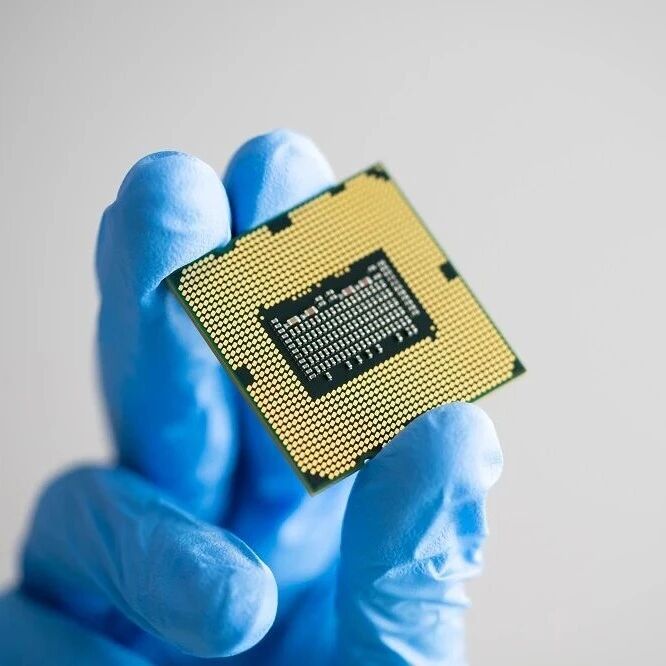
Chiplet,改变了芯片
半导体行业观察· 2025-10-13 01:36
Core Viewpoint - The article discusses the evolution of semiconductor technology, highlighting the shift from Moore's Law to chiplet technology as a solution to the challenges faced in semiconductor manufacturing [2][5]. Summary by Sections Moore's Law and Its Challenges - Moore's Law, proposed by Gordon Moore in 1965, states that the number of transistors on a semiconductor chip doubles approximately every two years, driving performance improvements and cost reductions [2]. - Recent advancements in chip manufacturing have faced physical limits, increased complexity, and rising costs, leading to a belief that Moore's Law may no longer be applicable [2]. Introduction of Chiplets - Chiplets are small chips that perform specific functions and can be combined into a single package, improving manufacturing yield and efficiency by allowing the use of "known good die" [2]. - This technology allows for the integration of different types of circuits, enhancing performance while maintaining cost-effectiveness, particularly in high-performance computing and automotive applications [3]. Heterogeneous Integration - Heterogeneous integration enables the combination of chips made with different processes and functionalities into a single package, which is particularly beneficial for the automotive industry [3]. - Major automotive manufacturers are exploring chiplet technology for future vehicle systems, aiming for mass production post-2030 [3]. Advantages Beyond Automotive - Chiplet technology is expanding into artificial intelligence and telecommunications, driving innovation across various industries [5]. - The technology relies on an intermediary layer that connects chips, enhancing communication speed and efficiency [5]. Advanced Packaging Techniques - The mainstream method for chiplet integration is 2.5D integration, while the next significant advancement is 3D integration, which stacks chips vertically for higher density [5][8]. - Combining flexible chip designs with 3D integration allows for faster, smaller, and more energy-efficient semiconductors, crucial for high-performance applications [7]. Challenges and Innovations - Vertical stacking of chips presents challenges such as heat management and maintaining high manufacturing yields, prompting research into advanced packaging technologies [8]. - The combination of chiplets and 3D integration is viewed as a disruptive innovation that could lead the semiconductor industry into a new era, potentially replacing Moore's Law [8].