
2030年可持续发展议程

Search documents
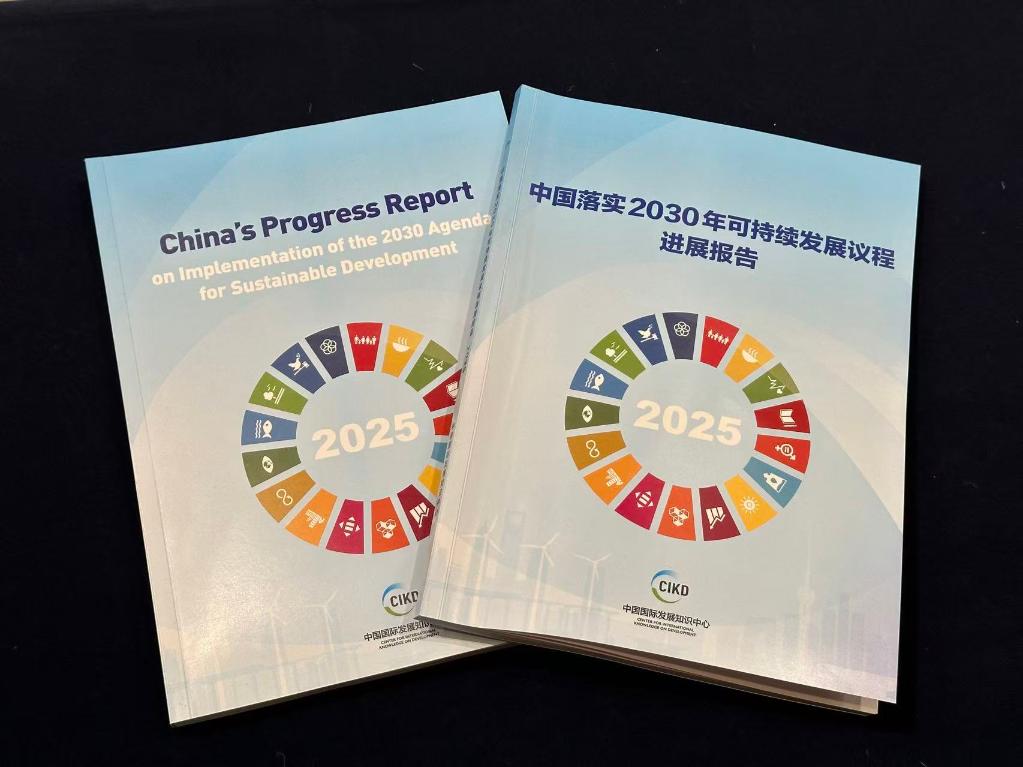
《中国落实2030年可持续发展议程进展报告2025》在湖发布
Xin Lang Cai Jing· 2025-12-21 00:06
Core Viewpoint - The report highlights China's significant progress in implementing the UN's 2030 Sustainable Development Agenda over the past decade, emphasizing the need for continued efforts in the next five years to achieve the set goals [1][2]. Group 1: Progress and Achievements - Over the past 10 years, China has prioritized the implementation of the UN 2030 Sustainable Development Agenda, achieving positive advancements in poverty alleviation, food security, ecological protection, and global development partnerships [2]. - The report cites specific examples of successful initiatives, such as Huzhou's high-level innovation platform, Deqing's sustainable development practices recognized as exemplary cases by the UN, and Anji's Yucun village being named a "Best Tourism Village" by the UN tourism organization [2]. Group 2: Future Plans and Strategies - In the next five years, China aims to solidify its commitment to the 2030 Agenda by focusing on goal-oriented and problem-oriented approaches, system thinking, deepening reforms, and expanding openness to enhance economic quality and reasonable growth [2]. - The report emphasizes the importance of building a community with a shared future for humanity and accelerating global efforts to implement the 2030 Agenda [2].
《中国落实2030年可持续发展议程进展报告2025》发布
Xin Hua She· 2025-12-19 15:11
Core Insights - The report titled "Progress Report on China's Implementation of the 2030 Agenda for Sustainable Development 2025" highlights China's significant progress in implementing the UN 2030 Agenda over the past decade, focusing on poverty alleviation, food security, ecological protection, and global development partnerships [1][2] Group 1: Implementation Progress - China has effectively integrated resources and encouraged participation from various sectors to promote development, particularly through support from developed eastern regions to the central and western regions [2] - The report indicates that China's food security capabilities have continuously improved, with stable food prices and a resilient agricultural food system, marking a significant milestone in global food security governance [2] Group 2: Future Plans - In the next five years, China aims to further advance the 2030 Agenda by adhering to goal-oriented and problem-oriented approaches, enhancing systemic thinking, deepening reforms, and expanding openness to achieve qualitative and reasonable economic growth [3] - The report outlines plans to promote comprehensive human development and common prosperity for all, while also collaborating with various parties to build a community with a shared future for humanity [3]

第八届落实2030年可持续发展议程:再造魅力故乡论坛举行
Zhong Guo Xin Wen Wang· 2025-12-07 01:22
Group 1 - The core viewpoint of the article emphasizes that China's urban and rural governance is providing valuable reference samples for the implementation of the United Nations 2030 Sustainable Development Agenda and the New Urban Agenda [1][2] - The eighth forum on implementing the 2030 Sustainable Development Agenda was held in Guilin, China, where around 100 representatives from various organizations gathered to discuss sustainable development goals, human living environment improvement, and technological innovation [1][2] - Zhang Zhenshan, a senior advisor from the UN-Habitat China Office, highlighted China's rapid urbanization, which increased from less than 20% to over 60% in a few decades, showcasing a unique path in human living environment construction [1] Group 2 - The UN-Habitat expressed its intention to deepen cooperation with the China Sustainable Development Research Association, particularly in supporting innovative demonstration areas like Guilin to implement SDG 11 and transform local experiences into global sustainable development solutions [2] - The China Sustainable Development Research Association has actively promoted the 2030 Agenda since its adoption in 2015, aligning sustainable development goals with China's long-term development plans and national strategies such as rural revitalization and carbon neutrality [2] - From 2020 to 2025, 36 localities in China have produced excellent cases in implementing SDG 11, including Guilin's "Urban Mountain Water Street Park Plan" and the China Women's Development Foundation's "Mother Water Cellar" public welfare project [2]
2025从都国际论坛在广州举行
Jing Ji Ri Bao· 2025-12-03 23:38
Core Points - The 2025 International Forum held in Guangzhou from December 1 to December 3 focused on global governance reform and maintaining world peace and development [1] - Participants included 28 former foreign leaders and representatives from various sectors discussing the inadequacies of the current global governance system and potential reform directions [1] - Key topics included global development imbalances, geopolitical conflict risks, artificial intelligence governance, and climate change response, emphasizing the need for global cooperation and collective action [1] Summary by Categories Global Governance - The forum addressed the need to reform and improve global governance to enhance stability and certainty [1] - Discussions highlighted the importance of providing global public goods and implementing the 2030 Sustainable Development Agenda [1] Security Threats - Participants noted the intertwining of traditional and non-traditional security threats due to the new wave of technological revolution and geopolitical changes [1] - The forum underscored the urgency of addressing global development imbalances and the risks associated with geopolitical conflicts [1] Future Cooperation - The discussions called for enhanced global cooperation and joint actions to tackle pressing issues such as artificial intelligence governance and climate change [1]
中国六成指标已接近或实现二○三○年目标
Ke Ji Ri Bao· 2025-09-28 01:15
Core Insights - The report highlights the slow global progress on Sustainable Development Goals (SDGs) over the past decade, with only 16.9% of the 59 assessed indicators on track for timely achievement [1][3] - China has made significant advancements in implementing SDGs, with 60.5% of its 233 indicators nearing or achieving the 2030 targets [1][2] Group 1: Global Progress on SDGs - The report indicates that out of 59 SDG indicators, only 10 are expected to be achieved on time, while 27 are progressing slowly, 5 are stagnant, and 17 are regressing [1] - The report calls for enhanced data infrastructure sharing and collaboration among nations to improve monitoring and policy simulation related to SDGs [3] Group 2: China's Achievements - China leads globally in renewable energy development, with wind power installations accounting for 39% of the global total and 68.21% of new installations in 2024 [2] - The proportion of urban populations with convenient access to public transportation exceeds 90%, and all provincial governments have implemented disaster reduction strategies, achieving 2030 targets ahead of schedule [2] Group 3: Future Directions - The SDG Center aims to deepen the application of big data in monitoring and policy optimization, focusing on cross-scale monitoring and scenario simulation [3] - The report emphasizes the need for new methods in big data monitoring and evaluation of SDG indicators, which will be crucial for the post-2030 agenda [3]
外交部:应重温2030年可持续发展议程初心,落实全球发展倡议
Xin Jing Bao· 2025-08-29 03:53
Core Points - The current global economic growth is weak, and the development gap is widening, necessitating a renewed focus on the 2030 Sustainable Development Agenda and global development partnerships [1][2] - There is a rise in unilateralism and protectionism, which is impacting global economic recovery and international development cooperation [1] - China emphasizes that its development is interconnected with the world, and it aims to provide new opportunities through its modernization efforts [1] - China is committed to high-level opening up, promoting an open world economy, and maintaining a stable global supply chain [1] - The Belt and Road Initiative has seen participation from over 150 countries, enhancing global cooperation [1] - China has announced support for eight global development actions, including zero-tariff treatment for 100% of products from least developed countries with diplomatic relations [1] Initiative and Support - The Global Development Initiative aims to refocus international attention on development issues and reaffirm commitments to the 2030 Sustainable Development Agenda [2] - Over 100 countries and international organizations support the initiative, with more than 80 countries joining the "Friends of the Global Development Initiative" group [2] - Practical cooperation under the initiative has provided tangible benefits to the people of participating countries [2]
外交部与联合国亚太经社会续签“一带一路”合作文件
news flash· 2025-07-27 06:28
Group 1 - The core viewpoint of the article emphasizes the significance of the Belt and Road Initiative (BRI) and the commitment to high-quality cooperation between the Ministry of Foreign Affairs of China and the United Nations Economic and Social Commission for Asia and the Pacific (UNESCAP) [1] - The memorandum aims to accelerate the implementation of the 2030 Sustainable Development Agenda, contributing to peace, development, mutual cooperation, and common prosperity [1]
联合国称2030年可持续发展议程落实情况滞后 外交部回应
news flash· 2025-07-17 08:04
Group 1 - The United Nations report indicates that nearly half of the 2030 Sustainable Development Goals are progressing slowly, with 18% of the goals experiencing regression, highlighting a "development emergency" globally [1][2] - The Chinese government has integrated the 2030 Sustainable Development Agenda into its 14th Five-Year Plan, achieving early targets in poverty reduction and health, contributing positively to global efforts [2] - China has proposed and implemented a Global Development Initiative, enhancing cooperation with over 20 development institutions, benefiting more than 30 million people across 60 countries [2] Group 2 - The Chinese government emphasizes the need for unity and collective action to achieve global sustainable development goals, urging a return to the core principles of the 2030 Agenda [2] - The Chinese leadership has announced eight actions to support global development, focusing on key areas such as food security, technological innovation, and green transformation [2] - The current global challenges necessitate a revitalization of international development partnerships, with development being a crucial pillar of the United Nations' work [2]
外交部:中方大力推进国际发展合作
news flash· 2025-07-17 07:57
Core Viewpoint - The Chinese government is actively promoting international development cooperation amidst rising unilateralism and protectionism, which are hindering global economic recovery and delaying the implementation of the 2030 Sustainable Development Agenda [1] Group 1: Current Challenges - Unilateralism and protectionism are on the rise, impacting global economic recovery [1] - There is insufficient momentum in international development cooperation, with significant delays in the 2030 Sustainable Development Agenda [1] - Some countries openly oppose or resist key international development cooperation documents, leading to a development crisis that poses real challenges for all nations [1] Group 2: China's Commitment - China positions itself as an active proponent of global development [1] - The Chinese government emphasizes the need for unity and collective action to achieve global sustainable development goals [1] - There is a call to revisit the original intentions of the 2030 Sustainable Development Agenda and to revitalize global development partnerships [1] Group 3: Future Directions - Development should remain a crucial pillar of United Nations work, with efforts to bring development issues back to the center of the international agenda [1] - China expresses willingness to collaborate with all parties to promote global prosperity and progress [1]
助力2030年可持续发展议程:“进博会在行动”全球发展倡议主题研讨会举办
Shang Wu Bu Wang Zhan· 2025-07-01 17:07
Core Points - The "Global Development Initiative" proposed by China is gaining widespread support from over 100 countries and international organizations, focusing on critical issues such as poverty alleviation, which is essential for the development of global South countries [2][3] - The initiative aims to provide a framework for achieving the 2030 Sustainable Development Agenda, emphasizing collaborative solutions to common challenges, including poverty reduction, food security, digital economy, climate action, and connectivity [2][3] - The China International Import Expo (CIIE) serves as a platform for enhancing cooperation among countries, particularly benefiting developing nations by creating opportunities for trade and investment [3][5] Summary by Sections Global Development Initiative - The initiative is recognized as a pragmatic approach to addressing significant global issues, receiving endorsement from various international organizations based in Geneva [2] - It aligns with the priorities of developing countries, fostering unity and progress among them [2] China International Import Expo (CIIE) - CIIE is highlighted as a vital platform for South-South cooperation, facilitating interactions between producers, consumers, exporters, and policymakers [5] - The expo has significantly contributed to the economic development of many countries, exemplified by the success of Peru's "Warm Llama" brand, which has positively impacted around 3,000 families [4] - CIIE has attracted participation from 152 countries and regions, showcasing China's commitment to expanding its market and providing global opportunities [6] Trade and Economic Cooperation - China is a key partner for many developing countries, being the largest or second-largest trading partner for nearly all countries in South America and Central America [3] - The trade volume between China and Africa is projected to reach $295.6 billion in 2024, with China maintaining its position as Africa's largest trading partner for 16 consecutive years [3] - Initiatives like the Global Development Initiative and CIIE are crucial for addressing challenges faced by developing countries, such as limited production capacity and unequal market access [5]