
3060双碳

Search documents
构建可持续发展新范式 需科技创新与绿色金融齐发力
Di Yi Cai Jing· 2025-12-14 04:05
Group 1 - The core viewpoint emphasizes the intersection of technological revolution and sustainable development, advocating for a new paradigm that leverages disruptive technology and systemic financial empowerment to create a more resilient and efficient sustainable future [1] - The integration of artificial intelligence and big data into sustainable development faces challenges such as data fragmentation and unclear disclosure standards, necessitating improved data aggregation and standardized reporting [1][2] - From 2026, companies listed on important indices will be required to disclose sustainability reports, indicating a positive trend towards systematic and standardized reporting, although there remains a gap between domestic and international standards [2] Group 2 - China's green loan balance reached 43.51 trillion yuan, a year-on-year increase of 22.9%, and green bonds issued totaled 4.95 trillion yuan, positioning China among the global leaders in green finance [3] - The development of climate technology is crucial for addressing climate challenges, with six core areas identified: renewable energy, energy storage, smart grid, carbon capture, hydrogen energy, and biomass energy [3] - Significant funding is required for the entire cycle of climate technology development, necessitating a multi-faceted climate financing system to overcome the challenges of financing gaps exceeding $2 trillion globally [4] Group 3 - Four financing solutions proposed to address the climate financing gap include cultivating patient capital, leveraging public capital to attract social investment, innovating blended capital models, and matching financial products to the full cycle of financial needs [4] - The establishment of a complete financial ecosystem is essential for empowering climate technology, which includes creating a shared value consensus and improving benefit mechanisms through tools like carbon trading [4][5] - The voluntary carbon market in China faces challenges such as a lack of independent standards and insufficient domestic supply to meet the growing demand for carbon credits from outbound enterprises [5] Group 4 - The integration of technology and green finance is crucial for creating a sustainable development ecosystem, with a focus on making trust measurable through data governance and technological innovation [6] - Balancing market activity and pricing in the carbon market is essential to ensure sustainability, as excessively high prices can burden industries while low prices may diminish the motivation for carbon reduction [7] - The rationalization of green premiums is key to achieving a win-win scenario in sustainable development, ensuring that all segments of the supply chain benefit from the green transition without passing costs onto consumers [7]
马蔚华:中国“双碳”行动成效显著 气候科技成破局关键
Xin Lang Cai Jing· 2025-12-12 09:19
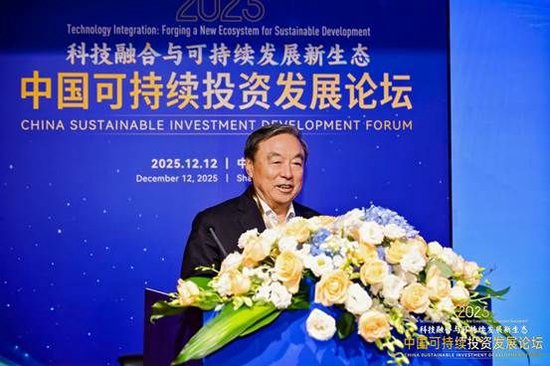
Core Insights - The 2025 China Sustainable Investment Development Forum emphasizes the integration of technology and sustainable development, highlighting the role of climate financing in fostering climate technology [1][11] - The UN's 2030 Sustainable Development Agenda has seen underwhelming progress, with over half of the projects stagnating and 18% regressing, primarily due to the escalating climate crisis [3][13] - China has made significant strides in climate commitments, with green bond issuance nearing 4 trillion yuan and renewable energy accounting for 60% of installed capacity, alongside the establishment of the world's largest carbon market [3][13] Climate Technology - Climate technology is defined as a set of technologies aimed at reducing greenhouse gas emissions and promoting green, low-carbon development, covering the entire energy production and consumption chain [3][13] - Six core areas of climate technology include renewable energy, energy storage, smart grid technology, carbon capture and utilization, hydrogen energy, and biomass energy [3][13] Current Advantages and Challenges - China has developed unique advantages in climate technology, including leading global production in photovoltaic technology and a complete energy storage supply chain [4][14] - Despite these advantages, challenges remain, such as high costs and safety concerns in hydrogen energy, reliance on rare lithium resources for batteries, and inefficiencies in carbon capture technology [4][14] Climate Financing Solutions - A multi-faceted climate financing system is essential to support the extensive funding needs of climate technology, which cannot rely solely on a single source of funding [5][15] - Four proposed solutions for addressing the climate financing gap include cultivating patient capital, leveraging public capital to attract social investment, innovating mixed capital models, and matching financial products to the full cycle of climate technology development [5][15][16][17][18] Financial Ecosystem Development - Building a complete financial ecosystem for climate technology requires a shared value consensus, improved incentive mechanisms, and the establishment of a green certification and rating system that aligns with international standards [8][18][19] - The emphasis is on creating a long-term investment perspective that integrates social value into decision-making, thereby enhancing the role of climate financing in supporting climate technology [8][19]

金融赋能强国路 投资助力新发展——申万宏源2025年前三季度投资业务亮点纷呈
申万宏源证券上海北京西路营业部· 2025-11-14 02:07
Core Viewpoint - The article emphasizes the proactive role of Shenwan Hongyuan Group in supporting national strategies through diversified financial services, focusing on technology finance, inclusive finance, green finance, pension finance, and digital finance, thereby contributing to high-quality economic development [1][19]. Group 1: Technology Finance - Shenwan Hongyuan Group has invested in high-end engine development for commercial aviation, supporting the C919 aircraft's engine projects, which ensures long-term funding for domestic aviation engine independence [3]. - The group is also involved in low-altitude economy initiatives, financing the W5000 unmanned cargo aircraft, which sets a benchmark in low-altitude logistics with its payload and range capabilities [3]. - Additional investments include support for Tianbing Technology, which has achieved significant milestones in commercial spaceflight, enhancing China's capabilities in satellite launches [5]. Group 2: Inclusive Finance - The group has partnered with Shanghai Construction Group to develop over 1,400 affordable rental housing units in Shanghai, benefiting new citizens and young people [10]. - Collaborations in urban renewal projects in Beijing and Chengdu aim to improve living conditions and upgrade old neighborhoods, aligning with the "housing for all" commitment [10]. - Financial support for small and micro enterprises has been emphasized, with investments aiding truck drivers and the logistics sector, as well as healthcare initiatives to support the aging population [12]. Group 3: Green and Digital Finance - Shenwan Hongyuan Group's futures division has implemented risk management strategies for various industries, including a notable case in the food sector that received media recognition for its effectiveness in stabilizing operations [14]. - Investments in companies like Xijing Technology focus on smart and green solutions, enhancing operational efficiency in global logistics [16]. - The group has also engaged in financing projects that align with national carbon neutrality goals, contributing to the development of new energy solutions [16]. Group 4: Consumer and Regional Development - The group participated as a strategic investor in consumer REITs, achieving a record subscription rate, indicating a deepening of the REITs market in China [17]. - Investments in regional development projects, such as the establishment of high-standard factories in Suzhou, support the growth of intelligent manufacturing in the Yangtze River Delta [17]. - The collaboration with e-commerce and offline resources aims to unlock consumer potential in the southwest region [17].

金融赋能绿色创新:中小微企业转型的“绿色引擎”
2 1 Shi Ji Jing Ji Bao Dao· 2025-07-04 10:58
Core Insights - The event focused on "green innovation" as a means to empower the resilience of small and micro enterprises (SMEs) in the context of sustainable development and climate change [1][5] - SMEs are recognized as a crucial engine for employment and innovation, contributing over 50% of global GDP and accounting for more than 90% of all enterprises worldwide [1][2] - The challenges faced by SMEs include limited financing channels, inadequate infrastructure, and the impacts of climate change [1][2] Group 1: Green Innovation and SMEs - Green innovation is becoming a key factor for the transformation of SMEs, which are essential for inclusive and sustainable development [1][5] - SMEs contribute over 50% of tax revenue, 60% of GDP, 70% of technological innovation, and 80% of urban employment in China [2] - Experts emphasize the need for policy support and innovative financial services to facilitate the green transition of SMEs [2][5] Group 2: Financial Empowerment - Financial technology companies are emerging as important players in supporting the green transition of SMEs by reducing financing costs through innovative solutions [2][3] - In 2024, a financial technology company provided 695 million yuan in loans to users engaged in green and renewable energy sectors, helping SMEs convert ecological benefits into market advantages [2] - Financial institutions are encouraged to enhance risk management and product innovation to better serve the unique needs of SMEs [3][4] Group 3: Policy and Collaborative Efforts - The establishment of specialized green finance departments by banks aims to provide inclusive financial products tailored for SMEs [4] - Social organizations are also playing a role in empowering SMEs in remote areas through funding, education, and platform integration [4] - The event served as a valuable platform for dialogue, highlighting the importance of collaboration among various stakeholders to support the green transformation of SMEs [5]