AI与文旅融合

Search documents
马年新春江苏文旅消费奋“蹄”迎“新”
Xin Hua Ri Bao· 2026-02-24 00:25
Group 1 - The tourism market experienced explosive growth during the extended 9-day Spring Festival holiday, with new travel habits emerging such as intangible cultural heritage experiences and family-oriented trips [1] - Jiangsu province welcomed 75.81 million tourists, generating a total expenditure of 60.963 billion yuan, reflecting a year-on-year increase of 10.1% and 10.5% respectively [1] - Family trips, including multi-generational travel, became a mainstream trend, indicating a shift in consumer preferences towards more inclusive travel experiences [2] Group 2 - The lengthened holiday allowed for increased travel frequency, with many families opting for dual travel peaks during the holiday period, leading to a 30% year-on-year increase in travel orders from February 2 to February 5 [2] - Popular outbound destinations included Southeast Asian countries, with Malaysia becoming the top choice, while Italy saw a 310% increase in tourism interest due to the overlap with the Milan Winter Olympics [3] - Domestic travel spending per capita rose by approximately 10% during the holiday, with high-star hotel bookings averaging nearly 3 nights [3] Group 3 - The trend of "reverse New Year travel" emerged, where individuals chose to celebrate the holiday in urban areas or local attractions rather than returning to their hometowns, significantly boosting local tourism [4] - The demand for local hotel bookings surged, with some areas experiencing over 100% year-on-year growth in reservations, particularly among younger travelers [4] - Elderly travelers also contributed to the tourism market, with a 20% increase in first-time flight bookings among those over 60, and significant growth in hotel stays and ticket purchases [4] Group 4 - The overall tourism experience was enhanced by the integration of cultural and commercial elements, with new attractions and events drawing significant visitor numbers [6] - The opening of new cultural complexes and the introduction of innovative travel products contributed to a vibrant tourism landscape, appealing particularly to younger demographics [6] - The presence of foreign tourists increased, with a 20% rise in bookings for domestic flights, highlighting the global interest in experiencing traditional Chinese New Year celebrations [7] Group 5 - The integration of technology in travel planning saw a significant rise, with AI-driven services experiencing an 800% increase in orders during the holiday, indicating a shift towards more convenient travel solutions [7] - The trend of "festival + cross-industry integration" is expected to shape the future of the tourism market, with continued interest in diverse travel experiences extending beyond the Spring Festival [7]
桂林旅游强势涨停 中秋国庆“超级黄金周”催化旅游消费热潮
Zheng Quan Shi Bao Wang· 2025-09-19 14:16
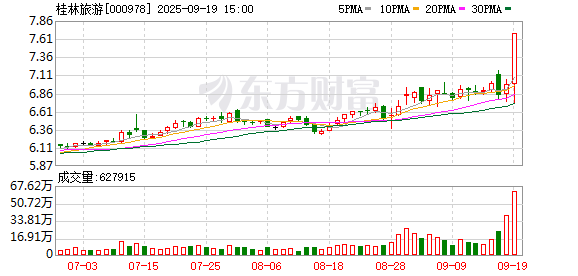
Group 1 - The tourism sector is experiencing a rebound, with Guilin Tourism (000978.SZ) hitting the upper limit of its stock price as the National Day holiday approaches, leading to increased attention on the cultural tourism market [2] - The 2025 National Day holiday coincides with the Mid-Autumn Festival, creating an eight-day "super golden week" that stimulates diverse travel demand, with Ctrip reporting a 45% year-on-year increase in cross-province travel orders for the holiday [2] - The cultural tourism industry is receiving strong policy support aimed at expanding domestic demand and boosting consumption, with various measures fostering innovation and integration within the sector [2] Group 2 - Guilin Tourism is actively exploring the "tourism+" model, launching themed tourism products that attract a large number of visitors, including a brand IP event that combines tourism experiences with intangible cultural heritage [2] - The company is integrating AI into its tourism offerings, introducing "AI companion" services at scenic spots and enhancing digital night tours, which modernizes the visitor experience [3] - Recent strategic moves include the acquisition of two tourism development companies, which will enhance digital services and contribute to the establishment of a comprehensive tourism ecosystem [3]


当科技遇上大运河文化传承
Ren Min Ri Bao Hai Wai Ban· 2025-06-09 04:19
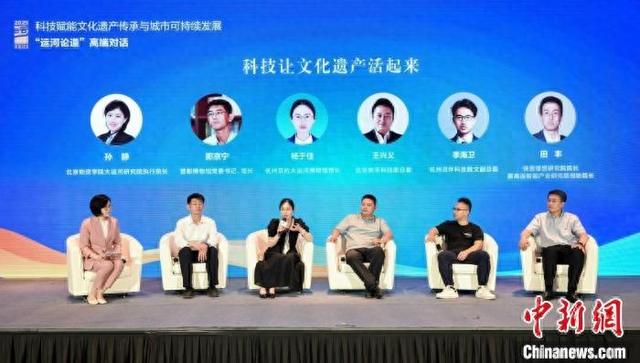
Group 1 - The event "Canal Dialogue" focused on the theme of "Technology Empowering Cultural Heritage Transmission and Urban Sustainable Development" [1] - The rapid development of technology is opening new pathways for the protection, transmission, and utilization of the Grand Canal culture in China, injecting new momentum into urban sustainable development [1] - The integration of technology in cultural heritage protection is essential, as highlighted by the director of the Capital Museum, who emphasized a balanced approach of content, technology, and dissemination [1] Group 2 - The integration of AI in tourism is advancing rapidly, with applications such as travel planning and automatic video editing for travel vlogs [2] - AI technology is expected to enhance the integration of culture and tourism, activating new consumption scenarios through various applications like guided tours and interactive historical figures [2] - The fusion of AR and AI technology is redefining the modern value of cultural heritage, allowing for immersive and interactive experiences that transcend time and space [2]
学界业界共论科技让大运河文化遗产活起来
Zhong Guo Xin Wen Wang· 2025-05-30 12:36
Group 1 - The event "Canal Dialogue" focused on the theme of "Empowering Cultural Heritage Transmission and Urban Sustainable Development" [1][3] - The event was hosted by the Beijing Municipal Publicity Department and the Zhejiang Provincial Publicity Department as part of the 2025 China Grand Canal Cultural Belt dialogue activities [1][3] Group 2 - Technology is deemed essential in the process of cultural heritage protection and transmission, as highlighted by the director of the Capital Museum [3] - The Beijing Grand Canal Museum integrates technology into its core philosophy, applying it extensively in artifact research, protection, and display [3] - The "museum fever" has led to widespread dissemination of Grand Canal stories, emphasizing the need for a deep integration of technology in museum operations [3] Group 3 - Kuaishou Technology reported that over 11 million creators are actively sharing intangible cultural heritage content on its platform [4] - The introduction of AI tools like "Keling" by Kuaishou enhances video creation methods, aiding in the recreation and dissemination of historical culture and stories [4] - Lingban Technology's AR guide glasses are being used in over 300 museums and scenic spots nationwide, including those along the Grand Canal [4] Group 4 - The integration of AI and cultural tourism is advancing rapidly, with AI technologies enhancing visitor engagement and experience [6] - AI can facilitate the connection between historical figures and tourists, creating interactive experiences that bridge online and offline environments [6] - The potential for AI to activate new consumption scenarios in cultural tourism is significant, with applications in guided tours, information access, and e-commerce [6]