Alpha因子

Search documents
Alpha因子跟踪月报(2026年1月):因子表现分化-20260203
GF SECURITIES· 2026-02-03 03:32
- The report introduces the "Alpha Factor Database" developed by the Guangfa Financial Engineering team, which is based on MySQL 8.0 and integrates over a decade of research experience. The database includes fundamental factors, Level-1 medium-frequency factors, Level-2 high-frequency factors, machine learning factors, and alternative data factors, supporting strategies such as long-short, index enhancement, ETF rotation, asset allocation, and derivatives[1][9][11] - The "agru_dailyquote" factor, a deep learning factor, is analyzed for its performance across various indices and timeframes. For the entire market with monthly rebalancing, its RankIC averages are 5.30% (1 week), -3.44% (1 month), 11.41% (1 year), and 13.63% (historical). Its historical win rate is 90.85%[4][54][55] - The "DL_1" factor, another deep learning factor, shows RankIC averages of 8.44% (1 week), -4.38% (1 month), 13.69% (1 year), and 13.66% (historical) in the entire market with monthly rebalancing. Its historical win rate is 86.80%[4][54][55] - The "fimage" factor, also a deep learning factor, has RankIC averages of 6.14% (1 week), 2.47% (1 month), 3.80% (1 year), and 5.06% (historical) in the entire market with monthly rebalancing. Its historical win rate is 77.44%[4][54][55] - The "keyperiod_ret_zero" factor, a Level-2 high-frequency factor, demonstrates negative RankIC averages of -8.25% (1 week), -6.39% (1 month), -5.32% (1 year), and -5.39% (historical) in the entire market with monthly rebalancing. Its historical win rate is 85.69%[4][54][55] - The "real_var" factor, a minute-frequency factor, shows negative RankIC averages of -5.14% (1 week), -3.61% (1 month), -7.94% (1 year), and -8.87% (historical) in the entire market with monthly rebalancing. Its historical win rate is 73.73%[4][54][55] - The "bigbuy_bigsell" factor, a Level-2 high-frequency factor, achieves positive RankIC averages of 5.71% (1 week), -3.56% (1 month), 6.80% (1 year), and 9.63% (historical) in the entire market with monthly rebalancing. Its historical win rate is 77.85%[4][54][55] - The "Amihud_illiq" factor, a minute-frequency factor, shows positive RankIC averages of 5.82% (1 week), -7.52% (1 month), 10.48% (1 year), and 10.70% (historical) in the entire market with monthly rebalancing. Its historical win rate is 73.59%[4][54][55]
回踩幅度决定趋势强度
Guolian Minsheng Securities· 2026-01-18 14:12
Quantitative Models and Construction Methods 1. Model Name: Hotspot Trend ETF Strategy - **Model Construction Idea**: This strategy identifies ETFs with upward trends in both highest and lowest prices, further selecting those with high short-term market attention based on turnover rates[28] - **Model Construction Process**: - Select ETFs where both the highest and lowest prices exhibit an upward trend - Construct a support-resistance factor based on the relative steepness of the 20-day regression coefficient of the highest and lowest prices - Choose the top 10 ETFs with the highest ratio of 5-day turnover rate to 20-day turnover rate from the long group of the factor - Build a risk parity portfolio using these ETFs[28] - **Model Evaluation**: The strategy achieved a cumulative return of 52.22% since 2025, with an excess return of 28.36% over the CSI 300 Index[28] 2. Model Name: Three-Strategy Fusion ETF Rotation - **Model Construction Idea**: This model combines three industry rotation strategies—fundamental-driven, quality low-volatility, and distressed reversal—to achieve factor and style complementarity, reducing the risk of single-strategy dependence[31] - **Model Construction Process**: - Fundamental-driven strategy: Uses factors like unexpected prosperity, industry momentum, and inflation beta - Quality low-volatility strategy: Focuses on individual stock quality and low volatility - Distressed reversal strategy: Captures valuation recovery and performance reversal opportunities using factors like PB z-score and analyst long-term expectations - Combine the three strategies equally to form a diversified ETF rotation portfolio[31][32] - **Model Evaluation**: The strategy achieved a cumulative return of 12.18% from April 10, 2017, to January 16, 2026, with a Sharpe ratio of 0.74[36] 3. Model Name: All-Weather Strategy - **Model Construction Idea**: This strategy aims to achieve stable returns by avoiding reliance on predictions, using asset selection, risk adjustment, and structural hedging to smooth volatility[50] - **Model Construction Process**: - High-volatility version: Utilizes a four-layer structured risk parity approach across stocks, bonds, and gold - Low-volatility version: Employs a five-layer structured risk budgeting approach - Both versions are designed to bypass macroeconomic assumptions and achieve absolute returns without leverage[50][54][56] - **Model Evaluation**: - High-volatility version: Annualized return of 11.8%, maximum drawdown of 3.6%, and Sharpe ratio of 2.3 as of 2025 - Low-volatility version: Annualized return of 8.8%, maximum drawdown of 2.0%, and Sharpe ratio of 3.4 as of 2025[60][61] --- Model Backtesting Results 1. Hotspot Trend ETF Strategy - Cumulative return since 2025: 52.22% - Excess return over CSI 300 Index: 28.36%[28] 2. Three-Strategy Fusion ETF Rotation - Cumulative return (2017.04.10–2026.01.16): 12.18% - Sharpe ratio: 0.74 - Annualized return (2025): 27.29% - Maximum drawdown (2025): 7.18%[36][37] 3. All-Weather Strategy - High-volatility version: - Annualized return (2025): 11.8% - Maximum drawdown (2025): 3.6% - Sharpe ratio (2025): 2.3 - Low-volatility version: - Annualized return (2025): 8.8% - Maximum drawdown (2025): 2.0% - Sharpe ratio (2025): 3.4[60][61] --- Quantitative Factors and Construction Methods 1. Factor Name: Beta, Growth, and Momentum Factors - **Factor Construction Idea**: These style factors capture market preferences for high-beta, high-growth, and high-momentum stocks[62] - **Factor Construction Process**: - Beta factor: Measures the sensitivity of a stock's returns to market returns - Growth factor: Evaluates the growth potential of a stock based on metrics like earnings growth - Momentum factor: Assesses the continuation of a stock's price trend over a specific period[62] - **Factor Evaluation**: - Beta factor: Weekly return of 3.33% - Growth factor: Weekly return of 1.97% - Momentum factor: Weekly return of 0.45%[62][66] 2. Factor Name: Volume Mean and Volume Standard Deviation Factors - **Factor Construction Idea**: These alpha factors leverage trading volume trends over different time horizons to identify stocks with strong liquidity and trading activity[64] - **Factor Construction Process**: - Volume mean factors: Calculate the average trading volume over 1, 3, 6, and 12 months - Volume standard deviation factors: Measure the volatility of trading volume over the same time horizons - Normalize the factors by market capitalization and industry[64][67] - **Factor Evaluation**: - 1-month volume mean factor: Weekly excess return of 1.69% - 3-month volume mean factor: Weekly excess return of 1.66% - 6-month volume mean factor: Weekly excess return of 1.65%[67] 3. Factor Name: R&D to Assets and R&D to Sales Ratios - **Factor Construction Idea**: These factors highlight the importance of research and development (R&D) in driving company performance, particularly in small-cap stocks[68] - **Factor Construction Process**: - R&D to assets ratio: Total R&D expenditure divided by total assets - R&D to sales ratio: Total R&D expenditure divided by total sales - Normalize the factors by market capitalization and industry[68] - **Factor Evaluation**: - R&D to assets ratio: Excess return of 35.64% in the CSI 800 Index - R&D to sales ratio: Excess return of 29.45% in the CSI 1000 Index[68] --- Factor Backtesting Results 1. Beta, Growth, and Momentum Factors - Beta factor: Weekly return of 3.33% - Growth factor: Weekly return of 1.97% - Momentum factor: Weekly return of 0.45%[62][66] 2. Volume Mean and Volume Standard Deviation Factors - 1-month volume mean factor: Weekly excess return of 1.69% - 3-month volume mean factor: Weekly excess return of 1.66% - 6-month volume mean factor: Weekly excess return of 1.65%[67] 3. R&D to Assets and R&D to Sales Ratios - R&D to assets ratio: Excess return of 35.64% in the CSI 800 Index - R&D to sales ratio: Excess return of 29.45% in the CSI 1000 Index[68]
Alpha因子跟踪周报(2025.12.12):深度学习因子胜率稳定-20251216
GF SECURITIES· 2025-12-16 10:51
- The report analyzes the performance of Alpha factors in various market segments, including the entire market, CSI 300, CSI A500, CSI 500, CSI 1000, and the ChiNext board, with monthly and weekly rebalancing[5] - The deep learning factor agru_dailyquote shows RankIC averages of 5.18%, 12.44%, 14.42%, and 13.94% over the past week, month, year, and historically, respectively, with a historical win rate of 91.63%[5] - The DL_1 factor shows RankIC averages of 4.00%, 19.68%, 16.48%, and 14.08% over the past week, month, year, and historically, respectively, with a historical win rate of 87.97%[5] - The fimage factor shows RankIC averages of -0.17%, 3.95%, 3.92%, and 5.17% over the past week, month, year, and historically, respectively, with a historical win rate of 78.11%[5] - The integrated_bigsmall_longshort factor, a Level-2 high-frequency factor, shows RankIC averages of -4.74%, 15.18%, 9.78%, and 11.10% over the past week, month, year, and historically, respectively, with a historical win rate of 75.86%[5] - The Amihud_illiq factor, a minute-frequency factor, shows RankIC averages of -3.21%, 16.88%, 13.34%, and 11.17% over the past week, month, year, and historically, respectively, with a historical win rate of 74.95%[5] - The report includes detailed performance analysis of 29 Level-2 high-frequency factors and 55 minute-frequency factors[5] - The deep learning factor agru_dailyquote shows an excess return of 9.01% in the CSI 300 index, 9.68% in the CSI A500 index, 5.82% in the CSI 500 index, 11.18% in the CSI 800 index, 10.75% in the CSI 1000 index, and 6.58% in the ChiNext index, with maximum drawdowns of 1.96%, 1.23%, 3.47%, 1.49%, 1.58%, and 1.95%, respectively, for the year-to-date period[5]
量化周报:市场支撑较强-20251214
Minsheng Securities· 2025-12-14 10:30
Quantitative Models and Construction Methods 1. Model Name: Three-Strategy Fusion ETF Rotation Strategy - **Model Construction Idea**: The strategy integrates three dimensions: fundamental-driven rotation, quality low-volatility style rotation, and distressed reversal industry discovery. It aims to achieve factor and style complementarity while reducing the risk of single-strategy exposure[35][36] - **Model Construction Process**: 1. **Fundamental Rotation Strategy**: Selects industries based on factors such as exceeding expected prosperity, industry leadership effects, momentum, crowding, and inflation beta[36] 2. **Quality Low-Volatility Style Strategy**: Focuses on individual stock quality, momentum, and low volatility to enhance defensiveness[36] 3. **Distressed Reversal Strategy**: Utilizes PB z-score, long-term analyst expectations, and short-term chip exchange to capture valuation recovery and performance reversal opportunities[36] 4. Combines the three strategies equally to form a composite ETF rotation strategy, achieving multi-dimensional industry screening and reducing single-strategy risks[35][36] - **Model Evaluation**: The strategy effectively balances factor complementarity and style adaptation, providing robust performance across different market conditions[35][36] 2. Model Name: Hotspot Trend ETF Strategy - **Model Construction Idea**: This strategy identifies ETFs with strong upward trends and high market attention, constructing a risk-parity portfolio based on support-resistance factors and turnover ratios[30] - **Model Construction Process**: 1. Select ETFs where both the highest and lowest prices exhibit an upward trend[30] 2. Calculate the relative steepness of the regression coefficients for the highest and lowest prices over the past 20 days to construct support-resistance factors[30] 3. Choose the top 10 ETFs with the highest 5-day turnover ratio/20-day turnover ratio from the long group of the support-resistance factor, indicating increased short-term market attention[30] 4. Construct a risk-parity portfolio using these ETFs[30] - **Model Evaluation**: The strategy demonstrates strong performance, achieving significant excess returns compared to the benchmark[30] 3. Model Name: Capital Flow Resonance Strategy - **Model Construction Idea**: This strategy identifies industries with resonant capital flows by combining financing margin and active large-order capital flow factors, aiming to enhance stability and reduce drawdowns[42][44][45] - **Model Construction Process**: 1. Define the financing margin factor as the market-neutralized financing net buy-in minus securities lending net sell-out, calculated as the two-week change in the 50-day moving average[45] 2. Define the active large-order capital flow factor as the market-neutralized net inflow ranking of industry trading volume over the past year, using the 10-day moving average[45] 3. Exclude extreme industries from the active large-order factor and apply a negative exclusion for the financing margin factor to improve strategy stability[45] 4. Perform weekly rebalancing to select industries with resonant capital flows for long positions[45] - **Model Evaluation**: The strategy achieves stable positive excess returns with reduced drawdowns compared to other capital flow strategies[45] --- Model Backtesting Results 1. Three-Strategy Fusion ETF Rotation Strategy - **2025 YTD Performance**: Portfolio return 25.60%, benchmark return 21.83%, excess return 3.77%, Sharpe ratio 0.24, maximum drawdown -7.18%[39][40] - **Overall Performance (2017-2025)**: Annualized excess return 10.28%, Sharpe ratio 1.09, maximum drawdown -24.55%[40] 2. Hotspot Trend ETF Strategy - **2025 YTD Performance**: Portfolio return 34.49%, benchmark (CSI 300) excess return 19.58%[30] 3. Capital Flow Resonance Strategy - **2018-Present Performance**: Annualized excess return 14.3%, IR 1.4, reduced drawdowns compared to Northbound-Large Order Resonance Strategy[45] - **Last Week Performance**: Absolute return -0.27%, excess return 0.37% (relative to industry equal weight)[45] --- Quantitative Factors and Construction Methods 1. Factor Name: Momentum Factor - **Factor Construction Idea**: Captures the continuation of stock price trends over a specific period[53] - **Factor Construction Process**: 1. Calculate the 1-year momentum as the return over the past 12 months, excluding the most recent month[53] 2. Rank stocks based on momentum and form quintile portfolios[53] - **Factor Evaluation**: Demonstrates strong performance, with the 1-year momentum factor achieving a weekly excess return of 1.13%[53] 2. Factor Name: R&D to Total Assets Ratio - **Factor Construction Idea**: Measures the proportion of R&D investment relative to total assets, reflecting innovation capability[56] - **Factor Construction Process**: 1. Calculate the ratio of total R&D expenses to total assets for each stock[56] 2. Rank stocks based on this ratio and form quintile portfolios[56] - **Factor Evaluation**: Performs well in small-cap indices, with an excess return of 20.25% in the CSI 500 index[56] 3. Factor Name: Single-Quarter ROA YoY Change - **Factor Construction Idea**: Tracks the year-over-year change in return on assets (ROA) for a single quarter, reflecting profitability trends[56] - **Factor Construction Process**: 1. Calculate the year-over-year change in ROA for the most recent quarter, considering preliminary and forecasted data[56] 2. Rank stocks based on this change and form quintile portfolios[56] - **Factor Evaluation**: Excels in large-cap indices, with an excess return of 25.52% in the CSI 300 index[56] --- Factor Backtesting Results 1. Momentum Factor - **Weekly Excess Return**: 1.13%[53] 2. R&D to Total Assets Ratio - **Excess Return in CSI 500**: 20.25%[56] 3. Single-Quarter ROA YoY Change - **Excess Return in CSI 300**: 25.52%[56] - **Excess Return in CSI 500**: 10.16%[56] - **Excess Return in CSI 1000**: 21.98%[56]
中金 | 大模型系列(4):LLM动态模型配置
中金点睛· 2025-09-23 00:14
Core Viewpoint - The article emphasizes the importance of dynamic strategy configuration in quantitative investing, highlighting the limitations of traditional models and proposing a new framework based on large language models (LLM) for better adaptability to changing market conditions [2][3][5]. Group 1: Evolution of Quantitative Investing - Over the past decade, quantitative investing in the A-share market has evolved significantly, driven by the search for "Alpha factors" that can predict stock returns [5]. - The rapid increase in the number of Alpha factors does not directly translate to improved returns due to the quick decay of Alpha and the homogenization of factors among different institutions [5][12]. Group 2: Challenges in Factor Combination - Different factor combination models exhibit significant performance differences across market phases, making it difficult to find a single model that performs optimally in all conditions [12]. - Traditional models, such as mean-variance optimization, are sensitive to input parameters, leading to instability in performance [14][15]. - Machine learning models, while powerful, often suffer from a "black box" issue, making it hard for fund managers to trust their decisions during critical moments [16][18]. Group 3: Proposed LLM-Based Framework - The proposed "Judgment-Inference Framework" consists of three layers: training, analysis, and decision-making [2][3][19]. - **Training Layer**: Runs a diverse set of selected Alpha models to create a robust strategy library [22]. - **Analysis Layer**: Conducts automated performance analysis of models and generates structured performance reports based on market conditions [24][27]. - **Decision Layer**: Utilizes LLM to integrate information from the analysis layer and make informed weight allocation decisions [28][31]. Group 4: Empirical Results - Backtesting results on the CSI 300 index show that the LLM-based dynamic strategy configuration can achieve an annualized excess return of 7.21%, outperforming equal-weighted and single model benchmarks [3][41]. - The LLM dynamic combination exhibited a maximum drawdown of -9.47%, lower than all benchmark models, indicating effective risk management [44]. Group 5: Future Enhancements - The framework can be further optimized by expanding the base model library to include more diverse strategies and enhancing market state dimensions with macroeconomic and sentiment indicators [46].


Alpha因子拥挤度高企的当下,指数增强基金是否依然有魅力?
Sou Hu Cai Jing· 2025-09-04 07:53
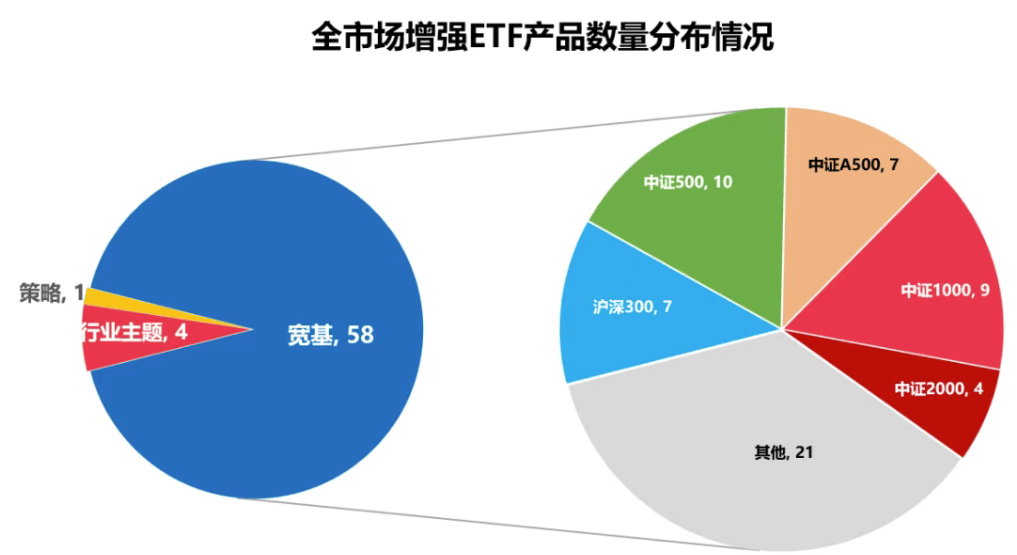
Core Insights - The article discusses the concept of enhanced index funds, which aim to achieve excess returns (Alpha) while passively tracking an index, using various strategies such as multi-factor models and quantitative analysis [1][9] - Enhanced index ETFs have seen significant growth, with over 60 products available as of August 22, 2025, nearly half of which were established in the last two years [1][9] Performance Analysis - Traditional index-enhanced strategies have faced challenges, with some funds underperforming compared to fully replicated index ETFs, particularly in the past year [2][4] - For instance, the annual returns of several enhanced strategy ETFs, such as the Guotai Hushen 300 Enhanced Strategy ETF, were lower than those of standard ETFs [3][4] Market Dynamics - Large-cap stocks, like those in the Hushen 300 index, are often well-covered by institutions, leading to high pricing efficiency and making it difficult for quantitative strategies to identify mispricings [4] - Conversely, small-cap stocks, particularly those in indices like the CSI 2000, have shown higher Alpha potential due to less institutional coverage and greater pricing inefficiencies [5][6] Long-term Trends - Enhanced index strategies have demonstrated superior long-term performance, with the CSI 500 Enhanced Index outperforming its benchmark over three, five, and ten-year periods [7][8] - The article emphasizes that the probability of achieving excess returns with enhanced index funds is over 90%, making them an attractive option for both retail and professional investors [9]
国信金工2025年夏季量化沙龙(上海站)|邀请函
量化藏经阁· 2025-08-06 14:20
Core Viewpoint - The article outlines the agenda for the 2025 Quantitative Salon in Shanghai, focusing on various investment strategies and risk management techniques in the financial sector [1][2]. Group 1: Event Details - The event is scheduled for August 13, 2025, from 13:30 to 17:00 at the Jinling Zijinshan Hotel in Shanghai [1]. - The agenda includes multiple sessions led by experts from Guosen Securities, covering topics such as stock selection strategies, multi-strategy enhancement, and risk models [1][2]. Group 2: Session Summaries - The first session will discuss "Steady Stock Selection Strategies" led by Zhang Xinwei, the Chief Analyst of Financial Engineering at Guosen Securities [1]. - The second session will focus on "Multi-Strategy Enhanced Portfolio from a Heuristic Perspective," also presented by Zhang Xinwei [1]. - The third session will cover "Alpha Information Contained in Intraday Special Moments," presented by Neng Yu, Co-Chief Analyst of Financial Engineering [1]. - The fourth session will address "Comprehensive Guide to Risk Models," led by Zhang Yu, Co-Chief Analyst of Financial Engineering [2]. - The fifth session will explore "Expansion and Enhancement of Alpha Factors in Financial Statements," also by Zhang Yu [4]. - The sixth session will discuss "Contrarian Investment Ability and Performance of Fund Managers," presented by Chen Mengqi, an Analyst at Guosen Securities [4]. - The final session will focus on "Unified Improvement Framework for Selection Factors from the Perspective of Hidden Risks," led by Hu Zhichao, an Analyst at Guosen Securities [4]. Group 3: Participation and Benefits - Participation is limited, and interested attendees must register through a specific process to ensure a good experience [2]. - Attendees who successfully register and attend will receive a copy of the "Selected Research Report of Guosen Financial Engineering Team for 2025" [5].