
Brand Strength

Search documents
Will Keurig's Brand Strength & Strategic Actions Power Growth?
ZACKS· 2026-03-27 20:16
Key Takeaways Keurig gains from brand strength, pricing actions and innovation across key beverage categories.KDP's Refreshment Beverages segment benefits from strong sales, product mix and Electrolit contributions.KDP's energy platform, led by GHOST, C4 and Bloom, boosts share via distribution and velocity gains.Keurig Dr Pepper Inc. (KDP) has been gaining from brand strength and pricing actions for a while. The company’s expansion initiatives and efforts to innovate its products have been showing results. ...



最具价值和最强大的餐厅品牌25强2026年度报告(英)2026
Brand Finance· 2026-02-24 03:30
Investment Rating - The report indicates a stable investment environment for the restaurant sector, with a focus on brand value growth and resilience despite economic pressures [20][23]. Core Insights - The global restaurant sector's brand value reached a record $190.1 billion in 2026, with McDonald's leading at $42.6 billion, marking a 5% increase [10][30]. - Chick-fil-A emerged as the fastest-growing brand, with a 44% increase in brand value to $8.1 billion, driven by strong revenue and expansion [36]. - Haidilao retained its title as the strongest brand with a Brand Strength Index (BSI) score of 89.5/100, despite a slight decline in its score [49]. Sector Overview - The restaurant sector has shown resilience, with a collective brand value increase of approximately 20% since 2015, driven by changing consumer habits towards takeout and delivery [20][21]. - Technology investments, including AI-enabled forecasting and digital ordering, have become essential for growth, particularly in the US market [22]. - There is a noted disconnect between brand value growth and Brand Strength Index scores, indicating pressures on pricing and consumer trust [23]. Valuation Analysis - The top 10 restaurant brands remain stable, with minor shifts in rankings based on brand value growth rates rather than fundamental changes in competitive positions [25][34]. - McDonald's, Starbucks, and KFC maintain their top three positions, with brand values of $42.6 billion, $37 billion, and $16.5 billion respectively [30][31]. - Subway and Chick-fil-A showed significant growth, with Subway's brand value increasing by 18% and Chick-fil-A's by 44% [28][36]. Brand Strength Analysis - Haidilao is recognized as the strongest restaurant brand globally, followed closely by Greggs and McDonald's, with BSI scores of 89.5, 88.2, and 88.1 respectively [52][54]. - The report highlights the importance of local relevance and consumer perceptions in driving brand strength, as seen with Jollibee's performance in the Philippines [58]. Sustainability Analysis - Sustainability is increasingly influencing consumer choices, contributing to 6.4% of consideration in the restaurant sector [64]. - Brands like Chili's and Mixue are noted for their strong sustainability perceptions, which are linked to higher quality and credibility among consumers [65]. Brand Value Ranking - The report lists the top 10 most valuable restaurant brands for 2026, with McDonald's, Starbucks, and KFC leading the rankings [30][71]. - Notable newcomers include Mixue, valued at $4.6 billion, reflecting a strong focus on affordability and rapid expansion [44].



M&S named UK’s top brand for fourth year in a row
Retail Gazette· 2026-01-29 09:10
Marks & Spencer has topped the list of the strongest brands in the UK for the fourth year running.The top ten, compiled by YouGov’s BrandIndex tool, shows M&S with an overall index score of 52.7, ahead of Ikea with 45.6.Retailers John Lewis and Boots also made the list, in fourth and ninth place, respectively.M&S CEO Stuart Machin said “We deeply appreciate being named the UK’s Best Brand by YouGov for the fourth year in a row.“This one means a lot, because it’s based on what our customers say about us. You ...


Where Will Coca-Cola Stock Be in 3 Years?
The Motley Fool· 2026-01-24 20:34
Core Insights - Coca-Cola dominates the global soft drink market with over 200 beverage varieties available in more than 200 countries, selling 2.2 billion servings daily [1] - The company is expected to maintain steady growth, with a projected compound annual growth rate of 3.8% in revenue from 2024 to 2027 [3] Company Performance - Coca-Cola's brand strength and economic moat contribute significantly to its success, allowing it to charge higher prices without reducing demand [4][5] - The company reported a net profit margin of 30% in Q3, with low capital reinvestment requirements enabling consistent quarterly dividends of $0.51 per share [6] Market Position - Coca-Cola's stock has produced a total return of 31% over the past three years, underperforming the S&P 500, which returned 79% in the same period [7] - While the stock is not expected to outperform the market, it remains an attractive option for dividend investors seeking income [8]

Is Lululemon's Brand Losing Its Heat?
The Motley Fool· 2025-11-30 04:05
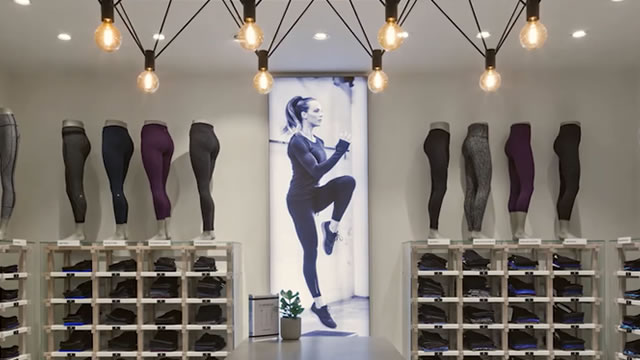
Core Viewpoint - Lululemon is experiencing a slowdown in growth, particularly in North America, raising concerns about its brand strength and consumer connection, although international markets remain strong [1][10][14]. North American Market Performance - The company has reported declining comparable sales in the Americas, with management noting softer store traffic and weaker demand across key categories [2][4]. - Rising price sensitivity among U.S. consumers indicates a shift in consumer behavior, as Lululemon previously enjoyed strong pricing power without significant pushback [3][4]. Inventory and Product Execution - Historically, Lululemon maintained lean inventory levels, but increased inventory now suggests a loss of urgency among consumers to purchase products [4]. - A Jefferies report highlights concerns regarding inconsistent product execution, including design choices and excessive discounts, indicating a need for improved product strategy [7][9]. Competitive Landscape - Competition in the premium athleisure market has intensified, with brands like Alo Yoga and Vuori gaining traction among younger consumers, while Nike and Adidas are also expanding their presence in lifestyle apparel [8][9]. International Growth and Financial Position - Despite challenges in the U.S., Lululemon continues to see rapid growth in international markets, particularly in China and Europe, with China reporting a 25% revenue increase in the latest quarter [10][11]. - The company maintains strong financial health with industry-leading gross margins and a clean balance sheet, allowing for strategic adjustments [11]. Future Outlook - Moving forward, Lululemon must focus on sharpening its product direction, recalibrating pricing strategies, and reconnecting with U.S. consumers to regain momentum [12]. - The next few quarters will be critical for assessing the company's ability to stabilize its U.S. business while sustaining international growth [13][15].

Mondelez's Innovation & Brand Strength Fueling Long-Term Growth
ZACKS· 2025-05-21 14:20
Core Strategies - Mondelez International is focused on creating memorable consumer experiences through smart brand investments and innovation driven by customer preferences [1][3] - The company is well-positioned for steady growth and long-term value for shareholders by continuously evolving its product lineup to match changing tastes [1] Financial Performance - In the first quarter of fiscal 2025, Mondelez reported a 3.1% increase in organic net revenues, with a 6.6 percentage point gain attributed to favorable pricing strategies [3] - The chocolate category experienced a 10.1% increase in revenue, driven by strong performance in both developed and emerging markets [4] Product Portfolio and Innovation - Mondelez's biscuits and baked snacks portfolio also saw growth, supported by brands like LU and 7DAYS, with revenue growth management strategies playing a key role [5] - Innovation is a cornerstone of Mondelez's strategy, exemplified by the successful launch of the Cadbury Dairy Milk Biscoff bar, which became the best-selling SKU in the UK [7] Market Expansion - The company expanded its distribution network into over 100,000 stores in emerging markets during the first quarter of fiscal 2025, enhancing market penetration [8] Competitive Positioning - Mondelez is effectively positioning itself for sustainable success by focusing on core snacking categories, investing in consumer-centric product development, and emphasizing health-conscious offerings [9] - The stock has gained 1.4% over the past three months, outperforming the industry's 3.7% decline [9]


加拿大最具价值和最强大品牌100强的2025年度报告(英)2025
品牌价值· 2025-05-06 02:30
Investment Rating - The report indicates a general decline in brand value across the top Canadian brands, with a total brand value of CAD342.1 billion in 2025, reflecting a 3.7% year-on-year decrease [20][21]. Core Insights - TD Bank Group remains the most valuable Canadian brand for the third consecutive year, valued at CAD23.4 billion, despite a 10% decline attributed to lower long-term revenue forecasts [25][33]. - Crown Royal is identified as the fastest-growing brand, with a remarkable 78% increase in value to CAD3.2 billion, and it also holds the highest Brand Strength Index score in Canada at 90.7 out of 100 [40][41]. - The banking sector leads in brand value, contributing one-third of the total brand value in the ranking, with notable performances from Circle K, CIBC, and Manulife, all recording double-digit growth [3][22]. Summary by Sections Valuation Analysis - The top 10 most valuable Canadian brands include TD, RBC, Circle K, Brookfield, Canada Life, Scotiabank, BMO, TELUS, CIBC, and Manulife, with varying changes in brand value [32][33]. - RBC ranks second with a stable brand value of CAD22.4 billion, supported by its acquisition of HSBC Bank Canada [26]. - Circle K's brand value increased by 11% to CAD17.2 billion, while Canada Life saw an 8% increase to CAD17.1 billion [28][29]. Brand Strength Analysis - Crown Royal's Brand Strength Index score increased by 23 points from the previous year, achieving a score of 90.7, indicating strong consumer perception [41][48]. - Dollarama follows as the second strongest brand with a BSI score of 86.6, driven by high familiarity among consumers [49]. - A&W and Canadian National Railway also rank highly in brand strength, with scores of 84.5 and 83.4, respectively [51]. Brand Guardianship Index - The Brand Guardianship Index evaluates the effectiveness of CEOs in managing brand value, with notable leaders including Calvin McDonald of Lululemon and Paul A Mahon of Great-West Lifeco [57][59]. Sustainability Analysis - Canadian brands are increasingly investing in sustainability initiatives, with Toromont leading in environmental sustainability perceptions [67][68]. - WSP Global ranks highest on social sustainability, while Jazz leads in governance perceptions [68][69].