
CPI上涨

Search documents
不要低估这轮大宗商品的牛市
Xin Lang Cai Jing· 2026-01-26 03:31
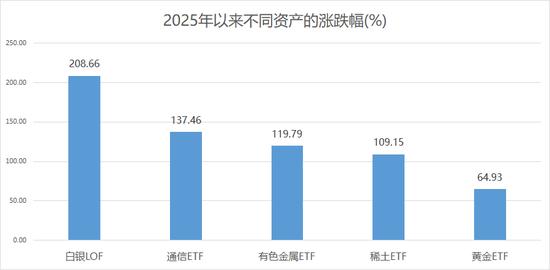
Core Viewpoint - The A-share market has shown a strong upward trend since the beginning of 2026, driven by technology stocks, particularly in AI, while the commodity market also presents significant investment opportunities due to its performance since last year [1][24]. Group 1: Commodity Market Performance - Since 2025, the commodity market has exhibited a clear differentiation, with gold, silver, and copper prices reaching historical highs, while steel and chemicals are in a recovery phase, and oil and coal remain at low levels [5][26]. - Precious metals, particularly gold, have shown remarkable performance, driven by factors such as the global "de-dollarization" narrative, renewed focus on gold's monetary attributes, and external factors like interest rate cuts and geopolitical tensions [6][7][26]. - Industrial metals are experiencing increased demand due to AI, with copper demand rising from AI data center construction, while silver has also seen significant price increases due to its dual role as a precious and industrial metal [27][28]. Group 2: Economic Cycle and Commodity Trends - The price trends of commodities are influenced by macroeconomic cycles and inventory cycles, typically following a pattern of precious metals leading, followed by industrial metals, energy, and finally agricultural products [28][29]. - In the transition from recession to recovery, precious metals like gold and silver lead the price increases, while industrial metals rebound during the recovery to overheating phase, and energy prices strengthen during the overheating phase [29][30]. Group 3: Investment Opportunities for 2026 - Opportunities in 2026 can be identified along three main lines: 1. AI-driven demand expansion, with significant growth in materials like lithium carbonate and copper, as evidenced by recent price increases [34][36]. 2. Supply contraction due to "anti-involution" policies, particularly in industries like photovoltaics, chemicals, and steel, which are expected to improve profitability and price stability [36][38]. 3. Monitoring CPI trends to identify potential agricultural investments, as the domestic CPI has shown signs of gradual recovery [45][46]. Group 4: Conclusion - The domestic economy is expected to continue its recovery in 2026, leading to a cycle of increased demand, inventory accumulation, and rising prices for various commodities, with global supply constraints becoming more pronounced [47].

持续改善市场供求
Jing Ji Ri Bao· 2025-11-11 22:11
Core Insights - In October, the National Bureau of Statistics reported a 0.2% year-on-year increase in the Consumer Price Index (CPI), driven by policies aimed at expanding domestic demand and the impact of the National Day and Mid-Autumn Festival holidays [1] - The core CPI, excluding food and energy prices, has seen its year-on-year growth rate expand for the sixth consecutive month [1] - The Producer Price Index (PPI) shifted from flat in the previous month to a 0.1% increase, marking the first rise of the year, attributed to the effects of "anti-involution" policies that have improved supply and demand in certain industries [1] Economic Policies - The ongoing improvement in market supply and demand requires further release of the potential of "anti-involution" policies, which aim to optimize market competition and support reasonable price increases for related industrial products [1] - There is a need to enhance consumption policies to boost income and reduce burdens for low- to middle-income groups, thereby increasing their consumption capacity, willingness, and levels [1]
政府数据显示,阿曼6月CPI同比上涨0.82%;数环比上涨0.29%。
news flash· 2025-07-20 10:00
Group 1 - The core point of the article indicates that Oman’s Consumer Price Index (CPI) increased by 0.82% year-on-year in June, reflecting inflationary pressures in the economy [1] - The month-on-month CPI change for June was reported at an increase of 0.29%, suggesting a slight upward trend in prices [1]
意大利5月CPI同比上涨2.8%。
news flash· 2025-06-27 10:04
Core Insights - Italy's Consumer Price Index (CPI) increased by 2.8% year-on-year in May [1] Group 1: Economic Indicators - The year-on-year CPI growth of 2.8% indicates inflationary pressures in the Italian economy [1]
日本5月份不含生鲜食品的CPI连续第三个月上涨,较上年同期上涨3.7%,为2023年1月以来的最快增速。
news flash· 2025-06-19 23:51
Group 1 - The core point of the article is that Japan's CPI excluding fresh food rose for the third consecutive month in May, increasing by 3.7% year-on-year, marking the fastest growth since January 2023 [1] Group 2 - The CPI increase indicates a potential shift in consumer price trends, which may impact various sectors including retail and consumer goods [1] - The 3.7% rise is significant as it reflects broader inflationary pressures within the Japanese economy, which could influence monetary policy decisions [1] - This trend may also affect investor sentiment and market dynamics, particularly in sectors sensitive to inflation [1]