CTP技术

Search documents
新能源汽车售后,谁是一条龙,谁是一条虫
3 6 Ke· 2025-12-31 12:09
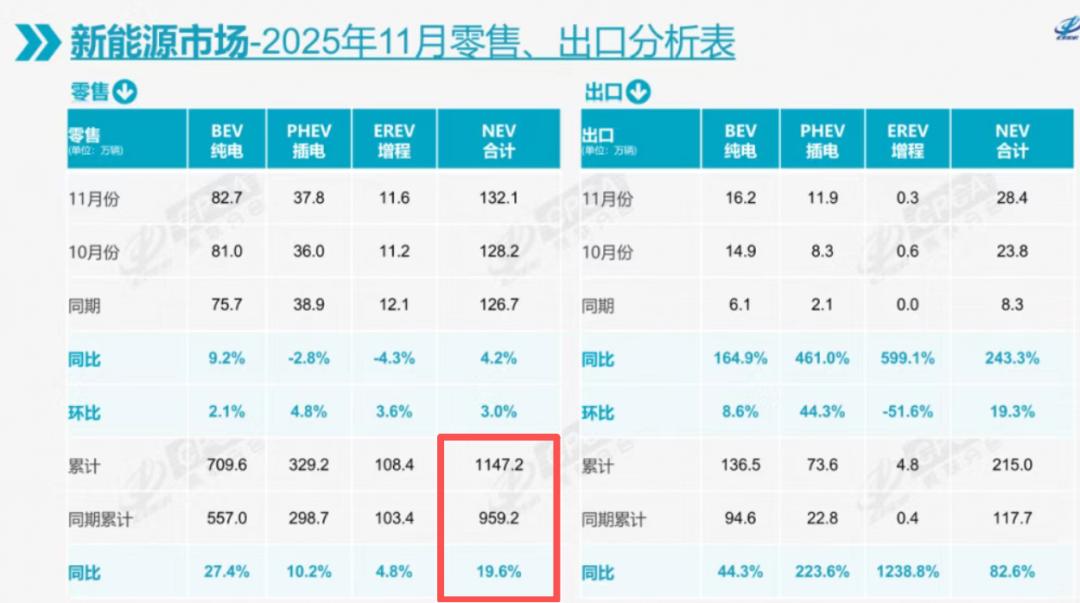
Core Insights - The retail sales of new energy passenger vehicles reached 11.472 million units in the first 11 months, a year-on-year increase of 19.6%, surpassing traditional fuel vehicles by 1.462 million units [1] - In November, the domestic retail penetration rate of new energy vehicles surged to 59.3%, an increase of seven percentage points year-on-year [1] Sales Data Summary - In November, the retail sales of new energy vehicles included 827,000 BEVs, 378,000 PHEVs, and 116,000 EREVs, totaling 1.321 million units [2] - Compared to October, November saw a 2.1% increase in BEV sales, a 4.8% increase in PHEV sales, and a 3.6% increase in EREV sales [2] - Cumulatively, from January to November, BEV sales reached 7.096 million units, PHEV sales reached 3.292 million units, and EREV sales reached 1.084 million units, totaling 11.472 million units [2] Customer Experience Challenges - Many new energy vehicle owners report dissatisfaction with post-purchase experiences, particularly regarding after-sales service [3] - Common complaints include delays in service response, issues with vehicle systems, and inadequate support for charging infrastructure [4][6] - The gap between sales promises and actual service delivery is becoming a significant concern for consumers [3][7] After-Sales Service Issues - Customers have expressed frustration over the reliability of charging stations and the responsiveness of customer service when issues arise [4][6] - Repair experiences can be lengthy and complicated, especially in areas lacking official service centers [8][19] - The high technical complexity of electric vehicles creates challenges for maintenance and repair, leading to longer wait times for parts and service [16][19] Industry Response and Strategies - Different companies are adopting varied strategies to address after-sales service challenges [21] - NIO has focused on building a high-quality service ecosystem, including extensive battery swap networks and dedicated service centers [25] - Tesla integrates sales and service through a direct sales model, ensuring transparency and efficiency in service delivery [27] - Other companies, like Hongmeng Zhixing, leverage existing networks to enhance service offerings, creating a more customer-centric experience [30] Conclusion - The new energy vehicle market is experiencing rapid growth, but the disparity between sales and service quality poses risks to customer satisfaction and brand loyalty [31] - Companies must prioritize after-sales service as part of their long-term strategy to remain competitive in the evolving market landscape [31]


整车客户增至五家,宁德时代主推滑板底盘背后有何谋划?
Xin Lang Cai Jing· 2025-05-14 12:50
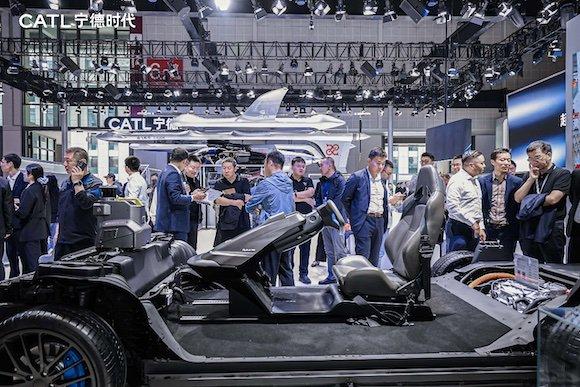
Core Viewpoint - CATL's skateboard chassis business is making significant progress, with a recent agreement signed with Changan Mazda to develop new energy vehicles based on this technology, marking it as the fifth automaker to adopt CATL's skateboard chassis solution [1] Group 1: Business Developments - CATL has previously announced similar collaborations with companies such as Avita, JAC, and BAIC New Energy, with BAIC New Energy planning to launch multiple new models based on the skateboard chassis by around 2026 [1] - The skateboard chassis integrates key components like drive, brake, steering, and battery, allowing for independent development of the vehicle body and chassis, which can accommodate various vehicle types [1] - CATL's chairman stated that the skateboard chassis will significantly reduce the development costs for new models, opening doors for new entrants in the electric vehicle industry [2] Group 2: Technological Innovations - The skateboard chassis is based on Cell To Chassis (CTC) technology, which directly installs battery cells onto the chassis, bypassing traditional assembly methods, thus enhancing efficiency and energy density [3][4] - CTC technology allows for the use of lower-cost lithium iron phosphate batteries while achieving similar range to higher-density batteries, thereby reducing overall costs [4] Group 3: Strategic Planning - CATL established a subsidiary, Times Intelligent, to focus on the skateboard chassis business, with a "531" plan aimed at product rollout within three years and annual support for 2-3 automakers starting from the fifth year [6] - The production base for skateboard chassis in Yichun, Jiangxi, is set to commence operations in 2024, with the capability to develop new models within 12-18 months [6] Group 4: Market Outlook - The market demand for skateboard chassis is expected to grow, with predictions that it could capture nearly double-digit market share within the next decade [8] - Despite current hesitance from automakers to fully embrace the skateboard chassis concept, increasing competition in the electric vehicle sector may lead to a shift in acceptance [7]